Back pain is one of the most common complaints of pregnancy, affecting well over half of pregnant women at some point. It is not a sign that something is wrong; it is a predictable consequence of substantial physical change happening quite quickly.
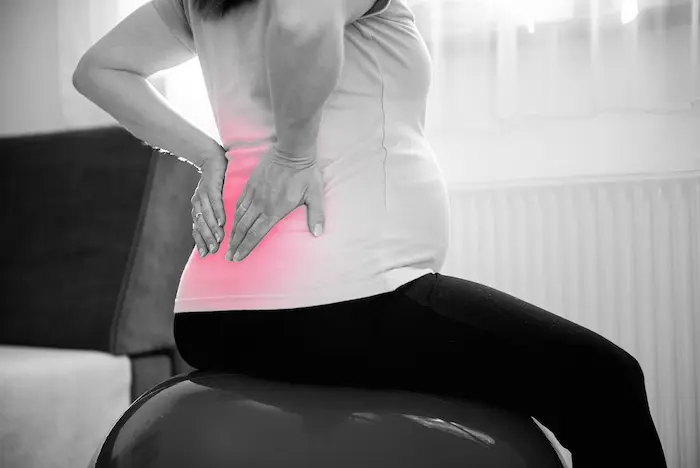
Common does not have to mean constant. This guide covers why pregnancy back pain happens, what actually helps, what is safe to take, and the specific signs that mean the pain needs medical attention rather than a heat pack.
Two Different Kinds of Pain
Working out which type you have matters, because they respond to different things.
Lumbar Pain
The most common type, felt as a deep ache across the lower back around waist level or just below. Three things drive it. Relaxin, the hormone that loosens ligaments and joints in preparation for birth, creates instability that the lower back muscles have to compensate for. Your center of gravity shifts forward as the uterus expands, and most people unconsciously arch their back to counterbalance, which loads the lumbar muscles continuously. And the additional weight, concentrated in front, increases the load on the spine.
Posterior Pelvic Pain and Pelvic Girdle Pain
Felt lower and deeper, across the tailbone or in the buttocks, often on one side, and it can radiate down the back of the thigh. The sacroiliac joints connecting spine to pelvis become irritated as relaxin loosens them and weight distribution changes. Pelvic girdle pain is the broader term covering the SI joints and the pubic symphysis at the front, where pain can be sharp enough to make walking, stairs, and turning over in bed genuinely difficult.
If your pain is pelvic rather than lumbar, a few specific adjustments help more than general back advice: keep your knees together when getting in and out of a car or turning over in bed, take stairs one at a time leading with the less painful leg, avoid standing on one leg to dress, and avoid activities that separate your legs asymmetrically. Pelvic girdle pain responds particularly well to physiotherapy, so it is worth asking for a referral rather than managing it alone.
Posture and Daily Habits
Small adjustments repeated all day tend to matter more than any single intervention.
Standing: distribute weight evenly across both feet and avoid locking your knees. If you have to stand for long periods, resting one foot on a low stool and swapping periodically reduces pelvic tilt considerably.
Sitting: use a chair with good lumbar support, or put a small rolled towel behind your lower back. Keep both feet flat on the floor rather than crossing your legs, which twists the pelvis. Get up and move every 30 to 45 minutes, since sustained sitting is often worse than standing.
Sleeping: side-lying is the position to aim for, with a pillow between your knees to keep hips, pelvis, and spine aligned. A full-length pregnancy pillow does this more reliably than improvising. Many women find left-side sleeping more comfortable later in pregnancy, and it is commonly recommended for circulation.
Lifting: never bend from the waist. Squat with a straight back and lift with your legs, and delegate anything genuinely heavy. This becomes more important, not less, as relaxin levels rise.
Footwear: low-heeled shoes with real arch support. High heels worsen the postural changes already happening, and completely flat unsupportive shoes are not much better.
What Actually Provides Relief
Heat and Cold
Cold packs suit acute sharp pain and inflammation, applied wrapped in a thin towel for 15 to 20 minutes. Heat suits chronic achy muscle tightness: a warm rather than hot bath, a heating pad on low, or a warm rice sock. Keep heat off your abdomen, and avoid hot tubs and very hot baths, since raising core body temperature significantly is not recommended in pregnancy.
Movement and Stretching
Staying active is one of the better-evidenced approaches, and walking, swimming, and prenatal yoga are the standard low-impact options. Swimming in particular takes the load off your joints entirely, which is why so many women find it the only comfortable exercise late in pregnancy.
Cat-cow on hands and knees, alternating between arching and dipping the spine gently, mobilizes the whole back without loading it. Pelvic tilts, done standing against a wall or on your back with knees bent in the first and second trimester, strengthen the deep core and directly counteract the swayback posture. Child’s pose with knees wide to make room for your belly releases lower back tension well.
Never stretch into pain, and avoid deep backbends, abdominal twists, and lying flat on your back for extended periods after the first trimester. Our guides to prenatal yoga and safe core exercises during pregnancy cover what to do and what to avoid in more detail.
Support Belts
A well-fitted maternity support belt can help meaningfully in the second and third trimesters by lifting the belly slightly and redistributing weight off the lower back and pelvis. It should be snug but not tight, with room to slide a finger or two underneath, and it is designed for intermittent use during activity rather than being worn continuously.
Professional Help
Physical therapy is the option with the strongest evidence behind it, particularly for pelvic girdle pain. A physiotherapist can assess your specific pattern, identify which muscles are compensating, and give you a targeted program, which is considerably more effective than generic exercises. Ask your provider for a referral rather than waiting until the pain is severe.
Prenatal massage from a therapist trained specifically in pregnancy can provide real relief for tight back and hip muscles, and it is widely considered safe with an appropriately trained practitioner.
Chiropractic care and acupuncture are used by some women for pregnancy back pain and many report benefit, though the evidence base is more limited than for physiotherapy. If you pursue either, use a practitioner experienced in treating pregnant patients and mention it to your obstetric provider.
What’s Safe to Take
This needs a conversation with your provider rather than a decision made from an article, but here is the general landscape.
Acetaminophen is generally considered the first-line option for pain in pregnancy, used at the recommended dose and for the shortest duration needed. ACOG has reaffirmed that it remains appropriate when needed, while noting it should be used purposefully rather than routinely.
NSAIDs such as ibuprofen and naproxen are generally avoided, and the FDA specifically advises against them from 20 weeks onward because of the risk of reduced amniotic fluid and effects on the fetal heart and kidneys. Do not take them for back pain without explicit provider approval.
Topical products have minimal systemic absorption and are often reasonable, but check with your provider first rather than assuming, and avoid salicylate-containing rubs unless specifically approved. Herbal supplements and essential oils should also be cleared with your provider, since “natural” does not mean tested in pregnancy.
When Back Pain Needs Medical Attention
Most pregnancy back pain is musculoskeletal. Contact your provider promptly if your pain is severe, constant, or progressively worsening; if it is rhythmic or cramping, which can indicate preterm labor; if it comes with vaginal bleeding, fluid leakage, or fever; if you have numbness, weakness, or tingling in your legs, groin, or buttocks, which can indicate significant nerve compression; or if it is localized to one side under your ribs, which can indicate a kidney infection.
Severe upper abdominal or right-sided pain under the ribs, particularly alongside headache, vision changes, or swelling, needs same-day evaluation for preeclampsia, which our guide to preeclampsia warning signs covers. Our guides to third trimester warning signs and signs of labor cover the wider picture of what warrants a call.
By Trimester
First trimester: establish good posture habits now, while the physical demands are still modest, and start gentle core work such as pelvic tilts once your provider has cleared exercise. This builds the foundation everything else rests on.
Second trimester: as your bump grows, a support belt starts earning its place. This is a good window for prenatal yoga or swimming, and a good time to sort out your sleeping setup with pillows before discomfort makes it urgent.
Third trimester: prioritize comfort and rest. Heat for aching muscles, continued gentle movement at lower intensity, and prepared rest areas at home, in the car, and at work. If pain is limiting your daily activities, this is when physiotherapy is most worth pursuing rather than enduring the last weeks. Our guide to third trimester symptom relief covers what else tends to arrive at this stage.
Frequently Asked Questions
Yes. Although it is usually associated with later weight gain, relaxin starts loosening joints and ligaments early, and postural changes begin before there is a visible bump. Stress and fatigue contribute too. First-trimester back pain that is severe, one-sided, or accompanied by bleeding or cramping should be reported to your provider rather than assumed to be routine.
True sciatica involves irritation of the sciatic nerve and causes sharp, shooting, or burning pain radiating from the lower back or buttock down the back of the leg, often with numbness or tingling, sometimes reaching the foot. General pregnancy back pain is more diffuse and achy. Most pain that feels sciatic in pregnancy is actually posterior pelvic pain rather than genuine nerve compression, which matters because the treatment differs.
No, when worn correctly. A maternity support belt sits under the belly and lifts, rather than compressing the uterus. It should be snug but never tight, with room to fit a finger or two underneath, and it is intended for use during activity rather than being worn all day. If it feels constricting or uncomfortable, it is either the wrong size or positioned incorrectly.
Yes. Avoid deep backbends and twists that compress the abdomen. After the first trimester, avoid lying flat on your back for extended periods, since it can restrict blood flow. Avoid anything that causes sharp pain or pulling in the pelvic area, and be cautious with wide-legged positions if you have pelvic girdle pain, since separating your legs asymmetrically tends to aggravate it.
Sooner than most people do. Ask for a referral if the pain is limiting your daily activities, if it has not improved with posture changes and gentle movement, or if you suspect pelvic girdle or SI joint involvement. Physiotherapy has the best evidence of any option here, and starting earlier gives you more of the pregnancy in less pain rather than treating it as a last resort.
For most women yes, though the timeline varies and relaxin remains elevated for months afterward, so joints stay looser than usual for a while. Pain driven by weight and posture usually resolves over weeks to months. Continuing gentle core and pelvic floor work postpartum supports recovery, and our guide to postpartum pelvic floor recovery covers that. If pain persists beyond a few months, ask for a physiotherapy assessment rather than waiting it out.
Managing It Rather Than Enduring It
Pregnancy back pain is common and it is also treatable, and those two facts sit together more often than people are told. The most effective approach is proactive rather than reactive: posture habits early, consistent gentle movement, support gear when it helps, and professional input before the pain becomes limiting.
And do not endure it silently on the basis that pain is just part of pregnancy. Tell your provider what is happening, both so they can rule out anything that needs attention and because there are options they can offer that you will not find on your own.
This article is for general information and is not a substitute for professional medical advice. Talk to your healthcare provider before taking any medication or starting a new treatment during pregnancy.
References
- American College of Obstetricians and Gynecologists. (2023). Back pain during pregnancy. acog.org/womens-health
- American College of Obstetricians and Gynecologists. (2020). Physical activity and exercise during pregnancy and the postpartum period. acog.org/clinical
- U.S. Food and Drug Administration. (2020). Avoid use of NSAIDs in pregnancy at 20 weeks or later. fda.gov
- Cochrane Database of Systematic Reviews. (2015). Interventions for preventing and treating pelvic and back pain in pregnancy. cochrane.org
- Mayo Clinic Staff. (2024). Back pain during pregnancy: 7 tips for relief. mayoclinic.org
- Eunice Kennedy Shriver National Institute of Child Health and Human Development. (2023). Pregnancy discomforts. nichd.nih.gov