Among the many choices you make in pregnancy, vaccination is one of the most powerful for protecting both you and your baby. Some vaccines guard your own health during a more vulnerable time, while others pass antibodies to your baby that shield them in their first fragile months of life. This guide sorts through which vaccines are recommended, which are situational, and which to postpone — so you can partner with your provider from a place of evidence rather than uncertainty.
How Maternal Vaccination Protects Your Baby
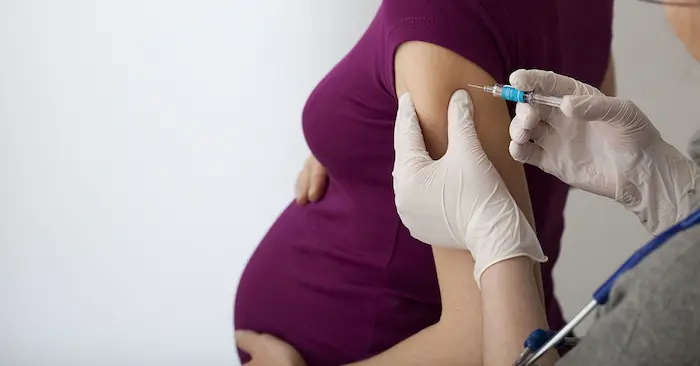
When you receive a vaccine in pregnancy, your immune system makes protective antibodies — and those antibodies cross the placenta to your baby, a transfer that ramps up in the late second and third trimesters. Your baby is then born with a temporary, ready-made defense (called passive immunity) against serious illnesses. This matters enormously because a newborn’s own immune system is immature for the first several months, so the antibodies you pass on act as a protective bridge through their most vulnerable window.
The Routinely Recommended Vaccines
Major obstetric bodies, led by the American College of Obstetricians and Gynecologists (ACOG), currently recommend four vaccines routinely during pregnancy: Tdap, influenza, COVID-19, and RSV. You’ll usually map these out with your provider at your first prenatal appointment.
- Tdap (tetanus, diphtheria, pertussis): recommended during every pregnancy, ideally early in the 27–36 week window, regardless of your prior Tdap history. Its main job is protecting your newborn from whooping cough (pertussis), which can be life-threatening for infants who can’t get their own first dose until 2 months old — your antibodies bridge that gap.
- Influenza (flu): recommended in any trimester during flu season. Pregnancy changes your immune system, heart, and lungs in ways that raise the risk of severe flu and hospitalization, and a high fever can affect your baby. Get the inactivated flu shot, not the live nasal spray (LAIV), which isn’t used in pregnancy.
- COVID-19: ACOG and other major medical societies recommend an updated COVID-19 vaccine during pregnancy (at any trimester), since infection raises the risk of severe illness, preterm birth, and other complications, and vaccination also passes protective antibodies to your baby. One note on the current landscape: federal guidance has diverged — U.S. health authorities removed the routine COVID-19 recommendation for pregnant people from the CDC immunization schedule, which has created some confusion around pharmacy access and coverage. ACOG has reaffirmed its recommendation, so it’s worth confirming both the current recommendation and how to access the vaccine with your provider.
- RSV (respiratory syncytial virus): a single dose of the maternal RSV vaccine (Abrysvo) is recommended between 32 weeks 0 days and 36 weeks 6 days, during roughly September through January in most of the continental U.S., if you weren’t previously vaccinated. It protects your baby from severe RSV in early infancy.
Vaccines Recommended Only in Certain Situations
These aren’t routine but may be advised when your risk of exposure outweighs any theoretical vaccine risk:
- Hepatitis B: if you’re at ongoing risk (for example, a healthcare worker or a partner with hepatitis B) and weren’t previously vaccinated. It’s an inactivated vaccine and considered safe in pregnancy.
- Travel or exposure vaccines: for necessary international travel or an outbreak, your provider may discuss hepatitis A, meningococcal, or rabies vaccines (all inactivated and used if truly needed). Yellow fever contains a live virus and is generally avoided unless travel to a high-risk area is unavoidable — a decision for a detailed risk-benefit talk with a travel-medicine specialist. Always discuss travel plans with your OB and a travel clinic well in advance; our guide to travel in the second trimester has more.
Live Vaccines to Postpone
As a precaution, vaccines containing live, attenuated (weakened) viruses are generally avoided in pregnancy, with the recommendation to receive them after delivery. These include MMR (measles, mumps, rubella), varicella (chickenpox), the live nasal-spray flu vaccine (LAIV), and yellow fever (used only with extreme caution).
What if you got a live vaccine before you knew you were pregnant? Don’t panic. The risk is theoretical, and there’s no documented evidence these vaccines cause birth defects — the recommendation to avoid them is precautionary. Let your OB know, but know it is not a reason to consider ending a wanted pregnancy.
Before and After Pregnancy: Closing the Gaps
Before pregnancy is the ideal time to check your immunity. Ask your doctor to review your immunity titers (a blood test) for MMR and varicella — if you’re not immune to rubella, getting the live MMR vaccine before conception is important, since rubella infection in pregnancy can cause serious birth defects. Get any needed live vaccines at least one month before trying to conceive. Immunity status is often part of your prenatal blood work.
Right after delivery is a key catch-up window. If you’re not immune to MMR or varicella, you can and should receive those live vaccines postpartum — breastfeeding is not a contraindication for any vaccine. If you’re Rh-negative and your baby is Rh-positive, you’ll also receive Rh immune globulin (RhoGAM) after delivery.
Safety and Common Concerns
The recommended vaccines are continuously monitored by robust safety systems (such as VAERS and the Vaccine Safety Datalink) and have not been shown to harm the pregnant person or the fetus. Side effects are usually mild — a sore arm, low-grade fever, fatigue, or muscle aches for a day or two — and are simply signs your immune system is responding.
On autism: there is no credible scientific link between any vaccine and autism spectrum disorder. That myth traces to a single fraudulent, retracted study, and studies involving millions of children have found no association. On thimerosal (mercury): preservative-free Tdap and flu vaccines are routinely available for pregnant people, and even trace thimerosal (an ethylmercury compound) is cleared quickly and hasn’t been shown to cause harm — a distinct compound from the methylmercury found in some fish.
Frequently Asked Questions
Yes, during every pregnancy. Antibody levels peak and then decline, so getting Tdap each time ensures each newborn receives the highest possible protection against whooping cough during their most vulnerable weeks.
Yes. All the routinely recommended vaccines — including flu, Tdap, COVID-19, RSV, and the live MMR and varicella vaccines — are safe during breastfeeding. Antibodies can even pass into your milk for an extra layer of protection. Our breastfeeding basics guide has more.
Yes. Today’s flu vaccines contain such tiny trace amounts of egg protein that the CDC recommends vaccination for people with egg allergies in any setting. If you’ve had a severe reaction like anaphylaxis to eggs, it can be given in a setting equipped to manage that.
Not at all — timing is just optimized. Flu and COVID-19 vaccines can be given in any trimester, while Tdap is given in the 27–36 week window and RSV in the 32–36 week window to maximize protection for your baby. Map out your schedule with your provider, and see our first trimester guide for what else to expect.
Tell your provider — a simple blood test can check your varicella immunity. If you’re not immune, you’ll be advised to avoid exposure during pregnancy and can receive the vaccine postpartum.
The Bottom Line
Vaccination in pregnancy is one of the safest, most effective tools available to prevent serious illness during a uniquely vulnerable time — for you and for your baby. When you get the Tdap vaccine, you’re passing your newborn a cloak of antibodies against whooping cough; when you get your flu shot, you’re protecting your own health for the journey ahead. Have open conversations with your provider, ask your questions, and confirm the current recommendations together — recommendations are updated regularly, especially each respiratory season.
This article is for general information and is not a substitute for personalized medical advice. Vaccine recommendations change over time, so confirm the current guidance with your healthcare provider.
References
- American College of Obstetricians and Gynecologists (ACOG). Maternal Immunizations.
- American College of Obstetricians and Gynecologists (ACOG). COVID-19 Vaccination Considerations for Obstetric–Gynecologic Care.
- Centers for Disease Control and Prevention (CDC). Vaccines During and After Pregnancy.