You already pull off the hardest part of your day without much applause. Between meetings, deadlines, and daycare runs, you still find a corner to pump and keep your baby fed. That effort deserves protection, and that is exactly what smart breast milk storage gives you. The moment your pump switches off, a second job begins: keeping every ounce cold, clean, and full of the nutrients your body worked to make.
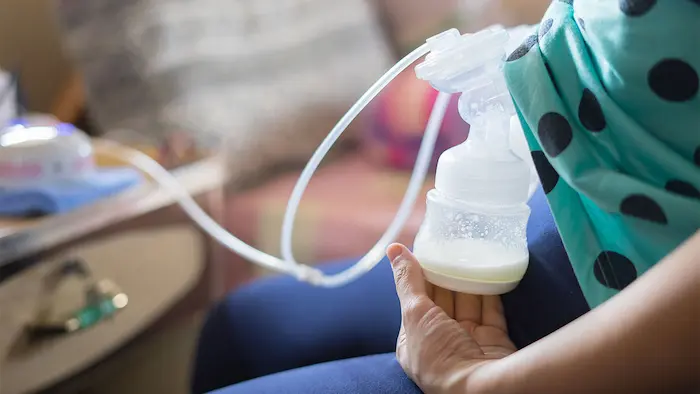
The questions come fast, usually at the worst time. Is this bottle still good after a long commute? Can the 10 a.m. batch mix with the 2 p.m. one? Is the office fridge actually cold or just pretending? None of that worry is silly. Milk is a living food, and how you handle it decides whether those antibodies survive the trip home.
Here is the reassuring part: you do not have to guess your way through it. A handful of tested habits will carry you through most situations. The Centers for Disease Control and Prevention (CDC) confirms that careful handling keeps milk’s protective qualities intact while holding harmful bacteria at bay. If you are still building a steady rhythm, our walkthrough on pumping and storing milk as a working mom pairs well with everything below.
Think of this as your field manual. It covers how long milk lasts at room temperature, how to freeze it without waste, and how to move it safely whether you are crossing town or boarding a flight. Once the rules feel automatic, the daily stress fades into the background where it belongs.
Why Temperature and Handling Matter
Breast milk is not a static liquid sitting in a bottle. It carries enzymes, live cells, and antibodies that adjust to your baby as they grow. The American Academy of Pediatrics describes it as tailored nourishment, which is why it asks for a little more respect than formula. Rough temperature swings and careless storage chip away at the very things that make it valuable.
Understanding the Risks
- Bacterial growth: Warmth gives bacteria the window they need to multiply.
- Nutrient loss: Repeated warming and cooling breaks down delicate proteins.
- Contamination: Careful handling, echoed by the World Health Organization, is your simplest defense against spoilage.
General Breast Milk Storage Guidelines
Once you know the safe windows, the guesswork disappears. These breast milk storage limits come straight from the CDC, AAP, and Mayo Clinic, and they are worth committing to memory.
The Room Temperature Rule (4 Hours)
Freshly pumped milk holds up at room temperature (77°F or cooler) for about 4 hours. If you know it will sit longer than that, move it to a fridge or cooler right away rather than testing your luck.
The Refrigerator Rule (4 Days)
In the fridge (40°F), milk stays fresh for up to 4 days. Tuck it toward the back on a solid shelf, not in the door, since the door warms up every time someone reaches for a snack.
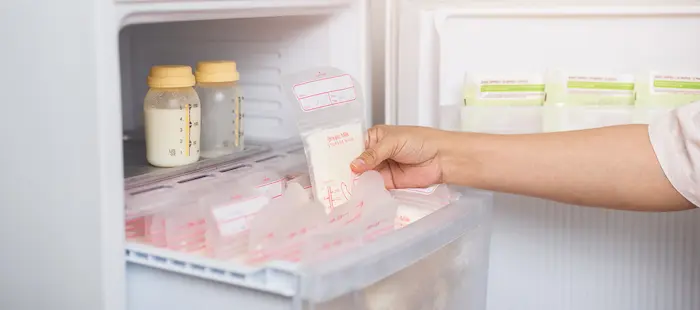
The Freezer Rule (6–12 Months)
- Freezer inside the fridge: Use within about 2 weeks.
- Standard separate freezer: 3–6 months is the sweet spot.
- Deep chest freezer: Safe up to 6–12 months thanks to its steady, deep cold.
Choosing and Labeling Your Containers
Your storage space usually decides the container. Freezer-safe milk bags flatten and stack, saving precious room, while glass or BPA-free bottles suit daily fridge use and hold up for years. Many moms keep both on hand and switch depending on whether milk is heading to the freezer or tomorrow’s bottle.
Pro tip: Leave about an inch of empty space at the top of every bag or bottle. Milk expands as it freezes, and overfilling is the fastest way to end up with a split bag and a puddle of liquid gold.
Labeling for Sanity
On no sleep, every bottle looks identical. Mark each one with the date and the amount, and add your name if you share a fridge at work. Write on the label patch with a permanent marker before you fill the bag, so you never puncture the plastic or smear the ink.
Pumping and Storing at the Office
The workplace adds its own puzzles, starting with where to keep your milk without feeling exposed. An opaque, insulated lunch bag with your name on it solves two problems at once: it keeps your milk private next to everyone’s leftovers, and it adds a buffer of temperature protection. Choosing a breast pump that matches your daily routine makes those short work breaks far less stressful too.
Cleaning Pump Parts
Between sessions, the CDC points to two reliable options:
- The fridge method: Rinse the parts, seal them in a clean bag, and refrigerate until the next session, then wash thoroughly once you are home.
- The full wash: Clean with hot soapy water or microwave steam bags after every use.
Know your rights while you are at it. The PUMP Act and the Break Time for Nursing Mothers law guarantee reasonable break time and a private space that is not a bathroom. Steady sessions also help protect your output, and if supply is on your mind, our tips on keeping your milk supply steady are worth a read.
Transporting Milk: The Commute and Beyond
A quality cooler bag earns its keep every single day. Pack ice packs along the bottom and sides, then nestle your milk in the middle so it stays surrounded by cold. Done well, this setup mimics a mini fridge and keeps milk safe for up to 24 hours on the move.
Flying with Liquid Gold
Breast milk is exempt from the usual 3.4-ounce liquid limit, and the TSA lets you carry it even without your baby present. Tell the officer at the start of screening and keep the milk in its own bag so the check moves quickly. A little advance notice usually turns security into a non-event.

Mixing and Thawing Your Milk
Combining sessions is fine, with one catch: match the temperatures first. Cool freshly pumped milk in the fridge before you add it to an already-chilled batch, otherwise the warm milk raises the temperature of the cold and invites bacteria. Always date the combined container by the oldest milk in the mix.
Safe Thawing Tips
- In the fridge: Thaw overnight and use within 24 hours.
- In warm water: Set the sealed container in a bowl of warm water until it loosens.
- Never the microwave: It creates scalding hot spots and wrecks nutrients.
If your baby leaves milk in a bottle, use it within 2 hours and then let it go. What you eat also shapes what ends up in the bottle, so our guide to eating well while breastfeeding is a helpful companion here.
Troubleshooting: High Lipase and Odd Smells
Thawed milk that smells soapy or metallic usually points to high lipase, an enzyme that breaks down fat faster in some women. It is completely safe, though a few babies reject the taste. If yours does, blend it with fresh milk or scald the milk before freezing next time. A genuinely sour or rancid smell, like spoiled cow’s milk, is different and means it belongs in the sink.

Making It Work, One Bottle at a Time
Heading back to work while breastfeeding asks a lot of you, and the storage logistics can feel like one more thing to master. Yet every labeled bag and carefully packed cooler is quiet proof of how much you show up for your baby. Keep these simple safety habits close, trust the routine you are building, and let go of the endless what-ifs. You have got this, mama.
Frequently Asked Questions
As long as the ice packs stay frozen and the milk feels cold to the touch, it is safe for about 24 hours. Once you arrive, move it into a fridge or freezer as soon as you can.
Cool the fresh milk in the fridge first, then combine it. Pouring warm milk straight into a cold batch raises the overall temperature and can encourage bacteria to grow.
If the milk still holds ice crystals, it is safe to refreeze. If it has fully thawed but is still cold, use it within 24 hours rather than refreezing.
No. Use bags made specifically for breast milk. They are thicker, BPA-free, and reinforced to resist leaks and contamination that thin sandwich bags cannot.
Use leftover milk from a started bottle within two hours. After that, bacteria from your baby’s mouth make it unsafe, so it is best to discard it.
A soapy or metallic smell usually means high lipase, which is safe to feed. A strong sour or rotten odor that stays after swirling means the milk has spoiled and should be thrown out.
References
- Centers for Disease Control and Prevention. (2024). Proper handling and storage of human milk. cdc.gov/breastfeeding/recommendations/handling_breastmilk.htm
- American Academy of Pediatrics. (2022). Breastfeeding and the use of human milk. Pediatrics, 150(1), e2022058895. publications.aap.org/pediatrics/article/150/1/e2022058895
- World Health Organization. (2023). Infant and young child feeding: Breast milk storage. who.int/news-room/questions-and-answers/item/infant-and-young-child-feeding
- Mayo Clinic Staff. (2024). Breast milk storage: Do’s and don’ts. mayoclinic.org/healthy-lifestyle/infant-and-toddler-health/in-depth/breast-milk-storage/art-20546850
- American Academy of Pediatrics. (2023). How to store and prepare expressed breast milk. healthychildren.org/English/ages-stages/baby/breastfeeding/Pages/Storing-and-Preparing-Expressed-Breast-Milk.aspx
- Centers for Disease Control and Prevention. (2024). Cleaning and sanitizing pump equipment. cdc.gov/breastfeeding/recommendations/cleaning-pump-equipment.htm
- U.S. Department of Labor. (2023). Break time for nursing mothers. dol.gov/agencies/whd/nursing-mothers
- Transportation Security Administration. (2024). Traveling with children: Breast milk and formula. tsa.gov/travel/special-procedures/traveling-with-children