The anticipation of returning to work after welcoming a baby brings a unique mix of emotions. There’s the professional part of you that’s ready to engage your mind again, and the mother part of you that worries about every single ounce of breast milk your baby will consume in your absence.
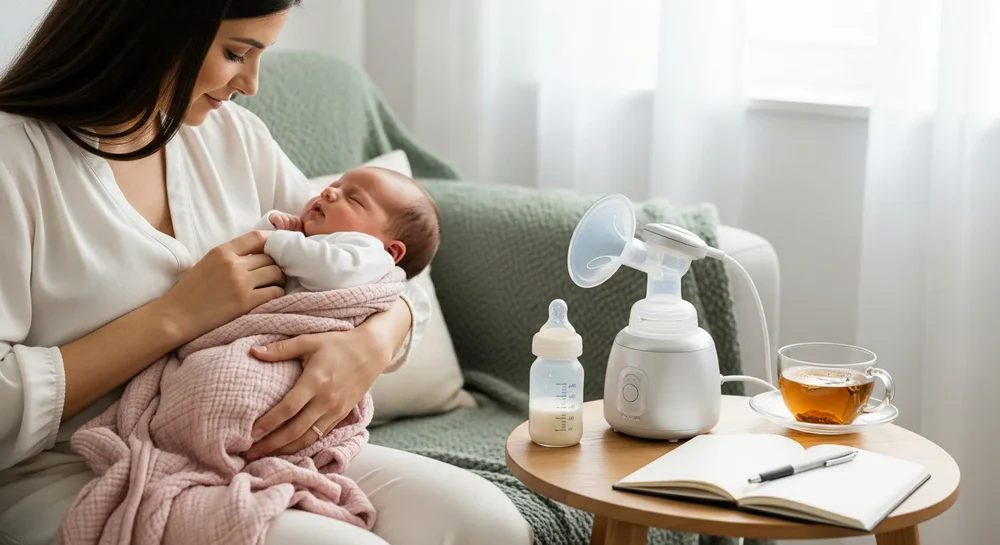
I’ve sat with dozens of mothers in my lactation practice during this transition. There was Jessica, a high school teacher, who cried in my office because she didn’t know how she’d find time to pump between classes. And Maria, a graphic designer, who was convinced her freezer stash was ruined because it smelled funny after thawing.
If you’re reading this while watching your baby sleep, mentally calculating how many days of milk you have stored, please take a deep breath. You can do this. Let me walk you through everything you need to know about pumping and storing breast milk as a working mom, from building that first freezer stash to navigating the office break room.
Before You Return: Building Your Freezer Stash
The weeks leading up to your return to work often feel like a race against time. How do you build a freezer stash when you’re feeding a baby who seems constantly hungry?
When to Start Pumping
The American Academy of Pediatrics (AAP) recommends waiting until breastfeeding is well-established, typically around 3-4 weeks, before introducing a pump. Pumping too early can lead to oversupply issues, while waiting too long leaves you scrambling.
I worked with a mom last year, a lawyer named Priya, who started pumping once daily after her baby’s morning feed at four weeks old. By the time she returned to work at twelve weeks, she had a comfortable freezer stash without ever feeling overwhelmed.
The Golden Window: The First Morning Feed
Here’s a secret most lactation consultants share: the best time to pump is first thing in the morning. Prolactin levels are highest between 1 AM and 5 AM, meaning many mothers have their greatest milk supply in those early hours.
Try pumping about an hour after your baby’s first morning feed. Your body will register this increased demand and respond by producing more. It’s supply and demand in action.
How Much Is Enough?
This question haunts every working mother. The general guideline is to aim for about 1 to 1.5 ounces of breast milk per hour you’ll be away from your baby. If you’ll be gone for nine hours, you want approximately 9 to 13 ounces available for that day.
But here’s what I tell mothers: you don’t need a deep freezer full of milk before day one. You only need enough for that first day back. The milk you pump at work on Monday feeds your baby on Tuesday. The system works.
The Science of Safe Storage: Following CDC Guidelines
Breast milk is living tissue. It contains antibodies, stem cells, and beneficial bacteria that change based on your baby’s needs. Storing it properly preserves these incredible properties.
The Centers for Disease Control and Prevention (CDC) provides clear storage guidelines that every working mother should know. I recommend printing these and putting them on your refrigerator.
The Rule of 4s for Freshly Pumped Milk
Freshly expressed breast milk follows what many lactation consultants call the “Rule of 4s”:
- 4 hours at room temperature (up to 77°F or 25°C)
- 4 days in the refrigerator (at 40°F or 4°C)
- 4 months in a standard freezer compartment inside a refrigerator
- 6 to 12 months in a deep freezer (at 0°F or -18°C)
These guidelines come directly from the CDC’s breast milk storage recommendations and represent the safest approach for full-term, healthy infants.
Containers Matter
You have options, and each comes with trade-offs:
Breast milk storage bags are excellent for freezing because they lay flat and save space. However, they’re prone to leaking if not double-bagged, and they’re more expensive per use.
Hard plastic or glass containers are reusable, easier to label, and virtually leak-proof. The downside? They take up significant freezer space, and glass can break if dropped when frozen.
Whatever you choose, avoid containers made with bisphenol A (BPA) and ensure they’re specifically designed for breast milk storage.
Creating Your Pumping Schedule at Work
Returning to work requires a logistical plan. Without one, you’ll find yourself scrambling between meetings, desperate for a private space and enough time.
How Often Should You Pump?
Most working mothers need to pump approximately every three hours during the workday to maintain their milk supply. This mimics how often a breastfed baby would typically eat.
If you work an eight-hour day with commuting time, you’ll likely need three pumping sessions. A ten-hour day might require four sessions.
Sample Pumping Schedule for Working Moms
Consider this template that’s worked for hundreds of mothers I’ve counseled:
- 8:00 AM: Nurse baby just before leaving for work
- 10:30 AM: First pumping session at work
- 1:30 PM: Second pumping session
- 4:00 PM: Final pumping session before heading home
- 6:30 PM: Nurse baby immediately upon reunion
The key is consistency. Your body produces milk based on regular removal. When you pump at the same times each day, your body learns to produce milk at those times.
Talking to Your Boss About Pumping
This conversation feels uncomfortable for many women, yet it’s protected by federal law in the United States under the Fair Labor Standards Act. The Break Time for Nursing Mothers provision requires employers to provide reasonable break time and a private space (not a bathroom) for pumping for up to one year after the child’s birth.
Consider Jessica, the teacher I mentioned earlier. She was nervous about approaching her principal but discovered that framing the conversation around logistics rather than permission made all the difference. She simply stated: “I’ll need 20 minutes three times daily to pump. The nurse’s office has a lockable door and an outlet. I wanted to coordinate with you so it doesn’t conflict with my classroom coverage.”
Most employers appreciate the professionalism and advance notice.

The Logistics: Pumping, Cleaning, and Storing at Work
Building Your Pumping Toolkit
Before your first day back, assemble a pumping bag with everything you’ll need:
- Your breast pump with fully charged batteries or a backup power source
- Pump parts and valves (bring a second set if possible)
- Storage bottles or bags
- A small cooler with ice packs for transporting milk
- Hands-free pumping bra (this is non-negotiable for sanity)
- Wipes for quick cleanup
- A picture or video of your baby (helps with letdown)
How to Clean Pump Parts Between Uses
The CDC recommends cleaning pump parts thoroughly after each use, but working mothers know this isn’t always realistic between meetings.
The “fridge hack” has become a popular, evidence-informed solution. After pumping, place your pump parts in a sealed plastic bag or container and store them in the workplace refrigerator between sessions. This prevents bacterial growth without requiring washing after every single pump. At the end of the day, wash everything thoroughly with hot, soapy water and air dry.
If you don’t have refrigerator access, microwave steam bags designed for pump parts can sanitize between uses in just a few minutes.
Combining Breast Milk: What’s Safe?
One of the most common questions I hear is whether you can combine milk from different pumping sessions.
Can I Mix Warm Milk with Cold Milk?
The short answer is yes, with one critical rule: cool the freshly pumped milk in the refrigerator before adding it to already-cooled milk. Adding warm milk to cold milk raises the temperature of the stored milk, potentially promoting bacterial growth.
Here’s the safe approach:
- Pump fresh milk into its own container
- Place that container in the refrigerator until chilled
- Once chilled, combine it with previously refrigerated milk from earlier sessions
- Label the container with the date of the oldest milk
This is called the “pooling method” and is perfectly safe according to the Academy of Breastfeeding Medicine.
Date Labeling Systems
Develop a system that works for you. Some mothers use the “first in, first out” method, always using the oldest milk first. Others freeze in specific portion sizes (2 ounces, 3 ounces, 4 ounces) so they can thaw exactly what their baby needs without waste.
Thawing and Preparing Stored Milk
Best Practices for Thawing
The safest way to thaw frozen breast milk is to transfer it from the freezer to the refrigerator the night before you need it. This slow, cold thaw preserves the most nutrients and antibodies.
If you need milk more quickly:
- Hold the container under warm running water
- Place it in a bowl of warm water
- Use a bottle warmer designed for breast milk
Never thaw or warm breast milk in the microwave. Microwaves create hot spots that can burn your baby’s mouth and destroy the beneficial proteins and antibodies in your milk.
The Swirl, Don’t Shake Rule
When breast milk sits, the fat separates and rises to the top. This is completely normal. To mix it, gently swirl the container.
Vigorous shaking can break down some of the protein molecules and diminish the milk’s protective properties. A gentle swirl is all you need.
Fresh vs. Frozen vs. Thawed: Understanding Expiration
This confuses many parents, so let’s make it crystal clear:
- Freshly pumped milk lasts 4 hours at room temperature, 4 days in the refrigerator
- Previously frozen milk that’s been thawed lasts 2 hours at room temperature, 24 hours in the refrigerator
- Never refreeze thawed milk
The High Lipase Mystery: Why Milk Smells Funny
Remember Maria, the graphic designer whose frozen milk smelled metallic? She experienced something that affects many mothers: high lipase activity.
Lipase is an enzyme that helps break down fats. In some women, lipase continues working during freezer storage, breaking down fats and causing a soapy, metallic, or fishy smell. The milk is still safe for the baby to drink, but some infants refuse it.
If you suspect high lipase:
- Test a small amount of frozen milk by thawing and smelling it
- If your baby rejects it, try scalding fresh milk before freezing (heating it to about 180°F then quickly cooling it)
- Mix high lipase milk with fresh milk to improve taste
Many babies actually accept high lipase milk without complaint. Don’t assume rejection until you’ve offered it to your baby.
How Much Milk Should You Send to Daycare?
This is the daily math problem working mothers solve. The general rule is 1 to 1.5 ounces per hour you’re apart, but babies have different appetites.
Start by sending 3-ounce bottles. If your caregiver consistently reports that your baby finishes bottles and still seems hungry, increase to 3.5 or 4 ounces. If milk regularly comes home unfinished, decrease slightly.
Remember that bottle feeding should be “paced feeding” to mimic breastfeeding. The caregiver should use a slow-flow nipple and allow the baby to pause and breathe throughout the feed.
Troubleshooting Common Pumping Challenges
Supply Drops
It’s common to notice a supply dip during the first weeks back at work. Stress, irregular pumping, and being away from your baby all contribute.
If you notice decreased output:
- Add a power pumping session on the weekend (pump for 20 minutes, rest 10, pump 10, rest 10, pump 10)
- Look at pictures or videos of your baby while pumping
- Ensure you’re staying hydrated and eating enough calories
- Check that your pump parts aren’t worn out (valves and membranes need replacing every 4-6 weeks)
Letdown Difficulties
Some women struggle to trigger letdown in a sterile office environment. Try:
- Bringing a receiving blanket that smells like your baby
- Listening to audio recordings of your baby’s coos or cries
- Practicing deep breathing before you start pumping
- Looking at photos or videos on your phone
Clogged Ducts
The transition back to work is a prime time for clogged ducts due to changes in pumping frequency. Signs include a hard, painful lump in the breast.
Treatment includes:
- Continuing to nurse or pump frequently
- Applying heat before pumping
- Gentle massage toward the nipple during pumping
- Anti-inflammatory medications as approved by your doctor
The Emotional Side: Navigating Guilt and Grief
We’ve covered the mechanics, but let’s address the heart of this journey. Many mothers experience grief when returning to work. They worry that bottle feeding pumped milk will weaken their bond. They fear their baby will prefer the bottle. They feel guilty for wanting both a career and breastfeeding.
I’ve sat with hundreds of women through these tears. Here’s what I tell them:
Your baby doesn’t love you less because you’re not attached 24 hours a day. The milk you pump carries your antibodies, your warmth, your unique immunological gift. When your caregiver feeds your baby your pumped milk, they’re not just providing nutrition. They’re delivering a message from you: “I’m not here right now, but I’m thinking of you, and I’ve sent my very best.”
That baby at daycare drinking from a bottle? They’re still completely, unequivocally your baby. And the reunion at the end of the day, when you nurse them close and they sigh against your skin, that’s where the real magic lives.

A Final Word of Encouragement
The pumping and storing journey is temporary. You might do this for three months, six months, or a year. But the example you’re setting—of dedication, of problem-solving, of loving your baby while honoring your professional self—that lasts forever.
You’ll have days when you forget your pump parts at home, when you spill an entire bottle of pumped milk, when you cry in the office Mother’s Room. You’ll also have days when you look at your freezer full of liquid gold and feel like a superhero.
Both are valid. Both are part of this season.
The Office on Women’s Health reminds us that any amount of breast milk is beneficial. Whether you’re pumping enough to cover every daycare bottle or supplementing with formula, your effort matters. Your love matters.
You’ve got this, working mama. One pump at a time.