Introduction: The Final Countdown – Understanding Your Body’s Signals
The final weeks of pregnancy carry a unique blend of exhilarating anticipation and nerve-wracking uncertainty. Every twinge, every ache, every unfamiliar sensation sends your mind racing: “Is this it?” You’re not just waiting for a date; you’re learning a new, intimate language spoken by your body. Distinguishing between your body’s final preparations and the true start of your baby’s journey into the world is one of the most common concerns for expectant parents.
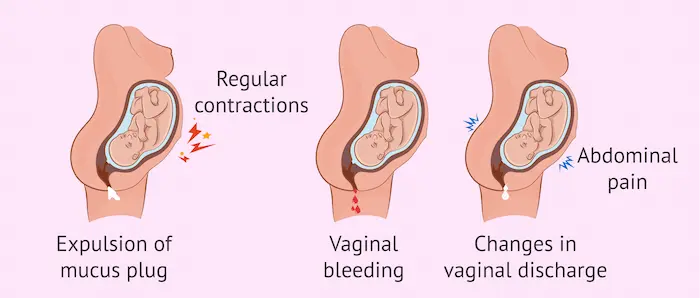
This guide is designed to be your compassionate translator. We’ll walk you through the nuanced vocabulary of labor, from the subtle early hints that unfold over days to the unmistakable signs that it’s time to grab your bag. We’ll place special emphasis on understanding the difference between Braxton Hicks and real labor contractions, because that distinction often causes the most confusion. More importantly, we’ll equip you with the knowledge to recognize the signs of preterm labor that require immediate attention.
Remember, while this article provides detailed, symptom-specific information to empower you, it is not a substitute for personalized medical advice from your healthcare provider. Your medical team knows you and your pregnancy best. Consider this a trusted reference—like having a knowledgeable doula or experienced friend explain what to watch for, so you can move through this time with greater confidence and clarity.
The Prelude: Early Signs Labor is on the Horizon (Days/Weeks Before)
Labor is rarely a sudden event. Think of your body as an orchestra tuning up before a symphony. In the days or even weeks before active labor begins, you may notice several “prelude” signs. These don’t mean you need to rush to the hospital, but they are encouraging indicators that your body is getting ready for the main event.
Lightening/Dropping: What It Feels Like
For first-time mothers especially, this often happens a few weeks before labor. You might notice your baby “dropping” lower into your pelvis, a process medically termed engagement. Suddenly, you can breathe easier because there’s less pressure on your diaphragm. The trade-off? You may feel increased pressure on your bladder (leading to even more frequent bathroom trips) and a distinct, sometimes waddling, change in your gait. Some women describe a heaviness or fullness in their lower pelvis. It’s a tangible sign your baby is getting into position for their grand entrance.
Cervical Changes: Effacement and Dilation Explained
You won’t be able to see or feel these directly without a cervical check, but they’re crucial work your body is doing behind the scenes. Effacement is the thinning and softening of the cervix. Imagine your cervix as a long, thick tube of clay. In preparation for labor, it softens and gets drawn up into the lower part of the uterus, becoming paper-thin. It’s measured in percentages (0% to 100% effaced).
Dilation is the opening of the cervix, measured in centimeters from 0 to 10. In the pre-labor phase, you might dilate to 1-3 centimeters slowly over time. These changes often happen in conjunction with other early signs and are a positive indication that your body is preparing efficiently.
Loss of the Mucus Plug: The “Bloody Show” – Details and Meaning
One of the most talked-about early signs is losing the mucus plug. So, what does the mucus plug look like when it comes out? It’s exactly as it sounds: a gelatinous, thick blob of mucus that has been sealing your cervical canal throughout pregnancy to protect against bacteria. It can be clear, pink, or slightly blood-tinged (hence the term “bloody show”). It may come out in one noticeable piece or in smaller fragments over a day or two.
Important note: Losing your mucus plug can mean labor is hours, days, or even a week or two away. It’s a sign that cervical changes are happening, but it’s not an immediate cue to head to the hospital. However, if you experience bright red bleeding (more than a few streaks), you should contact your provider immediately.
Nesting Instinct: Sudden Burst of Energy
Not everyone experiences this, but it’s a classic phenomenon. After weeks of feeling large and fatigued, you might be hit with an irresistible, almost frantic urge to clean, organize, and prepare your home. While it’s wonderful to channel this energy, listen to your body. This isn’t the time to move furniture or exhaust yourself. Use this burst to put final touches on the nursery, pack your hospital bag, or prepare some freezer meals. Enjoy the productive feeling, but pace yourself.

Distinguishing Practice from the Real Thing: Braxton Hicks vs. True Labor Contractions
This is the million-dollar question for nearly every pregnant person in the third trimester. Braxton Hicks contractions, often called “practice contractions,” are your uterus’s way of toning its muscles and preparing for the real work. Telling them apart is key to avoiding unnecessary trips to the hospital and managing anxiety.
Here’s a simple comparison table, followed by the “feel” test:
| Feature | Braxton Hicks Contractions | True Labor Contractions |
|---|---|---|
| Frequency | Irregular, don’t get closer together. | Regular, come at progressively shorter intervals. |
| Duration | Variable, often short (30 secs to 2 mins). | Become longer (consistently 45-90 seconds). |
| Intensity | Usually weak, don’t get stronger. | Gradually increase in intensity. |
| Location | Often felt only in the front or one area. | Typically start in the back and wrap around to the front. |
| Effect of Activity | Often subside with rest, hydration, or changing position. | Continue and intensify regardless of what you do. |
| Cervical Change | Do not cause progressive cervical dilation. | Cause progressive effacement and dilation. |
The “Feel” Test: Many mothers describe Braxton Hicks as a general, non-painful tightening or hardening of the belly. True labor contractions feel more like a wave—they build to a peak of intensity (often described as a powerful cramping or squeezing sensation, sometimes starting like a menstrual cramp that intensifies dramatically) and then slowly subside. They demand your focus.
Early (Latent) Labor: The “Should I Stay or Go?” Phase
This is the official, but early, first stage of labor. It can be the longest and most psychologically challenging phase because it’s a waiting game. The hallmark is that contractions are now causing progressive cervical change, but they may still be spaced apart.
Symptom Deep Dive: Contractions (Frequency, Duration, Sensation)
Contractions in early labor establish a pattern. They become predictable. This is when you start how to time contractions accurately. Time from the start of one contraction to the start of the next. Note their duration. Early labor contractions are typically 30-45 seconds long, eventually building to 60 seconds, and may be 5 to 20 minutes apart. The sensation moves beyond tightening to a distinct, crampy ache that you can’t ignore.
A helpful tip for timing contractions accurately is to use a dedicated app or simply note the times on paper. Stop timing if you fall asleep; true labor won’t let you sleep through it.
Other Key Symptoms
- Back Pain: Persistent lower back pain, often a constant ache with contractions layered on top, is very common, especially if your baby is in a posterior position (“sunny-side up”). So, to answer the common question, is back pain a sign of early labor? Yes, it very frequently is.
- Cramping & Pressure: Similar to period cramps but stronger, coupled with that increasing pelvic pressure.
- Digestive Upset: Some women experience nausea, diarrhea, or indigestion as the body clears itself out to make room for the work ahead.
When to Call Your Provider & What to Do at Home
Your provider will give you specific guidelines, but general rules for when to go to the hospital for labor in this phase are usually based on the “511” rule or your provider’s modified version (like 411 or 311): Contractions are 5 minutes apart, lasting 1 minute each, for at least 1 hour. However, always call for: rupture of membranes (your water breaks), decreased fetal movement, or any bleeding beyond spotting.
What to do at home: This is the time to conserve energy. Try to rest, sleep if you can, take a warm bath (unless your water has broken), hydrate well, eat light, easily digestible snacks, and use distraction techniques like watching a movie or going for a gentle walk. Let your support person know what’s happening.
Active Labor: It’s Time to Go to the Hospital/Birth Center
This is the phase where labor intensifies and progress accelerates. You will likely transition from “maybe this is it” to “this is definitely it.”
The Clear Shift in Contractions and Pain
Contractions become longer (60-90 seconds), stronger, and much closer together (every 2-4 minutes). They demand all your attention. You will need to pause and breathe through them. Talking through a contraction becomes difficult or impossible. This is the work of dilating from about 6 cm to 10 cm.
Other Possible Signs
- Increased Bloody Show: As the cervix dilates further, you may see more mucus mixed with blood.
- Shaking or Chills: Hormonal surges can cause uncontrollable shaking, which is normal but can be surprising.
- Focus Inward: You may become withdrawn, quiet, and intensely focused on the work of labor.
The Role of Water Breaking (Spontaneous Rupture of Membranes)
For about 1 in 10 women, the rupture of the amniotic sac (your “water breaking”) is the dramatic start of labor. For most, it happens during active labor. The key question is often water breaking vs. discharge how to tell.
- Amniotic Fluid: It is usually clear or pale yellow (may have white flecks of vernix). It often comes as a sudden gush or a constant trickle that you cannot control. It typically does not smell like urine. It often continues to leak.
- Urine or Discharge: Urine you can usually stop by clenching muscles. Vaginal discharge is usually thicker, more mucous-like, and not in large, uncontrollable amounts.
If you suspect your water has broken, note the color, amount, and smell, and call your provider immediately, regardless of whether contractions have started. They will advise you on next steps, as there is a timeframe to consider for reducing infection risk once the sac is ruptured.
The Vital Knowledge: Recognizing Preterm Labor Signs (Before 37 Weeks)
Knowing the signs of preterm labor is critical. If you experience any of the following before 37 weeks, do not wait. Contact your healthcare provider or go to the hospital immediately.
A Crucial List of Symptoms That Demand Immediate Attention
- Regular Contractions: More than 4-6 per hour, or any regular tightening that doesn’t go away with rest and hydration.
- Menstrual-like Cramps: Constant or intermittent, in your lower abdomen or back.
- Pelvic Pressure: A feeling that the baby is pushing down, which may come and go or be constant.
- Change in Vaginal Discharge: A sudden increase, or a change to watery, mucousy, or bloody discharge (even if it’s just pink or blood-tinged).
- Fluid Leaking: Any trickle or gush of fluid from the vagina (this could be your amniotic sac rupturing prematurely).
This list is vital for anyone searching for signs of preterm labor at 32 weeks (or any week before 37). Trust your instincts. It is always better to get checked and have it be a false alarm than to ignore a potential problem.
Risk Factors and Proactive Measures
While preterm labor can happen to anyone, risk factors include a previous preterm birth, carrying multiples, certain uterine or cervical conditions, and some infections. Proactive measures include attending all prenatal appointments, reporting any unusual symptoms promptly, staying hydrated, managing stress, and following your provider’s guidance on activity.
Symptom-Specific FAQ Section
Q: I’m having a lot of Braxton Hicks. Does this mean I’ll go into labor soon?
A: Not necessarily. While frequent Braxton Hicks can be a sign your body is preparing, they are not a reliable predictor of when labor will start. Focus on the pattern and characteristics (see the table above) to distinguish them from true labor.
Q: Can you be in early labor for days?
A: Yes, especially with a first baby. The latent phase can last up to 24 hours or more. The key is whether contractions are causing progressive change. If you’re coping well at home, rest and hydrate. If exhaustion sets in, contact your provider for advice.
Q: What if my water breaks but I have no contractions?
A: This is called Premature Rupture of Membranes (PROM). You must call your provider. They will likely have you come in to confirm the rupture and check for infection. They will discuss a plan, which may involve inducing labor if contractions don’t start on their own within a certain timeframe to prevent infection.
Q: Is it normal to feel scared when labor starts?
A: Absolutely. It’s a monumental life event. Acknowledge the fear, then use your breathing techniques, lean on your support person, and focus on one contraction at a time. You have prepared for this, and your body knows what to do.
Conclusion: Trust Yourself, Trust Your Team – A Final Word of Reassurance
As you navigate these final steps of your pregnancy journey, hold onto this: you are the expert on your own body. You will learn to interpret its signals. The signs of labor—early, active, or preterm—are your body’s communication. This guide aimed to give you the dictionary for that language.
Arm yourself with this knowledge, but also grant yourself permission to call your provider with any question, no matter how small it seems. That’s what they are there for. When the time comes, you will have a team—your provider, your support person, and your own incredible strength—to guide you through. Breathe, trust, and know that you are capable of navigating this profound transition. The moment you meet your baby will redefine every sensation that led you there.