For generations, pregnancy was pictured as a time of delicate stillness — feet up, exertion avoided. Today we know better. Pregnancy isn’t an illness; it’s a state of health, and movement is a vital part of nurturing it. Staying active through these months is one of the most powerful choices you can make for your own wellbeing and your baby’s development. This guide covers the benefits, safe options for each trimester, and clear safety rules — with the aim of helping you move with confidence, not fear.
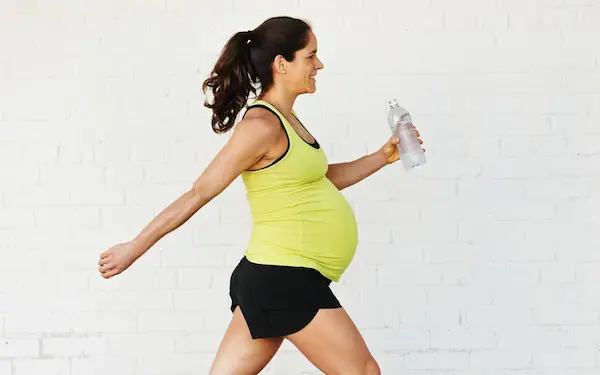
Staying active doesn’t mean chasing personal records or clinging to a pre-pregnancy routine. It means listening to your body, adapting as it changes, and building the kind of strength that supports your shifting center of gravity, eases common aches, and prepares you for labor and recovery. For a healthy pregnancy, ACOG recommends aiming for about 150 minutes of moderate-intensity activity per week — but any amount is better than none.
Why Movement Matters
- Eases common discomforts: regular activity strengthens the core and glutes that support your spine, helping with back pain; it improves circulation to reduce swelling, and stimulates the bowels to ease constipation.
- Improves sleep and mood: gentle movement helps regulate your body clock and eases restless legs, while the endorphins it releases are a real tool against pregnancy anxiety and low mood.
- Supports healthy weight gain and lowers the risk of complications like gestational diabetes and preeclampsia.
- Builds stamina for labor and recovery, conditioning your heart and muscles for the endurance event ahead. Research also links maternal exercise to a healthier placenta and fetal growth.
Safety First: The Ground Rules
Before you start, get clearance from your provider — then keep these principles in mind:
- Use the talk test: you should be able to hold a conversation while exercising. If you’re too breathless to speak, ease off.
- Avoid lying flat on your back for long after around 16 weeks — the weight of your uterus can press on a major vein (the vena cava) and reduce blood flow. Use side-lying or inclined positions instead.
- Skip high-risk activities: anything with a real fall risk (horseback riding, downhill skiing, road cycling on busy routes), contact or abdominal-impact sports, and scuba diving (pressure changes).
- Listen to your body, not the calendar: “no pain, no gain” does not apply. Rest when you need to, and treat dizziness, chest pain, shortness of breath, or bleeding as signals to stop and call your provider.
- Favor stability over deep stretching: the hormone relaxin loosens your ligaments, so you’re more flexible but more prone to joint strain — keep movements controlled.
- Stay hydrated and cool: drink water before, during, and after, and avoid overheating, especially in the first trimester. Our hydration guide helps.
A Trimester-by-Trimester Guide
First trimester (weeks 1–13) — the foundation phase. You may be battling fatigue and nausea, so be gentle and focus on a sustainable routine rather than intensity. Brisk walking, stationary cycling, prenatal yoga, swimming, and light strength work are all great. Even a 10-minute walk counts on a rough day.
Second trimester (weeks 14–27) — the energy window. For many, energy returns and nausea fades, making this the most enjoyable time to be active. Build strength to support your growing bump with prenatal Pilates, water aerobics, moderate hiking, and pregnancy-specific classes, and start consciously modifying any moves done lying on your back. A maternity support belt can help if you feel pelvic or low-back pressure.
Third trimester (weeks 28–40) — the adaptation phase. With a significant bump and returning fatigue, shift to maintenance, comfort, and labor prep: walking, swimming (wonderfully weightless), gentle stretching, pelvic floor work, and labor-prep movements like supported squats and pelvic tilts. Shorten sessions as needed and prioritize breathing and pelvic-floor awareness.
Your Prenatal Fitness Toolkit
- Cardio: walking is the ultimate accessible option; swimming and water aerobics support your joints and ease swelling; stationary cycling removes fall risk; and an elliptical is a good low-impact choice if you were a runner. Our guide on when to stop running helps if you’re a runner.
- Strength: strong muscles support your joints and posture. Focus on the upper back (rows, band pull-aparts) to counter rounded shoulders, glutes and legs (supported squats, lunges, bridges), and a functional core — think of it as a corset, using safe core exercises like bird-dogs and modified planks rather than crunches.
- Flexibility and mind-body: prenatal yoga safely improves flexibility and teaches labor breathing, while prenatal Pilates builds core and pelvic-floor stability with precise, controlled movements.
The Pelvic Floor: Your Inner Foundation
Your pelvic floor is a hammock of muscle supporting your bladder, uterus, and bowels, and pregnancy challenges it immensely. To engage it, imagine gently stopping the flow of urine or preventing passing gas — you should feel a lift and squeeze without holding your breath or clenching your glutes (and never practice by actually stopping urine mid-stream). Aim for short holds (2–5 seconds) and quick pulses, 10–15 reps a few times a day. A strong, flexible pelvic floor supports labor, recovery, and continence.
When to Stop and Call Your Provider
Stop exercising and contact your doctor if you have any of these warning signs:
- Vaginal bleeding or fluid leaking.
- Persistent dizziness, faintness, or headache.
- Chest pain or a racing heartbeat.
- Calf pain or swelling (which can signal a blood clot).
- Regular, painful contractions.
- A noticeable decrease in your baby’s movements later in pregnancy — one of the key third trimester warning signs.
Frequently Asked Questions
Yes. Start slowly and build gradually — begin with 10–15 minutes of walking or prenatal water aerobics, listen to your body, and get your provider’s okay. Pregnancy is a great time to build healthy movement habits.
For a healthy, low-risk pregnancy, moderate exercise does not cause miscarriage — it actually supports a healthy pregnancy. Still, follow the safety guidelines and get clearance from your provider, especially if you have a history of miscarriage or other risk factors.
Waiting about 60–90 minutes after a moderate meal works well. If you need a boost, a small, easily digestible snack like a banana or a few crackers 30 minutes before helps avoid nausea and keeps your energy up.
Yes. Gentle prenatal yoga poses like cat-cow and a wide-knee child’s pose, along with pelvic tilts, can ease sciatic nerve tension. A prenatal physical therapist is also very effective — see our guide to sciatica during pregnancy.
Braxton Hicks are irregular, usually painless, and ease with rest and hydration. If you get regular, rhythmic cramping or contractions that don’t subside when you stop and hydrate, contact your provider.
The Bottom Line
Staying active in pregnancy is a real act of self-care that benefits your baby too. It isn’t about a certain look or bouncing back quickly — it’s about feeling good in the body you have right now, building resilience, and claiming time for yourself. Start where you are: a 10-minute walk is a victory, and a few gentle stretches count. Let go of comparison, move for comfort and strength, and remember you’re already doing the most demanding work there is — growing a human.
This article is for general information and is not a substitute for personalized medical advice. Always exercise within your provider’s clearance.
References
- American College of Obstetricians and Gynecologists (ACOG). Exercise During Pregnancy.
- Centers for Disease Control and Prevention (CDC). Physical Activity for Pregnant or Postpartum People.
- Mayo Clinic. Pregnancy and exercise: Baby, let’s move!