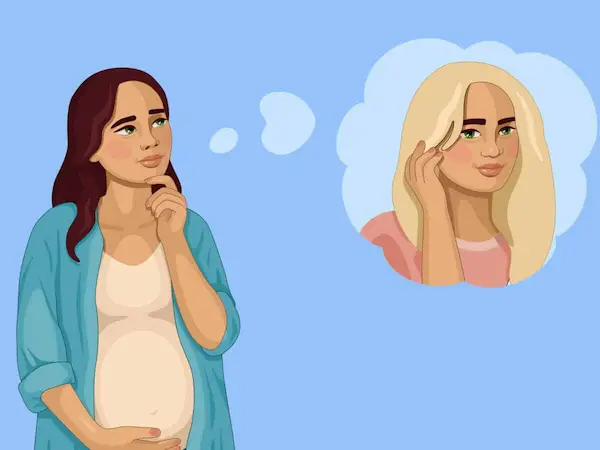
Coloring your hair is, for many people, a simple act of self-care and identity — covering grays, refreshing your look, or just feeling like yourself. So the moment a positive test arrives, a familiar question follows: is it safe to dye your hair during pregnancy? The internet offers everything from dire warnings to breezy reassurance, which mostly leaves you anxious. This guide cuts through the noise with a balanced, evidence-based look at what the science actually says, plus practical ways to minimize exposure and manage your color through each trimester.
The Science Behind the Concern
Most permanent and semi-permanent dyes contain a mix of chemicals — ammonia (which opens the hair cuticle), para-phenylenediamine (PPD, a common allergen in darker dyes), and others like resorcinol and hydrogen peroxide. The worry isn’t that these are highly toxic in the small amounts used; it’s two linked questions: can they be absorbed through the scalp in meaningful amounts, and if so, could they cross the placenta to the baby?
Here’s the reassuring part — expert bodies largely agree:
- The American College of Obstetricians and Gynecologists (ACOG) considers hair dye likely safe in pregnancy, noting very little is absorbed through the skin.
- The UK’s NHS concludes the chemicals in hair dye are not highly toxic and that it’s considered safe to use during pregnancy.
- Large studies have not found a link between personal hair-dye use in pregnancy and birth defects, miscarriage, or developmental problems.
No study can prove zero risk for anything, but the overall body of evidence is genuinely reassuring for those who choose to color their hair.
A Trimester-by-Trimester Approach
Even with reassuring science, many people choose a cautious approach based on minimizing unnecessary chemical exposure during key windows.
- First trimester (weeks 1–13): this is when the baby’s major organs form, so it’s often considered the most sensitive period. A common precaution — not based on evidence of harm — is to wait until after the first trimester if you can, and to use the gentlest method if you do color. If you’re navigating early symptoms, our first trimester guide may help.
- Second and third trimesters (weeks 14–40): with major development complete, this is widely viewed as a safer time to color, and the risk of any effect is considered very low. One practical note: pregnancy hormones can make your hair more porous, so color may take differently or fade faster — a strand test first helps.
Safer Strategies to Minimize Exposure
If you decide to color, these steps lower any potential exposure and make the experience more comfortable:
- Choose low-contact techniques: highlights, balayage, or foils apply color to strands away from the scalp, virtually eliminating skin absorption — often the safest option. For all-over color, ask your stylist to keep the dye off the roots until the last 10–15 minutes.
- Consider gentler formulas: temporary and semi-permanent dyes coat the hair shaft, wash out over time, and often skip ammonia and peroxide.
- Optimize the environment: color in a well-ventilated space (open windows, use fans), always wear gloves, and follow the timing exactly rather than leaving dye on longer for “more coverage.”
- Explore natural options: 100% pure henna (with no added metallic salts or PPD) gives red-brown tones — but avoid “black henna,” which often contains unsafe additives. Plant-based brands that skip ammonia and resorcinol are milder, though less dramatic.
- Patch test 48 hours ahead, since pregnancy can make you more prone to new allergic reactions.
The same “minimize scalp contact and ventilate” logic applies to bleaching or lightening, which uses stronger peroxide — highlights and balayage are good lower-contact alternatives. This mirrors the careful-ingredient approach in our guide to pregnancy-safe skincare.
Perms, Keratin, and Salon Comfort
Most experts suggest postponing perms and chemical straightening until after pregnancy, both for the lack of specific safety data and the stronger chemicals involved. Keratin and “Brazilian blowout” treatments deserve particular caution, because some can release formaldehyde — an irritant and known hazard — into the air, which is best avoided during pregnancy.
Don’t overlook plain comfort, either. A heightened sense of smell can turn ammonia fumes into a nausea trigger, and sitting still for a long service gets harder as pregnancy progresses — so tell your stylist you’re pregnant, ask for good ventilation and breaks, and consider shorter appointments.
What Matters Most: Your Peace of Mind
All the reassurance in the world may not settle a personal feeling of unease, and that’s completely valid. If chemical dye makes you anxious, it’s fine to skip it — your mental wellbeing is part of a healthy pregnancy. This can be a fun season to try a new cut, lean on accessories, or use wash-out root cover-up sprays and powders for touch-ups. And bring it up at your prenatal visit, where your provider can give advice tailored to your history.
Frequently Asked Questions
No need to panic. The exposure from a single coloring session is minimal, and there’s no evidence it causes harm. Just mention it at your first prenatal visit for your own peace of mind.
Neither is clearly safer on chemicals alone, since they’re similar. But a skilled stylist is a real advantage — they can apply color with minimal scalp contact (like foils), work in a ventilated space, and use products they know well.
The smell itself isn’t toxic — it’s an irritant that can trigger headaches or nausea for you. The sensible precaution is good ventilation so you’re not inhaling concentrated fumes in a closed space for a long time.
No specific hair-dye ingredient has been proven dangerous in typical use. Lead acetate (once in some gradual men’s dyes) has been banned from hair dyes, and if you have sensitive skin, be cautious with high-PPD formulas, since pregnancy can raise allergy risk — a patch test helps.
Quite possibly. Hormonal shifts can change your hair’s texture and porosity, so color may grab differently, fade faster, or look unexpected. A strand test beforehand — and telling your stylist you’re pregnant — helps them adjust.
The Bottom Line
So, can you dye your hair while pregnant? The evidence-based answer is yes — it’s generally considered safe, especially after the first trimester and with sensible precautions. Even better, you have a whole spectrum of safer choices, from low-contact highlights to pure henna to simply embracing your natural color for a season. This sits at the intersection of science, comfort, and self-expression, so make the choice that leaves you feeling confident and like yourself — from a place of information, not fear.
This article is for general information and is not a substitute for personalized medical advice. Discuss your plans with your provider, who knows your health history.
References
- NHS. Is it safe to use hair dye when I’m pregnant or breastfeeding?
- Mayo Clinic. Hair dye and pregnancy: Is it safe?
- MotherToBaby (OTIS). Hair Treatments and Pregnancy.