Picking a breast pump during pregnancy feels like a decision you are not quite equipped to make yet. You do not know how breastfeeding will go, how often you will pump, or whether you will even need to pump much, and yet here you are, trying to choose between a dozen models with different price points, different features, and reviews that seem to contradict each other.

This guide cuts through it. We have looked at the best breast pumps available right now, electric, wearable, manual, and hospital-grade, and broken down what actually makes them worth considering, who they suit best, and what the catches are. We have also covered the practical stuff people often forget, like insurance coverage and flange sizing, because those details matter more than most product descriptions let on. By the end, you should have a clear sense of which direction makes sense for your situation, not just which pump has the best marketing.
Why the Right Pump Actually Matters
A pump is not just a convenience item. For a lot of mothers it is what makes breastfeeding sustainable at all, whether that is because they are returning to work, dealing with a baby who has latch difficulties, building a freezer stash, or simply wanting a partner to be able to take a feed. The CDC and AAP both emphasize that regular milk removal, through nursing or pumping, is what drives milk production: the more consistently milk is removed, the more the body makes. A pump that does not fit well, lacks adequate suction, or is too complicated to use regularly can genuinely affect your supply over time, so it is not a trivial purchase. On the flip side, the most expensive pump is not automatically the best one for you; the right pump is the one that fits your nipples properly, fits your schedule, and that you will actually use consistently. If you are working through supply concerns alongside your pumping routine, it is worth reading about how to increase milk supply naturally, since pumping technique and frequency work together with other factors.
What to Think About Before You Buy
Types of Breast Pumps
Hospital-grade pumps are the strongest option, designed for frequent, heavy use and typically rented rather than bought outright; lactation consultants often recommend them for establishing supply for premature infants or when there are significant latch or transfer difficulties, so a hospital-grade rental while you figure things out is a smart move in that situation. Double electric pumps are what most mothers end up with, and for good reason: pumping both sides at once cuts session time roughly in half and may increase output through the prolactin response from bilateral stimulation, and they range from compact and portable to larger console-style units. Single electric pumps work well for occasional pumping, like offering the breast on one side while nursing on the other, though they are not great for exclusive pumping. Manual pumps are underrated, and every breastfeeding mother should own one: no batteries, no charging, completely silent, and they fit in any bag, invaluable for engorgement relief, travel, or when your electric pump dies at the worst moment. And wearable pumps, the newest category, are genuinely transformative for the right person, sitting inside your bra with no dangling tubing so you can move around while pumping, with the tradeoff usually being price and sometimes suction strength.
Wearable vs. Traditional: Which Is Actually Better?
This is the question a lot of mothers are asking right now, and the honest answer is that it depends entirely on your life. Traditional double electric pumps generally offer more suction customization, more established reliability, and lower cost, so they are better if you are an exclusive pumper who needs maximum output, building supply from scratch, or on a tighter budget. Wearable pumps are better when freedom of movement is the priority, at a desk job, chasing a toddler, or anything that makes sitting tethered to an outlet impractical, and the best wearables now deliver suction comparable to traditional pumps, so the gap has narrowed. Some mothers own both, a traditional pump for home sessions and a wearable for work or when out, which covers most situations well.
Closed System vs. Open System
This one matters for hygiene. A closed-system pump has a barrier between the milk collection parts and the motor, so milk cannot back up into the tubing or machine, and the CDC recommends closed systems specifically because they are safer and easier to clean properly. Open systems allow moisture into the tubing, which requires meticulous drying and more frequent replacement. All the pumps in this guide use closed systems.
Flange Size: The Detail That Changes Everything
Almost nobody talks about this enough before mothers start pumping, and then it becomes the thing that explains why pumping hurts or why output is lower than expected. Flanges are the funnel-shaped pieces that go against your breast, and most pumps include 24mm or 25mm as standard, but many mothers need something smaller or larger; the wrong size causes friction, reduces milk transfer, and can cause real tissue damage over time. A rough guide is to measure your nipple diameter in millimeters and add 2 to 4mm as a starting point, but nipple tissue is compressible and changes during pumping, so getting sized by a lactation consultant, in person or via video, gives a much more accurate result. Do not assume the included flanges will work for you.
Insurance Coverage for Breast Pumps
Here is something worth knowing before you spend money: under the Affordable Care Act, most private insurance plans are required to cover breast pump costs, either providing a pump directly or reimbursing you for one you purchase. ACOG recommends contacting your insurance provider during pregnancy to find out exactly what is covered, which brands qualify, and whether you need a prescription. Medicaid coverage varies by state, so if you are on Medicaid, check your state’s specific benefits, since some are quite generous and others less so. Either way, make this call before you buy anything out of pocket.
Best Breast Pump Reviews: Top Picks by Category
Spectra S1 Plus — Best Overall Traditional Pump
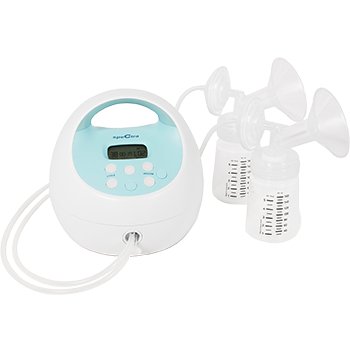
The Spectra S1 has a devoted following among mothers and lactation consultants for good reason: it delivers hospital-grade suction at a personal-pump price, and it is remarkably quiet doing it. The rechargeable battery (what separates the S1 from the corded-only S2) gives around three hours of unplugged use, genuinely useful for pumping at work or in the car. Twelve adjustable suction levels and four cycle patterns give you real control, which makes a meaningful difference if you pump multiple times a day, and the closed system with backflow protectors keeps things hygienic. There is also a built-in nightlight and timer, which sounds minor until you are pumping at 3 a.m. and do not want a bright overhead light. The main thing to know is that the included flanges run large, so many mothers buy smaller ones separately; that is not unusual, but knowing it upfront saves you from blaming the pump for what is really a sizing issue.
Best for: exclusive pumpers, mothers establishing supply, and anyone who wants maximum adjustability and reliability without a hospital-grade rental.
Medela Pump in Style with MaxFlow — Best for Brand Reliability
Medela has been the default recommendation in hospitals and pediatrician offices for decades, and the updated Pump in Style with MaxFlow is a genuinely good pump. The two-phase expression technology, stimulation mode followed by expression mode, mimics a baby’s natural nursing pattern and tends to trigger let-down effectively for many mothers, and the closed system with overflow protection is a meaningful upgrade from older models. Medela’s practical advantage is parts availability: if a valve wears out or you need a flange at short notice, you can often find Medela parts at a regular pharmacy or big-box store, which is not true of every brand, and the comprehensive starter kit includes a tote, cooler bag, and ice pack. The downside is fewer suction levels than the Spectra, and some mothers report suction decreasing over time with heavy use.
Best for: mothers who value brand recognition, parts availability, and a reliable track record over maximum customization.
Willow Go — Best Wearable Pump
The Willow Go is what most people picture when they think of a wearable pump: completely self-contained inside the bra, no external motor, no tubing, no attached bottles. You put it in, press a button, and go about your day, and nobody knows you are pumping unless you tell them. The suction is genuinely strong, comparable to traditional pumps for most users, and the leak-proof design means you can bend over, walk around, or sit in a meeting without worrying about spills, while the app lets you track output and control the pump from your phone; flange sizing options are good, with inserts for smaller sizes. The learning curve is real, since getting placement right takes a few tries and assembly is more involved, and the price sits at the high end, but for mothers who spend a lot of time on their feet or need to pump discreetly, the freedom is hard to argue with. Pairing it with good pumping and storing practices makes the whole system work well for working mothers.
Best for: active mothers, working professionals, and anyone who resents being tied to a wall outlet during sessions.
Elvie Stride — Best Hybrid Wearable
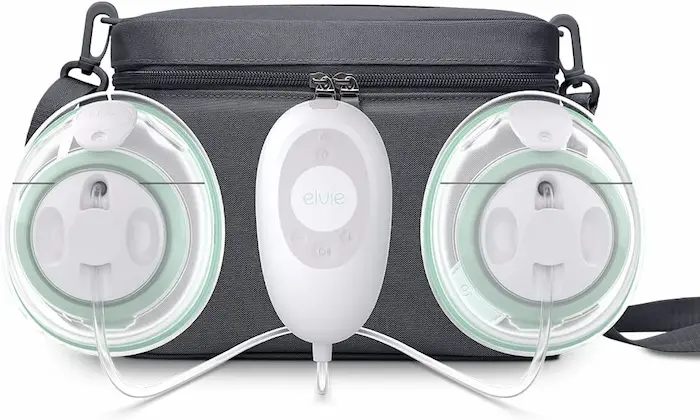
The Elvie Stride takes a slightly different approach: lightweight cups sit in your bra and connect via slim tubing to a small motor unit that clips to your waistband or sits in a pocket. It is not quite as discreet as the all-in-one Willow, but the in-bra cups are lighter, and many mothers find the suction stronger and more reliable. The app is well-designed and tracks output in real time, genuinely useful if you are monitoring supply, and the motor provides four or more sessions per charge with quiet operation you can use in an open office. The cup capacity tops out at 5oz each, so you may need to empty mid-session with a strong supply, and flange sizing options are more limited than some competitors, but for wearable convenience with stronger suction than many all-in-one options, the Stride is a strong contender.
Best for: mothers who want wearable freedom without sacrificing suction strength, and who like data tracking.
Lansinoh Discreet Duo — Best Value Pick
The Lansinoh Discreet Duo is the answer to “I do not want to spend a fortune, but I also do not want to compromise on quality.” It is a compact, closed-system double electric pump with a rechargeable battery, three pumping styles, and eight suction levels, more than enough customization for most mothers, at a price meaningfully lower than the premium options. It is quiet, lightweight, and the controls are intuitive enough to use half-asleep in the middle of the night, which matters more than people expect, and the parts are compatible with wide-mouth Lansinoh bottles. The battery life is shorter than larger competitors and it may not hold up as well over two or three years of heavy daily use, but for a first pump, or for a mother who does not plan to exclusively pump long-term, it performs well above its price point.
Best for: budget-conscious mothers who want genuine quality without the premium price tag, and good for one baby’s worth of pumping.
Evenflo Advanced Manual Pump — Best Manual Backup
Every breastfeeding mother should own a manual pump, and that is not an exaggeration. The Evenflo Advanced is a good one: an ergonomic pivoting handle that reduces hand strain compared to older designs, a soft silicone flange cushion, and very few parts to clean. It fits in any bag and needs nothing but your hand. It will not replace an electric pump for daily sessions and is not suitable for exclusive pumping, but for engorgement relief away from home, as a backup when your electric pump has a problem, or for pumping on a flight where plugging in is not practical, it is invaluable. Keep one in your car; you will thank yourself eventually.
Best for: every breastfeeding mother as a secondary pump, though not a primary option for exclusive pumpers.
Ameda Mya Joy — Best Ultraportable Option
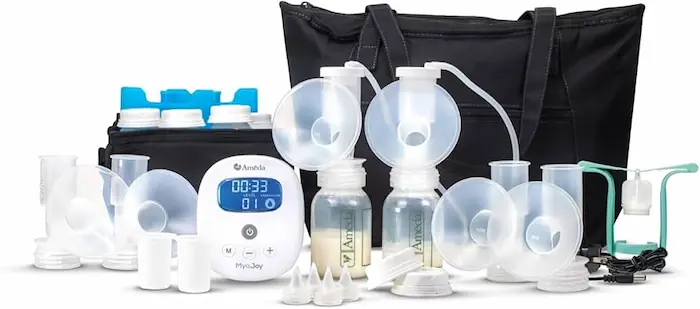
The Ameda Mya Joy weighs 10 ounces, smaller and lighter than most water bottles and many phones. It fits in the palm of your hand and delivers a closed-system double electric pump with two-phase expression and adjustable suction, impressive engineering for something this compact. It is not the strongest pump here, and the battery gives two to three sessions per charge rather than the four or five from larger options, but if desk space is limited, your bag is already full, or portability is the deciding factor, the Mya Joy genuinely delivers. It is also FSA and HSA eligible, worth noting if you are working out how to pay for it.
Best for: mothers pumping at work with limited space, or those wanting a lightweight primary pump for moderate frequency.
Frequently Asked Questions
During pumping, your nipple should move freely in the tunnel without rubbing the sides, and you should see very little areola pulled in, just the nipple moving in and out. If the nipple presses against the sides, it is too small; if a lot of areola is pulled in, it is too large. Pain, redness, or reduced output after switching pumps all signal a poor fit. Measure your nipple diameter and add 2 to 4mm as a starting point, but a sizing consultation with a lactation consultant is the most reliable route.
Valves and membranes wear out fastest, so replace them every 4 to 6 weeks with regular use, or sooner if suction drops. Replace tubing if you see moisture inside or any damage, and flanges when they crack, warp, or discolor. After 6 to 12 months of exclusive pumping, replacing the full kit is reasonable even if nothing looks wrong. Unexplained output drops are often a worn-parts issue rather than a supply problem, so replace valves first before drawing conclusions.
The CDC advises against sharing personal-use pumps between different users, even family members, since they are not designed to be sterilized between users and milk particles can work into the motor over time even in closed systems. Hospital-grade pumps are different, being built for multi-user rental with individual collection kits, which is safe. With a used personal pump, understand that suction degrades with use and hygiene cannot be guaranteed.
Wash all milk-contact parts after every session: rinse in cool water, wash in hot soapy water with a dedicated brush, rinse, and air dry on a clean rack rather than a towel. Sanitize daily for babies under 3 months or premature and immunocompromised infants, by boiling for 5 minutes, using steam bags, or a dishwasher sanitize cycle; for healthy older babies, weekly sanitizing plus daily washing is enough. Never submerge the motor unit, and replace tubing immediately if milk gets in.
Most private US insurance plans are required to cover a pump under the Affordable Care Act, either by providing one or reimbursing you. The specifics vary: some cover any pump up to a value, others list specific brands, and some require a prescription. Call your insurer before buying and ask which brands are covered, how out-of-network reimbursement works, and whether you need documentation from your OB or midwife. Medicaid coverage varies by state but is often available too.
If you plan to breastfeed and have no medical reason to pump immediately, most lactation consultants suggest waiting until breastfeeding is established, around 3 to 4 weeks, since starting too early can cause oversupply. If you plan to exclusively pump, beginning within the first days is important for supply, and if your baby is in the NICU or has significant latch difficulties, starting as soon as possible after birth is recommended. Your situation guides the timing more than any general rule.
Finding What Works for You
There is no single best breast pump. There is the best pump for an exclusive pumper building supply for a NICU baby, and a different one for a working mother who nurses at home and pumps twice at her desk; a best pump for a limited budget, and another for someone who prioritizes hands-free freedom above all else. What helps most is knowing your priorities before you start looking, getting your flange size right before deciding anything is wrong with the pump itself, and not assuming the most expensive option is automatically the best fit for your life. A lactation consultant can help with all of this, pump choice, flange sizing, technique, and troubleshooting output concerns, and the AAP encourages mothers to use that resource rather than figuring everything out alone. If you are building or maintaining supply alongside your pumping routine, understanding what causes low milk supply helps you troubleshoot more effectively when something feels off, and a refresher on the breastfeeding basics rounds out the picture of how pumping and nursing work together.
References
- American Academy of Pediatrics. (2023). Breastfeeding guidelines and support. aap.org/en/patient-care/breastfeeding
- American College of Obstetricians and Gynecologists. (2023). Breastfeeding and pumping. acog.org/womens-health
- Centers for Disease Control and Prevention. (2024). Handling and storage of breast milk. cdc.gov/breastfeeding
- World Health Organization. (2023). Infant and young child feeding. who.int/health-topics/breastfeeding
- Mayo Clinic Staff. (2024). Breast pumps: What you need to know. mayoclinic.org
- Eunice Kennedy Shriver National Institute of Child Health and Human Development. (2023). Benefits of breastfeeding. nichd.nih.gov