The third trimester brings a barrage of new sensations, and it is not always obvious which ones are just the uncomfortable work of late pregnancy and which are red flags that need a call to your provider. This guide lays out the common, expected symptoms of the final weeks and — most importantly — a clear checklist of the signs that mean “call now.” When in doubt, it is always better to be checked.
Why Everything Intensifies in the Final Weeks
From week 28 until birth, your body shifts from supporting growth to actively preparing for labor. Your uterus presses on your bladder, intestines, diaphragm, and major blood vessels; relaxin keeps loosening ligaments while progesterone slows digestion; and your baby’s final growth spurt demands a lot of energy. That context reframes much of the discomfort — it is often evidence of your body’s work, not a sign something is wrong.
Common and Expected Symptoms
These are the normal, if uncomfortable, adaptations of late pregnancy — worth managing, not worrying about.
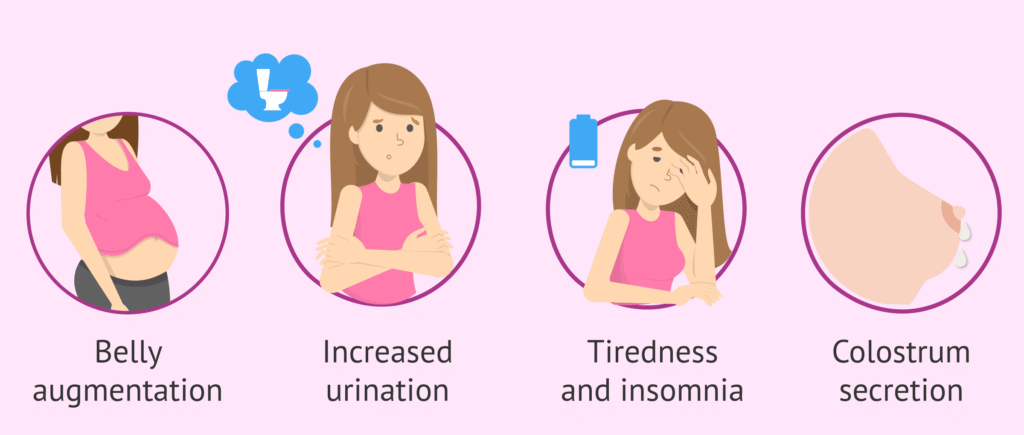
- Increased fatigue: your body is working at capacity, and anemia can add to it. Prioritize rest, keep your diet rich in iron and protein, and stay hydrated.
- Shortness of breath and rib pain: the uterus pushes up against your diaphragm and the baby’s feet may lodge under your ribs. Good posture, sleeping propped up, and gentle position changes help.
- Heartburn and indigestion: progesterone relaxes the valve at the top of the stomach while uterine pressure pushes acid up. Eat small, frequent meals, avoid spicy or greasy food, and stay upright for a couple of hours after eating.
- Swelling in the feet, ankles, and hands: normal when it is mild, symmetrical, worse by evening, and better after overnight elevation. Elevate your feet, stay hydrated, and go easy on salt.
- Lower back, hip, and pelvic pain: loosened joints, a shifting center of gravity, and the baby’s descent all contribute. A support belt, warmth, a pillow between the knees, and prenatal physical therapy can all help — see our guide to pregnancy back pain relief.
- Braxton Hicks contractions: irregular, non-painful practice tightenings that ease with a position change or water. Our guide to Braxton Hicks vs. real contractions explains how to tell them apart.
- Frequent urination and light leaking: the baby’s head presses on your bladder, and a stretched pelvic floor can allow small leaks with coughing or sneezing. Kegels, leaning forward to fully empty, and liners help.
- Hemorrhoids and constipation: slowed digestion plus pressure can swell rectal veins. More fiber and water, a stool softener if your provider agrees, and witch hazel pads or sitz baths all ease it.
- “Lightning crotch” and pelvic pressure: sudden, sharp jolts low down as the baby engages and presses on nerves. Change positions, rock on a birth ball, or try a warm bath.
- The nesting urge: a burst of energy and drive to prepare your home. Channel it, but avoid overexertion and delegate heavy tasks — more on the nesting instinct here.
Red Flags — Symptoms That Need Immediate Care
This is the most important part. Contact your provider immediately for any of the following, and err on the side of caution.
- Severe or persistent pain: constant or cramping abdominal pain, or unrelenting intense back pain — different from ordinary round-ligament or muscle ache. It can point to preterm labor or placental abruption.
- Vaginal bleeding: any bright red bleeding, spotting that soaks a pad, or bleeding with pain can signal placenta previa, abruption, or preterm labor.
- Leaking amniotic fluid: a gush or steady trickle of clear, pale, or straw-colored fluid may mean your water has broken — which needs monitoring even before contractions start.
- A significant drop in fetal movement: a noticeable, persistent change from your baby’s normal pattern. Have a cold drink, lie on your left side, and focus — and if you do not feel enough movement within an hour, go to labor and delivery. Do not wait.
- Signs of preeclampsia: sudden severe swelling of the face and hands; a severe, pounding headache that acetaminophen does not touch; vision changes like spots, flashes, or blurring; severe pain under the right ribs; or sudden nausea and vomiting in the second half of pregnancy. This is an emergency — go to the hospital.
- Signs of a blood clot (DVT): swelling, pain, redness, warmth, or tenderness in one calf or leg only. Contact your provider or go to the ER immediately, and do not massage the area.
- Regular, painful contractions before 37 weeks: tightenings at regular intervals that get stronger and closer together and do not stop with rest or water can mean preterm labor. Time them, lie on your left side, drink water, and call your provider. Our guide to the signs of labor can help you gauge what you are feeling.
- A fever of 100.4°F (38°C) or higher: without an obvious cause like a cold, this can signal an infection. Call your provider promptly — acetaminophen is generally the pregnancy-safe option for bringing a fever down, but it is important they check the underlying cause.

Your Action Plan for Uncertain Moments
- Know your baseline. Learn your baby’s typical movement pattern and your own body’s rhythms, so you can spot a change.
- Trust your instincts. If something feels off — even if it is not on any list — contact your provider. It is always better to be checked.
- Keep contact info handy. Save the after-hours number and the direct line to labor and delivery in your phone.
- Skip the late-night searches. Use trusted sources for information, but let your medical team make the diagnosis rather than working yourself up online.
Frequently Asked Questions
Real labor contractions follow a predictable pattern — they get longer, stronger, and closer together over time and persist despite changing position or hydrating. Braxton Hicks are irregular and ease up. If you have to stop and breathe through a contraction, it is likely real labor.
Significant foot and ankle swelling is common in late pregnancy. The concerning kind is sudden swelling in the face and hands, or swelling in only one leg — those are not normal and should be checked.
Not necessarily; tension headaches are common. The red flag for preeclampsia is a severe, persistent headache that does not respond to acetaminophen and is often paired with other symptoms like vision changes or upper abdominal pain.
It is less about a specific number and more about a change from your baby’s normal pattern. If an active baby goes quiet for an unusually long stretch, or the movements feel markedly weaker, that counts as a decrease — always investigate it.
Yes. Once your water breaks there is a risk of infection, so your provider will want to monitor you and the baby even if labor has not started. Call them for guidance on when to come in.
Yes, and perinatal anxiety is real and treatable. If your worries are constant, interfere with daily life, or keep you from sleeping, talk to your provider. Your mental health is a vital part of your pregnancy health.
The Bottom Line
The third trimester is largely about listening — to your body’s normal adaptations and to its rarer, crucial warnings. Manage the common discomforts with the practical strategies above, but keep the list of red flags close, and never hesitate to call. Your awareness and willingness to be checked are among the best protections you can give yourself and your baby in these final weeks.
References
- Centers for Disease Control and Prevention (CDC). Urgent Maternal Warning Signs.
- American College of Obstetricians and Gynecologists (ACOG). Preeclampsia and High Blood Pressure During Pregnancy.
- Mayo Clinic. Third trimester pregnancy: What to expect.