Finding out you are expecting twins brings a rush of excitement — and a long list of new questions. A twin pregnancy is classified as “high-risk,” but that label is about the need for specialized care for multiples, not an expectation that something will go wrong. It means you and your babies are watched with extra attention to reach the healthiest possible outcome. This guide walks through what makes a twin pregnancy different: the types of twins, your higher nutritional needs, the closer medical monitoring, and how to prepare for bringing two newborns home.
A twin pregnancy sits within the wider category of a high-risk pregnancy, so the same principle applies: closer monitoring, matched to what your particular twins need.
The First Distinction: Zygosity and Chorionicity
Not all twin pregnancies are the same, and how your twins developed early on shapes their care. Your first ultrasound is key to sorting this out.
- Fraternal (dizygotic) twins: the most common type, from two separate eggs fertilized by two separate sperm. Each has its own placenta and amniotic sac — a dichorionic-diamniotic (di-di) pregnancy. They are as genetically alike as any siblings and can be same-sex or boy/girl.
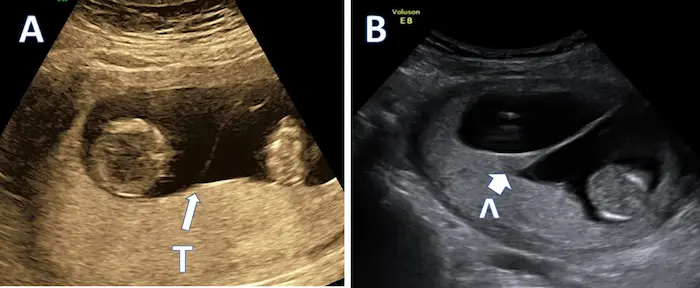
- Identical (monozygotic) twins: from a single fertilized egg that splits, with the timing of the split determining the type — di-di if it splits in the first 3 days (each twin has its own placenta and sac, the lowest-risk identical setup); monochorionic-diamniotic (mo-di) if it splits around days 4–8 (a shared placenta but separate sacs, needing closer monitoring for twin-to-twin transfusion syndrome); and monochorionic-monoamniotic (mo-mo) if it splits after day 9 (the rarest, highest-risk type, sharing both placenta and sac, with a risk of cord entanglement and needing very specialized care and early delivery).
Why it matters: your twins’ chorionicity — the number of placentas — is the single most important factor guiding your care, even more than whether they are identical or fraternal. A di-di pregnancy generally carries the lowest risk.
More Frequent Monitoring
From the start, your care is more intensive, often with a maternal-fetal medicine (MFM) specialist working alongside your OB-GYN. In practice that means:
- More frequent appointments — typically every 2–3 weeks in the second trimester and weekly in the third, more often than a singleton schedule.
- More ultrasounds — often at nearly every visit, especially for mo-di twins. Growth scans are usually every 4 weeks, but as often as every 2 weeks for mo-di twins, tracking each baby’s growth, fluid levels, and placental health.
- Specialized screening — nuchal translucency and NIPT can both screen for chromosomal conditions in twins; you will be screened early and regularly for gestational diabetes; and your blood pressure will be watched closely for pregnancy-induced hypertension and preeclampsia.
Amplified Physical Demands
Carrying two babies means your body works overtime, and singleton symptoms are often stronger and appear earlier:
- More severe morning sickness: higher hormone levels can bring more intense, prolonged nausea, sometimes reaching hyperemesis gravidarum.
- Faster weight gain and an earlier bump: the recommended gain is higher — typically 37–54 lb for someone starting at a normal BMI — to support two growing babies.
- Pronounced fatigue: growing two humans is exhausting, and rest is a genuine medical need, not a luxury.
- More intense discomfort: back and pelvic pain, heartburn, breathlessness, and swelling can all be stronger and start earlier as the uterus grows larger.
- Higher anemia risk: your iron needs rise sharply to support the extra blood volume for two placentas and babies, so iron supplementation is almost always recommended. Our guide to iron-rich foods can help.
Key Risks Your Team Watches For
Awareness, not fear, is the goal — your team is trained to monitor closely for these:
- Preterm birth: the most common issue. The average twin pregnancy delivers at 35–36 weeks, and a major goal of care is safely getting as close to term as possible. You will learn the signs of preterm labor.
- Preeclampsia: the risk is 2–3 times higher, so blood pressure and urine protein are checked regularly.
- Gestational diabetes: more likely because of the larger placental mass and insulin-resistant hormones.
- Growth restriction and discordant growth: one twin may grow more slowly than the other, which in a shared placenta can reflect unequal sharing of resources.
- Twin-to-twin transfusion syndrome (TTTS): a serious complication of monochorionic (shared-placenta) twins, where connecting blood vessels in the shared placenta pass blood unevenly — one twin (the donor) gives too much to the other (the recipient). Treatment exists, including laser surgery to seal the connecting vessels, which is exactly why frequent monitoring is so valuable.
- Vanishing twin syndrome: in very early pregnancy, one twin may miscarry while the other keeps developing, often seen on an early scan.
Fueling a Twin Pregnancy
Your diet is the raw material for two babies. The calorie increase is fairly modest — roughly 600 extra a day in the later stages — but certain nutrients matter a lot:
- Protein first: many providers suggest aiming for around 100–120 grams of quality protein a day for twins — see our guide to high-protein foods.
- Hydration: aim for around 3 liters of water a day to support your extra blood volume and help keep Braxton Hicks contractions down. Our guide on how much water to drink has more.
- Supplements: alongside a good prenatal vitamin, you will likely need extra iron and possibly calcium, magnesium, and vitamin D, as directed by your provider.
- Activity and rest: moderate movement like walking, swimming, or prenatal yoga is helpful, but listen to your body — your provider may suggest scaling back earlier than in a singleton pregnancy, and prioritizing rest is part of the care, not optional.
Preparing for Birth
Planning a twin delivery calls for flexibility. Vaginal birth is possible for many, but the chance of a cesarean is higher.
- Vaginal birth is generally an option when both twins are head-down — especially Twin A (the one nearest the cervix) — there are no other complications like preeclampsia or placenta previa, and your provider and hospital are experienced in twin deliveries.
- A cesarean may be planned or become necessary during labor — recommended if Twin A is breech, if there is a significant size difference or signs of distress, or for mo-mo twins.
- Delivering at a hospital with a Level III NICU is strongly advised whatever your birth plan, since twins are more likely to need specialized newborn care even when born near term.

Preparing for Two Newborns
- Gear: you do not need two of everything, but you do need two infant car seats and likely a double stroller. For safe sleep, separate bassinets or cribs are recommended.
- Feeding: whether you plan to breastfeed, formula-feed, or combine, get support — a lactation consultant experienced with twins is invaluable, and a twin nursing pillow helps a lot. Feeding two is a logistical feat, so give yourself grace. Our breastfeeding basics guide is a good starting point.
- Support system: this is the most important “supply.” Line up help for the postpartum weeks — family, friends, or a postpartum doula — for laundry, meals, and holding one baby while you tend to the other.
- Mental health: the risk of postpartum depression and anxiety is higher after a multiples pregnancy, so be proactive and discuss a screening plan and your support network with your provider ahead of time.
Frequently Asked Questions
Early delivery is common, but “early” is relative — many twins arrive in the mid-to-late 30-week range, which is late preterm. Every day you stay pregnant past 32 weeks is a meaningful benefit for your babies’ development.
It is possible, though the setting is more medically managed — both babies are monitored continuously and an IV line is standard. Share your pain-management preferences with your provider, but stay open to changes based on the babies’ positions and well-being.
Noticeably bigger. By the third trimester you will likely measure the size of a full-term singleton pregnancy, which adds to the discomfort and the need for more rest.
The main risk factor for developmental delay is prematurity, not twinning itself. Twins born at or near term have the same developmental outlook as singletons, while close follow-up is standard for any baby born preterm.
Attend all your prenatal appointments so any issue is caught early, prioritize nutrition and hydration, rest as much as you can, and build your support team before the babies arrive.
The Bottom Line
A twin pregnancy asks a lot of you and gives a lot back. Understanding the specialized monitoring, respecting your body’s amplified needs, and building a solid plan for birth and beyond shifts the experience from feeling like a high-risk patient to feeling like a prepared parent of multiples. Celebrate each milestone along the way — from two heartbeats on that first ultrasound to finally holding both babies in your arms.
References
- American College of Obstetricians and Gynecologists (ACOG). Multiple Pregnancy.
- Eunice Kennedy Shriver National Institute of Child Health and Human Development (NICHD). Twins, Triplets, and Other Multiples.
- Mayo Clinic. Twin pregnancy: What multiples mean for mom.