In the final weeks of pregnancy, many people notice their feet, ankles, and hands getting puffy — swelling that doctors call edema. Most of it is a completely normal part of late pregnancy, but some kinds of swelling can be a warning sign that needs quick attention. Here’s why it happens, how to ease the discomfort, and — most importantly — the red flags that mean you should call your provider or head to the hospital.
Why Swelling Happens
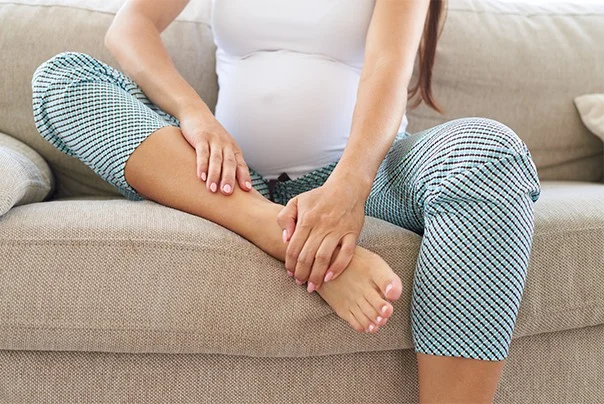
Some swelling is extremely common, affecting up to three-quarters of pregnant people. It comes from a few overlapping changes: your body makes roughly 50% more blood and fluid to support your baby and placenta; your growing uterus presses on the large vein (the inferior vena cava) that returns blood from your lower body, slowing circulation and letting fluid pool in your feet and ankles; the hormone progesterone relaxes your blood vessels; and plain gravity pulls fluid downward, which is why swelling is usually worst at the end of the day.
Normal (physiological) edema tends to sit in the feet, ankles, and lower legs (and sometimes hands), worsen as the day goes on, affect both sides fairly equally, leave a temporary “pit” when you press it, and — the reassuring part — improve overnight when you lie down.
Your At-Home Relief Toolkit
You can’t eliminate normal swelling, but you can take the edge off:
- Elevate your feet above the level of your heart when you can — lie on your left side (which takes pressure off the vena cava) with your legs propped on pillows for 30–60 minutes, a couple of times a day. This is your most effective tool.
- Move regularly. Don’t stay in one position for more than an hour; short walks engage your calf muscles, which pump fluid back up. Gentle prenatal swimming is excellent, since the water pressure helps compress tissues.
- Stay hydrated. It feels backwards, but drinking plenty of water (8–10 glasses a day) helps your body flush excess sodium; dehydration makes it hold onto fluid.
- Watch the salt. Cut back on high-sodium processed and restaurant foods, and lean on potassium-rich foods (bananas, spinach, sweet potatoes, yogurt) that help balance sodium.
- Wear compression socks, putting them on first thing in the morning before swelling builds; skip anything with a tight band at the top, and choose supportive, low-heeled shoes.
- Try a cool compress on swollen ankles for 15–20 minutes for soothing relief.
Our guide to third-trimester symptom relief has more comfort strategies, and if you’re dealing with achy, bulging leg veins too, see varicose veins in pregnancy.
The Red Flags: When Swelling Is Serious
This is the most important part. While most swelling is harmless, sudden or severe edema can signal two potentially dangerous conditions.
Signs suggestive of preeclampsia
Preeclampsia is a pregnancy disorder of high blood pressure and organ stress, usually after 20 weeks, and its swelling is often sudden and severe. Seek immediate care if swelling comes with any of these:
- Sudden puffiness of the face (especially around the eyes) or hands — rapid facial swelling is a classic warning sign.
- A severe, persistent headache that doesn’t ease with acetaminophen.
- Vision changes — spots, flashing lights, blurriness, or brief vision loss.
- Pain in the upper right abdomen, under the ribs.
- Sudden nausea or vomiting in the second half of pregnancy, or shortness of breath.
Signs suggestive of a blood clot (DVT)
A deep vein thrombosis is a clot in a deep leg vein, and pregnancy raises the risk. Its swelling is usually in one leg only. Contact your provider right away if you notice one calf, ankle, or foot that’s noticeably larger, redder, or warmer than the other; cramping or soreness in one calf or thigh that worsens when you stand or walk; or reddish, discolored skin on the affected leg.
Normal vs. Concerning: A Quick Reference
| Feature | Normal swelling | Concerning swelling |
|---|---|---|
| Onset | Gradual, over weeks; worsens slowly through the day | Sudden and severe, often overnight |
| Location | Feet, ankles, lower legs, hands | Face (especially eyes) and hands, or one leg only |
| Symmetry | Usually both sides equally | Marked asymmetry (one limb much larger) |
| Response to rest | Improves with overnight rest and elevation | Does not improve with rest or elevation |
| Other symptoms | Mild discomfort, tight skin | Headache, vision changes, upper-abdominal pain, breathlessness, chest or calf pain |
Call vs. Go to the Hospital
Call your provider promptly (within 24 hours) for new mild swelling in your face or hands, swelling that seems excessive to you even without other symptoms, or puffiness that doesn’t improve at all overnight.
Go to the hospital right away for sudden, severe swelling of the face or hands, any of the preeclampsia symptoms above, significant swelling in one leg with pain or redness, or chest pain or trouble breathing. When in doubt, trust your instincts — you know your body, and it’s never wrong to get checked. Our guide to third-trimester warning signs covers the full picture.

Frequently Asked Questions
Yes, it’s common. Take your rings off early, before they get stuck. If one is already stuck, don’t force it — cool the hand with ice, hold it elevated, and try soapy water as a lubricant. If it won’t budge, a jeweler can safely cut it off.
Not usually. If anything, some people notice a slight reduction in swelling a day or two before labor as fluids shift. Increased swelling isn’t a reliable sign that labor is near.
Mild morning puffiness can be normal, especially after sleeping flat. But if it’s pronounced, doesn’t settle once you’re up and about, and comes with swollen hands, call your provider to rule out preeclampsia.
Never take any supplement or diuretic (“water pill”) without your provider’s explicit approval — some herbs are unsafe in pregnancy. Stick to the proven, safe strategies: elevation, hydration, and gentle movement.
It may actually increase for a few days postpartum as your body redistributes and sheds fluid, then ease noticeably within the first week as you move more. Frequent urination and night sweats are how your body clears the extra fluid.
Sudden swelling of the face or hands, or swelling in just one leg — especially alongside a headache, vision changes, or calf pain. Those patterns can signal preeclampsia or a blood clot and need urgent medical attention.
The Bottom Line
For most people, swollen feet and ankles are just an uncomfortable sign of your body working hard in the home stretch, and the simple relief measures — elevation, movement, hydration, and compression — go a long way. The real value is knowing the red flags: sudden facial swelling, a pounding headache, or one swollen leg. Keep those in mind, use the comfort strategies, and never hesitate to call your provider when something feels off.
This article is for general information and is not a substitute for personalized medical advice from your healthcare provider.
References
- American College of Obstetricians and Gynecologists. Preeclampsia and High Blood Pressure During Pregnancy.
- Mayo Clinic. Swelling During Pregnancy.
- NHS. Swollen Ankles, Feet and Fingers in Pregnancy.