The home stretch of pregnancy brings a whole set of new physical changes as your baby puts on the last of their weight and your body gears up for birth. Most of these are normal, if uncomfortable — and most respond well to a few practical tweaks. This guide walks through the most common third trimester discomforts, why they happen, and the relief strategies that actually help, so you can spend these final weeks as comfortably as possible.
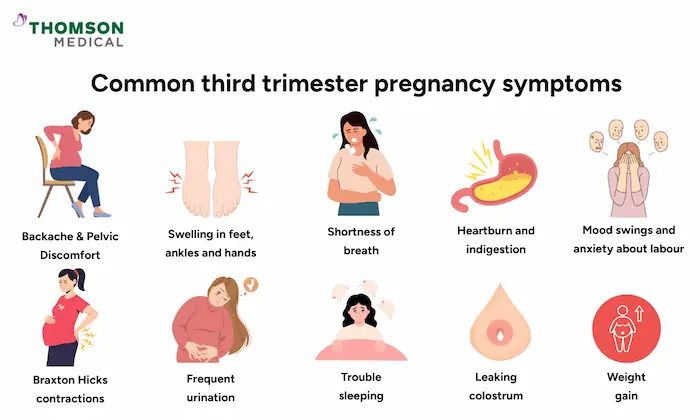
This one focuses on comfort and relief. For the flip side — the symptoms that are not normal and need a call to your provider — see our companion guide to third trimester warning signs.
Why the Third Trimester Feels Different
From week 28 to birth, your body switches from supporting growth to actively preparing for labor. Your now-sizeable uterus presses on your diaphragm, stomach, intestines, bladder, and major blood vessels; relaxin keeps loosening your joints while progesterone slows digestion and affects circulation; and your baby’s final growth spurt runs your metabolism at full tilt, which is tiring. Understanding the “why” behind each symptom is the first step to managing it.
Symptom-by-Symptom Relief
Shortness of breath and rib pain
Your uterus pushes up against your diaphragm, and the baby’s feet can lodge under your ribs. Sit and stand tall to give your lungs room, sleep propped up on pillows, and when you feel breathless, try getting onto your hands and knees to take the pressure off. A warm compress below the ribs can encourage the baby to shift their feet.
Heartburn and indigestion
Progesterone relaxes the valve between your stomach and esophagus while the growing uterus crowds your stomach. Eat smaller, more frequent meals, avoid spicy, acidic, and fatty triggers, stay upright for 2–3 hours after eating, and sleep with your upper body raised on a wedge pillow. Ask your provider about pregnancy-safe antacids. Our guide to heartburn during pregnancy goes deeper.
Swelling in the feet, ankles, and hands
Increased blood volume and pressure on your pelvic veins slow circulation, pooling fluid in your extremities. Elevate your feet when you can, stay hydrated (which actually helps your body release fluid), go easy on salt, and try compression socks put on first thing in the morning. Our guide to swelling in late pregnancy covers it fully. Note: sudden, severe swelling in your face or hands, or swelling in one leg only, is a red flag — call your provider right away.
Lower back, hip, and pelvic pain
Loosened joints, a shifting center of gravity, and the baby engaging in your pelvis all contribute. A warm (not hot) compress or bath, a pregnancy support belt, prenatal physical therapy, and a pillow between your knees at night all help, as do gentle prenatal yoga moves like cat-cow and pelvic tilts. Our back pain relief guide has more.
Frequent urination and light leaking
The baby’s head presses on your bladder, and a stretched pelvic floor can allow small leaks with coughing or sneezing. Lean forward to fully empty your bladder, do daily Kegels (use the stop-the-flow sensation only to identify the muscles, not as the exercise itself), ease off fluids in the couple of hours before bed while staying well-hydrated by day, and use a liner for minor leaks.
Braxton Hicks contractions
These irregular, usually painless practice tightenings ease when you change what you are doing — walk if you have been resting, sit and hydrate if you have been active — or with a warm bath and slow breathing. If they become regular, grow stronger, or come with lower back pressure, bleeding, or fluid leaking, that could be real labor, so time them and call your provider. Our guide to Braxton Hicks vs. real contractions explains the difference.
Fatigue and insomnia
Physical strain, frequent bathroom trips, discomfort, and anxiety all fragment sleep. Build a pillow nest with a full-body pregnancy pillow for side-sleeping, keep a cool, dark, screen-free bedtime routine, take short 20–30 minute naps, and try mindfulness or gentle yoga before bed.
Hemorrhoids and constipation
Slowed digestion plus pressure can swell rectal veins. Increase fiber (prunes, pears, oats, leafy greens), stay very well hydrated, avoid straining (a footstool to raise your feet helps), and ask your provider about a stool softener. For hemorrhoids, witch hazel pads and sitz baths bring relief.
Varicose veins and leg cramps
More blood volume and uterine pressure make it harder for blood to return from your legs. Elevate your legs often and wear compression stockings. For a sudden leg cramp, flex your foot and pull your toes toward your shin, and stretch your calves before bed. Adequate magnesium and potassium (bananas, sweet potatoes, spinach) may help — check with your provider.
“Lightning crotch” and pelvic pressure
Sharp, sudden jolts low down happen as the baby’s head engages and presses on nerves and the cervix. Change positions often, rock on a birth ball, try pelvic tilts or hands-and-knees, and use a warm bath for relief.

Everyday Wellness Basics
Beyond symptom-specific fixes, a few foundations make everything easier:
- Nutrition: focus on protein, iron, calcium, and fiber, and lean on small, frequent meals.
- Hydration: keep water flowing through the day — it helps with swelling, constipation, and Braxton Hicks. Our guide on how much water to drink gives real targets.
- Gentle movement: walking, swimming, and prenatal yoga boost circulation, ease swelling, improve sleep, and can help position the baby well.
- Rest: listen to your body and scale back. Nesting energy is real, but balance it with real rest.
When to Call Right Away
Most third-trimester discomforts are normal, but some signs are urgent. Contact your provider or go to labor and delivery for severe or persistent abdominal pain, any bright red vaginal bleeding, a gush or trickle of fluid, a significant drop in your baby’s movements, signs of preeclampsia (sudden severe swelling of the face or hands, blurred vision or seeing spots, a severe headache, or upper-right abdominal pain), signs of a blood clot (swelling, pain, redness, or warmth in one calf only), regular painful contractions before 37 weeks, or a fever of 100.4°F (38°C) or higher. Our third trimester warning signs guide covers each of these in detail.
Frequently Asked Questions
Yes. Hormonal shifts, physical discomfort, and anticipating a big life change can make emotions run high. Be gentle with yourself, and if anxiety becomes overwhelming or sadness persists, talk to your provider about perinatal mood and anxiety disorders — support is available.
Braxton Hicks are irregular, do not get closer together, often ease with a change of activity or water, and stay mild. Real labor contractions become regular, move closer together, last longer, grow stronger, and continue despite changing position.
Many providers suggest staying within about an hour of your hospital after 36 weeks, and many airlines restrict flying after 36 weeks. Check with your own provider about your situation.
Yes, unless your provider has advised pelvic rest for something like placenta previa or preterm labor risk. It will not hurt the baby, though you may need to adjust positions for comfort.
It can be a dramatic gush or a steady, uncontrollable trickle of clear, pale, or straw-colored fluid, and it often smells different from urine. If you are unsure, call your provider — a simple test can confirm it.
That feeling is nearly universal — you are preparing for the unknown. Focus on what you can control: your comfort, your knowledge, and your support system. Emotional readiness often arrives after the baby does, through simply doing it.
The Bottom Line
The third trimester is a physical and emotional marathon, but a good toolkit of relief strategies shifts you from just enduring symptoms to actively managing them. Celebrate the small wins — a night with less heartburn, a walk that eased your back. Listen to your body’s signals, rest when you can, and never hesitate to check in with your care team as you gather your strength for the birth ahead.
References
- American College of Obstetricians and Gynecologists (ACOG). Back Pain During Pregnancy.
- Mayo Clinic. Third trimester pregnancy: What to expect.
- NHS. Common health problems in pregnancy.