Nobody fully prepares you for what your body feels like after birth. You knew it would be hard. You knew things would change. But standing in the bathroom a few days postpartum, looking in the mirror, wearing a diaper-sized pad and leaking colostrum through your shirt, that moment has a particular quality that no amount of reading quite gets you ready for.
Your body just did something extraordinary, and it is now in the middle of one of the most significant physical transitions it will ever go through. Some of what happens will resolve in days. Some will take months. Some changes will be permanent. All of it is worth understanding, not so you can control the process, but so you can stop wondering whether what you are experiencing is normal. This guide covers what actually happens to your body after birth, from the first week through the first year and beyond, system by system, honestly.
The Fourth Trimester: What It Actually Is
The first three months after birth are increasingly recognized as a distinct phase, the “fourth trimester,” a time of profound physical and emotional adjustment that deserves as much attention as the pregnancy itself. ACOG has pushed for this framing precisely because postpartum care has historically been reduced to a single six-week checkup, which misses most of what actually happens in the months following birth. During this time your uterus is shrinking, your hormones are crashing, your body is either establishing or suppressing milk production, your wounds are healing, and your sleep is being fragmented in ways that affect every physiological system. Understanding what is happening and why is what allows you to take it seriously rather than pushing through it alone.
The First Week: The Most Dramatic Physical Changes
What Happens to Your Uterus
Within minutes of delivering the placenta, your uterus begins contracting back toward its pre-pregnancy size, a process called involution. Immediately after birth it weighs about 2.5 pounds and extends to your navel; by one week it has shrunk to roughly 1 pound and sits halfway to the pubic bone; and by six weeks it returns to its pre-pregnancy weight of approximately 2 ounces. The contractions that drive this, called afterpains, are noticeable, and the Mayo Clinic notes they are typically stronger in women who have had previous pregnancies and most intense during breastfeeding, since nursing triggers oxytocin, which drives uterine contractions. This is biology doing something useful, even when it hurts.
Vaginal Bleeding (Lochia): What’s Normal
Lochia is the postpartum discharge of blood, mucus, and uterine lining, and it is heavier than most women expect. In days 1 to 5, bleeding is bright red and similar in flow to a heavy period, possibly with small clots. From days 5 to 14, it transitions to a pinkish or brownish discharge with lighter flow, and from weeks 2 to 6 it becomes yellowish-white and gradually tapers off.
Clots smaller than a grape are normal. Soaking a pad in an hour, or clots larger than a golf ball, are not, and those need a call to your provider that day. Flow increases with activity and breastfeeding, and a rush of blood when you stand from lying down is just pooled blood releasing rather than a cause for alarm on its own. A detailed week-by-week picture of the early recovery period is in our guide to what to expect in the first 6 weeks.
Perineal Healing
If you delivered vaginally, your perineum, the area between the vagina and anus, will be sore, swollen, and possibly bruised. If you had a tear or episiotomy, stitches are present but dissolve on their own over 2 to 3 weeks. Ice packs help the first 24 to 48 hours and warm sitz baths help after that, while using a peri bottle with warm water during bathroom visits significantly reduces stinging from stitches. Sitting may be uncomfortable for the first week.
The Belly After Birth
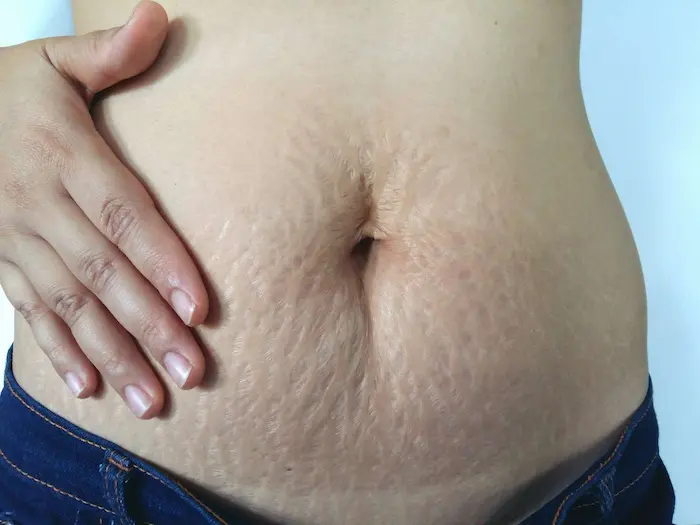
Your belly will still look significantly pregnant immediately after birth. The skin is stretched, the muscles are separated, and there is still fluid and expanded organs. This is not a failure of anything; it is what a body looks like after nine months of growing a person. Over the coming weeks your abdomen will gradually decrease in size as the uterus contracts, retained fluid is shed, and tissues begin to reorganize. The timetable here is measured in months, not days.
Breast Changes in the First Week
In the first few days, your breasts produce colostrum, a thick, yellowish, concentrated fluid packed with antibodies and exactly what your newborn’s immature gut needs. Around days 3 to 5, milk “comes in” and breasts become full, firm, warm, and often painful, which is engorgement and typically the most intense breast experience of the postpartum period. Nursing or pumping frequently is the most effective relief, cold packs between feeds help inflammation, and warm compresses before a feed encourage milk flow. Engorgement typically resolves within a week to ten days as supply and demand calibrate.
Weeks 2 to 6: Active Healing
Weight Changes After Birth
Most women lose 10 to 12 pounds immediately after birth, accounting for baby, placenta, and amniotic fluid. In the weeks that follow, additional weight drops as the body sheds retained fluid, and postpartum night sweats are partly the body eliminating this excess water through sweat. The CDC notes that gradual, steady weight loss is healthier than rapid loss, particularly for breastfeeding mothers. Postpartum weight loss follows its own timeline for every woman and is not well served by urgency.
Skin Changes
Stretch marks, if they appeared during pregnancy, may initially look more vivid as the skin deflates, and they typically fade from red or purple to silvery-white over 6 to 12 months. The linea nigra, the dark line down the pregnant belly, usually fades within months. Melasma, the darkening of facial skin sometimes called the “pregnancy mask,” generally lightens postpartum as estrogen levels drop, and varicose veins may improve as pressure on pelvic veins decreases.
Hair Shedding
Around 3 to 4 months postpartum, many women lose large amounts of hair, sometimes in alarming clumps. This is not hair loss in the clinical sense; it is telogen effluvium. During pregnancy, high estrogen levels kept hair in the growth phase longer than usual, and after delivery, when estrogen drops sharply, all that extra hair sheds at once. The American Academy of Dermatology confirms this is temporary and normal, with regrowth following, sometimes with a different texture or wave pattern than before. If shedding continues past 6 months or you notice distinct bald patches, a dermatologist visit is worthwhile.
Foot Changes
Some women permanently go up half a shoe size or more after pregnancy. Relaxin, the hormone that loosened pelvic ligaments for birth, also affects foot ligaments, allowing the bones to spread and the arch to flatten slightly under the increased weight of pregnancy. For some women this is temporary; for others the change is permanent. If your pre-pregnancy shoes feel tight a year postpartum, they probably are.
Months 2 to 6: The Adjustment Phase
When Your Period Returns
For formula-feeding mothers, menstruation typically returns 6 to 12 weeks postpartum. For breastfeeding mothers the timeline varies considerably, anywhere from 3 months to 18 months or longer, depending on how frequently and exclusively you are nursing. Prolactin, the milk-producing hormone, suppresses ovulation, which is why breastfeeding delays the period but is not reliable contraception: ovulation can return before your first postpartum period, meaning you can conceive without warning. When your period does return, the first few cycles may be heavier, more painful, or less regular than they were before pregnancy, and this typically normalizes over time.
Abdominal Muscles and Diastasis Recti
The rectus abdominis muscles, the ones that run vertically down the front of your abdomen, separate to accommodate the growing uterus, and this happens to some degree in most pregnancies. When the gap does not close adequately after birth, it is called diastasis recti, and it affects how the core functions. You can check for it by lying on your back with knees bent, lifting your head and shoulders slightly, and feeling above and below your navel for a gap between the muscle bellies; more than two fingerbreadths is significant. If you have diastasis recti, standard core exercises like crunches actively make it worse, and our guide to diastasis recti recovery explains what actually helps.
Pelvic Floor Changes
The pelvic floor, the group of muscles that support the bladder, uterus, and bowel, bears the full weight of pregnancy and the significant strain of labor and delivery. Common postpartum experiences include leaking urine when coughing, sneezing, or exercising; a feeling of heaviness or pressure in the pelvis; and decreased sensation during intercourse. The WHO recognizes pelvic floor dysfunction as a common postpartum condition that deserves treatment, not just acceptance, and pelvic floor physical therapy is the evidence-based approach. It is never too late to start, and everything you need to know about postpartum pelvic floor recovery is worth reading if any of this sounds familiar.
Scar Healing
C-section and episiotomy scars continue maturing well past the first weeks. Redness fades over months, scars flatten and soften, and numbness or tingling around the incision site may persist for months as nerves regenerate, which is normal and typically resolves, though it can take a year. Gentle scar massage, once the incision is fully closed and your provider approves, can help prevent adhesions that affect how the surrounding tissue moves. C-section internal healing takes significantly longer than external healing suggests, so the C-section recovery timeline is worth understanding if that was your delivery.
Months 6 to 12: Finding a New Normal
Weight and Body Composition
Most women reach a stable weight somewhere between 6 and 12 months postpartum, but weight alone tells an incomplete story. Even at the same number on the scale, your body composition may be different, with fat distributed differently and muscle changed. Many women notice permanently wider hips as pelvic bones shift, altered fat distribution, changed breast shape, and a softer abdominal contour that reflects changed muscle structure rather than just excess weight. These are not problems to fix; they are what a body that has been through pregnancy looks like.
Thyroid Function
Some women develop postpartum thyroiditis in the months after birth, an inflammatory condition that can cause the thyroid to swing from overactive to underactive. Because the symptoms, including fatigue, mood changes, weight changes, and temperature sensitivity, look so similar to normal new-parenthood experiences, it is frequently missed. If fatigue seems disproportionate to your sleep situation, or if other thyroid symptoms are present, ask your provider specifically for a thyroid panel. The full picture of postpartum thyroid issues explains what to watch for and when to push for testing.
Breasts Through and After Breastfeeding
The breast changes of breastfeeding extend through nursing and beyond weaning. During active breastfeeding, breasts fluctuate significantly in size and feel depending on timing, very full before a feed and noticeably softer after. Breasts feeling less full between feeds around weeks 4 to 6 is a sign of supply regulation rather than a drop in milk, a distinction worth knowing before you assume you are losing supply.
Plugged ducts feel like tender lumps and need to be resolved promptly, with continued nursing and gentle massage as first-line approaches. If a plugged duct develops into mastitis, marked by fever, flu-like symptoms, and one area of the breast that is red and hot, the AAP recommends continuing to nurse through it and seeking antibiotics. The bacterial infection is in the breast tissue, not the milk, so nursing is safe for the baby and helps clear the duct.
After weaning, breasts go through another transition. Many women find theirs are smaller or deflated-looking, less full, or differently shaped than before pregnancy, and this is often attributed specifically to breastfeeding, though most breast shape change comes from the pregnancy itself rather than the nursing. Genetics, age, and how many times you have been pregnant all influence outcomes more than the specific feeding choice. Supporting the breasts well during and after nursing helps, but there is no intervention that prevents all change.
Changes That Often Go Unmentioned
Joint and Ligament Changes
Relaxin stays in your system for months after birth, continuing to affect joint stability even after you have delivered. This is why the postpartum period carries elevated injury risk during exercise: joints that are more flexible than usual are also more vulnerable. Back pain is common from the combination of carrying a baby, nursing posture, and the still-altered joint landscape. Gentle movement and attention to body mechanics help, and high-impact exercise is best avoided before the pelvic floor and core have been properly rehabilitated.
Night Sweats and Temperature Regulation
Postpartum night sweats are common and can be dramatic, soaking sheets and waking you on top of the already fragmented sleep from the baby. This is the body eliminating the extra fluid it retained during pregnancy and reflects the dramatic hormonal shift after delivery. Breathable sleepwear, light bedding, and staying hydrated all help, and it typically resolves within a few weeks. The full explanation for why this happens is part of postpartum hormonal changes.
Swelling
Many women are surprised that postpartum swelling can be more significant than pregnancy swelling. Your body is shedding the enormous amount of extra fluid pregnancy required, and that process takes time, so swollen ankles and feet at the end of the day, puffy hands and face upon waking, and rings that will not go on are all common in the first week or two. Elevating feet, staying hydrated, gentle movement, and compression socks help. If swelling is severe, only in one leg, or accompanied by pain, contact your provider, since one-sided leg swelling can indicate a blood clot.
Vision and Dental Changes
Temporary vision changes such as blurriness or difficulty with contact lenses can occur postpartum from hormonal shifts affecting corneal shape and from fluid changes. These typically resolve without intervention, but if vision changes are sudden or severe, contact your provider. On the dental side, pregnancy gingivitis can persist postpartum, and gum sensitivity, bleeding when brushing, and increased cavity risk are real concerns during this period. The CDC recommends continuing dental care postpartum, since your own health appointments matter as much as your baby’s.
Nutrition for Physical Recovery
What you eat has direct effects on how your body heals. Protein from lean meat, poultry, fish, eggs, dairy, legumes, or nuts supports tissue repair and should anchor each meal. Iron-rich foods matter particularly if you lost significant blood during birth, so red meat, dark leafy greens, fortified cereals, and legumes paired with vitamin C for better absorption are worth prioritizing. Calcium supports bone health depleted by pregnancy and breastfeeding, available from dairy, fortified plant milks, leafy greens, and canned salmon with bones. Fiber prevents constipation, which postpartum hormonal shifts and pain medications make more likely, so whole grains, fruits, vegetables, and legumes help alongside adequate hydration.
Hydration deserves special attention, since fluid needs are significantly elevated if you are breastfeeding. The simplest practice is to drink something every time you sit down to nurse, and to keep a water bottle wherever you feed the baby. Your body is doing a lot right now and it needs fuel to do it. Our full guide to postnatal nutrition gives specific guidance on eating well during this season.
Returning to Exercise
In the first weeks, gentle walking, pelvic floor contractions if comfortable, and nothing heavier than your baby is the right scope. If activity increases bleeding, that is your body telling you to do less. After provider clearance at around six weeks, movement can gradually increase, starting with walking, then targeted core rehabilitation (not crunches), then building from there. A pelvic floor physical therapist assessment at this point is valuable even without specific symptoms, since it establishes what is actually happening rather than leaving you guessing. Our phased guide to returning to exercise after baby covers what each stage should look like.
Body Image and the Emotional Reality
The physical changes of postpartum are inseparable from the emotional experience of them. Many women feel genuinely unprepared for how different their bodies look and feel after birth, not because they were not warned, but because the warnings do not quite capture the reality of standing in a body that does not feel like yours anymore. Social media images of rapid postpartum “bounce back” have created a cultural expectation that is both unrealistic and genuinely harmful, since most women’s bodies do not return to their pre-pregnancy shape. They build new shapes that carry the physical record of what they went through, and that is not failure. It is what happens.
Disconnection from your body, frustration when clothes do not fit, grief for your pre-pregnancy shape, and impatience with how long healing takes are all normal responses to a genuinely significant change. So is pride at what your body accomplished, and the complex ambivalence of feeling both at once. If body image concerns are significantly interfering with daily life, your relationship with your baby, or your basic self-care, that is worth raising with a therapist who understands perinatal mental health. The WHO is explicit that maternal mental health is essential to overall postpartum wellbeing rather than peripheral to it.
When to Call Your Provider
Most of what happens to your body after birth is normal, but certain symptoms need same-day attention: heavy bleeding soaking a pad in an hour, clots larger than a golf ball, fever above 100.4°F, severe headache that does not respond to medication (especially with vision changes), chest pain or difficulty breathing, swelling or pain in one leg, redness or discharge from an incision, painful or difficult urination, or severe abdominal pain.
On the emotional side, persistent sadness or emptiness that is not improving, inability to bond with your baby, thoughts of harming yourself or your baby, overwhelming anxiety or panic attacks, or difficulty caring for your own basic needs all warrant reaching out to your provider promptly rather than waiting to see if they resolve. Knowing what counts as a warning sign versus an expected part of adjustment is covered in our guides to postpartum depression signs and when to seek postpartum help.
Frequently Asked Questions
It shrinks significantly but not completely in the first few weeks, as the uterus contracts and retained fluid is shed. Many women still have a visible soft belly at 3 months, and full abdominal recovery, to the extent it happens at all, often takes 6 months to a year or longer. For women with significant diastasis recti, the timeline with proper rehabilitation can extend further. Your belly is not on anyone else’s schedule.
Many women lose most of it within 6 months, though this varies significantly. But weight as a single number misses most of the picture, since body composition, shape, and fat distribution all change with pregnancy in ways the scale does not capture. What matters more is whether you feel strong, well nourished, and able to do what you want to do. Focusing on health and function rather than a target number tends to produce better outcomes both physically and mentally.
Stress incontinence, meaning leaking with a cough, sneeze, laugh, or exercise, is common postpartum and is a sign of pelvic floor dysfunction rather than something you simply have to live with. Pelvic floor physical therapy addresses it effectively. If leaking is still happening at 6 weeks postpartum and bothering you, bring it up at your checkup rather than assuming it is normal. It is common; it is not inevitable.
Research indicates that breastfeeding itself does not cause breast sagging, since the changes come from pregnancy rather than nursing. The expansion and contraction of breast tissue during pregnancy, weight changes, age, genetics, and number of pregnancies all play roles. Supporting the breasts well with a properly fitted bra during and after nursing helps, but no intervention fully prevents the shape changes pregnancy creates.
Very normal, and for multiple overlapping reasons: physical healing, low estrogen especially while breastfeeding, exhaustion, changed body image, the mental load of new parenthood, and the sheer fact of being touched constantly by a baby all affect libido. Desire typically returns gradually as healing progresses and hormones stabilize, though the timeline varies widely. If low libido is persistent, distressing, or accompanied by pain with intercourse, that is worth discussing with your provider rather than waiting out indefinitely.
Relaxin remains elevated in your system for months postpartum, keeping joints looser and more vulnerable than pre-pregnancy. The physical demands of new parenthood, including lifting, carrying, nursing in repetitive positions, and bending repeatedly, compound this, and back and hip pain are particularly common. Gentle movement, attention to posture during feeding, and avoiding high-impact activity before your core and pelvic floor are rehabilitated all help. If joint pain is severe or localized, a physiotherapy assessment can identify what is going on.
One Last Thing
Your postpartum body is not a before-and-after. It is a body mid-process, doing a remarkable amount of work that you cannot always see or measure. Some of what it is doing will resolve, some will settle into your permanent shape, and all of it is the record of what you went through to bring your child into the world. Be patient with the process. Ask your provider about things that concern you rather than assuming they are just something to endure. And stop asking when you will get your body back, because you have your body right now. It is just in the middle of something significant.
References
- American College of Obstetricians and Gynecologists. (2018). Optimizing postpartum care. acog.org/clinical
- Mayo Clinic Staff. (2024). Postpartum care: What to expect after vaginal birth. mayoclinic.org
- Centers for Disease Control and Prevention. (2024). Postpartum health and maternal warning signs. cdc.gov/hearher
- American Academy of Dermatology. (2023). Hair loss during pregnancy and after childbirth. aad.org
- World Health Organization. (2023). Maternal mental health. who.int
- American Academy of Pediatrics. (2022). Breastfeeding and the use of human milk. publications.aap.org