A C-section is major abdominal surgery. It just happens to also be the day you became a mother, which means you are expected to recover from that surgery while simultaneously feeding a newborn around the clock, operating on no sleep, and figuring out how to get off the couch without using your abdominal muscles. The combination is genuinely hard, and knowing what to expect week by week makes it meaningfully less so.
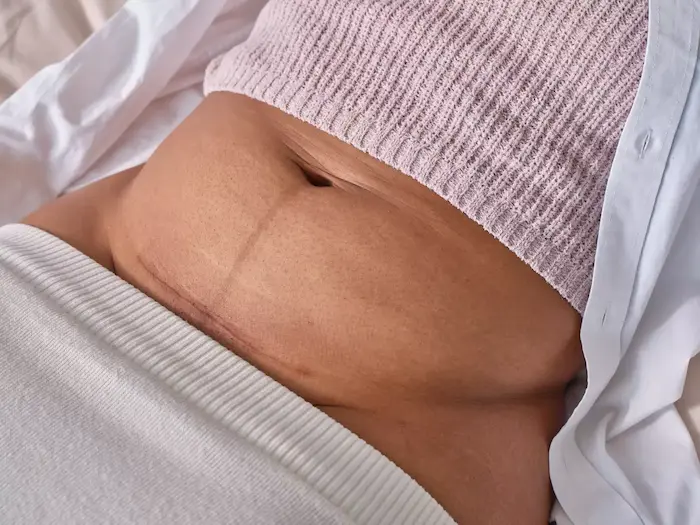
This guide walks through the C-section recovery timeline week by week: what is happening inside your body at each stage, what the restrictions are and why they exist, how to care for your incision, and what warning signs to take seriously. Whether you are preparing for a planned C-section or recovering from an emergency one, the information is the same and it matters.
What Actually Happens During a C-Section
To understand the recovery, it helps to know what the body went through. The CDC reports that C-sections account for roughly a third of all US births, so it is a very common procedure, but common does not mean simple. During the surgery, the surgeon makes an incision through skin, fat, and fascia. The abdominal muscles are typically separated rather than cut, moved aside to access the uterus, and then the uterine wall is cut to deliver the baby and placenta.
After delivery, all of those layers are closed in reverse order: uterus first, then fascia, then skin. You are healing from the inside out, and the internal layers take significantly longer than the external skin suggests. This is why the recovery timeline is longer and the restrictions more extensive than many women anticipate when they are told they will be “cleared at six weeks.”
The First 72 Hours: Hospital Recovery
Immediately After Surgery
You will come out of surgery feeling shaky, nauseous, and tired, which are normal effects of anesthesia and the medications involved. Your legs will have no feeling initially as the spinal or epidural wears off, which takes a few hours, and a catheter drains your bladder for the first 12 to 24 hours.
Pain management starts immediately and matters more than many women realize. ACOG is explicit that adequate pain control is not just about comfort; it is about being able to move, which is essential for preventing blood clots and for being physically capable of caring for your baby. A combination of IV pain medication and oral medication is standard. Do not wait until pain is severe to ask for medication, since it is much harder to manage pain that has already escalated than to stay ahead of it.
You can breastfeed. Ask the nurse to help you find a position that does not put the baby’s weight on your incision, since the football hold, where the baby is tucked along your side, is often the most comfortable in the early days.
Days 2 and 3
A nurse will help you stand and walk within 12 to 24 hours of surgery. This is uncomfortable and it is also non-negotiable, since early walking is one of the most important things you can do to prevent blood clots, a serious post-surgical risk. Your first few walks will be slow and supported, and that is exactly right.
Gas pain is one of the most unpleasant and least discussed parts of C-section recovery. During surgery the bowels slow down or temporarily stop, gas gets trapped, and it can cause sharp, referred pain in the shoulder and chest that genuinely mimics something alarming. It is not alarming; it is trapped gas. Walking is the most effective treatment, simethicone helps, and moving around even slowly gets things working again faster than lying still.
Your incision will be checked for infection signs before discharge: redness, discharge, warmth, swelling, or edges pulling apart. Most women go home on day 3 or 4.
Week by Week: What to Expect
Week 1: Back Home, Full Rest
The first week at home is genuinely about rest. Significant soreness around the incision, fatigue, and the full adjustment to newborn care all happen simultaneously. Vaginal bleeding (lochia) is bright red and heavy, which happens after every birth, C-section or not, because the placenta detaches from the uterine wall regardless of how delivery happened.
Restrictions in week one: no lifting anything heavier than your baby. The Mayo Clinic is clear that lifting heavier objects strains the incision before the internal layers have sufficient strength to handle it. No stairs except when necessary. Slow walking around the house is fine and good, while sitting for long periods is not. The surgical dressing can usually be removed and replaced with steri-strips once you are home; let the area air out but keep it dry.
Log rolling is essential. To get out of bed, roll to your side, keep your knees bent, and push up with your arms while swinging your legs off the edge. Never sit straight up from lying down, since that motion uses the exact abdominal muscles you need to protect. Practice this every time, even when you feel like you might be able to do it normally.
Week 2: More Mobile, Still Healing
The fog begins to lift in week two. You may feel more like yourself in brief windows, then overdo something and be reminded that you are still healing from surgery, which is normal and useful information. Stabbing pains or twinges around the incision are common as nerves begin reconnecting, and numbness in the skin around the belly is also normal and can last for months.
Bleeding shifts from bright red to pinkish or brownish. You can walk a bit farther than in week one, but rest remains the primary activity. Emotionally, this is often when baby blues peak, with mood swings, tearfulness, and moments of feeling overwhelmed as hormones shift after delivery. If these feelings persist or worsen rather than easing within two weeks, contact your provider, since postpartum depression is common, treatable, and worth addressing early. The CDC reports it affects roughly 1 in 8 women. More on distinguishing normal adjustment from something that needs support is in our guide to postpartum depression signs.
Week 3: The Turning Point
Many women describe week three as when recovery starts to feel real. Steri-strips may fall off on their own, so let them. The external incision looks mostly healed, and internal healing is still fully underway, but you may have stretches where you forget you had surgery right until you cough or sneeze and are quickly reminded.
Light household tasks such as folding laundry or light meal prep become possible. Tasks that engage core muscles, including vacuuming, pushing a shopping cart, or carrying anything significant, still need to wait. The distinction matters because engaging the core prematurely puts tension on internal healing layers that cannot handle it yet.
Weeks 4 to 6: Leading to the Checkup
Vaginal bleeding should have stopped or become very light discharge, energy levels are better, and the incision site feels less sensitive. The risk of wound complications drops significantly if healing has been on track up to this point.
This is the stretch leading to your 6-week postpartum checkup, where you will be assessed and cleared for a gradual return to activity. Most women are cleared for gentle walking and pelvic floor exercises at 6 weeks, with more intensive exercise, including core work, running, and lifting, coming after that in a phased progression. Our guide to returning to exercise after baby gives the specific phases and what each stage should look like so you do not go too fast too soon.
Incision Care: What Actually Helps
Keeping It Clean and Dry
The incision heals better when it is kept clean and dry. During showers, let warm water run over it rather than scrubbing, which is the approach the CDC’s surgical site guidance supports, and pat dry with a clean soft towel rather than rubbing. Keep it from becoming damp, since the natural crease of the lower abdomen can trap moisture if you are not paying attention, which creates conditions for infection.
What’s Normal vs. What Needs Attention
Normal: slight bruising, minor swelling in the first few days, clear or slightly pink fluid in the first 24 to 48 hours, and itching as healing progresses.
Contact your provider the same day for increasing redness spreading from the incision edges rather than decreasing, pus or foul-smelling discharge, fever above 100.4°F, pain that is worsening rather than slowly improving, or incision edges visibly pulling apart. These require assessment, not watchful waiting.
Scar Care After Healing
Once the incision is fully closed with no open areas or scabs, and your provider confirms it is ready, you can begin scar management. Silicone sheets or silicone gel applied daily for around 12 hours is the most evidence-based approach for reducing the raised, thickened appearance of scars, and the American Academy of Dermatology supports silicone for scar management. Sun protection matters from the beginning, since UV exposure can permanently darken new scar tissue.
Gentle scar massage comes later, usually around 8 to 12 weeks once healing is well established, and it helps break up adhesions and improve mobility. This is especially worth doing because C-section scar adhesions affect not just the skin but the deeper tissue layers, and internal adhesions can affect core function and pelvic floor movement for months or years if not addressed. Our complete guide to C-section scar care covers the massage technique, timing, and what to do if the scar feels tight or restricted.
Why the Restrictions Exist
The restrictions during C-section recovery are not arbitrary; each one protects a specific aspect of healing.
No lifting heavier than your baby. Lifting creates intra-abdominal pressure that puts direct tension on the healing uterine incision and the fascial layer, and the internal layers are not strong enough to handle that load until healing is well advanced, usually 6 to 8 weeks minimum.
No driving until you are off narcotic pain medication and able to stomp a brake fully without hesitation or pain, typically around 2 weeks. This is not just a liability question; it is about reaction time and physical capacity.
No core exercises until cleared. The transverse abdominis and other core muscles were affected by both the incision and the separation of the abdominal muscles, and high-load core exercises before healing is adequate can worsen diastasis recti and stress the incision area. Starting with deep core activation rather than crunches after provider clearance is the right progression.
No sexual activity until cleared, since the uterine incision needs to be healed before intercourse is safe. This is typically confirmed at the 6-week checkup.
Wait 18 months before conceiving again. ACOG’s recommendation exists because the uterine scar needs to fully mature before sustaining another pregnancy, and conceiving too soon increases the risk of uterine rupture, a serious complication. This timeline applies to uterine healing, not just to how you feel physically.
Practical Tips That Actually Help
Splinting for Coughs and Sneezes
Every time you feel a cough, sneeze, or laugh coming, hold a pillow firmly against your incision. This provides counter-pressure that significantly reduces the jarring pain of unexpected abdominal movement. Keep a pillow within reach at all times, next to your bed, on the couch, wherever you are spending time. This technique makes a real difference in the first two to three weeks.
Managing Constipation
Constipation after a C-section is very common, caused by pain medications, reduced mobility, and the bowels slowing during surgery. Stool softeners, plenty of water, fiber-rich foods, and gentle walking all help. Do not strain, since straining puts direct pressure on your incision, and if you have not had a bowel movement by day 4 or 5, contact your provider rather than waiting it out.
Nutrition for Healing
Your body is healing from surgery and potentially breastfeeding simultaneously, and both are enormous nutritional demands. Protein supports tissue repair, available from lean meats, eggs, legumes, and dairy. Iron replenishes blood lost during surgery, and pairing iron-rich foods such as dark leafy greens, red meat, and fortified cereals with vitamin C improves absorption. Hydration is non-negotiable, especially if nursing. More specific guidance is in our guide to postnatal nutrition.
Accept Help
The requests for help that feel hardest to make, whether asking someone to bring the baby to you in the night, asking your partner to handle all lifting for the first two weeks, or asking family to cook or clean, are the ones that most directly protect your healing. Every time you do something you should not in order to avoid asking for help, you are putting the recovery timeline at risk. That is worth naming directly: this is a medical recovery, and it requires real accommodation from the people around you.
Warning Signs That Need Same-Day Attention
Contact your provider immediately, rather than waiting for your next scheduled appointment, if you experience incision redness that is spreading or increasing rather than resolving; pus or foul-smelling drainage from the incision; fever above 100.4°F; heavy vaginal bleeding soaking a pad in an hour or less; one-sided leg swelling, redness, or pain, which can indicate a blood clot; chest pain or difficulty breathing, which can indicate a blood clot in the lung; or severe abdominal pain that is worsening.
The CDC’s “Hear Her” campaign exists precisely because postpartum warning signs, particularly in the weeks after surgery, are too often dismissed as normal recovery discomfort. Trust your instincts if something feels wrong. You are not bothering anyone by calling; this is exactly the situation your provider wants you to call about.
Frequently Asked Questions
The skin incision heals in a few weeks. The uterine incision and internal layers take 6 to 8 weeks for initial healing and significantly longer for full maturation, up to a year for complete scar remodeling. This is why the restrictions extend beyond when the external scar looks healed, and why providers recommend waiting 18 months before conceiving again. What you see on the surface is not a reliable indicator of what is happening inside.
Lochia happens after every birth regardless of delivery method. The placenta attached to the uterine wall, and when it detaches, that wound bleeds and sheds as it heals, which is the same process whether the baby came vaginally or surgically. Lochia typically lasts 4 to 6 weeks, progressing from bright red to pink-brown to yellowish-white. Our guide to postpartum bleeding and lochia explains what is normal at each stage.
Once you are off narcotic pain medication and can physically stomp on a brake pedal fully without hesitation or pain, typically around the 2-week mark. Do not drive while still taking opioid pain relievers regardless of how you feel, since reaction time is genuinely impaired. Check with your provider at the 2-week mark if you are unsure about your specific situation.
Small nerves in the skin and tissue were cut during surgery, and as they regenerate, sensation gradually returns, a process that can take months to over a year. Some degree of permanent numbness in the scar area is common. Some women experience the opposite, with shooting pains or hypersensitivity as nerves regenerate, and both are normal variations of the same process. Consistent scar massage, once fully healed, supports nerve recovery and tissue mobility.
Vaginal birth after Cesarean. Many women are candidates for VBAC in a subsequent pregnancy, and eligibility depends primarily on the type of uterine incision from the previous C-section along with overall health factors. This is a conversation to have explicitly with your provider early in any future pregnancy rather than at the last minute, and ACOG has detailed guidance on VBAC candidacy and safety considerations.
The “C-section shelf” is a bulge of tissue above the scar caused by scar tissue tethering skin downward while tissue above it accumulates. It is common, and it often improves significantly over the first year with consistent scar massage and pelvic floor physical therapy addressing the underlying adhesion patterns. For some women it persists and for others it resolves almost completely. Our guide to postpartum pelvic floor recovery is relevant here, since pelvic floor dysfunction and C-section scar adhesions are frequently connected.
One Last Word
C-section recovery is harder than it is often framed. It is major surgery during one of the most demanding transitions of your life, with restrictions that feel limiting precisely when you want to do everything for your baby. The timeline is not always linear; you will have days that feel like real progress and days that feel like a setback, and both are part of how surgical healing works.
Be patient with the restrictions, because they exist to protect something real. Follow the incision care routine consistently. Ask for help when you need it, since the asking is the hard part rather than the receiving. And if something feels wrong, call your provider. The recovery is the foundation for everything else, and it is worth treating it seriously.
This article is for general information and is not a substitute for professional medical advice. Follow your own provider’s guidance on medications, activity restrictions, and clearance after a C-section. In an emergency, call 911.
References
- Centers for Disease Control and Prevention. (2024). Births: Method of delivery. cdc.gov/nchs
- American College of Obstetricians and Gynecologists. (2018). Postpartum pain management. acog.org/clinical
- Mayo Clinic Staff. (2024). C-section recovery: What to expect. mayoclinic.org
- Centers for Disease Control and Prevention. (2024). Hear Her: Urgent maternal warning signs. cdc.gov/hearher
- American Academy of Dermatology. (2023). Scars: Tips for managing. aad.org
- American College of Obstetricians and Gynecologists. (2023). Vaginal birth after cesarean delivery. acog.org/womens-health