If you’ve ever seen a movie birth scene, you know the drill: a frantic rush to the hospital, the person in labor flat on their back in a sterile bed, legs in stirrups, pushing with a strained face. For decades, this was the standard image—and often the standard practice. But what if this common position is actually one of the least effective ways to give birth?
Modern understanding of childbirth physiology tells a different story. Your body isn’t designed to labor against gravity. It’s designed to work with it. When you’re upright and mobile, you’re not just enduring contractions—you’re actively helping your baby navigate the intricate journey through your pelvis. The right positions can be powerful allies, turning passive waiting into purposeful progress.
This guide is your handbook on the “how” and “why” of labor positions. We’ll move beyond a simple list to explore the biomechanics of birth, providing you with a toolkit of effective labor positions for fetal descent that you can practice now and use during the incredible marathon of labor. Think of it as learning the dance moves for the most important dance of your life.
Why Position Matters: The Biomechanics of Birth
To understand why position is so crucial, picture your pelvis not as a rigid, bony ring, but as a dynamic, slightly mobile structure. The joints (symphysis pubis and sacroiliac joints) have a small amount of “give,” especially when influenced by pregnancy hormones.
Now, imagine your baby—their head is the largest part—needing to navigate through this bony passage. They must make a series of subtle turns and tucks (called cardinal movements) to find the path of least resistance.
- The Problem with Lying Flat (Supine): When you lie on your back, several things happen:
- Gravity Works Against You: Your baby is now pressing back into your spine instead of down into the birth canal.
- Your Pelvic Opening Narrows: Research shows the supine position can reduce your pelvic outlet by up to 30%. You’re literally giving your baby a tighter squeeze.
- Compression of Major Vessels: The weight of your uterus can compress the vena cava, reducing blood flow to your heart, your placenta, and your baby. This can lead to dizziness and less optimal fetal heart patterns.
- The Power of Upright and Asymmetric Positions: By staying upright or using specific asymmetrical poses, you:
- Harness Gravity: Baby’s weight combines with the force of contractions to encourage descent.
- Optimize Pelvic Space: Different positions subtly change the shape and dimensions of your pelvis, helping baby find the room they need to rotate and descend.
- Improve Contraction Efficiency: Good positioning can help contractions become more effective and regular.
- Manage Pain: Movement and position changes release endorphins and can take pressure off your back (especially helpful for “back labor”).
This proactive approach is the core of using movement to progress labor naturally.
Your Pre-Labor Toolkit: Positions to Practice Now
You don’t have to wait for active labor to start using these principles. In the final weeks of pregnancy, certain positions can help optimize baby’s position for labor and encourage engagement (when baby’s head settles into the pelvis).
- Forward-Leaning Inversion (with support/caution): A gentle, supported inversion (knees on couch, hands on floor) can help create space for a breech or posterior baby to turn. Always practice under the guidance of a prenatal professional like a Spinning Babies®-trained provider.
- The 90-90 Hip Release: Sit on the floor with your back against a couch. Place your legs up on the couch so your knees and hips are at 90-degree angles. This helps release tension in the pelvic ligaments and can encourage balance.
- Spending Time on Hands and Knees: This takes pressure off your spine and encourages baby to move toward the front of your pelvis (anterior position), which is ideal for labor.
The Active Labor Playbook: Positions for Each Stage
Think of these as your go-to moves when contractions are regular and building. Have your partner or doula read this, too, so they can suggest and support you in them.
First Stage (Dilation): Opening and Descending
The goal here is to stay comfortable, manage pain, and help baby descend.
- Standing and Leaning: Stand and lean your hands or forearms on a wall, bed, or your partner. Sway your hips side to side. This is fantastic for early labor positions to encourage engagement.
- Slow Dancing: Wrap your arms around your partner’s neck, rest your head on their chest, and sway together through contractions. They can provide counter-pressure on your lower back.
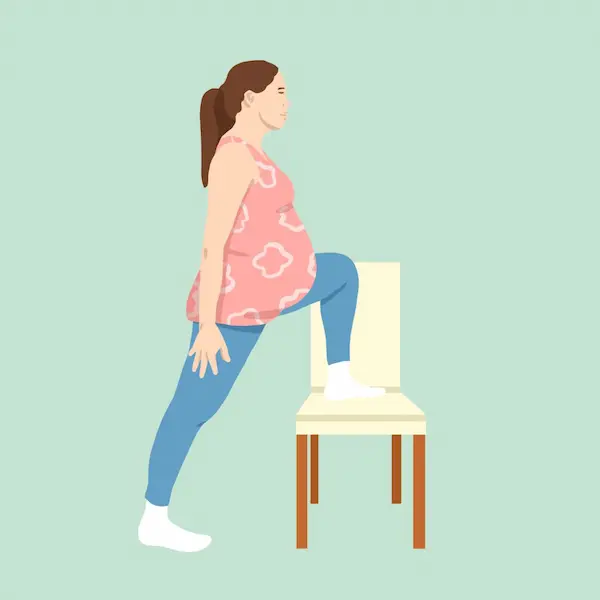
- Lunge: Place one foot on a sturdy chair or low stool. Gently lunge into the raised leg during a contraction. This creates asymmetrical pelvic space, perfect for helping a baby rotate from a posterior position. Alternate sides.
- Hands and Knees (All-fours): A superstar position. It relieves back pressure, allows for pelvic rocking, and gives your birth partner full access to your back for massage or counter-pressure with a rebozo scarf.
- Supported Squat: Lean back into your partner (who is sitting on a chair or bed) while you squat between their knees. They fully support your weight. This opens the pelvis maximally.
Transition and Second Stage (Pushing): The Power Positions
When it’s time to push, you want gravity and pelvic opening on your side.
- Supported Squat (at the bed/with a bar): Using a squat bar attached to the bed or holding your partner’s hands, sink into a deep squat. This increases the pelvic outlet by up to 10-20% compared to lying down. It’s one of the most effective pushing positions for second stage.
- Semi-Sitting/Throne Position: Prop yourself up with pillows at about a 45-degree angle on the bed. This keeps you upright enough for gravity but provides support if you’re tired or have an epidural.
- Side-Lying: Lie on your side with your top leg held up by your partner or a peanut ball. This is incredibly effective for slowing a too-fast descent, for people with epidurals, or for preventing tearing. It allows one side of the pelvis to open freely.
- Kneeling/Hands and Knees on the Bed: Kneel on the bed, leaning over the raised head of the bed or a pile of pillows. This gives the benefits of all-fours with more support and is often easier for providers to monitor if needed.
- Birth Stool: A classic for a reason. Sitting on a specially designed low stool provides full pelvic opening while giving you solid support and conserving energy.
Special Considerations: Positions with an Epidural or Monitor
Having an epidural doesn’t mean you’re sentenced to your back. Modern “walking epidurals” or lighter doses often allow some movement. Even with full numbness, you and your nurse can use positions that work with gravity.
- The Peanut Ball: This is a game-changer. Placed between your knees while lying on your side, it creates pelvic asymmetry and can significantly aid in dilation and rotation, even while you rest.
- Side-Lying: As mentioned above, this is a top choice.
- Semi-Sitting/Throne Position: Easily achievable with bed adjustments and pillows.
- Semi-Prone: Lying on your side but tilted slightly forward onto a pile of pillows.
The key is communicating with your nurse about your desire to change positions regularly (every 30-60 minutes) to help labor progress, even with an epidural.
How to Use This Knowledge: Creating Your Game Plan
- Practice Prenatally: Try these positions at home in your third trimester. Notice which ones feel comfortable and empowering. Stretch and strengthen the muscles you’ll use (thighs, back).
- Pack Your “Position Bag”: Include items like a rebozo scarf for hip sways, a tennis ball for counter-pressure, and a printed list or photos of positions for your birth partner.
- Communicate with Your Birth Team: During labor, your partner or doula’s job is to remind you to change positions. A good rule of thumb: if you’ve had 3-4 contractions in one position without progress or comfort change, try a new one.
- Listen to Your Body: You will instinctively move into positions that feel right. This guide simply gives you a vocabulary for those instincts. If a position feels wrong, don’t force it.
Frequently Asked Questions
Q: How often should I change positions during labor?
A: There’s no strict rule, but many midwives suggest aiming for a change every 30-60 minutes, or after 3-5 contractions in one spot if it’s not feeling effective. Listen to your body’s cues and your care team’s feedback.
Q: What if my baby is “sunny side up” (posterior)?
A: Posterior labor (back of baby’s head against your spine) often causes intense back pain. Positions to rotate a posterior baby are key: hands and knees (with pelvic rocks), forward-leaning positions, and deep lunges. Avoid sitting back in chairs or reclining, which can encourage a posterior position.
Q: I’m having a hospital birth. Will I be allowed to move around?
A: In most cases, yes, especially in early labor. Continuous fetal monitoring may limit mobility, but many hospitals now offer wireless telemetry monitors that allow you to walk, shower, and use positions. Discuss mobility preferences with your provider during a prenatal visit.
Q: What’s the single best position for pushing?
A: There isn’t one. Different positions work for different people and different moments. Many find upright pushing positions like squatting to be most effective, but side-lying is excellent for reducing tearing, and semi-sitting offers a good balance. Be prepared to try a few.
Conclusion: You Are the Architect of Your Birth Experience
Learning about labor positions is an act of empowerment. It shifts your role from passive patient to active participant. You are learning to work with your body’s brilliant design, using gravity and movement as your allies.
Tape this to your fridge, share it with your partner, and tuck it into your birth plan: My body knows how to birth, and my job is to find the positions that give it the best architecture to do its work.
When the intensity of labor arrives, you won’t remember a complex list. But the muscle memory from practicing and the trust in your body’s wisdom will guide you. You’ll sway, you’ll lean, you’ll squat, you’ll find the shape that opens the path for your baby. Trust the process, trust your team, and most of all, trust your own powerful, knowing body. You’ve got this.