When the temperature drops and the air turns dry, your baby’s bath needs a few thoughtful adjustments. Winter bathing is a balance between keeping your baby clean, protecting delicate skin from moisture loss, and keeping them warm from tub to towel. Dry, heated indoor air and harsh conditions outside can leave a baby’s skin more prone to dryness, irritation, and eczema flare-ups — so a relaxing splash can become a skin stressor if you’re not careful. This guide covers how to warm the room, choose the right water temperature, adjust bathing frequency, and — most importantly — lock in moisture afterward.

Why Winter Is Harder on Baby Skin
Infant skin is thinner than adult skin and loses moisture more quickly, and winter makes this worse in two ways: cold outdoor air holds very little moisture, and indoor heating (forced-air furnaces, space heaters, fireplaces) drops indoor humidity even further. This “double dry” effect can weaken the skin’s protective barrier, leading to more water loss, dryness, flaking, and itching — and, for babies prone to atopic dermatitis, winter is a prime flare season. The goal of winter bathing, then, is simple: cleanse without stripping, and hydrate immediately afterward.
Prep: A Warm, Safe Setup
Chilly air on wet skin is the main cause of discomfort and heat loss, so warm the space first. Close the bathroom door and windows and let a hot shower run for a couple of minutes to warm the room (keep it ventilated so it doesn’t get too humid) — aim for around 75°F (24°C), and keep any space heaters away from the tub and out of reach of cords.
Then gather everything within arm’s reach before you start: a pre-warmed towel (a hooded one is ideal for trapping heat at the head), a clean diaper and clothing unfolded and ready for fast dressing, your fragrance-free moisturizer open and ready, and a washcloth and gentle cleanser if you’re using one. Fill the tub last, once the room is warm and supplies are set, so the water doesn’t cool while you prepare.
The Bath: Water, Frequency, and Cleanser
Water temperature
Keep the water lukewarm, not hot — around 98.6°F to 100°F (37°C to 38°C), roughly body temperature. Always test with your elbow or inner wrist rather than your hand, and a floating bath thermometer is a cheap way to be sure. For newborns and infants, 2–3 inches of water is enough to cover their legs and keep them warm.
Frequency: less is often more
In winter you can comfortably cut back on full baths. Newborns (0–3 months) need only 2–3 baths a week, with “topping and tailing” (a damp-cloth wash of face, neck, hands, and diaper area) on other days. Older infants (3–12 months) are usually fine with about three times a week unless they’re especially messy — daily baths are rarely needed and can strip natural oils. The main exception is a baby with eczema, who often benefits from a short daily lukewarm bath as part of the “soak and seal” method described below.
Cleanser: choose gentle, use sparingly
Use a fragrance-free, soap-free, dye-free cleanser made for babies or sensitive skin, and skip bubble baths, which are drying. Apply a small amount to a wet washcloth or your hands rather than into the water, and wash only the areas that need it — face, neck, hands, and diaper area; limbs and torso often don’t need soap every time. Keep the whole bath short, about 5 to 10 minutes, since even warm water is drying with prolonged exposure.
The Most Important Step: Seal in Moisture
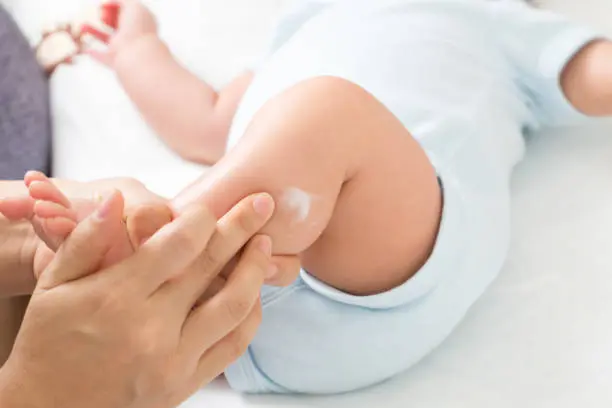
This is where winter skin care is won or lost. The goal is to trap the water the skin absorbed during the bath, and timing matters: apply moisturizer within about three minutes of taking your baby out, onto damp (not dripping) skin.
- Lift and wrap your baby straight into the pre-warmed hooded towel and pat — don’t rub — dry.
- Move to a warm, draft-free spot while they’re still wrapped.
- Moisturize, uncovering one area at a time and applying a generous layer of a fragrance-free cream or ointment (petrolatum, ceramides, or shea butter are good). Ointments and thick creams work better than thin lotions in winter — pay extra attention to dry patches, cheeks, and skin folds.
- Dress quickly in soft, breathable layers, ideally cotton. A snug footed onesie or pajama helps hold heat.
If dryness or eczema is a real concern, the “soak and seal” method works well: a 5–10 minute lukewarm soak (no soap on inflamed areas), pat dry to leave the skin slightly damp, then apply any medicated cream your doctor has recommended to the affected spots, followed by a thick moisturizer over the whole body to seal it in. Our baby eczema guide covers this in more detail.
Extra Winter Tips and Cautions
- Run a humidifier. A cool-mist humidifier in your baby’s sleeping area counteracts dry indoor air and eases both skin and breathing comfort. Clean it regularly to prevent mold.
- Don’t overdress for bed. A single layer of warm, breathable pajamas is usually enough — overheating is a SIDS risk factor, so keep the room at a comfortable temperature (around 68–72°F / 20–22°C) and skip the extra blankets.
- Protect skin before going out. If you head outside soon after a bath, wait until your baby is fully dry and dressed, cover exposed skin with a hat and mittens, and dab a little plain petroleum jelly on the cheeks to guard against windburn.
- Safety basics still apply. Never leave your baby unattended in the bath, even for a second; test the water temperature every time; and keep humidifiers, heaters, and other electricals away from the tub and out of reach.
Troubleshooting Common Winter Issues
- Baby gets chilly during the bath. Pre-heat the room, use a smaller infant tub (less water cools more slowly), and drape a warm washcloth over the parts of the chest and belly you’re not actively washing.
- Skin looks very dry afterward. You’re likely bathing too often, using water that’s too warm, or not moisturizing quickly or thickly enough — revisit frequency, temperature, and the three-minute rule.
- Cradle cap worsens. Dry air can aggravate it. During the bath, gently work the scalp with a soft brush and baby shampoo, and afterward loosen scales with a little mineral or baby oil, then brush gently — never pick. See our cradle cap guide for more.
Frequently Asked Questions
Less often than you might think. Newborns need only 2–3 baths a week and older infants about three, with a damp-cloth “top and tail” on other days. Daily baths can strip natural oils. The exception is a baby with eczema, who may do better with a short daily lukewarm bath followed immediately by moisturizer.
Lukewarm — around 98.6°F to 100°F (37°C to 38°C), roughly body temperature. Hot water is more drying, especially in winter. Test with your elbow or inner wrist, or use a floating bath thermometer, and keep the water just 2–3 inches deep.
Keep baths short and lukewarm, bathe less frequently, and moisturize within about three minutes of the bath onto damp skin, using a thick fragrance-free cream or ointment rather than a thin lotion. A cool-mist humidifier in the room helps counter dry indoor air.
It’s often very helpful in winter. A cool-mist humidifier in your baby’s sleeping area adds moisture back into dry, heated indoor air, which can ease both dry skin and breathing comfort. Clean it regularly to prevent mold buildup.
Wait until they’re completely dry and dressed first. Then cover exposed skin with a hat and mittens and protect the cheeks with a little plain petroleum jelly against windburn. Going out with damp skin or hair in the cold can chill your baby quickly.
The Bottom Line
Winter bath time comes down to a warm room, lukewarm water, fewer and shorter baths, and — above all — moisturizing generously the moment your baby is out of the water. Handled that way, a bath becomes a hydrating treatment rather than a skin stressor, and stays a cozy, comfortable ritual through the coldest months. For the full bathing technique, see our newborn bath guide.
This article is for general information and is not a substitute for personalized medical advice.
References
- American Academy of Pediatrics (HealthyChildren.org). Bathing Your Newborn.
- American Academy of Pediatrics (HealthyChildren.org). Winter Safety Tips.
- National Eczema Association. Eczema, Bathing and Moisturizing.
- Mayo Clinic. Baby Bathing and Skin Care Basics.