Somewhere between the gummy newborn grin and that first flash of a tooth, most parents hit a confusing stretch: Is this fever from teething or an illness? Is the fussiness pain, or a developmental leap? “Teething” has become a catch-all explanation for almost any baby behavior — which is exactly the problem, because it can mask a real illness that needs care. This guide separates the genuine, evidence-based symptoms from the myths, lays out the eruption timeline, and points you to safe relief — so you know when it’s really teething and when it’s something else.

What Actually Happens During Teething
Teething is the natural process of a baby’s primary (“baby”) teeth breaking through the gums. Tooth buds formed before birth slowly travel up through the jawbone; as a tooth pushes against the gum from below, it causes localized inflammation, increased blood flow, and eventually a breakthrough. The key point: this inflammation is confined to the mouth and gums. It does not cause whole-body illness — though an uncomfortable, run-down baby can be more susceptible to catching the ordinary bugs that circulate among infants, which is part of why teething gets blamed for so much.
The Real Symptoms (Backed by Evidence)
A consistent cluster of mild, local signs is genuinely associated with teething — these are signs of discomfort, not disease:
- Irritability and fussiness — the most common sign, often worse in the afternoon and evening.
- Excessive drooling, which can soak through bibs and shirts.
- A drool rash — red, chapped skin on the chin, cheeks, and neck from constant moisture.
- Gnawing and chewing on toys, hands, and fingers to get counter-pressure on sore gums.
- Swollen, tender gums, sometimes with a small bluish eruption cyst or a speck of blood as the tooth breaks through (usually normal).
- Ear rubbing or cheek pulling — gum pain (especially from molars) can radiate along nerves to the ears. On its own, this is not a sign of an ear infection.
- Mild feeding changes and disrupted sleep — some babies feed less because suction is uncomfortable; others seek comfort sucking, and night wake-ups increase.
What Teething Does NOT Cause
This is the most important section. Teething may cause a very slight rise in temperature, but it does not cause a true fever. The AAP is clear: a rectal temperature of 100.4°F (38°C) or higher is a fever and is not caused by teething — it points to an infection or illness that needs evaluation. Likewise, diarrhea, vomiting, a true high fever, a widespread rash, or significant congestion are not teething symptoms. If you see these, look for another cause and check with your pediatrician rather than writing them off as teething — this is exactly where the “catch-all” habit can delay needed care. Our guide to taking your baby’s temperature can help.
The Teething Timeline
Timing varies a lot. The first tooth usually appears between 4 and 7 months, but anywhere from 3 to 12 months is completely normal. Teeth often come in pairs, with calm intervals between bursts of discomfort, and the larger molars tend to cause the most fuss. The typical order:
- Lower central incisors (bottom front two) — 6–10 months
- Upper central incisors (top front two) — 8–12 months
- Upper & lower lateral incisors — 9–16 months
- First molars — 13–19 months
- Canines (“eye teeth”) — 16–23 months
- Second molars — 23–33 months, completing the set of 20
If no teeth have erupted by 18 months, mention it to your pediatrician.
Safe Ways to Soothe
The goal is cold plus gentle counter-pressure:
- A chilled (not frozen) teether — a solid silicone or rubber ring cooled in the fridge; avoid liquid-filled rings that can leak.
- A cold, damp washcloth — twist and chill a clean cloth; the texture is perfect for gnawing.
- A gentle gum massage with a clean finger, firm circular pressure for a minute or two.
- Chilled soft foods for babies on solids (cold applesauce or yogurt; a chunk of cold cucumber in a mesh feeder for safe gnawing).
- Weight-based pain relief for significant pain that disrupts sleep or feeding — acetaminophen (2+ months) or ibuprofen (6+ months), dosed by weight (not age), confirmed with your pediatrician and used intermittently for pain peaks, not around the clock.
⚠️ Avoid the dangerous “remedies”: the FDA warns against benzocaine numbing gels under age 2 (risk of methemoglobinemia, a serious blood-oxygen disorder) and homeopathic teething tablets (inconsistent, toxic belladonna levels); amber teething necklaces are a strangulation and choking hazard with no proven benefit; never rub alcohol on the gums; and skip rock-hard frozen teethers, which can bruise delicate gums. Our guide to safe teething medications covers this in full.
Caring for That First Tooth
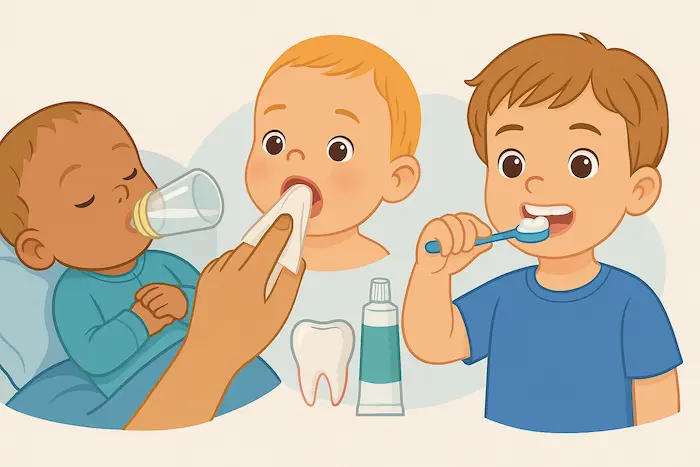
Dental care starts with the first tooth. Brush twice a day with a soft, infant-sized brush and a rice-grain-sized smear of fluoride toothpaste, never put your baby to bed with a bottle of milk, formula, or juice (the pooling sugars cause rapid “baby bottle tooth decay”), and book the first dental visit by the first birthday or within 6 months of the first tooth, as the ADA recommends. More in our guide to your baby’s first tooth.
When to Call the Pediatrician
- A fever of 100.4°F (38°C) or higher.
- Inconsolable crying for hours that gentle methods don’t ease.
- Signs of dehydration — fewer than 4 wet diapers in 24 hours, or a sunken soft spot.
- Diarrhea, vomiting, or a widespread rash, or significant gum bleeding, pus, or swelling beyond the tooth area.
- No teeth by 18 months.
Frequently Asked Questions
Not a true fever. Teething may cause a very slight rise in temperature from gum inflammation, but a rectal temperature of 100.4°F (38°C) or higher is a real fever and is not caused by teething — it signals an infection or illness that needs evaluation.
Usually between 4 and 7 months, but anywhere from 3 to 12 months is completely normal. If no teeth have appeared by 18 months, mention it to your pediatrician.
A chilled (not frozen) teether, a cold damp washcloth, and a gentle gum massage are the first line. For significant pain disrupting sleep or feeding, weight-based acetaminophen (2+ months) or ibuprofen (6+ months) can help — confirm the dose with your pediatrician.
No. The FDA warns against benzocaine numbing gels under age 2 (risk of methemoglobinemia) and homeopathic belladonna teething tablets. Amber teething necklaces are a strangulation and choking hazard with no proven benefit — the AAP advises against them.
No. Diarrhea, vomiting, and a widespread rash are not caused by teething. If your baby has these, look for another cause and check with your pediatrician rather than assuming it’s the teeth.
The ADA recommends the first dental visit by the first birthday or within 6 months of the first tooth appearing. Start brushing as soon as that first tooth arrives, using a rice-grain-sized smear of fluoride toothpaste twice a day.
The Bottom Line
Teething is a temporary, real, but localized challenge — sore gums, not a mystery illness. Know the genuine symptoms, lean on cold and counter-pressure for relief, steer clear of the dangerous “remedies,” and above all, remember the dividing line: if your baby seems truly sick — a real fever, diarrhea, vomiting, a rash — they probably are, and that’s a reason to call your pediatrician, not to blame the teeth. Trust your instincts, and soon you’ll be rewarded with a brand-new little smile.
This article is for general information and is not a substitute for personalized advice from your pediatrician or dentist.
References
- American Academy of Pediatrics (HealthyChildren.org). Teething: 4 to 7 Months.
- Mayo Clinic. Teething: Tips for Soothing Sore Gums.
- U.S. Food and Drug Administration. FDA Warning on Over-the-Counter Benzocaine Teething Products.