The first time your baby wakes at 2 a.m. with that particular cry — the one that’s different from hunger or a wet diaper — you’ll do almost anything to help. When tiny fingers go constantly into a drooly mouth and cheeks flush pink with frustration, the urge to reach for something, anything, that promises relief is overwhelming. But the teething aisle is full of products that range from useless to genuinely dangerous, and the safest, most effective options are rarely the ones in a box. Here’s what every parent deserves to know about what’s safe, what isn’t, and what actually helps.
What Teething Actually Is — and Isn’t
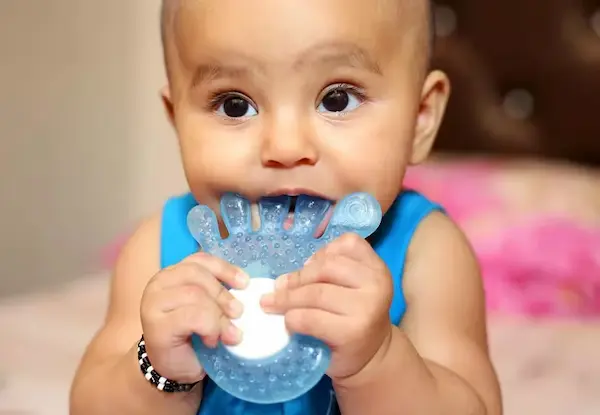
Teething is the period when an infant’s primary (baby) teeth begin to break through the gum tissue, typically starting around 4 to 7 months, though the range is wide — some babies are born with a tooth, others don’t cut their first until after their first birthday, and both are normal. Before a tooth emerges, the body releases chemicals that break down some gum tissue to clear a path, and that localized inflammation, plus the pressure of the tooth pushing up, causes the discomfort. According to the American Academy of Pediatrics, common symptoms include increased fussiness, excessive drooling, chewing on hands and toys, a slightly elevated temperature (below 100.4°F/38°C), swollen tender gums, a reduced appetite for solids, and disrupted sleep.
What matters just as much is what teething does not cause: a high fever (over 100.4°F/38°C), severe diarrhea, persistent vomiting, a full-body rash, or significant respiratory symptoms. If your baby has any of these, they’re likely ill, not teething — and assuming “it’s just teething” can delay care for a real illness. Never attribute a high fever or severe symptoms to teething without checking with your pediatrician. (In a baby under 3 months, a rectal temperature of 100.4°F/38°C or higher is always a medical emergency.)
The Big Warning: Benzocaine Gels
Benzocaine is a topical anesthetic found in many over-the-counter teething products (brand names include Baby Orajel and Anbesol, plus store-brand equivalents). It numbs the gums within minutes, which is exactly why it appeals to desperate parents — but it carries a rare and serious risk called methemoglobinemia, a condition that reduces the blood’s ability to carry oxygen, starving tissues throughout the body. The U.S. FDA has issued repeated warnings that this can occur after just a single application, even when used as directed. Warning signs include pale, gray, or blue-tinged skin, lips, or nail beds; shortness of breath; fatigue; confusion; headache; and rapid heart rate, appearing within minutes to hours. Without immediate treatment, it can cause permanent injury or death.
The FDA’s position is unequivocal: benzocaine oral products should not be used in children under 2 years, in any form (gel, liquid, or spray). Yet these products often remain on shelves. Check the active ingredient list — if you see benzocaine, put it back.
Other Ingredients to Avoid
- Belladonna (deadly nightshade) appears in some homeopathic teething tablets and gels. The FDA warned about these in 2016 and 2017 after reports of seizures, difficulty breathing, lethargy, and death; testing found wildly inconsistent belladonna levels between tablets. “Natural” and “homeopathic” do not mean safe — poison hemlock is natural too. Avoid these entirely.
- Lidocaine is a stronger anesthetic than benzocaine. It should never be used for routine teething pain — prescription-strength lidocaine can cause heart problems and seizures in infants.
- Alcohol (listed as ethanol or isopropyl alcohol) numbs briefly but irritates and dries tissue, and infants can absorb it through the mouth, affecting blood sugar and the developing brain. It has no place near a baby’s mouth.
Are Any Topical Gels Safe?
Some gels contain no active drug — just soothing substances like glycerin and thickeners. They work purely as a physical barrier plus the counter-pressure of rubbing them on, and while generally safe, they don’t do much more than a cold washcloth does for free. As for natural options, chamomile (cooled, on a cloth) is generally safe in food amounts but lacks strong evidence and can trigger reactions in babies with ragweed allergies, and clove oil contains eugenol (a natural anesthetic) but is potent enough to burn tissue, with a narrow margin between an effective and a harmful dilution. The AAP takes no position on these due to insufficient data — discuss concentrations with your pediatrician first. The bottom line: most pediatricians advise against any medicated topical treatment, because the few minutes of numbness aren’t worth the risks, and safer options exist.
When Oral Pain Relievers Are Appropriate
For significant discomfort that disrupts sleep and makes your baby truly miserable, oral pain relievers are a safer choice than topical numbing agents — but “safer” isn’t “risk-free,” and correct use matters.
Acetaminophen (Tylenol) is the most commonly used option for infants and, used correctly, is effective and generally safe. The key rules: dose by weight, not age (use your baby’s most recent weight, or call your pediatrician’s office to calculate it); check the concentration on the label (infant acetaminophen is now standardized at 160 mg/5 mL, but old bottles may differ — when in doubt, replace it); space doses at least 4 hours apart with no more than 5 in 24 hours; and always use the syringe that came with the medication, since even 0.5 mL matters in a small infant. Track every dose in a notebook or app — exhausted parents double-dose more often than you’d think. For babies under about 4 months, check with your pediatrician before giving any medication, even acetaminophen.
Ibuprofen (Advil/Motrin) is an option for infants 6 months and older (younger only if a pediatrician specifically directs it). It reduces inflammation, which acetaminophen doesn’t, and lasts a bit longer (6–8 hours). Dose by weight, give it with a feeding to protect the stomach, and make sure your baby is well hydrated, since ibuprofen affects kidney function. Don’t alternate acetaminophen and ibuprofen without a specific schedule from your pediatrician — it raises the risk of dosing errors in infants.
Never give a teething baby aspirin (linked to Reye’s syndrome), adult formulations (wrong concentration, can’t be safely split), topical adult NSAID gels (ibuprofen or ketoprofen, not tested for infant oral use), or any prescription painkiller not specifically prescribed for your child.

Safer, Drug-Free Relief
Before reaching for any medication, these often work surprisingly well with zero drug exposure:
- Chilled — not frozen — teething rings. Refrigerate them for 30–60 minutes so they’re pleasantly cool but still flexible. Frozen rings become rock-hard and can damage or “freezer burn” delicate gum tissue. Cool, never frozen, applies to anything you offer.
- A clean, cold washcloth. Dampen it, twist it, and chill it for 15–20 minutes — the texture and cold both soothe. Supervise closely and replace it when frayed, since saturated cloth can tear.
- Gentle finger rubbing. With clean hands, rub your baby’s gums with a finger (dip it in cool water first for extra relief). The counter-pressure helps, and your touch is comforting in itself.
- Distraction. A warm bath, a new toy, a change of scenery, or going outside can interrupt the pain-fussiness cycle — teething comes in waves, and catching a lower-intensity moment helps. Our guide to soothing a fussy baby has more.
- Breastmilk popsicles, but only once your baby has started solids (around 6 months) — frozen in baby-safe molds, they soothe and comfort. Skip them for younger babies.
Food-grade silicone teethers (free of BPA, phthalates, and PVC) are also safe when used properly — inspect them regularly, replace if pieces break off, and refrigerate but never freeze them. Our guide to a non-toxic nursery covers choosing safe materials.
Teething Necklaces and Amber Beads: Don’t
Amber teething necklaces are marketed on the claim that body heat releases succinic acid from the amber, absorbed through the skin to ease pain. There is zero scientific evidence for this. What does exist is clear evidence of danger: the AAP is unequivocal that teething necklaces, bracelets, and anklets pose serious risks — strangulation (a necklace can catch on crib slats or furniture and tighten around the neck), choking (beads break loose or get bitten off and block the airway), and mouth injuries. The CDC has documented infant deaths linked to teething jewelry. No unproven benefit justifies that risk. If you own any, remove them from your baby’s environment entirely — not in the crib, not on the baby, not within reach.
When to Call the Doctor
Knowing when teething warrants a call protects your baby from a delayed diagnosis of real illness:
- Fever over 100.4°F (38°C) — teething causes at most a slight elevation; anything higher needs evaluation (ear infection, virus, or other illness). In a baby under 3 months, this is an emergency.
- Persistent diarrhea or vomiting — not caused by teething; call your pediatrician.
- Refusing all liquids or noticeably fewer wet diapers — dehydration progresses fast in infants.
- A rash spreading beyond the drool area (chin, neck, chest), or a drool rash that looks infected (oozing, spreading redness, warmth).
- Symptoms lasting more than a few days without improvement, or simply a gut feeling that something is wrong. Trust it and call — pediatric offices field these questions all day.
Frequently Asked Questions
Absolutely not. This dangerous old remedy has no place in infant care — alcohol can cause blood-sugar drops, seizures, and coma in small children, and the amount needed to numb gums is far more than is safe for a baby to absorb or ingest.
Most cut their first tooth between 4 and 7 months, though anywhere from 3 to 12 months is normal. The two bottom front teeth usually appear first, then the top front teeth, and by about age 3 most children have all 20 primary teeth.
Look at the whole picture. Teething babies are generally content between fussy spells, want to chew, drool, and may feel slightly warm but not feverish. Sick babies often have a persistent fever, refuse to eat or drink at all, seem lethargic even between fussy periods, or have vomiting or diarrhea. When in doubt, assume illness and call your pediatrician.
Yes, when used properly. Choose food-grade silicone free of BPA, phthalates, and PVC, inspect it regularly, and replace it if pieces break off. Silicone teethers can be refrigerated but not frozen, and you should follow the manufacturer’s age guidance.
Yes, early teething happens, and some babies are even born with a tooth. The symptoms are the same at any age, but for babies under about 4 months, check with your pediatrician before using any medication, including acetaminophen.
Indirectly. Extra drool can loosen stools slightly, and those more frequent stools can irritate the skin. Treat the rash with frequent changes and a barrier cream — but don’t assume a rash means your baby is seriously ill.
The FDA advises against them. Despite “natural” labeling, some have contained inconsistent and dangerous levels of belladonna, several brands have been recalled, and adverse events including seizures have been reported. Stick with treatments that have proven safety profiles.
The Bottom Line
Teething is hard on babies and on parents — the sleep loss, the constant crying, the helplessness all take a toll. But it passes: every tooth eventually emerges, and every baby eventually sleeps well again. In the meantime, be kind to yourself, accept help, and if you ever feel overwhelmed, put your baby down somewhere safe and step away for a few minutes. And when you’re standing in that pharmacy aisle, exhausted and uncertain, remember that the safest choice for teething pain is rarely in a box — more often it’s in your refrigerator, your clean hands, or your lap as you rock and soothe your way through this temporary storm.
This article is for general information and is not a substitute for personalized medical advice. Always confirm medication doses with your pediatrician.
References
- U.S. Food and Drug Administration. FDA Warns About Serious Risks of Benzocaine Oral Drug Products.
- American Academy of Pediatrics (HealthyChildren.org). Teething: 4 to 7 Months.
- American Academy of Pediatrics (HealthyChildren.org). Teething Necklaces and Beads: A Caution for Parents.
- Mayo Clinic. Teething: Tips for Soothing Sore Gums.