When yellowish, crusty patches start appearing on your newborn’s scalp, it’s natural to feel a wave of concern. The reassuring news: this is incredibly common — cradle cap affects a large share of infants in the first few months — and it’s harmless, temporary, and very manageable at home. This guide covers what cradle cap is, how to tell it from other skin conditions, a gentle step-by-step way to treat it, and when it’s worth a call to the pediatrician. (For cradle cap as part of overall scalp and hair care, see our baby hair care guide; this article is the dedicated deep-dive.)
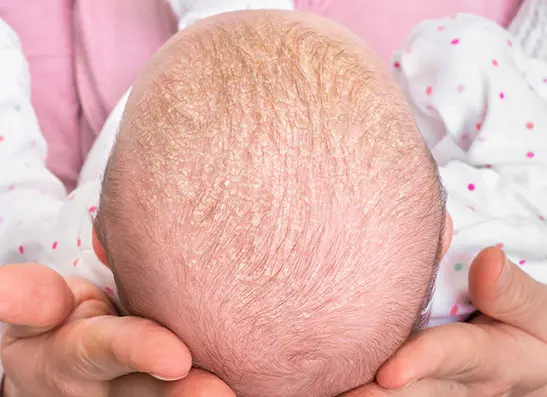
What Cradle Cap Actually Is
Medically known as infantile seborrheic dermatitis, cradle cap isn’t an infection, a sign of poor hygiene, or an allergy. It’s an inflammatory skin condition that appears most often on the scalp, though it can also show up behind the ears, on the eyebrows, or in skin folds. The exact cause isn’t fully understood, but the leading explanation is that maternal hormones crossing the placenta before birth leave a baby’s oil (sebaceous) glands temporarily overactive. That excess oil traps dead skin cells so they don’t shed normally, producing the classic yellowish, greasy, sometimes flaky scales. A common yeast called Malassezia — naturally present on everyone’s skin — can also colonize the oil-rich environment and contribute to the inflammation.
Cradle cap appears across all genders and ethnicities, though it tends to be more noticeable in babies with darker hair simply because the flakes contrast more. It has nothing to do with how often you bathe your baby. It typically emerges between about two weeks and three months of age and gradually resolves on its own, usually clearing by six to twelve months.
How to Recognize It
The appearance ranges from mild (small, white or off-white dandruff-like flakes) to moderate (thicker, yellowish, greasy scales) to pronounced (dense, layered, waxy crusts). The skin underneath may look slightly pink but generally isn’t inflamed unless it’s been irritated by scratching. Unlike some other skin conditions, cradle cap usually doesn’t itch — though mild itching can occur if it spreads to the neck folds or behind the ears. Beyond the scalp, it can appear behind the ears, along the eyebrows, occasionally on the eyelids (which need extra gentleness), in neck folds (especially on chubbier babies), and less commonly in the armpit or diaper area. It’s the same condition wherever it lands.
Cradle Cap vs. Other Skin Conditions
Getting the identification right matters, because treatments differ. The most common mix-up is with baby eczema:
| Feature | Cradle Cap | Baby Eczema |
|---|---|---|
| Appearance | Greasy, yellowish scales | Dry, red, rough patches |
| Location | Scalp, behind ears, eyebrows | Cheeks, elbows, knees, torso |
| Sensation | Usually no itching | Often intensely itchy |
| Skin feel | Oily or waxy | Dry or leathery |
The two can coexist but need different management — eczema responds to heavy moisturizers and trigger avoidance, while cradle cap responds to gentle oil treatments and regular washing. A couple of other look-alikes: infant psoriasis (much rarer) tends to be silvery-white rather than yellowish, thicker and more defined at the edges, and more likely to appear on other body parts at the same time; baby acne shows up as small red bumps or pustules on the cheeks, forehead, and chin rather than scales on the scalp. If you’re unsure, a pediatrician can usually tell the difference with a simple visual exam.
Treating Cradle Cap at Home
Most cases respond beautifully to consistent, gentle care. The key word is gentle — aggressive scraping or picking can damage delicate skin and introduce infection.
Step 1: Soften the scales
Trying to remove dry, stubborn scales without softening them first risks damaging the skin. About 15 to 30 minutes before bath time, gently massage a small amount of oil into the scaly areas with your fingertips in circular motions — no need to press hard. Good options include mineral oil, plain petroleum jelly, or coconut, jojoba, or almond oil. For thicker buildup, you can leave the oil on longer (some parents apply it before a nap, then bathe on waking, with a soft towel under the head to protect bedding).

Step 2: Wash and brush gently
Bath time is your chance to lift the softened scales. Wet the scalp with warm (not hot) water, lather a mild, fragrance-free baby shampoo with your fingertips, and let the water rinse away loosened flakes. For stubborn areas, a soft-bristled baby brush (or soft silicone bristles) used in gentle circles helps — never scrape or pick. As for over-the-counter dandruff shampoos with salicylic acid or selenium sulfide: they can work, but check with your pediatrician before using them on an infant, and if recommended, they’re typically used only occasionally and rinsed right away.
Step 3: Rinse and dry
Rinse thoroughly, since leftover shampoo or oil can actually worsen buildup by trapping more skin cells — let warm water run over the scalp, gently separating the hair. Afterward, pat the scalp dry with a soft towel rather than rubbing, and a final gentle brush while the hair is damp can lift any remaining loosened scales.
Products That Actually Help
For persistent cases that don’t respond to home care, a pediatrician might recommend a medicated option: ketoconazole 1% or 2% shampoo (an antifungal targeting Malassezia, usually twice weekly for a few weeks), selenium sulfide lotion (reduces oil and flaking, must be rinsed well), or a salicylic acid shampoo (breaks down scales, but can be drying — use with care). These are generally safe when used as directed, but always follow your pediatrician’s guidance on frequency and duration.
Many parents prefer to start gentler, and several options have solid track records: coconut oil (mildly antimicrobial and moisturizing), jojoba oil (closely mimics skin’s natural sebum, so it’s well tolerated), shea butter (thicker, useful for very dry patches), and oatmeal-based shampoos (soothing, though less effective on thick buildup). Our baby skincare guide covers gentle products in more depth. Whatever brush you use, choose extra-soft nylon or silicone bristles with a small head, use it only on scaly areas, and clean it after each use.
Preventing It from Coming Back
You can’t permanently prevent cradle cap — it’s a temporary developmental phase — but you can minimize recurrences. The simplest step is regular, gentle washing with a mild shampoo two to three times a week, which keeps oil from building up and trapping dead skin cells. Between washes, gently brush the scalp daily with a soft brush to loosen forming flakes, and wipe away any oiliness with a soft, damp cloth. Dry indoor air (especially in winter) can aggravate it, so a cool-mist humidifier in your baby’s room can help. And if you notice it starting behind the ears or in skin folds, a tiny amount of petroleum jelly or coconut oil on clean, dry skin can head off buildup early.
When to Call the Doctor
Most cradle cap resolves without medical care, but contact your pediatrician if you notice spreading redness (skin that looks angry, swollen, or warm to the touch), bleeding or oozing, patchy bald spots, a fever alongside the skin changes, extensive spreading onto the face, neck, or body folds, or simply no improvement after several weeks of consistent home care. These can signal a secondary bacterial or fungal infection that needs prescription treatment. At the visit, your pediatrician will usually confirm the diagnosis by looking, and may prescribe a mild hydrocortisone cream if there’s significant inflammation, an antifungal cream if yeast is suspected, or rule out other conditions if the presentation is unusual.
Frequently Asked Questions
Not at all. You can’t catch cradle cap from another baby, and siblings won’t develop it through contact. It’s an individual skin reaction, not an infection.
Usually not. Unlike eczema, which can keep babies awake scratching, cradle cap typically doesn’t itch or cause discomfort — the scales are just dead skin. Discomfort can develop only if an area becomes inflamed or infected.
There’s no proven way to prevent it before birth, since it’s linked to maternal hormones and your baby’s individual skin response. Gentle, consistent newborn scalp care from day one can help minimize its severity, but developing some cradle cap isn’t a reflection of anything you did or didn’t do.
Sometimes, temporarily — and it’s normal. Scales can trap hair, and when they loosen, some hair comes with them. Once the cradle cap clears, the hair grows back. Permanent hair loss from cradle cap is extremely rare.
For most infants it appears around one to three months and clears by six to twelve months. Some babies have it only briefly; others deal with it on and off through the first year, and occasionally mild dandruff-like flaking lingers into toddlerhood.
Not without pediatrician approval. Adult formulations are stronger and can be too harsh for infant skin. If your pediatrician suggests a medicated shampoo, they’ll specify which one and how often to use it.
Seborrheic dermatitis in the diaper area looks different from ordinary diaper rash — it’s greasier and often yellowish. Treat it with gentle cleansing, letting the area air dry, and a protective barrier like petroleum jelly. If you’re unsure which it is, your pediatrician can help distinguish them.
The Bottom Line
Cradle cap is one of those parenting moments where patience matters more than perfection. Your consistent, gentle care — massaging in a little oil, warm baths, soft brushing — clears the scales in time, and the condition is harmless and self-limiting. If you’ve tried home care for several weeks without improvement, or you’re ever concerned about what you’re seeing, reach out to your pediatrician. It will pass, your baby’s scalp will clear, and this will become just one more small thing you handled.
This article is for general information and is not a substitute for personalized medical advice.

References
- American Academy of Pediatrics (HealthyChildren.org). Cradle Cap.
- Mayo Clinic. Cradle Cap: Symptoms & Causes.
- American Academy of Dermatology. Seborrheic Dermatitis: Diagnosis and Treatment.
- NHS. Cradle Cap.