If your baby has eczema, you’ve probably spent anxious nights watching them struggle against a relentless itch — trying cream after cream, only to see the red, rough patches return. It’s draining, and it often comes with a nagging question: is this just skin-deep, or is something else going on? Your concern is valid. Persistent infant eczema can be the first visible sign of a broader conversation your baby’s immune system is having, and what we’ve learned over the past decade is that the skin isn’t a passive barrier — in babies with eczema, it’s an active player that can involve the immune system and, sometimes, reactions to foods. This guide walks through that connection, a solid skincare routine, and an evidence-based approach for breastfeeding parents considering an elimination diet.

What Infant Eczema Really Looks Like
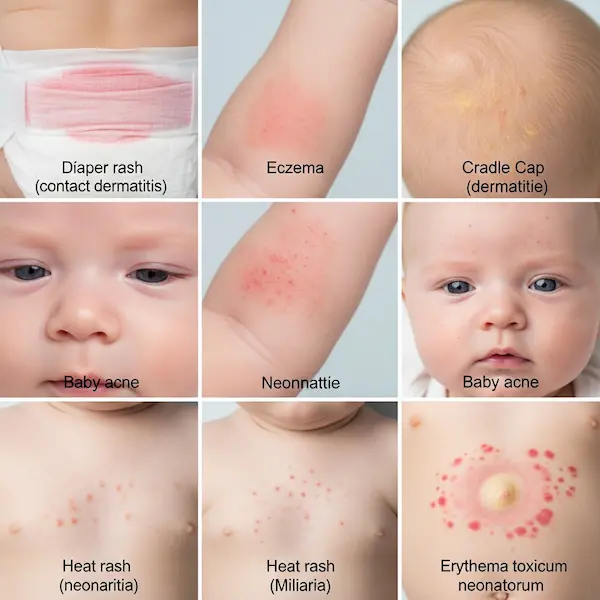
Many newborns have peeling skin or occasional dry patches, so how do you tell if it’s truly atopic dermatitis (the medical term for eczema)? It’s about the pattern, persistence, and presentation. Classic infant eczema often starts between 2 and 6 months, appearing first on the cheeks and scalp as red, scaly, sometimes oozing patches, and it’s intensely itchy — you may notice your baby rubbing against sheets or your clothes before they can even scratch. As they grow, the rash often moves to the outsides of the elbows and knees, and later, in toddlers, to the insides of those joints.
The skin isn’t just dry; it’s inflamed. You might see tiny red bumps, rough leathery patches (lichenification) from chronic rubbing, and pronounced redness in lighter skin tones. In darker skin tones, eczema can look ashen, brown, purple, or grey, and may center on small follicular bumps, so it’s easy to underestimate. Persistent scratching can break the skin and lead to secondary bacterial infection, which shows up as honey-colored crusts, pustules, or increased warmth and swelling. If the rash is simply dry skin, it usually responds well to consistent moisturizing alone; true eczema tends to need more, because the skin barrier itself is compromised.
The Science: A “Leaky” Barrier and the Atopic March
Picture healthy skin as a well-built brick wall: the skin cells are the bricks and lipids (fats) are the mortar holding them tightly together, keeping moisture in and irritants out. In babies prone to eczema — largely for genetic reasons — that mortar is deficient, so the wall is “leaky.” Everyday substances (dust, pet dander, detergent residue, and food proteins from saliva or spilled milk) can then penetrate deeper than they should, where they meet immune “sentinel” cells that sound the alarm. This can both trigger the local eczema rash and begin sensitizing the wider immune system to that protein.
This is the start of the atopic march — the observed progression in which infant eczema often precedes food allergies, hay fever, and asthma. The leading theory is that inflamed, damaged skin becomes a primary site for allergic sensitization: a baby might first become sensitized to a food like peanut through skin contact (via household dust), not by eating it, and then react more strongly when they later ingest it. That’s a powerful reason why treating eczema well matters beyond today’s comfort — protecting the skin barrier may help reduce the risk of some future allergic conditions. It also underlines why introducing allergenic foods early, on your pediatrician’s guidance, is now recommended rather than delayed.
Food Triggers and How Reactions Show Up
Food-related reactions come in two forms: IgE-mediated allergies (immediate — hives, vomiting, or anaphylaxis) and non-IgE-mediated sensitivities (delayed — often worsened eczema or digestive upset). For eczema flares, it’s frequently the delayed, non-IgE type. The most common culprits, by far, are cow’s milk protein, egg, peanut, soy, and wheat.
Reactions aren’t always dramatic. Rather than instant hives (which do need immediate medical attention), think of a slow burn: a breastfeeding parent has a large glass of milk, and 24–48 hours later the baby’s cheeks flare a deeper red, the itch intensifies, or they seem fussier and gassier. That subtle, delayed pattern is exactly what makes food triggers hard to pin down and why a systematic approach matters. Keep in mind that eczema is multifactorial — food is only one possible piece, alongside heat, sweat, irritants, and infection, and a food trigger won’t cause eczema in a baby without the genetic predisposition, though it can be a real flare factor in some infants.
The Foundation: A Daily Skincare Routine
Before considering any dietary change, a rock-solid daily skincare routine is non-negotiable — it repairs the leaky barrier, reduces inflammation, and breaks the itch-scratch cycle. It’s also what makes any later dietary investigation meaningful.
The cornerstone is the “soak and seal” method, done once or ideally twice a day: bathe daily in lukewarm (not hot) water for 5–10 minutes; use a fragrance-free, soap-free cleanser only on dirty areas rather than the whole body; pat the skin dry, leaving it slightly damp; then within about three minutes apply any prescribed medication to affected spots and immediately slather the entire body in a thick moisturizer — an ointment (like plain petroleum jelly) or thick cream, not a thin lotion — to trap the bath’s water in the skin. This is the single most effective thing you can do at home.
Support the routine with a few environmental controls: dress your baby in 100% cotton (avoid wool and rough synthetics), wash their clothes and bedding — and your own clothes that they contact — with a fragrance-free, hypoallergenic detergent, skip fabric softeners and dryer sheets, keep the home cool (overheating is a major itch trigger), and run a humidifier in dry months. Finally, keep those tiny nails filed short and smooth, and consider soft cotton mittens or scratch sleeves at night to limit damage from unconscious scratching.
Elimination Diets for Breastfeeding Parents
An elimination diet is not a first step. It’s a considered move for when good skincare hasn’t controlled moderate-to-severe eczema, or when there are strong clues pointing to food — a reproducible flare after you eat a specific food, or accompanying symptoms in your baby like frequent reflux, vomiting, mucousy or blood-streaked stools, poor growth, or marked fussiness. Do this in partnership with your pediatrician, a pediatric allergist, or a registered dietitian, who can confirm it’s warranted, target the right food, and protect your own nutrition.
The usual approach: start with a single food, most often a dairy-free trial, since cow’s milk protein is the most common offender — eliminating all forms (milk, cheese, yogurt, butter, and hidden dairy like casein, whey, and lactoglobulin on labels) for a minimum of 2–4 weeks. Keep a daily food-and-symptom log noting what you ate, your baby’s skin (rated simply, say 1–5), their itch, sleep, and digestion, plus any environmental factors — patterns emerge that guesswork never reveals. Become a label reader, since dairy, egg, soy, and wheat hide in countless products. Crucially, protect your own nutrition: when you cut dairy, replace the calcium (fortified plant milks, calcium-set tofu, leafy greens, almonds, and possibly a supplement your doctor approves), keep protein and calories up from other sources, and continue a prenatal or similar vitamin for vitamin D and B12 — don’t undereat, since your health drives your milk supply. If the skin clearly improves after about four weeks, confirm the trigger with a guided reintroduction “challenge”: have a serving of the food and watch your baby over 24–72 hours for returning symptoms. Don’t eliminate multiple food groups at once — it’s overly restrictive, nutritionally risky, and makes the real culprit impossible to identify.
The Role of Medication
Skincare and diet work with medical treatment, not instead of it. For inflamed eczema, topical corticosteroids (such as hydrocortisone 1%) are the first-line anti-inflammatory — used correctly, a thin layer applied once or twice daily only to red, itchy areas until they clear (usually 3–7 days) then stopped, they’re very safe and effective. The common fear of “steroids” often leads to under-treatment, which actually prolongs discomfort and skin damage. For persistent spots or maintenance, a doctor may prescribe a topical calcineurin inhibitor (pimecrolimus or tacrolimus) — non-steroid anti-inflammatory creams useful on sensitive areas like the face and for longer-term control. The point of medication is to quickly calm the inflammation so your barrier-repair efforts can actually work, breaking the itch-scratch cycle and improving sleep for everyone.
Frequently Asked Questions
Many children improve significantly or outgrow eczema by school age. For food allergies, tolerance to milk, egg, soy, and wheat is common (roughly 50–80% outgrow them by about age 10), while peanut, tree nut, and seafood allergies are more often lifelong. Effective early eczema management and guided early introduction of allergenic foods may support better outcomes.
No. Breast milk offers important immune benefits and remains ideal nutrition. For a baby with a confirmed cow’s-milk protein allergy who isn’t breastfed, a pediatrician will recommend a hypoallergenic (extensively hydrolyzed or amino-acid-based) formula — switching to a standard formula doesn’t help and can worsen symptoms.
Pure virgin coconut oil can be a safe moisturizer for some babies and works fine for the “seal” step, but it’s a moisturizer, not an anti-inflammatory — it won’t calm active, red, inflamed eczema, which needs a proper anti-inflammatory. Always patch-test any new product on a small area first.
Watch for increased redness, warmth, and swelling; yellow or honey-colored crusting; pus-filled bumps; or a fever. Infected eczema (often staph) needs prompt medical attention and usually oral antibiotics. Consistent good skincare is the best prevention.
For the delayed, non-IgE reactions behind most eczema flares, it can take 2–4 weeks of strict elimination to see clear skin improvement (gut symptoms may ease sooner). That slow timeline is exactly why careful food logging matters — you’re connecting the dots over time.
The Bottom Line
Managing infant eczema linked to food sensitivities is a process of observation, patience, and consistent care — there’s rarely a single cure, but there’s absolutely a path to excellent control. You’re not just soothing itchy skin; you’re nurturing your baby’s skin barrier and potentially influencing their longer-term immune health. Diet is one tool in a well-stocked toolbox that also includes daily moisturizing, trigger avoidance, and appropriate medical care. Trust your instincts, partner with a supportive healthcare team, and celebrate the small wins — a better night’s sleep, a smoother patch of skin, a more comfortable baby.
This article is for general information and is not a substitute for personalized medical advice. Work with your pediatrician or a pediatric allergist for your baby’s specific situation.
References
- National Eczema Association. Eczema in Babies and Toddlers.
- American Academy of Dermatology. Eczema in Children: Bathing and Moisturizing.
- American Academy of Pediatrics (HealthyChildren.org). Eczema (Atopic Dermatitis) in Children.
- National Institute of Allergy and Infectious Diseases. Food Allergy and Early Allergen Introduction.