Once you’ve decided you’re ready to start a family, a wave of practical questions usually follows: Should I just stop my birth control? Do I need any tests? Does that glass of wine last night matter? Is my body ready? The good news is that the healthiest pregnancies often begin well before a positive test — and preparing for one is very doable. This is a checklist of the ten areas worth covering in the months before you start trying. It’s a companion to our month-by-month preconception plan, which lays the same groundwork out as a 90-day timeline; use this to see what to cover and that one to see when.
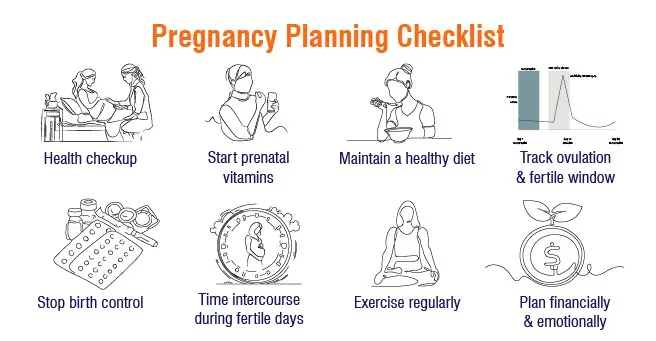
The 10-Point Preconception Checklist
1. Schedule a preconception checkup (both partners)
Book a dedicated appointment with your OB-GYN or primary care doctor to talk specifically about your plans to conceive — this is different from a routine annual physical. It’s a chance to review your full medical history and any chronic conditions (thyroid issues, diabetes, hypertension, depression or anxiety), check that all your medications and supplements are pregnancy-safe, and confirm your vaccinations are current — especially MMR and varicella, which are live vaccines that can’t be given during pregnancy and need a short waiting period before trying. Your partner’s health matters too, so a parallel conversation with his doctor about medications, lifestyle, and any exposures is worthwhile. A good question to ask: “Given our histories and our goal, are there any tests, vaccines, or medication changes you’d recommend now?”
2. Start a prenatal vitamin with folic acid now
Begin a daily prenatal vitamin with at least 400–800 micrograms of folic acid today, ideally a few months before you start trying so your levels are optimal. Folic acid dramatically reduces the risk of neural tube defects like spina bifida — and because the neural tube forms and closes in the first 28 days, often before you’ve missed a period, waiting until a positive test means missing that window. Any reputable brand works; one that also includes DHA is a nice bonus for later brain development. Our guide to prenatal vitamins covers what to look for.
3. Audit your lifestyle and habits
A quick, non-judgmental review of daily habits pays off, since your choices affect egg and sperm quality, hormones, and the early pregnancy environment. Stop smoking and recreational drugs (both harm fertility for either partner and raise miscarriage risk), and cut back heavily on alcohol, which can disrupt ovulation and sperm health. Start a consistent, moderate routine — 30 minutes of brisk walking most days improves circulation, weight, and stress. And mind your caffeine (current guidance is under 200 mg a day, about one 12-ounce coffee) and bring a full list of any medications and herbal supplements to your checkup, since even over-the-counter products may need review.
4. Work toward a healthy weight
Aim for a weight that supports your metabolic health rather than an arbitrary number. Both being significantly underweight and carrying excess weight can disrupt ovulation, affect sperm, and raise risks like gestational diabetes and preeclampsia. Frame it as fueling and strengthening your body rather than dieting, combine steady nutrition with regular movement, and consider a registered dietitian for a personalized plan — the goal is sustainable change, not a crash diet.
5. See your dentist
This is the most commonly skipped step, and it matters more than people expect. Severe gum disease is a source of chronic inflammation that’s been linked to a higher risk of preterm birth and preeclampsia. Book a cleaning and exam, mention that you’re planning a pregnancy, and address any cavities or gum issues now, while treatment and medications are simplest to manage.
6. Review your family health history
Talk with relatives on both sides about chronic conditions and any genetic disorders, birth defects, or childhood deaths in the family. This information helps you and your doctor decide whether carrier screening makes sense — a blood test that shows whether you and your partner carry genes for conditions like cystic fibrosis, sickle cell disease, or Tay-Sachs. Knowing your carrier status before pregnancy gives you information and options rather than a surprise later.
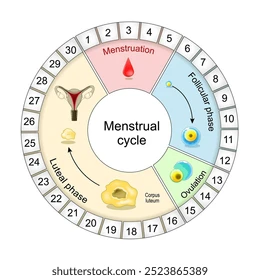
7. Track your cycle and fertile window
For a few cycles before you start trying, begin tracking your period. It does two things: confirms you’re ovulating regularly and helps you spot your five-to-six-day fertile window. A simple app works for logging start dates; for more precision, track basal body temperature or use ovulation predictor kits, and watch for cervical mucus becoming clear and stretchy like egg whites around ovulation.
8. Optimize your diet for fertility
Food provides the building blocks for hormones, eggs, and sperm, so shift toward a nutrient-dense, anti-inflammatory pattern — without overcomplicating it. Fill half your plate with colorful fruits and vegetables, include healthy fats (avocado, nuts, seeds, olive oil), lean on smart proteins (fish, poultry, beans, lentils), and choose whole grains like oats and quinoa over refined flour. Our guide to the best foods for a healthy pregnancy carries this forward into pregnancy itself.
9. Assess your financial and logistical readiness
A practical conversation now prevents stress later. Review your health insurance to understand maternity coverage, deductibles, and any fertility coverage; start setting aside money for medical costs, baby gear, and possible lost income; and talk through parental-leave policies, childcare options, and living space. None of this has to be solved perfectly — just started.
10. Tend to your emotional and relational foundation
Conceiving and becoming a parent is a big emotional transition, and a strong foundation helps you face it as a team. Build a stress toolkit that works for you — yoga, meditation, therapy, time outdoors — and talk openly with your partner about your hopes, worries, and parenting values. It also helps to set expectations: for healthy couples under 35, conception can take up to a year, and knowing that in advance can spare a lot of month-to-month heartache.
Frequently Asked Questions
Ideally 3 to 6 months ahead. That gives lifestyle changes time to take effect (sperm take around 90 days to develop), lets folic acid build up, and leaves room for any medical steps like updating vaccinations. The longer you can hold healthy habits, the better — but even a few months helps.
Yes. It can surface silent issues — an immunity gap needing an MMR booster, a vitamin deficiency, or genetic risks worth knowing about — and let you adjust any medications early. Think of it as a proactive optimization visit, not just a problem-solving one.
The checklist matters even more, and the timeline tightens. Start 6 months to a year ahead, and if conception hasn’t happened after about 6 months of trying, see a fertility specialist rather than waiting a full year.
Yes. Sperm health is half the equation, and male factors contribute to about a third of fertility challenges. Partners should take part in the medical review, lifestyle audit, healthy weight, family history, diet, and emotional prep — his health affects conception, miscarriage risk, and the baby’s health.
It depends on the method. Fertility usually returns quickly after stopping the pill, patch, ring, or having an IUD removed — often within a cycle or two. The contraceptive injection can take longer, sometimes several months to a year. Ask your provider about your specific method so you can time it well.
It’s common and doesn’t mean you did anything wrong — about 1 in 8 couples face fertility challenges. This checklist maximizes your chances and leaves you in the best position if you need help. If you’re under 35 and have tried for 12 months (or 6 months if over 35), it’s time to see a fertility specialist.
The Bottom Line
Working through this checklist isn’t about reaching some state of perfect readiness — that doesn’t exist. It’s about building the strongest, healthiest foundation you can before conception, and doing it a little at a time. You don’t have to tackle all ten points tomorrow; start with one, whether that’s booking a checkup or picking up a bottle of prenatal vitamins. For a sense of how to sequence these over the three months before trying, pair this with our 90-day preconception plan, and once you’re expecting, your first prenatal appointment picks up where this leaves off.
This article is for general information and is not a substitute for personalized medical advice.
References
- Centers for Disease Control and Prevention. Planning for Pregnancy.
- American College of Obstetricians and Gynecologists. Good Health Before Pregnancy: Prepregnancy Care.
- March of Dimes. Planning for Your Baby.
- Mayo Clinic. Preconception Planning: Getting Ready for Pregnancy.