For many new parents, the first bath feels like a high-stakes test. Your newborn looks impossibly fragile, the water suddenly seems dangerous, and you’re sure you’ll do it “wrong.” That mix of excitement and nervousness is almost universal — and the reassuring truth is that the first bath isn’t really about getting your baby clean. It’s about safety, warmth, and comfort. This guide walks through the timing, temperature, technique, and safety of a newborn’s first bath, plus the reasoning behind each step, so you can turn a potentially stressful moment into a calm one for both of you.
Before the First Bath
When to Bathe: Rethinking the Timeline
The most important decision is when, and the old habit of bathing a baby right after birth is now outdated.
- The vernix advantage. Your baby is born covered in a white, waxy substance called vernix. It isn’t dirt — it’s a natural moisturizer and protective barrier with antimicrobial properties that also helps regulate temperature and skin pH. The World Health Organization recommends delaying the first bath for at least 24 hours, and many hospitals and parents wait longer.
- Modern timing. Many experts suggest waiting two to three days, or even up to a week. In the meantime, simply “spot clean” the face, neck folds, and diaper area with a warm, damp cloth. Waiting preserves the vernix, supports breastfeeding (less stress for the baby), and helps stabilize blood sugar and temperature.
- The umbilical cord. If you wait a few days, you’ll be bathing while the umbilical cord stump is still attached — that’s perfectly fine, and cord care is covered below.
Gathering Supplies: The “Within Arm’s Reach” Rule
You can’t leave a baby unattended for even a second, so assemble everything before you start:
- A safe bath vessel — a small plastic baby tub, a clean sink lined with a towel, or a sink insert, placed on a stable, waist-high surface to save your back.
- Lukewarm water (we’ll test it precisely below).
- Two or three soft washcloths — one for the face, one for the body.
- A gentle, tear-free, fragrance-free baby wash. A single mild bottle is all you need — skip regular soap, which is too harsh.
- A soft hooded towel (pre-warming it makes the exit far more pleasant).
- A clean diaper and clothing, laid out and ready.
- A safe spot (like a bouncer on the floor) to place the baby if you absolutely must step away.
The Step-by-Step Gentle Bath
Step 1: The Right Temperature
- Fill the tub with just 2–3 inches of water — enough to cover the legs and bottom while keeping most of the body warm and lowering the risk of slipping.
- Test the water with your elbow or inner wrist, which are more sensitive than your hands. It should feel warm, not hot — around body temperature (about 100°F / 38°C). A bath thermometer offers extra reassurance.
- Add cold water first, then hot, to prevent steam burns, and always turn the taps off before placing your baby in.
Step 2: Undressing and Entry
- Undress your baby except for the diaper and wrap them loosely in a dry towel.
- Start with a “top and tail” clean. Before they touch the tub, use a damp washcloth (water only) to gently wipe the face (eyes from inner corner outward), the outer folds of the ears, and the neck creases.
- Remove the diaper, cleaning the area first if there’s a mess.
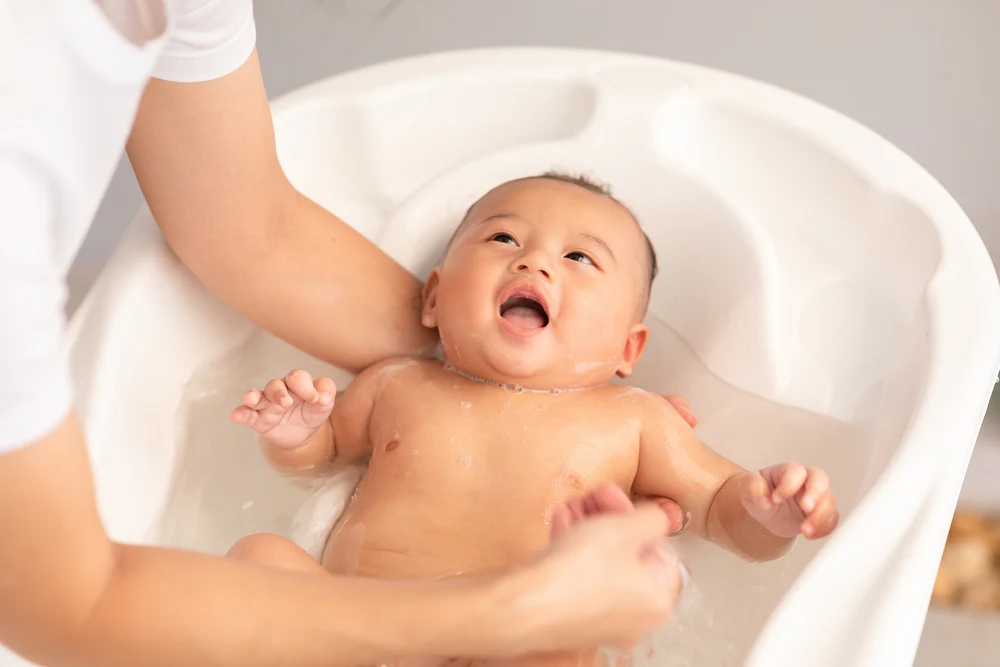
- Support the head and neck at all times. Slide one hand under the back and grasp the far arm at the armpit so your forearm cradles the head and neck; use your other hand to support the bottom. Lower them into the water feet-first, slowly and calmly, talking or singing softly.
Step 3: The Washing Sequence
Keep most of the body in the warm water and use a gentle “pour and wash” approach rather than scrubbing.
- Hair last. Wet the hair by pouring cupped handfuls of water over the head while shielding the eyes, add a tiny drop of wash, lather gently, and rinse the same way. The soft spots (fontanelles) are protected by a tough membrane — you can touch them gently.
- Body. With a soft cloth and a drop of wash, clean in order: neck, chest, arms, underarms, legs, and finally the diaper area (for girls, front to back). Pay attention to folds where moisture and milk collect.
- Umbilical cord. If the stump is still attached, it’s fine for it to get wet. Afterward, gently pat it dry with a clean gauze pad and leave it exposed to air. No alcohol swabs are needed unless your pediatrician specifically advises it.
Step 4: Exit and Dry-Down
- Lift your baby out with the same secure hold and wrap them straight into the warm hooded towel.
- Pat, don’t rub, paying careful attention to every fold — neck, armpits, behind the knees, and the groin. Thorough drying helps prevent rash.
- Diaper and dress them promptly to keep them warm. A little fragrance-free baby lotion is fine if the skin seems dry, though it’s often unnecessary.
Safety Rules That Aren’t Optional
- Never turn away, even for a moment. A baby can drown in less than an inch of water in seconds.
- Prevent slips with a textured tub surface or a small washcloth on the bottom for grip.
- Put your phone away — this is a focused activity.
- Keep pets out of the room and make sure older siblings are supervised separately.
- Ignore the doorbell or phone. If you truly must respond, take the baby out and wrap them up — never leave them in the tub.
Common First-Bath Challenges
- Baby cries or screams. They’re usually cold or startled. Warm the room (around 75–78°F), have the towel ready, and keep enough warm water over the torso. Bathing together, skin-to-skin in a shallow adult bath, can be very comforting.
- The wobbly head. Practice the hold with a doll first; your confidence transfers to your baby.
- Dry skin or cradle cap. For dry skin, bathe less often (2–3 times a week is plenty). For cradle cap, massage a little mineral or coconut oil onto the scalp before the bath, then gently loosen the scales with a soft brush.
- The slippery baby. They really are — which is why your hold matters. A washcloth on the chest gives you something to grip.
The Sponge-Bath Alternative
Until the umbilical cord falls off (around one to three weeks), many parents prefer sponge bathing on a padded surface such as a changing pad. The method is the same — clean top to bottom, keep the baby wrapped in a dry towel, and expose only the part you’re washing. It can feel more controlled for the first few sessions.
How Often to Bathe
For the first month, two to three baths a week is plenty — over-bathing strips the skin of its natural oils. On non-bath days, a thorough “top and tail” clean of the face, neck, hands, and diaper area is all that’s needed. Bath time is also a lovely chance to connect: keep eye contact, talk softly, describe what you’re doing, and gently massage their limbs. That focused, tactile interaction supports bonding and is part of what makes the routine calming for both of you. For more on the early weeks, see our newborn care basics guide.
Frequently Asked Questions
No — adult products are too harsh and drying for newborn skin. Use a single mild, tear-free baby wash for both hair and body to minimize irritation, and only a tiny amount.
Not yet. For a newborn, your face, voice, and the sensation of the water are stimulation enough. Simple solid silicone toys can be introduced later, once your baby can sit up.
If you’re comfortable in a light layer, it’s likely fine for your baby afterward. The keys are eliminating drafts and having a warm towel ready for the moment they come out of the water.
Whatever fits your schedule. Many families make a warm bath part of a calming bedtime routine, but watch your baby — some find it relaxing while others get energized, so adjust the timing to suit them.
Making the water too hot. When in doubt, err on the cooler side — a lukewarm, comfortable bath is always safer and more pleasant than one that’s even slightly too warm. Always test with your wrist or elbow.
The Bottom Line
Your baby’s first bath is a milestone, and it may be messy — there might be crying (from one or both of you). But with a little preparation and a focus on gentle safety, it becomes far less daunting. Keep the water shallow and lukewarm, support the head and neck, never look away, and don’t worry about a perfect result. Warmth, a secure hold, and a calm voice matter far more than getting every fold spotless — the cleanliness is really just a bonus.
This article is for general information and is not a substitute for personalized medical advice.
References
- American Academy of Pediatrics (HealthyChildren.org). Bathing Your Newborn.
- NHS. Washing and Bathing Your Baby.
- Nemours KidsHealth. Bathing Your Baby.
- Mayo Clinic. Baby Bathing and Skin Care Basics.