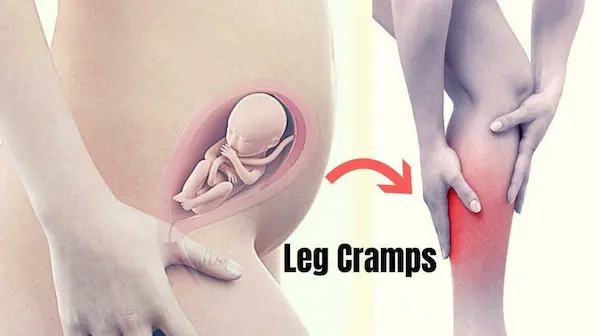
You’re drifting into a hard-won sleep, or maybe you’ve just stood up from the couch, when it strikes — a sudden, seizing pain in your calf or foot, like a muscle knotting into a rock. It’s intense, startling, and for many expecting parents it becomes a frustratingly familiar visitor. The immediate question is “how do I make it stop?” — but the more empowering one is why does this happen? These spasms aren’t bad luck or a random quirk; they’re a physiological response to the extraordinary demands on your body. This guide explores the interconnected science — how shifts in your minerals, circulation, and posture conspire to make your muscles more prone to cramping. (For the step-by-step prevention and fast-relief plan, see our companion guide to preventing and relieving leg cramps.)
A Perfect Storm of Factors
Pregnancy leg cramps rarely come from one single issue. Think of it as several of pregnancy’s normal adaptations converging to increase what clinicians call “neuromuscular irritability” — your muscles and their controlling nerves become more sensitive and more easily triggered into a sustained, painful contraction. It’s worth saying up front that the science isn’t fully settled (studies on any single cause are mixed), but a few well-understood mechanisms explain most of what’s going on.
Theory 1: The Electrolyte and Mineral Balance
Muscle function depends on a delicate dance between minerals — the most cited explanation for cramps:
- Calcium is the “go” signal: when a nerve tells a muscle to contract, calcium floods into the muscle cells to start the tightening.
- Magnesium is the “relax” counterpart: it helps move calcium back out, letting the fibers unwind — a natural muscle relaxant. When it’s low, the “off” switch works less well.
- Potassium maintains the electrical gradient across cell membranes, so nerve signals fire cleanly and muscles contract smoothly.
Pregnancy can tip this balance through increased demand (your baby draws minerals to build its own skeleton and systems), increased excretion (hormones can raise mineral loss through urine), hemodilution (your blood volume rises up to 50%, diluting electrolyte concentration), and dietary shortfalls (nausea and food aversions can lower your intake). When magnesium dips, the calcium-magnesium “see-saw” tips and muscles sit in a more easily triggered state. Note, though, that studies testing mineral supplements for pregnancy cramps have had mixed results — food-first, with your provider’s guidance on your calcium and prenatal vitamin, is the sensible approach.
Theory 2: Circulation and Mechanical Load
- Blood volume and venous stasis: your soaring blood volume raises pressure in your veins, and the growing uterus presses on the inferior vena cava (the big vein returning blood from your legs). Circulation can become a little sluggish, letting metabolic waste like lactic acid build up in the leg muscles — an environment that can irritate muscles and nerves and lower the threshold for cramping. Staying well hydrated helps counter this.
- Weight and fatigue: extra weight and a forward-shifting center of gravity often create an anterior pelvic tilt, placing your calf and leg muscles under constant, novel strain as they work to stabilize you. Overworked, fatigued muscles spasm more easily.
Theory 3: Nerves and Hormones
Sometimes it’s less about the muscle than the wiring that controls it. As your uterus expands, it can press on nearby nerves — pressure on the sciatic nerve (running from your lower back down each leg) is a classic example, which can cause sciatica but also show up as referred tightness or cramping in the calf or foot. This is why a baby’s position that presses on a nerve root can be a direct trigger later in pregnancy. Hormones may play a supporting role too: progesterone relaxes smooth muscle and affects the nervous system, and some researchers think it may subtly alter nerve-signal transmission — though this link is less firmly established.
Why the Patterns Make Sense
Why cramps are worse at night: several factors line up at bedtime — you’re still and horizontal (which can worsen venous stasis and let metabolites pool), your quiet mind notices subtle twinges more, and any daytime dehydration or dip in minerals leaves the cramping threshold at its lowest. Cramp vs. “charley horse”: in practical terms there’s no difference — a charley horse is just the common name for a sudden, painful muscle spasm, and in pregnancy its causes are the physiological shifts above.
From Understanding to Action
Knowing the causes points straight at what helps. The electrolyte angle means hydration and a diet rich in magnesium (leafy greens, nuts, seeds), potassium (bananas, sweet potatoes), and calcium, with prenatal-vitamin adequacy checked by your provider. The circulatory/mechanical angle means gentle movement like walking to work the calf-muscle pump, leg elevation to aid venous return, and supportive footwear. The neurological angle means minding your posture, avoiding nerve-compressing positions, and using prenatal yoga or stretching to release tension. Our full prevention and relief guide turns these into a daily routine.
Frequently Asked Questions
It’s crucial to tell them apart. A typical cramp is a tight, knotted spasm that relaxes after stretching and massage, with no skin changes. A deep vein thrombosis (DVT) causes persistent, often worsening pain — not just a spasm — usually with swelling, redness, warmth, and tenderness in one leg. DVT risk is higher in pregnancy, so if you have those signs, seek care immediately.
Check with your provider first — the evidence for supplements is mixed, and they can advise whether a well-absorbed form (like magnesium glycinate) fits your situation and won’t interact with anything else. Dietary sources are the best first step.
The calf muscles work constantly as postural muscles to keep you upright — even more so as your posture shifts — and they’re farthest from your heart, making them more susceptible to circulation changes and waste buildup.
Yes, indirectly. A position that puts pressure on a nerve root (like the sciatic nerve) can trigger referred tightness or cramping down the leg. It’s one reason cramps can change or intensify as your baby grows and moves.
For most people the pregnancy-specific triggers — hormone shifts, uterine pressure, and heightened mineral demands — resolve after delivery, and cramps diminish within days to weeks. If you were prone to them before pregnancy, they may return occasionally, but usually with less frequency and intensity.
The Bottom Line
Leg cramps are a painful reminder of the dynamic transformation your body is orchestrating — not a sign something is wrong, but evidence of the biochemical and physical shifts supporting your baby’s growth. By unraveling the science — the mineral dance, the challenges of increased circulation, the pressure on nerves — you move from feeling victimized by a random spasm to understanding it as a logical, if uncomfortable, side effect. That understanding is the first step toward relief: it lets you tailor your self-care and advocate for yourself with informed clarity.
This article is for general information and is not a substitute for personalized medical advice. Seek prompt care for one-sided leg swelling, warmth, or redness.
References
- NHS. Leg cramps in pregnancy.
- MedlinePlus (U.S. National Library of Medicine). Muscle Cramps.
- Mayo Clinic. Deep vein thrombosis (DVT).