One of the most reassuring milestones of pregnancy is feeling that first subtle flutter — your baby’s first greeting from within. Known as quickening, it turns pregnancy from an idea into a tangible connection. But the question “when will I feel my baby move?” often comes with a mix of anticipation and anxiety, especially for first-time parents. This guide walks through the timeline of fetal movement — when to expect those first sensations, what they feel like, and the factors that affect when and how you perceive them. For the full practice of counting movements and what’s normal once you’re feeling them, see our companion guide on quickening and kick counts.

What’s Happening Before You Feel Anything
Long before you feel it, your baby is busy. Fetal movement is a direct sign of a developing nervous system and growing muscle — not random kicking, but practice that’s essential for healthy joints, muscles, and brain development. Around 7–9 weeks, your baby makes their first spontaneous movements — tiny startles and limb twitches — but you won’t feel them, as your baby is far too small and tucked deep in your pelvis. By 10–15 weeks, movements grow more coordinated: your baby may suck a thumb, stretch, and even hiccup as the diaphragm develops. The uterus is still roomy, and its muscular walls plus the cushioning amniotic fluid keep these early motions below your perception. When you finally feel movement depends on your baby’s size and strength, your placenta’s position, and your own body — which is where the timeline gets personal.
The Timeline: When Most Women First Feel Movement
- First-time mothers: most feel first movements between 18 and 25 weeks. Don’t be alarmed if it’s closer to 25 — the uterine and abdominal muscles are tighter and less familiar with the sensation, acting like a thicker muffler.
- Experienced mothers: in a second or later pregnancy, you’ll likely recognize the feeling earlier, often between 16 and 22 weeks, because you know what to tune into and what to ignore.
- Placenta position: an anterior placenta (attached to the front wall of the uterus) sits like a padded pillow between your baby and your abdominal wall, and can delay your perception of movement by a few weeks. It’s a common, normal variation — often first noted at your anatomy scan.
What do those first movements feel like? Descriptions vary — a gentle “butterfly” or fluttering low in the abdomen, a subtle bubbling or “popcorn” feeling often mistaken for digestion, a light “goldfish swimming” swish, or a faint, repetitive tapping from the inside. They’re easiest to notice when you’re still and quiet — lying down in the evening or just after a meal.
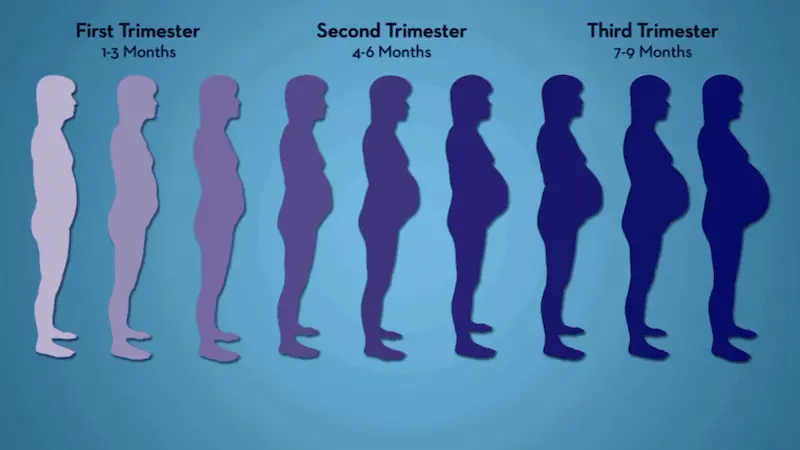
How Movement Grows: Second to Third Trimester
- Weeks 24–28: movements become distinct and more regular, with recognizable patterns of activity and rest. You’ll feel definite kicks, jabs, and rolls, and a partner may feel a kick with a hand on your belly.
- Weeks 28–32: often the peak of fetal activity — more muscle but still room for somersaults, stretches, and strong kicks, and you’ll see your belly move from the outside.
- Weeks 32 to birth: as space gets tight, the character of movement shifts from big rolls to more pronounced (sometimes uncomfortable) pokes, stretches, and jabs — often in the ribs or bladder. The frequency shouldn’t decrease, even as the type changes.
What Affects When and How You Feel Movement
Two people at the same stage can have very different experiences of when movement becomes noticeable. Several things shape your perception:
- Placenta position: an anterior placenta cushions and delays feeling, while a posterior placenta (on the back wall of the uterus) means fewer barriers — often earlier, sharper sensations.
- First vs. later pregnancy: experienced mothers recognize and feel movement sooner.
- Body composition: more abdominal tissue can make early movements feel slightly later or more muted.
- Your activity level: if you’re constantly on the go, you may simply be less tuned in to subtle early movements — they’re easier to notice when you pause.
- Hydration and blood sugar: being well-hydrated and recently fed tends to make a baby more active and easier to feel.
Your Baby’s Daily Rhythm
Your baby isn’t a perpetual motion machine — they have sleep-wake cycles, typically 20–40 minutes but sometimes up to 90, much like a newborn, and you’ll gradually learn their rhythm. Activity often picks up after you eat (a rise in blood sugar gives a burst of energy), when you’re resting or lying down (during the day your movement can rock the baby to sleep, so they wake when you stop — which is why many women feel the most movement at night), and sometimes in response to sounds or a cold drink. Learning this personal rhythm is exactly what makes movement counting meaningful later on.
Once You’re Feeling Movement: Counting & Red Flags
From around 28 weeks, many providers suggest paying deliberate attention to your baby’s movements, because a genuine decrease can be an early sign worth checking. The simple version: at a time your baby is usually active, get comfortable (feet up or lying on your left side) and count distinct movements — kicks, jabs, rolls, swishes — until you reach 10. Most babies get there within about 30 minutes, though it can take up to 2 hours; the point is learning what’s normal for your baby. Our full kick-counts guide walks through the method in detail.
You are the expert on your baby’s pattern — contact your doctor or midwife right away if you notice a significant decrease in movement (less than half of usual for a day), a complete stop over a period when your baby is usually active, a sudden drastic, sustained change in pattern, or simply an intuition that something is wrong. Don’t wait until the next day, and don’t rely on a home Doppler to reassure yourself — hearing a heartbeat doesn’t rule out distress. Go to Labor & Delivery or your provider’s office for a non-stress test (NST) that monitors your baby’s heart rate in response to movement. Your provider may also check the baby’s heart rate or arrange a biophysical profile if needed.
Frequently Asked Questions
No — especially if you’re a first-time parent or have an anterior placenta. The range of normal is wide. Mention it at your next appointment for reassurance, but at this stage it’s often simply too early.
As your baby runs out of room in the third trimester, they usually settle head-down. Their feet and bottom then sit in the upper abdomen — hence the rib kicks — while their head can press on your bladder and cervix.
Strong kicks and rolls can be uncomfortable or even painful for you, but they can’t hurt your baby — they’re well cushioned by the amniotic fluid. Your discomfort is really a sign of their growing strength.
Babies do have quieter stretches, like newborns. But a pattern of decreased movement over a day isn’t something to brush off as “just a quiet day.” When in doubt, get checked — it’s always better to be reassured.
Those are almost certainly fetal hiccups — completely normal and a sign of diaphragm development. They can last several minutes and feel like a steady, gentle pulsing or tapping.
The Bottom Line
Feeling your baby move is an ongoing, intimate dialogue — from the first elusive flutter to powerful third-trimester rolls. Exactly when you first feel it depends on your placenta, whether it’s your first pregnancy, and your own body, so there’s a wide window of normal. As the weeks pass, tune into your baby’s rhythm, celebrate their strength, and take the signal of decreased movement seriously. That awareness turns anticipation into connection — and makes you an active, informed partner in your own prenatal care.
This article is for general information and is not a substitute for personalized medical advice. When in doubt about your baby’s movements, contact your provider.
References
- NHS. Your baby’s movements.
- American College of Obstetricians and Gynecologists (ACOG). Special Tests for Monitoring Fetal Well-Being.
- March of Dimes. Kick counts: counting your baby’s movements.