You have read the books, seen the lactation consultants, and tried every positioning trick — yet feeding your baby is still a source of sharp pain, frustration, and worry. Your baby clicks at the breast, gulps air from the bottle, seems perpetually hungry yet exhausted, and you are left with cracked nipples and a search history circling one term: tongue tie. You are not imagining it, and you are not alone.

Ankyloglossia — tongue tie — is a condition where the thin band of tissue under the tongue (the lingual frenulum) is unusually short, thick, or tight, restricting the tongue’s movement. This guide walks through the symptoms in both baby and parent, the real pros and cons of a revision procedure, and what aftercare involves — with balanced information so you can advocate for your child and make an informed decision alongside qualified professionals.
Understanding Tongue Tie: Function Over Appearance
The modern view treats tongue tie as a functional issue rather than a purely cosmetic one: what matters is not how the frenulum looks but whether it is actually interfering with feeding. Clinicians usually describe two forms:
- Anterior tongue tie: the classic, visible tie, where the frenulum attaches near or at the tip of the tongue, often giving a heart-shaped look when the tongue is extended.
- Posterior tongue tie: a less visible tie further back under the tongue’s mucosal covering. This category is more debated among clinicians, since it is harder to define and diagnose consistently, and it is more prone to over-diagnosis.
The Signs: In Baby and in Parent
In the baby
A baby with a significant tie is not being “lazy” — they are working against a physical restriction. Common feeding signs include, when breastfeeding, a painful latch that does not improve with positioning, clicking or smacking sounds, sliding off or slipping to the nipple tip, very long feeds (40+ minutes) with the baby still seeming hungry, and poor weight gain from inefficient milk transfer. With bottle feeding, you may see milk dribbling from the sides of the mouth, fatigue during feeds, and a preference for fast-flow nipples. Because ties can lead to more air swallowing, some babies also have more gas, spit-up, and hiccups.
Some longer-term concerns — such as effects on speech sounds, eating certain textures, or dental spacing — are sometimes raised, but the evidence linking tongue tie to these outcomes is mixed, and they are best assessed individually rather than assumed.
In the breastfeeding parent
Your own experience is a key diagnostic clue. Signs include damaged, creased, blanched, or bleeding nipples that persist past the first couple of weeks, and pain described as pinching or burning through the feed. Mechanically, a poor latch can contribute to frequent plugged ducts, mastitis, and low supply from ineffective emptying. The emotional weight of painful feeds and worry over intake is real, and feeling dismissed can add to postpartum anxiety — our guide to perinatal emotional wellbeing may help if you are struggling.
To Revise or Not? A Balanced Look
The decision to have a tongue tie revision (a frenotomy or frenectomy) is personal and best made with a qualified team — ideally an International Board Certified Lactation Consultant (IBCLC) to assess feeding, and a pediatric dentist, ENT, or pediatrician experienced in this area. The guiding principle is “form follows function”: not every tie needs treating. If your baby is feeding well and gaining weight and you are comfortable, revision is likely unnecessary, even if a tie is visible.
It is worth knowing that frenotomy rates have risen sharply in recent years, and major bodies have cautioned that some procedures are done without clear evidence of benefit. That is not a reason to dismiss a genuinely struggling baby — it is a reason to insist on a careful, function-based assessment rather than a snap decision from anatomy alone.
The procedure
A frenotomy releases the restrictive frenulum. It is commonly done either with sterile scissors — a quick, simple, well-established method, especially for thin anterior ties — or with a dental laser, which is widely used in dental settings and may involve a little less bleeding. Current evidence does not clearly establish one method as superior overall, so the best choice depends on the tie and, importantly, on the experience of the provider. For an infant, the procedure is very quick, often under a minute; brief crying is usually more about being held still than pain, a small amount of bleeding is normal, and babies can typically feed straight afterward, which is both soothing and helpful.
Questions worth asking first
- Is the tie truly causing functional problems? If feeding and weight gain are fine and you are pain-free, revision may not be needed.
- How experienced is the provider, and do they assess function (not just appearance) with proper before-and-after support?
- Are you set up for aftercare? The outcome depends heavily on feeding support afterward, so having an IBCLC in your corner matters.
Aftercare: What Recovery Involves
A release does not automatically teach the tongue new patterns, and the wound can occasionally heal in a way that recreates some restriction (reattachment). Aftercare aims to support healing and function — but the specifics genuinely vary between providers, and there is ongoing debate about how aggressive wound stretching should be, so follow your own provider’s instructions rather than a generic protocol. A common approach includes:
- Gentle wound care/stretches as directed, usually for a few weeks, to discourage reattachment. Some providers now favor gentler, less frequent handling to avoid creating oral aversion — this is exactly the kind of thing to clarify with yours.
- Play-based functional practice, such as encouraging the tongue to reach up and out and supporting a deep, wide latch during feeds, done when the baby is calm and happy.
- Frequent, comforting feeds, since the baby’s own suck is good practice, plus skin-to-skin contact.
You may hear about complementary “bodywork” such as pediatric chiropractic or craniosacral therapy as add-ons. Some families feel these help, but the evidence for them is limited, and they should never replace evaluation by qualified medical and lactation providers — if you are considering any hands-on therapy for an infant, discuss it with your pediatrician first. For post-procedure discomfort, ask your pediatrician about whether and how to use infant pain relief, and lean on skin-to-skin as well.
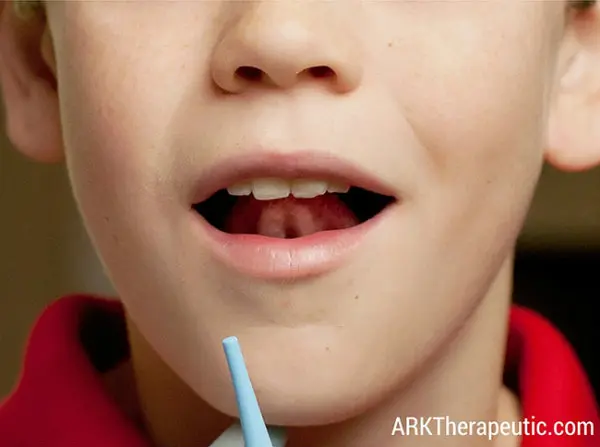
The first day or two can be emotionally tough — your baby may be fussier and feeding messier as they learn new mechanics. Progress is often not linear: some babies improve immediately, while others take weeks of small, uneven steps as they adjust. Trust the overall direction, and stay in touch with your support team.
Older Babies and Toddlers
Sometimes a tie is only flagged when solids start or speech concerns come up. The revision itself is similar, but aftercare relies more on active cooperation, and working with a speech-language pathologist can help retrain swallowing and articulation where needed. As with infants, the decision still hinges on genuine functional problems — trouble with certain food textures, clear speech difficulties, or dental issues — assessed individually.
Frequently Asked Questions
The procedure itself involves minimal discomfort and is over in under a minute. The aftercare handling can make babies protest briefly, but most return to their usual temperament quickly. Talk to your provider about what to expect and how to keep your baby comfortable.
Look for a pediatric dentist, ENT, or pediatrician experienced in assessing and treating tongue tie, ideally working with an IBCLC. Ask about their assessment criteria, method, and the feeding support they provide before and after. Your pediatrician and local parenting groups can point you toward reputable options.
A small degree of reattachment can happen. If symptoms return significantly, an experienced provider can assess whether a further review is needed. Good feeding support afterward lowers the chance of problems.
Opinions genuinely differ here. If your baby is feeding and growing well, watchful waiting is reasonable. But if you have a real cluster of feeding symptoms and pain, it is fair to seek a second opinion from a provider or IBCLC who specializes in infant feeding. Both caution about over-treatment and attention to a struggling baby can be right.
There is real debate. Greater awareness has helped some struggling families, but diagnoses and procedures have also risen faster than the evidence in places. The responsible middle ground is a careful, function- and symptom-based assessment — treating ties that cause measurable problems, and not those that don’t.
The Bottom Line
Navigating a possible tongue tie asks you to read your baby’s cues closely and seek the right help. Trust your lived experience — if feeding consistently hurts and your baby is struggling, that is valid data worth acting on. At the same time, keep the bar at genuine function: the goal is not to treat every frenulum but to relieve real feeding problems. Whether the path is a revision with good feeding support, or focused lactation help without one, the aim is the same — a baby who feeds comfortably and a parent who feeds without pain.
References
- Mayo Clinic. Tongue-tie (ankyloglossia).
- NHS. Tongue-tie.
- American Academy of Pediatrics (HealthyChildren.org). Tongue-Tie and Breastfeeding.