The first time your baby wakes at 2 a.m. with that particular cry—the one that’s different from hunger or a wet diaper—you’ll do almost anything to help. When tiny fingers go constantly into a drooly mouth and cheeks flush pink with frustration, the urge to reach for something, anything, that promises relief is overwhelming.
I remember standing in the pharmacy aisle at 3 a.m. with my firstborn, squinting at boxes of teething gels, desperately trying to remember which ones were actually safe. The labels all looked reassuring. They all promised relief. But somewhere in the back of my exhausted mind, I remembered hearing something about warnings.
Here’s what I wish I’d known then, and what every parent deserves to know now.
Understanding Teething: What’s Actually Happening in Your Baby’s Mouth
Before we talk about treatments, let’s talk about what teething actually is—and what it isn’t. Because understanding the process helps us respond appropriately, without over-treating or misreading symptoms.
Teething refers to the period when an infant’s primary teeth (also called baby teeth) begin to break through the gum tissue. This typically starts around 4 to 7 months of age, though the range varies widely. Some babies are born with a tooth (rare, but possible), while others don’t cut their first until after their first birthday. Both scenarios are normal.
The Physical Process
Before a tooth emerges, the body releases chemicals that break down some of the gum tissue cells to create a pathway. This localized inflammation and tissue breakdown cause the discomfort babies experience. The pressure of the tooth pushing upward against sensitive gum tissue adds to the sensation.
According to the American Academy of Pediatrics, the most common teething symptoms include:
- Increased fussiness or irritability
- Excessive drooling
- Chewing on hands, toys, or anything within reach
- Slightly elevated temperature (less than 100.4°F or 38°C)
- Swollen, tender gums
- Decreased appetite for solid foods
- Interrupted sleep patterns
What Teething Is NOT
This distinction matters enormously for your baby’s safety. Teething does NOT cause:
- High fever (over 100.4°F or 38°C)
- Severe diarrhea
- Persistent vomiting
- Full-body rash
- Significant respiratory symptoms
If your baby has these symptoms, they are likely ill, not teething. Delaying medical care while assuming “it’s just teething” can have serious consequences. The Mayo Clinic emphasizes that parents should never attribute high fever or severe illness symptoms to teething without consulting a healthcare provider.
The Big Warning: Teething Gels Containing Benzocaine
Let’s address the elephant in the nursery: benzocaine. This topical anesthetic appears in numerous over-the-counter teething products, often marketed with cheerful packaging and reassuring claims. But here’s what those boxes don’t prominently display.
What Is Benzocaine?
Benzocaine is a local anesthetic that numbs mucous membranes by blocking nerve signals. It works quickly—usually within minutes—which explains its appeal for desperate parents. Apply a small amount to baby’s gums, and within minutes, they stop fussing. It feels like magic.
Except it’s not magic. It’s a drug with potentially devastating side effects.
The Risk: Methemoglobinemia
Benzocaine carries a risk of a rare but serious condition called methemoglobinemia. In simple terms, this condition alters the hemoglobin in your baby’s blood, reducing its ability to carry oxygen. Without enough oxygen, tissues throughout the body begin to suffer.
The U.S. Food and Drug Administration has issued multiple warnings about this risk, noting that it can occur after just one application of benzocaine, even when used exactly as directed. Symptoms of methemoglobinemia include:
- Pale, gray, or blue-colored skin, lips, or nail beds
- Shortness of breath
- Fatigue
- Confusion
- Headache
- Rapid heart rate
These symptoms can appear within minutes to hours after application. Without immediate medical treatment, methemoglobinemia can cause permanent injury or death.
The FDA’s Position
The FDA is unequivocal: benzocaine oral drug products should not be used in children younger than 2 years. Their warning extends to gels, liquids, and sprays containing this ingredient. Yet despite these warnings, products containing benzocaine remain on shelves, often positioned prominently in the baby care aisle.
Brand names parents might recognize include Baby Orajel, Anbesol, and numerous store-brand equivalents. Always check the active ingredient list—if you see benzocaine, put it back.
Other Ingredients to Avoid in Teething Products
Benzocaine isn’t the only problematic ingredient lurking in teething products. Several others warrant your attention.
Belladonna
Belladonna—also known as deadly nightshade—appears in some homeopathic teething tablets and gels. The name itself should give you pause. This plant contains alkaloids that can be toxic, especially in the tiny bodies of infants.
In 2016 and again in 2017, the FDA issued warnings about homeopathic teething tablets containing belladonna, following reports of adverse events including seizures, difficulty breathing, lethargy, and death. Testing revealed inconsistent levels of belladonna in these products, meaning one tablet might contain negligible amounts while another contained dangerous concentrations.
The concept of “natural” or “homeopathic” does not equal “safe.” Poison hemlock is natural too. Always approach these products with extreme skepticism, and preferably avoid them entirely.
Lidocaine
Lidocaine is another topical anesthetic, stronger than benzocaine, typically available by prescription or in lower concentrations over-the-counter. While occasionally prescribed by dentists for specific procedures, it should never be used for routine teething pain.
Prescription-strength lidocaine can cause serious side effects in infants, including heart problems and seizures. Even over-the-counter formulations carry risks when used in young children.
Alcohol
Some older teething remedies and certain topical gels contain alcohol as an ingredient. Alcohol numbs tissue temporarily but also irritates and dries mucous membranes. More concerning, infants can absorb alcohol through their oral tissues, potentially affecting blood sugar levels and brain development.
If you see alcohol (often listed as ethanol or isopropyl alcohol) in the ingredients, that product has no place near your baby’s mouth.
Are There Any Safe Topical Teething Gels?
After reading all those warnings, you might wonder if any topical product is safe. The answer requires nuance.
Non-Medicated Gels
Some teething gels contain no active drug ingredients—just soothing substances like glycerin, natural flavors, and thickening agents. These work purely through physical means: the gel provides a protective barrier, and the act of rubbing (during application) offers counter-pressure that distracts from gum discomfort.
While generally safe, these products also generally don’t do much beyond what a cold washcloth accomplishes for free. They’re not harmful, but they’re also not the miracle workers their packaging might suggest.
Ingredients Like Chamomile and Clove
Some natural health circles recommend chamomile tea (cooled, applied with a cloth) or extremely diluted clove oil for teething. Here’s the reality:
- Chamomile: Generally recognized as safe when used in food amounts, but its effectiveness for teething lacks strong evidence. Some infants with ragweed allergies might react to chamomile.
- Clove oil: Contains eugenol, a natural anesthetic. However, it’s potent and can burn tissues if not properly diluted. The margin between effective dilution and harmful concentration is narrow, especially for infants.
The American Academy of Pediatrics takes no position on these remedies due to insufficient safety and efficacy data. If you choose to explore them, discuss concentrations and methods with your pediatrician first.
The Bottom Line on Topical Treatments
Most pediatricians advise against any medicated topical treatment for teething. The risks outweigh the benefits, and safer alternatives exist. The few minutes of numbness simply aren’t worth the potential for catastrophic side effects.
When Over-the-Counter Pain Relievers Are Appropriate
For significant teething discomfort—the kind that disrupts sleep and makes your baby truly miserable—oral pain relievers offer a safer alternative to topical numbing agents. But “safer” doesn’t mean “risk-free,” and proper use matters enormously.
Acetaminophen (Tylenol) for Infants: Dosage and Safety
Acetaminophen is the most commonly used pain reliever for infants under 6 months. When used correctly, it’s effective and generally safe.
Critical safety points:
- Weight-based dosing only: Never dose by age alone. Weight determines how much medication your baby’s body can safely process. Use your baby’s most recent weight from a doctor’s visit. If you’re unsure, call your pediatrician’s office—they can calculate the dose based on their records.
- Concentration matters: Infant acetaminophen currently comes in one standard concentration (160 mg/5 mL), but older bottles with different concentrations may still exist in medicine cabinets. Always check the label. When in doubt, discard old medications and purchase new.
- Timing intervals: Doses should be spaced at least 4 hours apart, with no more than 5 doses in 24 hours.
- Measuring tools: Use the syringe that came with the medication, not kitchen spoons or random droppers. The difference of 0.5 mL matters in a small infant.
According to the Mayo Clinic, parents should track every dose in a notebook or phone app. Sleep-deprived parents accidentally double-dose more often than you’d think.
Ibuprofen (Advil/Motrin) for Infants: When It’s Safe
Ibuprofen offers an alternative for infants 6 months and older. It reduces inflammation (which acetaminophen doesn’t) and lasts slightly longer—about 6 to 8 hours versus 4 hours for acetaminophen.
Important considerations:
- Minimum age: 6 months, unless specifically directed by a pediatrician.
- Weight-based dosing: Same principle as acetaminophen—calculate by weight, not age.
- With food: Ibuprofen can irritate the stomach lining. Give it with a feeding or immediately after.
- Hydration: Ensure your baby is drinking adequately, as ibuprofen affects kidney function and requires good hydration for safe processing.
Never alternate acetaminophen and ibuprofen without a specific schedule from your pediatrician. While this practice can work for older children with severe pain, it increases the risk of dosing errors in infants.
Medications to NEVER Give a Teething Baby
Some medications belong in the “absolutely not” category, no exceptions:
- Aspirin: Associated with Reye’s syndrome, a rare but potentially fatal condition affecting the liver and brain. Never give aspirin to children or teenagers recovering from viral illnesses.
- Adult formulations: Adult ibuprofen or acetaminophen tablets cannot be accurately split and dissolved for infant doses. The concentration is wrong, and the risk of error is too high.
- Topical NSAIDs: Gels containing ibuprofen or ketoprofen are designed for muscle pain in adults, not for infant gums. They’re not tested for oral use in babies and can cause severe reactions.
- Prescription painkillers: Unless specifically prescribed for a post-surgical or medical condition, narcotics and other prescription pain medications have no place in teething management.

Natural and Non-Pharmacologic Teething Relief Strategies
Before reaching for any medication, try these safer alternatives. They work surprisingly well for many babies, with zero drug exposure.
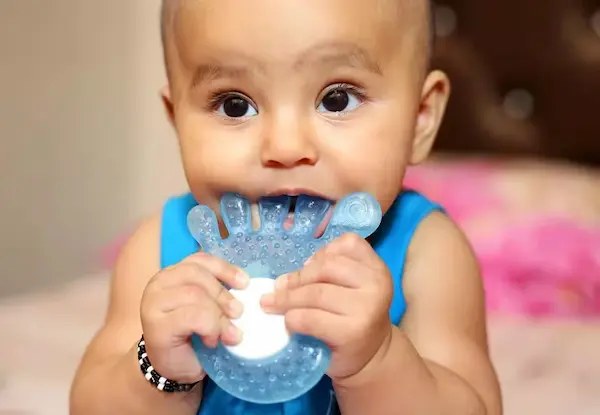
Chilled (Not Frozen) Teething Rings
The cold provides numbing through physical means—it constricts blood vessels temporarily, reducing inflammation and discomfort. But there’s a crucial distinction between chilled and frozen.
- Chilled: Place teething rings in the refrigerator for 30-60 minutes. They become pleasantly cool but remain flexible.
- Frozen: Teething rings straight from the freezer become rock-hard and extremely cold. They can damage delicate gum tissue, causing freezer burn or bruising.
The same principle applies to any object you offer: cool, not frozen.
Clean, Cold Washcloths
A simple, inexpensive option that many babies love. Dampen a clean washcloth, twist it, and place it in the refrigerator for 15-20 minutes. The texture provides something interesting to gnaw on, and the cold soothes gums.
Safety note: Always supervise your baby with a washcloth. As it becomes saturated with drool, small pieces could potentially tear off. Inspect washcloths regularly for wear and replace them when frayed.
Gentle Finger Rubbing
Sometimes the simplest solution works best. Wash your hands thoroughly, then gently rub your baby’s gums with a clean finger. The counter-pressure can significantly reduce discomfort, and your touch is comforting beyond the physical sensation.
For added benefit, dip your finger in cool water first. Some parents freeze breastmilk or formula in ice cube trays, then wrap a cube in a thin cloth and rub gently—though again, never apply anything frozen directly to gums.
Distraction Techniques
Never underestimate the power of distraction. A warm bath, a new toy, a change of scenery, or simply going outside can interrupt the pain-fussiness cycle. Teething discomfort often comes in waves, and catching your baby during a lower-intensity moment with engaging activity can prevent the spiral into full-blown misery.
Breastmilk Popsicles (for Babies Eating Solids)
If your baby has started solids (typically around 6 months), you can freeze breastmilk or formula in specialized baby-safe popsicle molds. The cold provides relief, and the familiar taste offers comfort.
For babies not yet eating solids, skip this—they don’t need the extra sugar (breastmilk contains natural sugars) and aren’t ready for that texture.
Teething Necklaces and Amber Beads: A Safety Warning
You’ve seen them in boutiques and on social media—amber teething necklaces, marketed as natural pain relief. The claim is that body heat releases succinic acid from the amber, which is then absorbed through the skin to reduce inflammation and pain.
There is zero scientific evidence supporting this claim. None.
What does exist is abundant evidence of danger.
Strangulation and Choking Hazards
The American Academy of Pediatrics is unequivocal: teething necklaces, bracelets, and anklets pose serious safety risks to infants and young children. These include:
- Strangulation: Necklaces can catch on crib slats, furniture, or caregiver hands, tightening around the baby’s neck.
- Choking: Beads can break loose, and infants can bite through cords. Small beads become airway obstructions.
- Mouth injuries: Babies chew on these beads, potentially damaging teeth or injuring gums.
The Centers for Disease Control and Prevention has documented cases of infant deaths related to teething jewelry. No potential benefit—which is itself unproven—justifies this risk.
If you’ve already purchased such items, remove them from your baby’s environment entirely. They don’t belong in the crib, on the baby, or anywhere accessible during play.
When to Call the Doctor: Red Flags During Teething
Knowing when teething warrants a medical call protects your baby from delayed treatment of actual illness. Use these guidelines:
Fever Over 100.4°F (38°C)
This is non-negotiable. Teething can cause a slight temperature elevation—usually less than 100.4°F. Anything above that requires evaluation. Your baby may have an ear infection, viral illness, or other condition needing treatment.
Persistent Diarrhea or Vomiting
While increased drool can loosen stools slightly, true diarrhea (frequent, watery bowel movements) is not caused by teething. Neither is vomiting. If your baby has these symptoms, call your pediatrician.
Refusing All Liquids
Pain can decrease interest in eating, but your baby must stay hydrated. If they refuse multiple feedings over several hours, or if you notice fewer wet diapers than usual, seek guidance. Dehydration progresses quickly in infants.
Rash Spreading Beyond the Drool Area
Drool rash appears on the chin, neck, and chest—areas constantly wet from saliva. If you see rash elsewhere, or if the drool rash looks infected (oozing, spreading redness, warmth), call the doctor.
Symptoms Lasting More Than a Few Days Without Improvement
Teething symptoms typically come in cycles corresponding to tooth movement. If your baby has been miserable for a week with no improvement, something else may be going on. Chronic fussiness warrants investigation.
You’re Just Not Sure
Trust your gut. You know your baby better than anyone. If something feels wrong—even if you can’t articulate why—call. Pediatricians’ offices field these calls constantly. That’s what they’re there for.
Frequently Asked Questions About Teething Pain Relief
Can I use whiskey or alcohol on my baby’s gums?
Absolutely not. This dangerous old wives’ remedy has no place in modern infant care. Alcohol can cause blood sugar drops, seizures, and coma in small children. It’s toxic to their developing brains and bodies. The amount that numbs gums is far more than is safe for an infant to ingest or absorb.
When do babies start teething?
Most babies cut their first tooth between 4 and 7 months, though the range from 3 to 12 months is considered normal. The two bottom front teeth (central incisors) usually appear first, followed by the top front teeth. By age 3, most children have their full set of 20 primary teeth.
How can I tell if my baby is teething or sick?
Look at the whole picture. Teething babies are generally happy between fussy episodes. They want to chew on things. They drool. They might be slightly warm but not feverish. Sick babies often have persistent fever, refuse to eat or drink altogether, seem lethargic even between fussy periods, and may have vomiting or diarrhea. When in doubt, assume illness and consult your pediatrician.
Are silicone teethers safe?
Yes, when used properly. Look for food-grade silicone, free from BPA, phthalates, and PVC. Inspect regularly for damage, and replace if pieces break off. Silicone teethers can be refrigerated but not frozen. Always follow the manufacturer’s age recommendations.
My baby seems to be teething at 3 months—is that normal?
Yes, early teething happens. Some babies are born with teeth, while others cut their first at 3 months. The symptoms are the same regardless of age, though the treatment options differ slightly. For babies under 4 months, check with your pediatrician before using any medication—even acetaminophen.
Can teething cause diaper rash?
Indirectly, yes. Increased drool contains enzymes that can irritate the digestive tract, leading to looser, more frequent stools. Those stools, combined with the enzymes they contain, can cause diaper rash. Treat the rash with frequent changes and barrier cream, but don’t assume the rash itself means your baby is dangerously ill.
What about homeopathic teething tablets?
The FDA advises against them. Despite “natural” labeling, these products have contained inconsistent and sometimes dangerous levels of belladonna. Several brands have been recalled, and adverse events including seizures have been reported. Stick with treatments that have proven safety profiles.
A Final Word for Exhausted Parents
I see you there, at 3 a.m., bouncing a screaming baby, questioning every decision you’ve made. You’re doing a good job. The very fact that you’re reading this, that you’re seeking information to help your baby safely, proves that.
Teething is hard. It’s hard on babies, and it’s hard on parents. The sleep deprivation, the constant crying, the feeling of helplessness—all of it takes a toll. But this phase will pass. Every tooth eventually emerges, and every baby eventually sleeps through the night again.
In the meantime, be kind to yourself. Accept help when offered. Put the baby down in a safe place and step outside for five minutes if you feel overwhelmed. Call your pediatrician with questions—they’ve heard them all.
And when you’re standing in that pharmacy aisle, exhausted and uncertain, remember: the safest choice for your baby’s teething pain is rarely in a box. Often it’s in your refrigerator, your clean hands, or your lap as you rock and soothe and love your way through this temporary storm.