The safest place for your baby to sleep isn’t a plush, pillow-filled cradle or a cozy nest of blankets — it’s something far simpler and far more protective. Evidence-based safe sleep practices have cut deaths from SIDS and other sleep-related causes dramatically, and most of that protection comes down to how you set up the space. This guide is the practical, hands-on companion to the safe sleep guidelines (which cover the “why” and the science): how to choose and audit the crib, what goes in it, how to handle temperature and gear, and how to stay safe through real-world exhaustion.
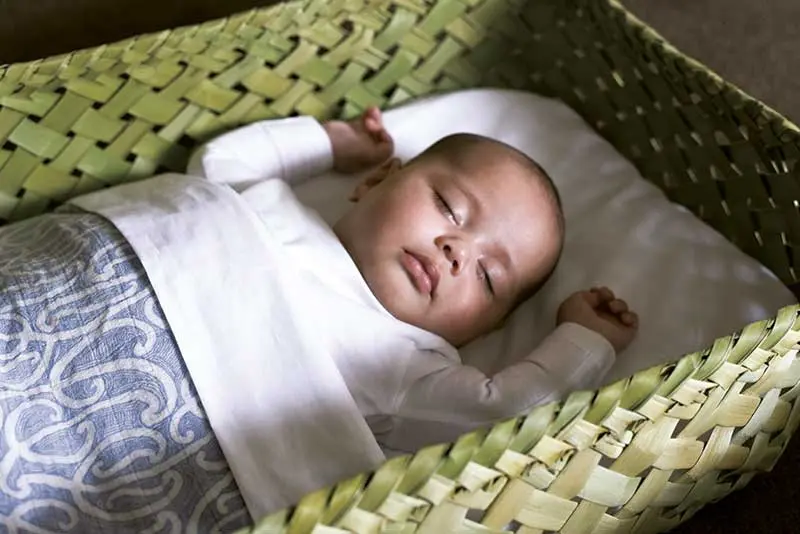
The Quick-Start Checklist
- Surface: a firm, flat mattress in a safety-approved crib, bassinet, or play yard.
- What’s inside: a fitted sheet, and nothing else — no bumpers, pillows, toys, or loose bedding.
- Position: always on the back, for every sleep.
- Clothing: a wearable blanket or sleep sack, not loose blankets.
- Environment: in your room for at least the first 6 months, at 68–72°F (20–22°C).
- Extras: consider a pacifier at sleep time; don’t rely on a commercial cardiorespiratory monitor as a safety crutch.
The Foundation: ABC
Everything rests on three fundamentals — Alone, Back, Crib. Your baby sleeps Alone in their own space with nothing in it but a fitted sheet; on their Back for every nap and every night (the single most effective step, until they can roll both ways on their own around 4–6 months, when you still always start them on their back); and in a Crib, bassinet, or play yard — never an adult bed, couch, armchair, or a car seat, swing, or bouncer used for unsupervised sleep. Our safe sleep guidelines explain the science behind each one; the rest of this guide focuses on building the space itself.
Choosing and Auditing the Sleep Surface
Your baby’s bed is the cornerstone. Run through this inspection checklist:
- Firmness. The mattress must be firm — do the “hand test”: press down and it should snap back immediately, not conform to your hand. Soft memory-foam toppers are a hazard.
- Fit. Use the exact mattress size the crib manufacturer specifies. You shouldn’t be able to fit more than two fingers between the mattress and the crib side — gaps are dangerous.
- Standards. The crib must meet current Consumer Product Safety Commission (CPSC) standards: slats no more than 2⅜ inches apart (about a soda can’s width) and no drop-side rails. Always check the manufacturer’s site for recalls.
- Play yards (Pack ‘n Plays). These are a safe, approved sleep surface when used correctly — which means using only the thin, firm mattress pad that came with it. Never add a supplemental mattress, pillow-top, or foam topper, no matter how thin it seems.
“Bare is best”
The crib should contain your baby and a fitted sheet — that’s it. Crib bumpers, even “breathable” mesh ones, are not safe (they pose a suffocation, strangulation, and entrapment risk, and give older babies a foothold to climb); in fact, padded crib bumpers are now federally banned. Those matching bedding sets are for show: the quilt is for floor tummy time, the pillow is for you, and the stuffed animal can wait on a shelf.
Temperature, Clothing, and Gear
Keeping warm without overheating
Overheating is a known risk factor, so aim for a room temperature of 68–72°F (20–22°C). Dress your baby in about one more layer than you’d be comfortable in, and gauge warmth by feeling the back of their neck or chest — cool hands and feet are normal and not a good guide. A wearable blanket (sleep sack) is your best friend here: it replaces loose blankets entirely, so choose one that’s snug at the neck and armholes (so it can’t ride up) and made for sleep — not a weighted one, which isn’t recommended for infants. If you swaddle, keep the hips and legs free to move, and stop at the first sign of rolling (as early as 8 weeks).
Pacifiers
Offering a pacifier at nap and bedtime is associated with a meaningful reduction in SIDS risk. If you’re breastfeeding, introduce it once nursing is well established (around 3–4 weeks). Don’t force it, don’t reinsert it if it falls out after your baby is asleep, and never hang it around the neck or attach it with a cord.
Monitors: helpers, not guardians
This distinction matters. Commercial cardiorespiratory (vital-sign) monitors are medical devices for babies with diagnosed conditions; for a healthy baby they aren’t recommended as a SIDS-prevention tool, and they can create a false sense of security and cause alarm fatigue from false alerts. Video and audio monitors are great for convenience and peace of mind, but they’re no substitute for a safe sleep space — you can’t monitor away a hazard like a loose blanket.
Getting Through Real-World Exhaustion
The guidelines are easy in daylight and feel impossible at 3 AM. The AAP recommends room-sharing — your baby in their own safe space within arm’s reach of your bed — for at least the first 6 months, which is itself protective. A few strategies for the hard nights:
- Avoid the couch and armchair. The most dangerous scenario is falling asleep feeding your baby on a sofa or armchair — the cushions and crevices create an extreme suffocation risk.
- If you might doze off, use your bed, not the couch — and first clear away all pillows, blankets, and comforters. It’s still safer than a sofa, and the moment you wake, put your baby back in their own space.
- Have an exhaustion safety net. If you’re truly at your limit, place your baby (awake or asleep) in their own bare crib, leave the room, and set a timer for 10–15 minutes. A brief cry in a safe space is far less dangerous than the risk of falling asleep together somewhere unsafe.
Five Dangerous Myths
- “They sleep better on their stomach.” They may sleep more deeply — which is precisely the problem, since deep sleep can impair their ability to rouse if they have trouble breathing.
- “A little blanket won’t hurt.” It can — suffocation is silent and quick. A wearable blanket removes the risk entirely.
- “Bed-sharing is safe if you’re a light sleeper.” The evidence shows bed-sharing increases risk for all infants; deep sleep, exhaustion, and medications can override even a light sleeper’s awareness.
- “It’s fine for a nap in the swing.” Positional asphyxia — where the chin drops to the chest and blocks the airway — can happen in semi-reclined seats like swings and car seats. Move a sleeping baby to a flat, firm surface as soon as it’s practical.
- “Grandparents did it differently and we survived.” That’s survivor bias. We now have decades of research they didn’t — so we can do better.
Frequently Asked Questions
Just a firm mattress and a fitted sheet made for it — nothing else. No pillows, blankets, quilts, crib bumpers, stuffed animals, or positioners. For warmth, use a wearable sleep sack instead of loose bedding.
No — including “breathable” mesh ones. They pose suffocation, strangulation, and entrapment risks and give older babies a foothold to climb. Padded crib bumpers are now federally banned. A bare crib is the safest crib.
Yes, when used correctly. Use only the thin, firm mattress pad that came with it, with a fitted sheet made for that model. Never add an extra mattress, pillow-top, or foam topper, even a thin one — that creates a suffocation hazard.
No. Commercial cardiorespiratory (vital-sign) monitors aren’t recommended as a SIDS-prevention tool for healthy babies and can create false reassurance. Video and audio monitors are fine for convenience, but they don’t replace a safe sleep space.
Aim for a room at 68–72°F and dress your baby in about one more layer than you’d wear, using a wearable sleep sack in place of loose blankets. Check the back of their neck or chest for warmth — cool hands and feet are normal and not a reliable gauge.
The Bottom Line
The safest sleep is strikingly simple: a firm, flat, safety-approved surface; a fitted sheet and nothing else; your baby on their back; a sleep sack instead of blankets; and their own space in your room. Skip the bumpers and gadgets, keep the crib bare, and have a plan for the exhausted nights. Set it up once, share it with everyone who cares for your baby, and you’ve built a space where risk is as low as you can make it.
This article is for general information and is not a substitute for personalized medical advice.
References
- American Academy of Pediatrics (HealthyChildren.org). How to Keep Your Sleeping Baby Safe: AAP Policy Explained.
- NICHD Safe to Sleep. Safe Sleep Environment.
- U.S. Consumer Product Safety Commission. Safe Sleep — Cribs and Infant Products.
- Mayo Clinic. Sudden Infant Death Syndrome (SIDS).