There’s a moment that catches almost every new parent by surprise — one the books and the polished social-media feeds tend to skip. In the first seconds after birth, when that slippery, squirming, sometimes cone-headed little person is placed on your chest, a quiet thought often surfaces alongside the love: “They look… different than I expected.” If you’ve felt that flicker of surprise or worry, here’s the reassuring truth: it’s completely normal, and so is your baby. A newborn has just completed the most demanding physical feat of their life, and nearly every quirk — the pointy head, the puffy eyelids, the peeling skin — tells that story. This is a head-to-toe tour of what’s typical, and the few signs genuinely worth a call to your pediatrician.

Quick Guide: Normal Traits vs. When to Check In
| Feature | What’s Typical (Normal) | When to Mention to Your Pediatrician |
|---|---|---|
| Head Shape | Cone-shaped, elongated, or asymmetrical from birth molding. | Significant asymmetry that doesn’t improve within a couple of days. |
| Skin Color | Bluish hands/feet (acrocyanosis), red/pink body, mottling. | Yellow tinge (jaundice) in the first 24 hours, or a blue tint to the lips or torso. |
| Eyes | Puffy lids, an occasional red spot on the white, blue/gray color. | A white pupil, persistent redness with discharge, or one eye not moving. |
| Skin Textures | Peeling, tiny white bumps (milia), red “newborn rash,” baby acne. | Blistering, widespread raw-looking skin, or pus-filled bumps. |
| Genitals | Swelling (in boys & girls), minor vaginal blood/discharge in girls. | Severe swelling or redness, or no urine passed in 24 hours. |
| Overall | Fists clenched, legs curled, irregular breathing patterns. | Limpness, extreme lethargy, or fever (100.4°F+ rectally). |
The Head: Built for the Journey
The shape
That elongated or cone-shaped head has a name: birth molding. A baby’s skull isn’t one solid bone but several plates with soft seams (sutures) between them, which lets the plates overlap slightly to navigate the birth canal. You might also feel a soft, puffy swelling on the scalp, often on the side that led the way out — this is caput succedaneum, simple fluid buildup under the skin that crosses the suture lines and clears within a few days.
A related but different lump is a cephalohematoma — a collection of blood under the covering of one skull bone. Unlike caput, it doesn’t cross the suture lines, feels more defined, and takes weeks to months to reabsorb. It’s usually harmless but worth having your pediatrician confirm. As for molding, the rounding-out is quick: you’ll see dramatic improvement in the first 48–72 hours, and most heads look much rounder within a few weeks. Alternating the direction your baby’s head faces during sleep helps.
The soft spots (fontanelles)
Those soft, pulsing areas are the fontanelles — a larger diamond-shaped one near the front and a smaller triangular one toward the back. They let the skull compress during birth and give the brain room to grow in the first year. Many parents are afraid to touch them, but they’re protected by a tough membrane, so it’s perfectly safe to wash over them gently, and a soft pulse with the heartbeat is normal. Two things to note: a sunken soft spot can signal dehydration, and a bulging one when your baby is calm and upright can indicate increased pressure — both warrant a prompt call to your doctor.
Hair
A full head of hair, a light fuzz, or a bald head — all are normal. The fine, downy hair you might see on the shoulders, back, or ears is lanugo, which helped hold the protective vernix on the skin in the womb and rubs off over the first few weeks. Don’t be alarmed if scalp hair falls out in patches around 2–3 months; it’s often replaced by hair of a different color and texture.
The Face: A Portrait of Transition
The eyes
- Puffiness and red spots: puffy eyelids are common from the pressure of birth. A bright red spot on the white of the eye is a subconjunctival hemorrhage — a tiny broken blood vessel, like a bruise, that’s harmless and fades over 1–2 weeks.
- Color: babies with less melanin at birth often start with blue-gray eyes; the permanent color develops as melanin is produced over the next 6 to 12 months.
- “Sticky eye”: a blocked tear duct is very common, causing harmless goopy discharge (usually without redness); gentle massage of the inner corner can help.
The nose and ears
A flat little nose often comes from being pressed against the uterine wall; the soft cartilage gains a more defined shape within days to weeks. Ears can look folded or crumpled from the fetal position and usually reshape on their own.
The mouth
Inside the mouth you might spot tiny pearly-white cysts on the gums or roof — Epstein’s pearls, harmless keratin collections that disappear on their own. A small clear blister on the center of the upper lip is a sucking blister, a sign of vigorous feeding rather than dehydration. It’s also worth checking under the tongue: a tight, heart-shaped tip or a tongue that can’t extend past the gums may point to a tongue-tie, which your pediatrician or a lactation consultant can assess.
The Skin: A Dynamic Canvas
Color changes
- Acrocyanosis: bluish hands and feet for the first few days are normal, as circulation prioritizes the vital core organs. (A blue tint to the lips, tongue, or torso is not normal — that needs urgent attention.)
- Mottling: a lacy, red-and-white pattern is a normal reaction to temperature changes.
- Birthmarks: pink or red patches on the eyelids, forehead, or nape (“stork bites,” or nevus simplex) are dilated capillaries that usually fade, though the neck ones may linger. Flat bluish-gray patches on the lower back or buttocks — congenital dermal melanocytosis (historically called Mongolian spots) — look like bruises but are harmless and fade over years.
Rashes and bumps
- Erythema toxicum: this alarmingly named but harmless “newborn rash” looks like small red blotches with tiny white or yellow centers, and comes and goes in the first week.
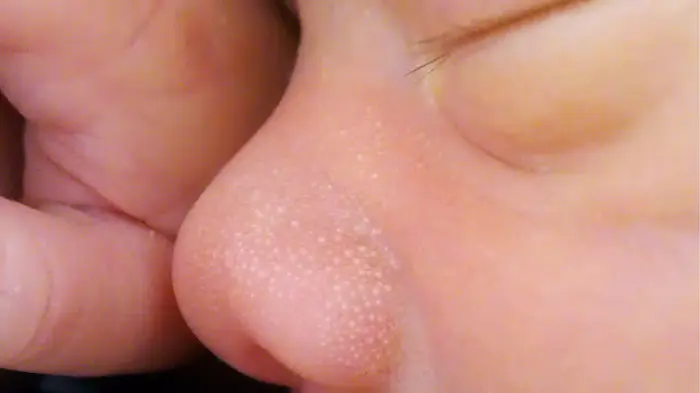
- Milia: pinpoint white bumps on the nose, chin, and cheeks are blocked pores — don’t squeeze them; they clear on their own.
- Baby acne: red pimples around 2–4 weeks come from maternal hormones and clear without treatment — just gentle washing with water.
- Peeling skin: especially on wrists, ankles, and feet, this is normal shedding of the outer layer after life in amniotic fluid. No lotion is needed.
- Vernix: the white, cheesy coating protected the skin in the womb and works as a natural moisturizer and barrier, so it’s often left to absorb rather than washed off.
The Body: Proportions and Surprises
Swelling and breast buds
Many newborns look generally puffy, especially around the face and genitals, from fluid retention and maternal hormones — it subsides quickly with feeding and peeing. You may also feel small, firm lumps under the nipples (breast buds) in both boys and girls, and occasionally see a drop of milky fluid. This is hormone-driven and disappears on its own; don’t massage or squeeze.
Genitals
- Girls: a swollen labia and even a small amount of white or slightly bloody vaginal discharge — a “mini-period” from the withdrawal of maternal hormones — is common.
- Boys: the scrotum can look large and swollen. A hydrocele (a fluid-filled sac around a testicle) is common and usually resolves on its own. If circumcised, the tip looks red and raw at first, with yellowish healing tissue forming after a few days.
Posture and proportions
Your baby will likely look a bit top-heavy, with a potbelly and narrow chest as their abdominal muscles develop. They’ll favor the fetal position — spine curved, fists clenched, legs bent with feet turned in — because it’s the only posture they’ve ever known. They gradually stretch out over the coming months.
True Red Flags: When to Call the Pediatrician
Almost everything above is typical — but trust your instincts and call your provider for any of these, which point to something beyond normal newborn appearance (our guide to signs of illness in a newborn goes deeper):
- Jaundice (yellow skin) appearing in the first 24 hours, or spreading rapidly to the chest and abdomen.
- A fever of 100.4°F (38°C) or higher, taken rectally, in a baby under 3 months — seek care immediately.
- Lethargy so profound you can’t rouse them to feed.
- Forceful, projectile vomiting (not just gentle spit-up).
- Signs of respiratory distress: grunting, flaring nostrils, or the skin sucking in between the ribs with each breath.
- Inability to latch or sustain a suck.
- A bulging or deeply sunken soft spot when your baby is calm.
Frequently Asked Questions
It’s from birth molding. A baby’s skull is made of separate plates that overlap slightly to fit through the birth canal, which can leave the head elongated or pointy. It’s harmless and rounds out quickly — noticeably within 48–72 hours and mostly within a few weeks.
Yes, very. Newborns shed the outer layer of skin that protected them in amniotic fluid, often most visibly on the wrists, ankles, and feet in the first week or two. No lotion is needed — it resolves on its own.
Babies with less melanin at birth often start with blue-gray eyes, and the permanent color develops as melanin is produced over roughly the first 6 to 12 months. Babies with more pigment may have darker eyes from the start.
Bluish hands and feet in the first few days are normal, a harmless pattern called acrocyanosis as circulation matures. What’s not normal is a blue tint to the lips, tongue, or torso — that needs urgent medical attention right away.
Call for jaundice in the first 24 hours, a rectal fever of 100.4°F or higher under 3 months, lethargy where you can’t rouse your baby, projectile vomiting, breathing distress (grunting, flaring, or ribs pulling in), or a bulging or deeply sunken soft spot when calm.
The Bottom Line
Your newborn’s first look is fleeting. Within a few weeks the cone rounds out, the peeling stops, the puffiness fades, and the eyes begin to reveal their color. Nearly all of that early, unexpected appearance is the temporary, adaptive aftermath of birth — not a flaw. Keep the short list of real red flags in mind, trust your instincts when something feels off, and otherwise let yourself simply take in the perfectly normal, remarkable newborn in front of you.
This article is for general information and is not a substitute for personalized medical advice.
References
- American Academy of Pediatrics (HealthyChildren.org). Your Newborn’s Appearance.
- Nemours KidsHealth. Looking at Your Newborn: What’s Normal.
- Mayo Clinic. Newborn: What to Expect in the First Days.
- National Health Service (NHS). Getting to Know Your Newborn.