Polycystic ovarian syndrome:
The Syndrome combination of problems or diseases. Polycystic ovarian syndrome Pcos is a disease that grounds unbalanced menstrual periods, additional hair growth and fatness. Pcos may upsurge the risk of long-term health problems, counting DM.
It is not yet clear what origins pcos. Pcos may be hereditary. Too much insulin in the body changes the way the body uses food for energy. It can cause cells in your ovaries to produce more male hormones. The polycystic ovary syndrome is knows as one of the commonest problems of humans, with prevalence of generally 5%–15% all over the world. The disorder appears to be an old complex genetic trait, almost 50,000 years ago. The phenotype of PCOS can be distributed into four different forms. Phenotype A and B (hyperandrogenism + ovulatory dysfunction, with [A] and without [B] polycystic ovarian morphology [PCOM], in this manner. In most cases, medication or surgery can help to produce egg.
Hair thinning:
- Hair thinning is a symptom of PCOS.
- Hair thinning can be caused by stress.
- Hair thinning can be caused by genetics.
- Hair thinning can be caused by other factors.
- Hair thinning can be caused by the medications used to treat PCOS.
Unwanted hair growth
- Facial hair
- Hirsutism
- Beard
- Hair on the arms.
- Hair on the thigh.
- Hair on the legs.
- Hair on the stomach.
- Hair on the pubis.
- Hair on the back.
- Hair on the armpits.
Irregular periods:
- Irregular periods can be a sign of pcos.
- Irregular periods can be a sign of other health problems.
- Irregular periods can be a sign of pregnancy.
- Irregular periods can be a sign of stress.
- Irregular periods can be a sign of an eating disorder.
Endocrine disorder in PCOS
- PCOS is a common cause of menstrual abnormality.
- PCOS is a common cause of hair loss.
- PCOS is a common endocrine disorder.
- PCOS.is a common cause of infertility.
PCOS is ovary related problems in women. pcos is a major common problem in female in which menstrual cycle is disturb and female not Able to produce egg properly. PCOS a hormonal disorder effect the reproductive age women .it develop after primary menstrual period, at young as age 11 or 12. It also develop in the 20s or 30s.
Mood swings and anxiety problems in women suffering with PCOS:
Gynecologic, metabolic, and reproductive abnormalities occur when females suffer from polycystic ovary syndrome and their entire lifespan is disturbed. Females with PCOS are mostly at higher risk of developing mood and anxiety disorders. Rate of depression is increased in females that have developed PCOS. Clinical characteristics of hyperandrogenism badly affects the healthy lifestyle. The connection between body image, depression, hirsutism and acne is currently undecided.
Causes:
The main Cause is unknown
- Many researcher said that genetic play Very important role in developing pcos.
- 2High level of male hormone androgen prevents the ovary to produce egg and which disturb menstrual cycle.
- Irregular ovulation.
- Disturb menstrual cycle.
- Metabolic homeostasis.
- Insulin resistance.
- Hyperandrogenemia.
- Steroid secretory abnormalities.
- PCOM.
- Insulin secretory imperfections.
- pcos have FOH related steroidogenic defects. It arises between the interaction of diverse genetic and environmental factors.
- The one of the major reason is testosterone advancement after overpowering of adrenal androgen production.
- Those cells from where polycystic ovaries of PCOS steroidogenic dysregulation which can description for the steroidogenic irregularities mostly FOH.
Symptoms of PCOS:
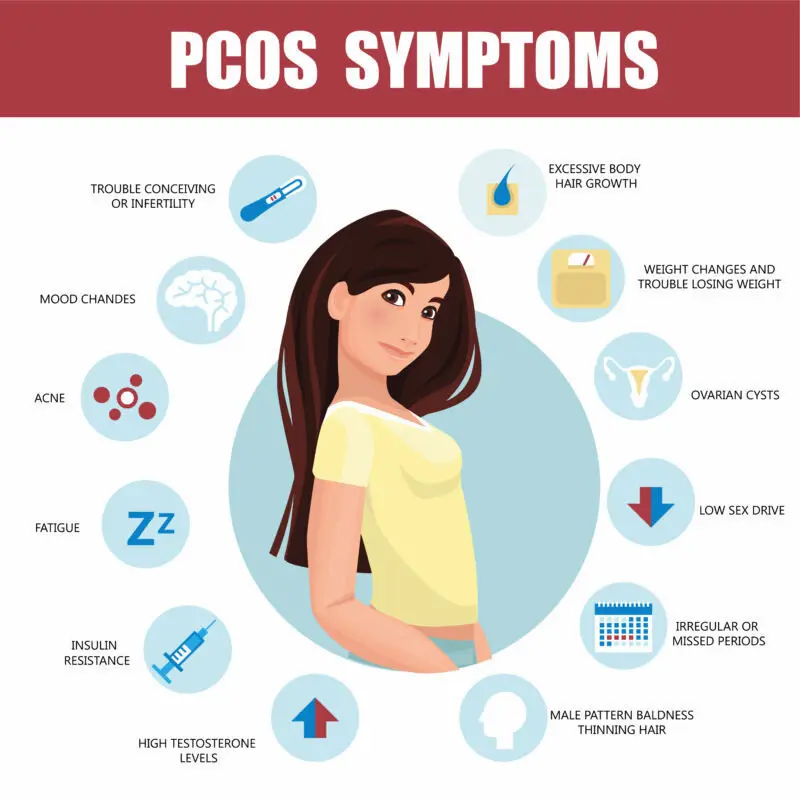
- Increase growth of hair (hirsutism) mostly on the face, back, buttocks and chest.
- Increase in weight.
- Removal of hair and increased hair fall from the head.
- Oily skin or acne
- Unbalanced periods or not periods
- Polycystic ovary has (many cysts) visible on an ultrasound
- Psychological distress
- Anxiety
- Low body mass index,
- Pcos is a common endocrine disorder
Diagnosis:
When Should I Be Tested for PCOS?
- If you have irregular periods
- If you have acne
- If have additional hair growth
- If you have difficulty getting pregnant
- If you have high blood pressure
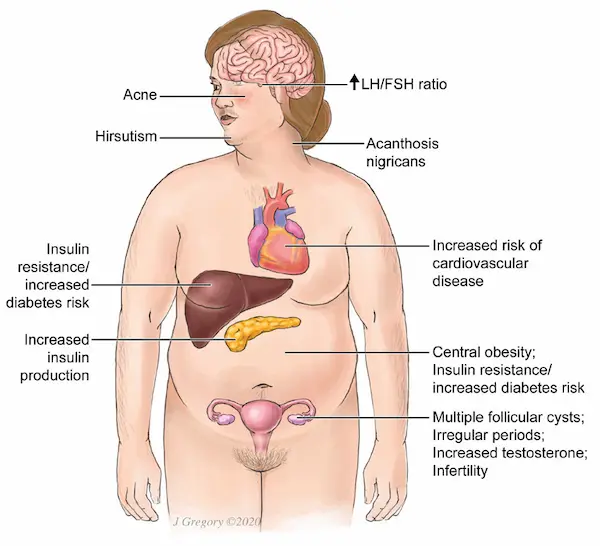
Ultrasound scan is most useful in diagnostic purpose. But test for hyperandrogenism and ovulatory disorders can be done without an ultrasound. To diagnose the PCOS without actually having multiple small follicles in ovary is very difficult and can be done only with ultrasound scan. In some case ultrasound is not useful for diagnosis of PCOS because ultrasound is normal but still have hormonal disturbance which show conditions for PCOS. Transvaginal ultrasound is best for PCOS. PCOS on ultrasound scan are as the “presence of 12 or more follicles in each ovary with size of 2-9 mm each”.
Endocrinologist: these are the specialists that diagnose and treat PCOS with specialized measures in a large range of medical problems that are hormone related. They deal with PCOS as part of their medical focus. They put some focus to treat this problem especially in larger cities with teaching access to hospital noises of PCOS, but it cause some discomfort. The diagnosis of polycystic ovary syndrome is confirmed by the presence of two of the three following factors: polycystic ovaries, hyperandrogenism and ovulatory dysfunction. High level of LH secretions cause androgen level to increase in body of female .low level of FSH secretions because poor egg development and inability to evaluate. Hair growth on face chest also diagnostic signs for PCOS. Transvaginal ultrasound the best way without any pain.
Testosterone and free androgen index (FAI) are the blood tests for PCOS if you have hyperandrogenism (high androgen levels). Other blood tests used to identify increased levels of androgen include sex hormone-binding globulin (SHBG) dehydroepiandrosterone sulphate (DHEAS).
Treatment:
The main aim is to control androgen level or regular the menstrual cycle or reduce the symptoms which is occurred by PCOS. To reduce the acne used many medicines or procedures. To reduce the level of androgen we used birth control pills are mostly used.
To remove the hair growth on face the best way is laser. Diode laser is most effective for removal of hair. The most common drugs used for chronic PCOS include contraceptives pills, progestins and metformin. For infertility or reduction of ovulation the drugs used are letrozole or clomiphene or gonadotropin .Letrozole should be considered the first line drugs to control PCOS. Endometrial cancer is must be prevented in PCOS women. In pcos the major focus is to reduce the symptoms and decrease the level of testosterone. Actually testosterone is a mainly male hormone so its increase secretions cause male like appearance in female. The major problem caused by testosterone is beard growth in female.
Insulin-sensitizing mediators are used for PCOS because they are proven beneficial against insulin resistance, irregular menstrual cycle, hirsutism, and obesity. Metformin (Glucophage) has proven to be the best drug among all to treat PCOS, is considered best drug. In PCOS the attack of acne is to severe which require urgent medication. Difficult type of acne appeared in PCOS .For the treatment of scene we mostly used
Antibiotics. (Azomax, claret gel).
Antiallerg. (Fixit, rigix, pulsate).
If you have a problem with acne
There are many reasons why people have acne problems.
PCOS causes acne that becomes worse in those areas that are usually considered “hormonally sensitive,” especially at the lower third area of the face.
It is important to know that pcos not only causes acne but also weight gain, body hair increase and infertility.
Tips for PCOS Acne Control and Management:
- Patient must apply moisturizer and sunscreen that suits her skin type.
- Patient must use non-comedogenic makeup and skin care products.
- Patient must wash her face daily with a suitable cleanser.
- Patient must remove all makeup before going to bed.
- Patient must not pick at pimples or pop acne at home.
In terms of management, orientation of ovulation in most cases can be gathered by the use of antiestrogen.
Polycystic ovary syndrome interpretations for almost 75% of cases of unproductiveness. The contrivance of absence of ovulation is indeterminate but there are reports that prevented antral follicle enlargement is related to the abnormal endocrine profile, particularly the connection of insulin and LH on granulosa cell differentiation.
Medications which are mostly used in PCOS are metformin, thiazolidinedione’s, orlistat, vitamin D acarbose, naltrexone, and statins. Fat should be reduced to ≤30% of total calories and the amount of saturated fat is low. Dyslipidemia and weight gain occurs due to High intake of low GI carbohydrate. It also increases appetite and carbohydrate craving.
Diet and exercise essential to be managed to the requirements of persons and predilections. Calorie consumption should be disseminated between various meals per day and low amount should be consumed from drinks and axis. Use of drugs to increase insulin thoughtfulness or to increases weight loss are considered as a short-term measure, and are most probably to be advantageous when used early in amalgamation with diet and exercise.
Clomiphene-resistant subjects are difficult to handle; conventional doses of gonadotropins are related to the high rates of ovarian hyper stimulation syndrome and numerous pregnancy. In other words, gonadotropin therapy in low doses has proven beneficial in stimulating unimolecular ovulation.
Hepatic gluconeogenesis decreases Metformin and free fatty acid oxidation while increasing
The good news is that there are things you can do if you have PCOS. Peripheral glucose.
After six cycles, the rate of cumulative conception was more than 50% and the rate of multiple pregnancy was only 3%. Decreasing the weight in fatty patients with PCOS not only enhances the chance of pregnancy but May also increase the longer prognosis related to diabetes development. Most commonly doctors prescribe Insulin-sensitizing drugs such as metformin.
- Get a hysterectomy
- Consider a second opinion
- Talk to your doctor
- Take birth control
PCOS Management and Treated During Pregnancy:
- Careful monitoring during pregnancy
- Low-carbohydrate diet
- Exercise
- Medication
- Life style change
Diet that is used for PCOS weight loss:
Try the addition of healthy, high-protein substances for example eggs, nuts, and seafood to your nutrition.
Strong, high-protein foods consist of eggs, nuts, dairy, meat, and seafood. Higher protein consumption for improvement of weight loss, particularly for women suffering with PCOS.
Foods to Avoid if Have PCOS:
- Processed meats for example hot dogs, sausages and hamburgers.
- Carbohydrates like white bread, pastries and pasta
- Processed food that are ice creams, cakes, sweetened yogurt, candy,
- Sugary drinks.
- Deep-fried foods.
Healthful PCOS diet can also include the following foods:
- Natural foods that are not processed
- Foods rich in fiber
- Fatty fish that includes sardines, mackerel, salmon and tuna,
- Kale, spinach, and other dark, leafy greens.
- Fruits that are dark red colored, such as red grapes, blueberries, blackberries, and cherries.
- Broccoli and cauliflower.
Milk and Milk Products are good for pcoc:
This is because women with PCOS have the predisposition to develop insulin confrontation and the consumption of dairy can lead to higher level of insulin. Milk, paneer, cheese and butter are regular part of most people’s diet but are not good for females with PCOS.
Drink good for PCOS:
Tea has been used as a medication for immeasurable issues and PCOS is one of them. The best teas for PCOS are turmeric tea, green tea, neem, amala, and cinnamon tea.
Natural Ways to Treat Polycystic Ovary Syndrome (PCOS):
- Diet changes.
- Supplements.
- Herbs.
- Probiotics.
- Healthy weight.
- Regular exercise.
- Sleep hygiene.
- Stress management.
- Naturally since they are rich in protein.
Best Fruits and vegetables for PCOS:
Antioxidant-rich foods for a PCOS nutrition comprises fruits like raspberries, strawberries and blueberries, and vegetables like spinach, kale, and artichokes and the last one Whole Grains that are brown rice, whole oats, quinoa and whole wheat.
Consumption of chicken in PCOS:
Bony protein cradles like chicken, fish and tofu don’t provide fiber but are a very substantial and nourishing nutritional preference for people who are fighting with PCOS.
Food to Avoid in PCOS:
- Deep-fried nutriments.
- Processed meats (ex. hot dogs, sausages, hamburgers)
- Sugary drinks.
- Processed food for example ice creams, cakes, sweetened yogurt, candy
- Sophisticated Biological compound for example white bread, pasta, and pastries
Eating rice in PCOS:
Food items similar to white rice, candies, and loaves of bread, potatoes, and pastries have sophisticated flour. Refined carbohydrates are the nastiest food for PCOS and should be sidestepped. Refined carbohydrates escalation insulin manufacture in our body, leading to diabetes. PCOS women are more likely to develop diabetes.
Best food for PCOS patients:
Insulin resistance is cured by high fiber foods. Such foods slow down digestion and reduce the effect of sugar on the blood. This may be healthy for people with PCOS.
Examples:
Following are the examples of high fiber foods like cruciferous vegetables, like cauliflower, Brussels sprouts and broccoli.

Mostly beneficial fruits and vegetables for PCOS:
These foods include:
- Kale.
- Spinach.
- Tomatoes.
- Olive oil.
- Fruits, like blueberries and strawberries.
- Almonds and walnuts.
- Exercise.
- Supplements.
- Natural products.
- CBD.
- Probiotics.
- Blubbery fish containing omega-3 fatty acids, like salmon and sardines.
- Knowledge to learn about seven natural factors of managing PCOS.
- Weight beating. Share on Pinterest Losing weight through exercise and beneficial diet may help a person to decrease the PCOS symptoms.
- Diet changes. Improving the diet is an integral part of treating PCOS.
Physical therapy management for PCOS:
50% of the women diagnosed with Polycystic Ovarian Syndrome PCOS have showen great improvements by different exercise programs, by dealing with the irregularities of menstrual cycle and promoting ovulation. For PCOS at least 150 min of physical activity per week.
Exercise best timing for PCOS:
There is no impeccable time to exercise, only when you can do it unswervingly.
Some females wake up early in the morning to work out or try to fit it in during a lunch hour or after work.
Ovarian cysts reduction by regular exercise:
Extending and exercise: jogging and light activity such as yoga have been helped a lot to condense ovarian cyst discomposure in females. Females may seek help by using a heating pad at home.
Benefits of weight lifting:
Strength Training can improve body composition and Cardiometabolic profile for example risk of developing diabetes, heart infection or stroke in PCOS patients the lessening of testosterone and the rise in the level of the androgen receptor
Benefits of gym for PCOS:
The moral news is physical exercise is something you can do for your health when you have PCOS, irrespective of your weight.
Not all women with PCOS have overweight
Importance of weight loss in PCOS:
Large improvement in PCOS can occur by decreasing the weight by just 5%.
By losing excess weight in overweight women, the symptoms and overall risk of developing long-term health issues from PCOS can be improved.
For decrease pain In PCOS condition:
Non-steroidal anti-inflammatory drugs (aka NSAIDS) such as ibuprofen and aspirin, and are common over the counter medications which can help relieve moderate PCOS pain in the lower abdomen.
Measure to reduce ovarian cyst pain at home
- Health line’s picks for the best home remedies for ovarian cyst treatments
- Take an over-the-counter (OTC) pain reliever.
- Use heat therapy to ease cramps.
- Snack on almonds, which are high in magnesium.
- Take dong quoi supplements to help ease cramps.
- Take an Epsom salt wash to help lower your muscles and ease hampering.
Multivitamin is best solution in PCOS situation:
For supplementation, Myo inositol and D-chiro-inositol are the commonly used types of inositol.
Inositol or vitamin B is one of the best medications for PCOS, backed by science that holds a significant role in maintain blood glucose levels and ovarian health.
Best gym or yoga for PCOS patient:
Keep in mind that yoga is only one part of an overall therapy plan for PCOS.
Symptoms of PCOS can be decreased by practicing yoga regularly. Yoga also decreases testosterone levels. It can cause relaxation also.
Time require to heal PCOS:
These medicines treat the effects of excess androgens on a girl’s body, and is also used to clear up skin and to deal with hair growth problems. Almost 6 months are required to determine whether treatment with birth control is effective. Antiandrogens are also used to treat PCOS in some cases.
Importance of squats in PCOS:
You can try bodyweight movements like squats, push-ups, or triceps dips to expand the occupation of insulin in your body. What’s more, it can also quicken your metabolism by building more muscle mass.