You planned for this. You read the books, took the classes, set up the nursery. You told yourself you were ready. What nobody told you is that ready and overwhelmed can live in the same body: that you might hold your newborn and feel nothing, or love them so fiercely it hurts and still find yourself sobbing in the bathroom at 3 a.m. for reasons you cannot explain. That the joy you expected might be buried under something heavier, something that does not have a name you can put to it yet.
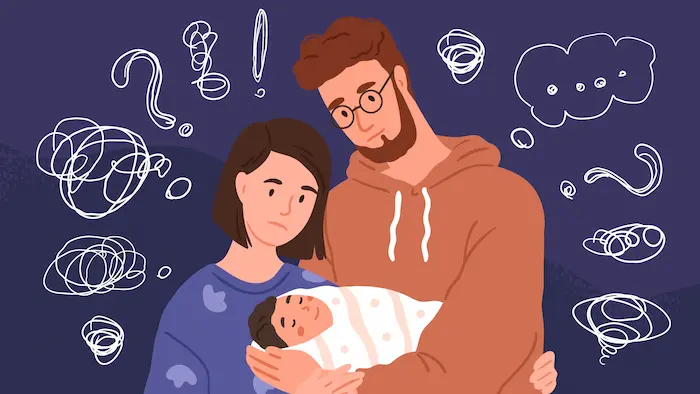
If any of that sounds familiar, you are not broken, you are not a bad mother, and you are not alone in this, not even close. ACOG reports that postpartum depression affects up to 1 in 7 women, making it one of the most common medical complications of childbirth, more common than gestational diabetes and more common than preeclampsia. It is also one of the most undertreated, because it affects the mind instead of the body, and because the lies it tells about your worth and capacity are very convincing when you are already exhausted. This guide is here to help you recognize the signs of postpartum depression clearly and without judgment, understand how PPD differs from normal postpartum adjustment, and know what to do when what you are experiencing crosses the line into something that needs real support.
Baby Blues vs. PPD: Understanding the Difference
In the first days after birth, your body is riding a hormonal freefall. Estrogen and progesterone, which climbed to extraordinary levels during pregnancy, plummet within hours of delivery, and this affects everything: mood, energy, sleep, appetite. For most women, this creates what we call the baby blues.
What Baby Blues Actually Feel Like
Baby blues are a normal, expected response to that hormonal shift. They typically start within the first few days after birth, peak around days 3 to 5, and resolve on their own within two weeks. During that time you might cry at a kind text message, feel irritable over small things, swing between feeling okay and falling apart in the same afternoon, or feel anxious and overwhelmed by decisions that would normally be simple. The key word is temporary. With baby blues, there are good hours inside the bad ones: you laugh at something funny even if you cried twenty minutes before, the fog lifts even if it keeps coming back, and you still feel like yourself underneath it.
When It Crosses Into Postpartum Depression
PPD is different. It is not a series of waves you ride through; it is an undertow that keeps pulling you down regardless of what is happening around you. The CDC is clear that PPD is a clinical condition requiring treatment, not something to wait out or tough through, and what distinguishes it from baby blues is symptoms that last more than two weeks, symptoms present most of the day nearly every day, and a meaningful impact on your ability to function, whether caring for yourself, caring for your baby, or maintaining your relationships. This distinction matters because baby blues resolve with time and support, while PPD typically does not resolve without intervention and may get worse. But here is something equally important: you do not need to be certain which one you are experiencing to reach out. If you are suffering and struggling, that is sufficient reason to talk to someone. You do not need to meet a diagnostic threshold to deserve help.
Signs of Postpartum Depression: What It Actually Looks Like
PPD does not look the same in every woman, and it often does not look like what people picture. Let us get specific.
Emotional Signs
Persistent sadness or emptiness that does not lift, even during moments that should feel good. Hopelessness about the future or your ability to feel differently than you do right now. Overwhelming guilt, the sense that you are not good enough, that you should be enjoying this more, that other mothers are handling it better. Irritability and anger that feels disproportionate and hard to control, especially toward people you love. Emotional numbness, going through the motions without being able to feel the love you know is there. Many mothers describe it as knowing they love their baby but being unable to feel that love, as if watching themselves from outside their own body, and that captures something important: PPD does not erase love, it creates a barrier between the feeling and your access to it.
Cognitive Signs
Brain fog that makes it hard to follow conversations or remember things you knew five minutes ago. Indecisiveness that goes beyond normal postpartum overwhelm, with paralysis over small choices and second-guessing everything. Intrusive, unwanted, distressing thoughts. Difficulty concentrating on anything for more than a few minutes. These cognitive symptoms are real, they are frustrating, and they are part of how PPD operates: it affects thinking as much as feeling.
Physical Signs
Sleep disruption that goes beyond the baby’s needs, lying awake unable to sleep even when the baby is down, mind racing, body unable to settle. Appetite changes in either direction, eating significantly more or less than usual. Exhaustion that sleep does not touch, a bone-deep fatigue that rest does not fix. Headaches, stomach problems, and muscle tension without a clear physical cause. Your body and mind are not separate systems, and PPD shows up in both.
Behavioral Signs
Withdrawing from people who care about you, avoiding calls and texts, making excuses not to see anyone, isolating. Losing interest in things you used to enjoy, including things that had nothing to do with the baby. Not leaving the house, staying in one room, avoiding the world. Neglecting your own basic needs, not eating, not showering, not doing anything that is just for you. These behavioral changes are often how the people around a woman first notice something is wrong, even before she recognizes it herself.
Beyond Depression: Other Postpartum Conditions to Know
“Postpartum depression” has become something of an umbrella term, but several distinct conditions can emerge in the postpartum period, often overlapping with or masquerading as depression, and all of them deserving of the same care and attention.
Postpartum Anxiety
Postpartum anxiety can occur on its own or alongside depression, and the Mayo Clinic notes it is at least as common as PPD. It looks like relentless worry about the baby’s health and safety that does not respond to reassurance, racing thoughts that will not slow down no matter how tired you are, physical symptoms like heart palpitations and shortness of breath, catastrophic thinking where your mind immediately goes to the worst possible outcome, and checking behaviors, repeatedly checking on the baby or asking others over and over if the baby seems okay. Normal new-parent worry settles when you get reassurance or when the immediate situation improves; postpartum anxiety does not settle, it just moves to the next thing. Understanding the signs of postpartum anxiety after birth is as important as recognizing depression, because anxiety is often what is driving the suffering and yet it frequently goes unidentified.
Postpartum OCD
This is the most misunderstood postpartum condition, and it causes tremendous shame and suffering in silence. Postpartum OCD involves intrusive, repetitive, frightening thoughts or mental images, often about the baby, with common themes including thoughts of accidentally harming the baby, thoughts of intentionally harming the baby, fear of losing control during caregiving, or other intrusive images that feel horrifying and completely at odds with who you are. The critical distinction is that women experiencing postpartum OCD are terrified by these thoughts and do not want to act on them; the thoughts are distressing precisely because they clash with everything the mother values. Having these thoughts does not make you dangerous or a bad mother. It makes you someone who needs, and deserves, specialized support. If this sounds familiar, please tell someone who understands postpartum OCD specifically, because general advice about intrusive thoughts often misses the mark for this condition.
Postpartum Panic Disorder
Panic attacks in the postpartum period can arrive suddenly and feel genuinely terrifying. Symptoms include sudden waves of intense fear, racing heart and chest pain, feeling unable to breathe, sweating, trembling, nausea, feeling detached from your body or surroundings, and intense fear that something catastrophic is happening. They can last minutes or longer and leave you exhausted and frightened of when the next one will come.
Postpartum Psychosis: A Medical Emergency
Postpartum psychosis is rare, affecting roughly 1 to 2 per 1,000 women, but it is a psychiatric emergency that requires immediate intervention. It comes on fast, usually within the first two weeks after birth, and looks dramatically different from depression or anxiety.
Emergency warning signs: confusion and disorientation, rapid mood swings, paranoia or suspiciousness, beliefs or thoughts not based in reality (delusions), seeing or hearing things that are not there (hallucinations), going days without sleep, or thoughts of harming yourself or the baby.
If you or someone near you is experiencing these symptoms, do not wait. Call emergency services or go to the nearest emergency room immediately. Postpartum psychosis is treatable and most women recover fully, but it requires urgent care, not watchful waiting.
When Does PPD Start, and How Long Does It Last?
PPD does not follow a neat timeline, which is one reason it gets missed. It can begin during pregnancy itself, since perinatal depression affects up to 1 in 10 expecting mothers. It can start within days of delivery, often initially looking like baby blues that never resolve. It can build gradually over the first few months in a way that makes it hard to pinpoint when normal adjustment became something more. Late-onset PPD is also real: symptoms can emerge months after birth, sometimes triggered by weaning (which causes its own hormonal shifts), returning to work, or the baby reaching a new developmental stage. The postpartum period for mental health purposes is generally considered the first year, not just the first six weeks, so if you are struggling at four months or eight months, that is still postpartum and it still matters.
Without treatment, PPD can persist for months or years. Some women recover spontaneously, but many do not, and the suffering does not simply lift on its own. With treatment, whether therapy, medication, peer support, or a combination, most women recover fully within several months. The single most important variable is accessing help rather than waiting to see if it passes.
Who Is at Higher Risk for PPD?
PPD does not discriminate by age, income, race, or how much someone wanted their baby, but certain factors do increase risk, and knowing them helps with both prevention and early recognition. Personal or family history of depression, anxiety, or other mood disorders is one of the strongest risk factors, and a history of PMDD or depression related to hormonal changes, like starting or stopping birth control, also increases vulnerability. Difficult pregnancies, traumatic birth experiences, NICU stays, or a baby with feeding difficulties or health challenges all contribute, as do lack of social support, relationship stress, financial pressure, major life stressors during pregnancy or postpartum, history of trauma, and single parenting. Knowing you have risk factors is not a sentence; it is information. Mothers with higher risk can talk to their providers ahead of time about a monitoring plan, so that if symptoms emerge they are caught early rather than allowed to build.
How PPD Is Identified and When to Get Help
The Edinburgh Postnatal Depression Scale (EPDS) is the most widely used screening tool, a 10-question questionnaire about how you have felt over the past week. It does not diagnose PPD, but it identifies who needs further conversation, and you can find it online and take it yourself; a score above 10, or any positive response to the question about thoughts of self-harm, means it is time to talk to your provider. ACOG recommends screening at obstetric visits during pregnancy and at postpartum appointments, and the AAP recommends that pediatricians screen mothers at well-child visits throughout the first year, because maternal mental health directly affects infant health and development. When you bring your baby in for checkups, a provider asking how you are doing is not small talk; it is part of the care.
If your provider does not ask, bring it up yourself. You can say exactly this: “I’ve been struggling since the baby was born. I’m not feeling like myself, and I’m worried it might be more than normal adjustment. Can we talk about it?” That is enough. That opens the door. You do not need to arrive with a list of symptoms or a self-diagnosis. You just need to say something rather than nothing.
Treatment That Works
The most important thing to hold onto is that treatment works, recovery is real, and you will not feel this way forever. Therapy is the first-line treatment for most PPD presentations: cognitive behavioral therapy addresses the negative thought patterns that PPD feeds and reinforces, while interpersonal therapy focuses on relationships and life transitions, which is particularly relevant for the identity and relationship shifts that come with becoming a parent. Both have strong evidence behind them, and many therapists now offer virtual sessions, which removes the childcare barrier that keeps many new mothers from accessing in-person care.
Medication is appropriate for some women, and many antidepressants are considered compatible with breastfeeding. Many mothers worry about this, but the equation includes the fact that untreated PPD also affects babies, through reduced responsiveness, difficulty bonding, and impaired caregiving. The decision about medication is personal and should involve a provider who understands both psychiatry and lactation; it is a conversation worth having, not a door that is closed because you are nursing. Peer support, finding other mothers who understand what you are going through, can be profoundly healing in ways that professional treatment sometimes is not, and Postpartum Support International maintains groups both locally and online. Being in a room with people who get it, who are not going to look at you with alarm or reassure you with platitudes, is its own form of medicine.
The lifestyle factors matter too, whether sleep where possible, consistent nutrition, gentle movement when ready, or connection with people who do not judge. None of these treat PPD alone, but all of them support recovery when the foundational treatment is in place. For practical strategies around these, our guide to self-care for new moms covers what actually helps in this season without being preachy about it.
For Partners and Family: How to Actually Help
If you are reading this because you are worried about someone you love, your instinct to look this up matters, and your support genuinely makes a difference in whether she reaches out and stays in treatment. What to say: “I’m worried about you and I’m here.” “This isn’t your fault, you haven’t done anything wrong.” “You don’t have to figure this out alone.” What not to say: “Just try to be positive.” “You should be grateful, you have a healthy baby.” “Have you tried exercise?” The second list sounds supportive to the person saying it and lands as dismissive to the person receiving it.
Practical support looks like sitting with her and making the appointment together rather than suggesting she call, going with her to the appointment, handling childcare during therapy sessions, picking up prescriptions, and checking in about how treatment is going rather than assuming everything is fine once she has started. The administrative burden of accessing help when you are already depleted is a real barrier, and removing it matters. Know the emergency signs, too: if she mentions thoughts of harming herself or the baby, if she seems confused or detached from reality, or if she is going multiple days without sleep, do not wait, call for help. The AAP also notes that partners can experience their own postpartum depression, affecting roughly 1 in 10 men, so if you are a partner who is also struggling, that is real and also deserves support. More on this in our guide to postpartum anxiety in new dads.
Frequently Asked Questions
Yes, and it is significantly underrecognized. While the hormonal component differs, fathers and non-birthing partners experience the same sleep deprivation, identity disruption, relationship changes, and stress as birthing parents. Paternal PPD affects around 1 in 10 men and often presents as irritability, withdrawal, and throwing themselves into work rather than the sadness-centered presentation more commonly discussed. If you are a partner who is struggling, that is real and it deserves attention, not just for your sake but because your wellbeing affects your baby and your relationship.
Untreated PPD can affect parenting responsiveness and the early parent-child relationship. But this is the crucial thing: treatment protects babies. When you get help for yourself, you are simultaneously protecting your child’s development and wellbeing. The AAP is explicit that addressing maternal PPD improves bonding, responsiveness, and long-term outcomes for children. Getting help is not just for you, though it is for you; it is also for your baby. Building a secure attachment in the first year is more achievable when you are getting the support you need.
No. The fact that these thoughts horrify you is actually the evidence that they do not reflect your desires or intentions. Intrusive thoughts, in postpartum OCD specifically, are ego-dystonic, meaning they clash with everything you value, and the distress they cause is precisely what distinguishes them from genuine intent. Please tell a provider who specifically understands postpartum OCD, not just postpartum depression, because the assessment and approach are different, and the shame of not disclosing keeps too many women suffering unnecessarily.
Many therapists offer sliding-scale fees, so it is worth asking directly even if the stated rate is beyond reach. Community mental health centers serve people regardless of ability to pay, support groups through Postpartum Support International are often free, and if you are in crisis, emergency rooms cannot turn you away based on inability to pay. PSI’s helpline (1-800-944-4773) can also connect you with low-cost and no-cost options you may not know about. Do not let cost be the reason you do not reach out; there are paths through it.
Completely. PPD is not caused by ambivalence about your baby or your role. It is caused by a complex interaction of hormonal, biological, psychological, and social factors, none of which have anything to do with how much you wanted or love your child. Mothers who desperately wanted their babies and feel genuine joy in parenthood can still develop PPD; those two things coexist without contradiction. The idea that PPD only happens when something is wrong with the relationship is one of the most harmful myths about the condition, because it keeps women who love their babies from recognizing their own symptoms.
You can say exactly this: “I’ve been struggling since having the baby. I’m not feeling like myself, and I’m worried I might have postpartum depression. Can we talk about it?” That is the whole script. You do not need to come prepared with a list of symptoms or arrive having already diagnosed yourself. You just need to say something, and that one sentence opens the door to everything else.
Resources
- Postpartum Support International: 1-800-944-4773 (call or text), with the helpline available to connect you to local resources
- 988 Suicide and Crisis Lifeline: call or text 988, available 24/7
- Crisis Text Line: text HOME to 741741
- Emergency Services: 911 if you or someone else is in immediate danger
One Last Thing

Postpartum depression is not a character flaw. It is not a parenting failure. It is not something you brought on yourself by thinking the wrong things or not being grateful enough. It is a medical condition, common, treatable, and temporary with the right support. If you recognized yourself in any of this, please reach out: tell your doctor, text a friend, call the PSI helpline. Say the words “I’m struggling and I need help” out loud to someone. That is the hardest part, and once it is done, the path forward opens. You are not alone in this. You are not to blame. And on the other side of this, and there is an other side, you will look back at the version of yourself who reached out her hand and be grateful she did.
This article is for general information and is not a substitute for professional medical advice. If you or someone you know may be in crisis, call or text the 988 Suicide and Crisis Lifeline (988), text HOME to 741741, or reach Postpartum Support International at 1-800-944-4773. In an emergency, call 911.
References
- American College of Obstetricians and Gynecologists. (2023). Postpartum depression. acog.org/womens-health/faqs/postpartum-depression
- Centers for Disease Control and Prevention. (2024). Depression among women. cdc.gov/reproductive-health/depression
- American Academy of Pediatrics. (2023). Maternal mental health and infant care. healthychildren.org
- Mayo Clinic Staff. (2024). Postpartum depression: Symptoms and causes. mayoclinic.org
- Postpartum Support International. (2024). Understanding postpartum depression. postpartum.net
- American Psychiatric Association. (2023). What is postpartum depression? psychiatry.org