Let me start with a story that still makes me cringe. Six weeks after my first baby, I got the “all-clear” at my checkup. Eager to feel like myself again, I laced up my running shoes, left my baby with my partner, and hit the pavement. Ten minutes in, I felt a strange, heavy sensation in my pelvis—like something might fall out. I spent the next two days leaking urine with every cough. My triumphant return to fitness wasn’t a victory; it was a setback. I had mistaken medical clearance for physiological readiness. I’d traded the “bounce back” myth for a pelvic floor protest.
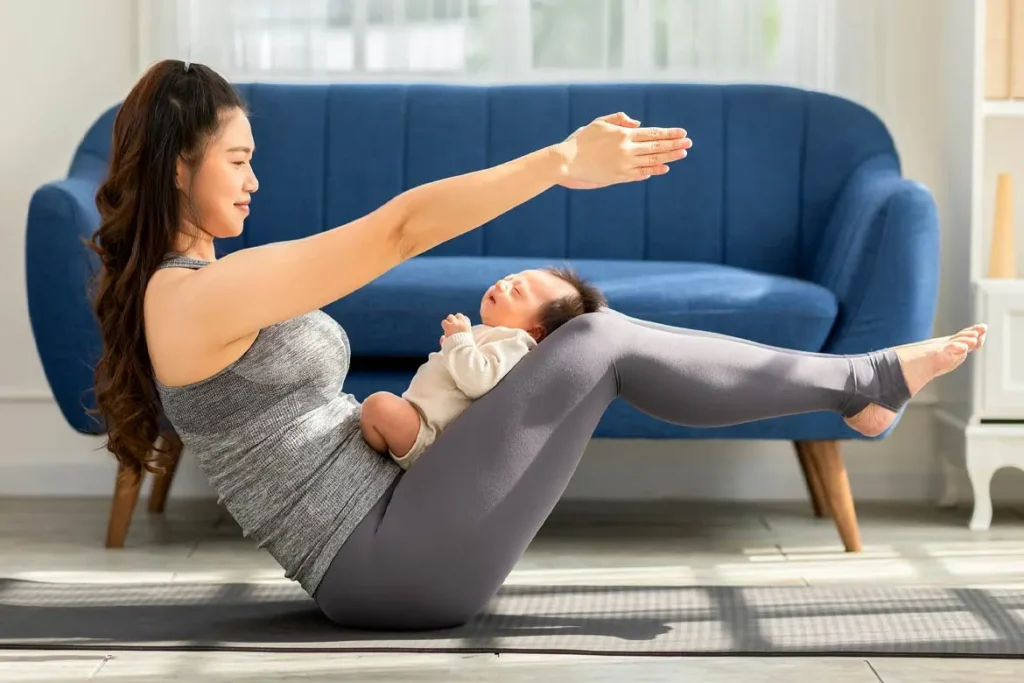
This is the critical gap we need to bridge. The question “When can I exercise after giving birth?” isn’t answered by a single date on a calendar. It’s a personal roadmap that must navigate healing tissue, shifting hormones, sleepless nights, and a body that has just performed a monumental feat. This guide will move you beyond the generic “6-week rule” and into the realm of intelligent, phased, and respectful return to movement. We’re not here to rush you; we’re here to rebuild you—stronger and smarter.
The Foundation: Why Rushing is the Real Setback
Before we talk about exercise, we must talk about injury. Your postpartum body is in a unique state:
- Ligament Laxity: The hormone relaxin, which loosened your joints for birth, can remain elevated for months, especially if breastfeeding. This makes you more prone to joint instability.
- Diastasis Recti: The separation of your abdominal muscles. Nearly 100% of women have it at term. How it heals is crucial for core function and preventing back pain.
- Pelvic Floor Trauma: Whether you had a vaginal birth or a C-section, your pelvic floor muscles have been under immense pressure for nine months. They can be overstretched, weak, or conversely, clenched and tight (guarding).
- Changed Center of Gravity & Posture: Your body has spent months adapting to a front-loaded weight. Now it must readjust, often leading to back and hip pain.
Exercising without addressing these factors is like building a house on a cracked foundation. The goal isn’t to just do exercise; it’s to re-establish functional movement patterns that support motherhood—lifting, carrying, bending—without pain or dysfunction.
Keyword: postpartum body changes affecting exercise safety, why relaxin matters for joint stability after birth.
The Phased Approach: Your Postpartum Exercise Timeline
Think of your return in phases, not weeks. Your progression depends on your birth experience, sleep, healing, and prior fitness level. Listen to your body above all else.
Phase 1: The Immediate Postpartum Period (First 24-48 Hours)
Movement Goal: Circulation and mental clarity.
- What’s Allowed: Gentle walking to the bathroom and around your room. Ankle circles and deep breathing in bed.
- The Why: Prevents blood clots, helps with gas pain (especially after C-section), and begins gentle reactivation.
- Keyword: first 48 hours postpartum movement guidelines.
Phase 2: The Healing & Rest Phase (First 2-3 Weeks)
Movement Goal: Promote healing, manage pain, and connect with your core.
- What’s Allowed:
- Walking: Start with 5-10 minutes indoors, gradually increasing as you feel able. This is your primary “cardio” for weeks.
- Diaphragmatic Breathing: The #1 most important exercise. Lying on your back, breathe deeply into your ribs, allowing your pelvic floor to relax and descend on the inhale, and gently lift on the exhale. This reconnects your core and pelvic floor.
- Pelvic Tilts & Gentle Stretching: For lower back relief.
- Absolute NOs: No lifting beyond your baby’s weight, no high-impact, no strenuous housework, no formal “ab workouts.”
- Keyword: diaphragmatic breathing for postpartum core connection, safe walking routine first month postpartum.
Phase 3: The Reconnection Phase (Weeks 3-8)
Movement Goal: Rebuild foundational strength and stability.
- What’s Allowed (after bleeding has significantly lightened):
- Continue and extend walking.
- Begin gentle pelvic floor exercises: Focus on coordination, not just Kegels. Learn to engage your deep core (Transverse Abdominis) with your pelvic floor. A “knack” cue is gentle, not maximal.
- Gentle Strength: Heel slides, glute bridges, modified bird-dog (on hands and knees, extending opposite arm/leg if stable).
- Postural Work: Gentle chest openers and upper back strengthening to counteract the “nursing hunch.”
- The “Check-In”: Your 6-week appointment is a check on internal healing, not a green light for CrossFit. Use it to discuss your specific exercise plan with your provider.
- Keyword: postpartum pelvic floor exercises before 6 weeks, rebuilding core stability after pregnancy.
Phase 4: The Rebuild Phase (8 Weeks – 6 Months+)
Movement Goal: Gradually rebuild strength, endurance, and return to preferred activities.
- The Critical First Step: If possible, get an assessment from a pelvic floor physical therapist (PFPT). They can check your diastasis, pelvic floor function, and provide a personalized plan. This is the single best investment in your long-term fitness.
- Progression Principles:
- Master Your Core Strategy: Can you maintain gentle core engagement during movement without holding your breath?
- Low-Impact First: Cycling, swimming, elliptical, low-impact strength training.
- Introduce Impact Cautiously: Start with a light jog for 1 minute, walk for 2. How do you feel? Any heaviness, dragging, pain, or leakage? These are red flags to stop and regress.
- Strength Training Focus: Form over weight. Prioritize alignment. Excellent starter moves: bodyweight squats, modified planks (on knees or against a wall), rows with light bands.
- Keyword: when to see a pelvic floor therapist before returning to running, low-impact cardio options postpartum.
Birth-Specific Considerations
- After a Vaginal Birth with Tears/Episiotomy: Focus on scar mobilization (once fully healed) and ensuring pelvic floor muscles are not just weak but also able to relax. Tight, scarred tissue can be as problematic as weakness.
- After a Cesarean Birth: You have an external and internal scar. Protect your incision, avoid direct ab work that causes “coning” (doming of the abdomen), and be mindful of adhesions. Core breath and walking are paramount.
The “Return to Run” Test (A Specific Guideline)
Running is a high-impact sport. Don’t just start because you hit 12 weeks. A good checklist includes:
- At least 12 weeks postpartum.
- No pain in pelvis, back, or incision.
- No urinary or fecal leakage during daily activities or jumping.
- Able to perform 10 single-leg squats per side with good control.
- Able to hold a 10-second pelvic floor engagement while walking, breathing normally.
- Diastasis gap is functional (it’s less about the finger-width and more about tension and control during movement).
If you fail any of these, more foundational work is needed. Running is a privilege, not a right, for the postpartum body.
Keyword: postpartum return to run criteria checklist, how to know if your body is ready for running after baby.
Red Flags: Signs You’re Doing Too Much, Too Soon
Stop immediately and consult a PFPT or your doctor if you experience:
- Increased bleeding (a return of bright red blood).
- Pain anywhere—particularly in your pelvis, back, or incision site.
- Heaviness, pressure, or a bulging sensation in your vagina (sign of pelvic organ prolapse).
- Urinary or fecal leakage during or after exercise.
- Seeing “coning” or doming down the midline of your abdomen during core work.
- Extreme fatigue that lasts for days after a session.
The Mental and Logistical Hurdles
- Energy vs. Exercise: Sometimes, a 20-minute nap is a better use of your resources than a 20-minute workout. Honor your need for rest.
- Baby-Integrated Movement: Wear your baby for a walk, do squats while holding them, use them as a “weight” for gentle lifts during tummy time. Connection and movement can coexist.
- Let Go of Pre-Pregnancy Metrics: Your pace, your weights, your flexibility—all will be different. Compare yourself only to your postpartum self from last week.
Frequently Asked Questions (FAQ)
Q: I had a C-section. When can I start ab workouts?
A: Traditional crunches and sit-ups are often detrimental. Focus on deep core restoration via breathing, gentle bracing, and functional movements for months before considering isolation work. A PFPT can guide you safely.
Q: Can I do yoga or Pilates?
A: Yes, but choose postpartum-specific classes. General classes often include poses and cues (like “engage your core”) that can be harmful to a healing diastasis or pelvic floor. Look for instructors trained in postpartum exercise.
Q: Does breastfeeding affect exercise?
A: Yes. Feed or pump before exercising for comfort. Wear a high-support bra. Stay hyper-hydrated. Your caloric needs are higher, so fuel appropriately. Relaxin levels may stay elevated, prolonging joint laxity.
Q: What’s the one exercise I should avoid at all costs?
A: There’s no single forbidden move, but the most common mistake is overdoing high-impact exercise (running, jumping, HIIT) before establishing pelvic floor and core stability. The second is aggressive, improper abdominal work (full sit-ups, double leg lifts).
Q: What if I was very fit before pregnancy?
A: Your cardiovascular base and muscle memory are assets, but your connective tissues healed at the same rate as everyone else’s. You may progress through phases faster, but don’t skip the foundational reconnection work. Fitness can mask dysfunction until it causes injury.
Conclusion: Movement as Nourishment, Not Punishment
Returning to exercise after birth isn’t about earning your body back or shrinking into your old jeans. It’s about reclaiming your strength, not for aesthetics, but for function—to lift your growing child without back pain, to play on the floor without stiffness, to carry the mental and physical load of motherhood with resilience.
This journey requires patience, self-compassion, and a willingness to start from a new baseline. Throw away the arbitrary timeline. Tune into the subtle signals from your pelvis and your core. Celebrate the small wins: a pain-free walk, a successful connection of breath to movement, a day where you felt strong.
Your body has done something extraordinary. Now, honor it by rebuilding with intelligence and care. The strongest foundation is built slowly, with attention to detail. That foundation will support you for a lifetime of active motherhood.