The final weeks of pregnancy come with a quiet, nagging “what have I forgotten?” This checklist is about more than packing a hospital bag — it is about getting your home, your relationships, your admin, and your headspace ready so your first days with a newborn can be about bonding, not logistics. Work through it systematically, ideally starting around 34–36 weeks.
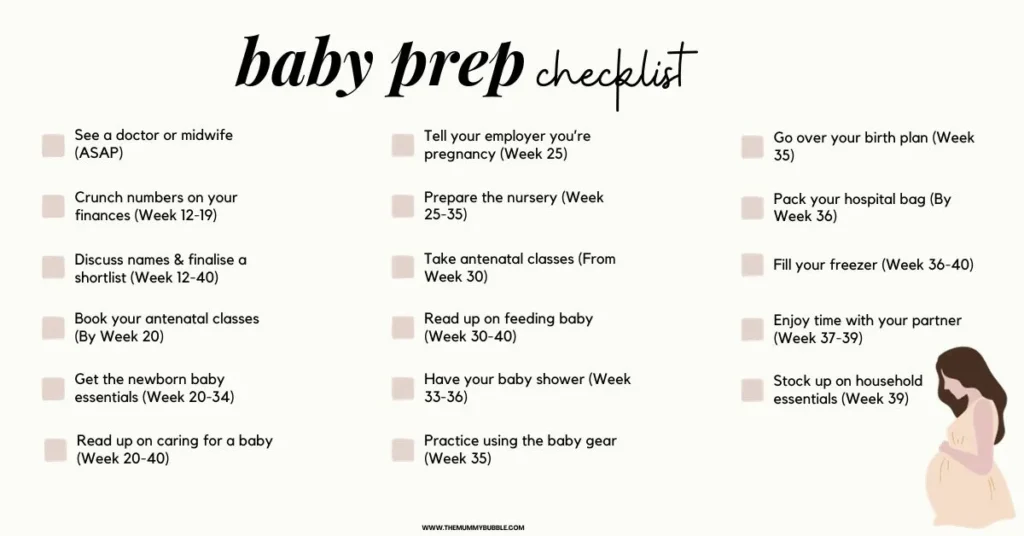
The goal is simple: minimize the decisions and chores waiting for you after birth, so you can focus on recovery, feeding, and connection. Here is everything to tackle, grouped by area.
Medical and Logistics
- Finalize your birth preferences. Keep a clear, one-page outline of your key wishes (pain relief, delayed cord clamping, and so on) while staying flexible, and talk it through with your birth partner so they can advocate for you. Our guide to choosing your delivery preferences helps shape it.
- Pre-register at the hospital or birth center to avoid paperwork delays when you arrive in labor.
- Install the infant car seat and have it checked by a certified child passenger safety technician (many fire stations and hospitals offer this). Practice buckling the harness.
- Know your route to the birth place, a backup route, and where the labor and delivery entrance is (often separate from the ER).
- Pack your hospital bag (see below) and keep devices and power banks charged with music, podcasts, or shows downloaded.
- Confirm your pediatrician is accepting patients and knows your due date, and learn the protocol for the first visit (usually within 2–3 days of discharge). If you have not chosen one yet, our guide to choosing a pediatrician walks through it.
- Check how to add baby to your insurance after birth, so there is no coverage gap.
The Home Front
- Wash baby clothes and linens in a fragrance-free detergent — anything that will touch the baby’s skin.
- Set up key stations: a feeding spot (chair, water, snacks, burp cloths, charger); a diaper caddy on each floor; and a postpartum recovery basket in the bathroom with pads, a peri bottle, and sitz-bath supplies. Knowing what the first weeks of bleeding and recovery involve helps you stock the right things.
- Test your gear: assemble the stroller, trial-run the monitor, and clean the breast pump (if using) so you know its parts. A minimalist registry helps you avoid over-buying.
- Stock the freezer and pantry with single-portion meals and easy snacks, plus household staples like toilet paper and detergent. This is the prep new parents appreciate most.
- Sanitary, not spotless: deep-clean the bathroom, kitchen, and bedroom, and put fresh sheets on near your due date. Gather loose, comfortable clothes and nursing bras.
- Plan for pets: arrange care for your hospital stay, and consider sending home a blanket with the baby’s scent first.
Life Admin and Communication
- Sort the boring essentials: share key logins securely with your partner, set up a shared calendar, put recurring bills on autopay for the next couple of months, and get final errands (haircut, dental) out of the way.
- Confirm leave details: your and your partner’s parental leave, short-term disability, or FMLA paperwork.
- Set up a communications plan: pick one point person to relay news after the birth so you are not texting everyone, and draft a simple announcement template with blanks for name, weight, and time.

The Hospital Bag
Pack two bags — one for labor and delivery, one for your postpartum stay — and keep them in the car by 37 weeks. Our full hospital bag essentials guide has the complete list; the short version:
- For labor: ID and insurance card, birth plan, a robe or long shirt, non-skid socks, lip balm, hair ties, electrolyte drinks and snacks, a long phone charger, and comfort items like your own pillow (with a dark case). Pack a change of clothes and snacks for your partner too.
- For your postpartum stay: a loose going-home outfit, high-waisted postpartum underwear, nursing bras or nightgowns, toiletries, and dry shampoo. For the baby: two going-home outfits (newborn and 0–3 month), mittens, socks, a hat, and a blanket for the car seat.
- Extras: an empty bag for hospital freebies, and a notebook for logging feeds and questions.
The Mental and Emotional Prep
This matters as much as any physical task. Have the honest conversation with your partner about the first few weeks — overnight duties, visitor boundaries, and what “support” means to each of you. Decide who visits and when (a no-visitors stretch to establish feeding and rest is completely fair). Schedule in some joy, like a final date or an afternoon doing something you love, to nourish your non-parent identity. And bookmark your key resources: an IBCLC (lactation consultant) finder, your pediatrician’s after-hours line, local parent groups, and postpartum mental health support like Postpartum Support International (1-800-944-4773). Our guides to emotional preparation for birth and staying close with your partner go deeper.
When You Think It’s Go Time
When labor might be starting, a quick run-through helps: eat a light, easily digestible meal if you can, take a shower, do a last tidy (dishwasher, trash), give your pets some attention, and double-check the bags are in the car. Our guide to the signs of labor can help you tell whether it is the real thing.
Frequently Asked Questions
Freezing meals and stocking the pantry. Having food ready when you are exhausted, hungry, and touched-out is the single most appreciated prep by new parents.
Do a trial overnight with their caregiver, pack them a “special hospital bag” with new toys or books, have a small gift “from the baby” for their first meeting, and record yourself reading a few bedtime stories they can play while you are away.
It is the perfect time. Babies can arrive earlier than expected, and having it done removes a big source of last-minute stress.
Aim for sanitary, not spotless. Clean bathrooms and kitchen and fresh sheets matter far more than a perfectly organized garage — let the rest go.
Release the pressure. The true essentials are a safe place for the baby to sleep, a car seat to get home, a way to feed them, and a few basic supplies. Everything else is a bonus — the baby’s needs are simple.
Expect it to be unpredictable. Have your stations ready and agree with your partner on a shift system so you each get one block of uninterrupted sleep. Lower every expectation except survival and snuggles.

The Bottom Line
Every task you check off is one less thing to handle in the newborn haze — you are building a soft landing for your family, not chasing a perfect house. So focus on the essentials, lean on the freezer and your point person, and let the rest go. The most important preparation, growing and nurturing this baby, is already done. Take a deep breath; you are ready.
References
- American Academy of Pediatrics (HealthyChildren.org). Getting Ready for Baby.
- National Highway Traffic Safety Administration (NHTSA). Car Seats and Booster Seats.
- Mayo Clinic. Signs of labor: Know what to expect.