The space between possibility and knowledge can feel infinite. You’ve tracked your cycle, timed everything just so, and now… you wait. In this suspended state, every fleeting sensation becomes a clue. A twinge in your lower abdomen, a wave of unexpected fatigue, a subtle shift in your mood—your mind, buzzing with hope and apprehension, transforms you into a detective analyzing the most intimate of mysteries. This is the uniquely human experience of the “two-week wait,” a limbo where biology feels agonizingly slow and the desire for an answer is immediate.
The central question, the one that pulses behind every Google search and internal scan, is this: How early can you detect pregnancy? The answer isn’t a single day or a simple yes. It’s a layered story, a chronological unveiling written in hormones, bodily signals, and, eventually, those life-altering lines on a test. This guide is your companion through that story. We’ll separate the hopeful myths from the biological facts, validate what you’re feeling, and provide a clear map from the first cellular handshake to the moment you can confidently know.
The Biological Blueprint: From Conception to Implantation
To understand when you can know, you must first understand what has to happen. Pregnancy detection isn’t about the moment of conception itself, but about the cascade of events it sets in motion.
Let’s follow the journey. After ovulation, an egg is viable for about 12-24 hours. If sperm are present, fertilization can occur in the fallopian tube. This creates a single-celled zygote, which immediately begins dividing as it travels toward the uterus—a journey taking about 5-7 days. This tiny cluster of cells, now called a blastocyst, isn’t yet “pregnant” in the sense that it’s connected to you. It’s a free-floating traveler.
The pivotal event is implantation. Around 6-12 days after ovulation (most commonly on days 8-10), the blastocyst must burrow into the lush, blood-rich lining of your uterus (the endometrium). Think of it like a space capsule performing a perfect landing on a distant planet. This landing is the true biological start of a pregnancy.
This timeline is why we talk about DPO, or Days Past Ovulation. It’s the most accurate clock for early pregnancy events. The clock starts ticking at ovulation, not after a missed period, which is a much later milestone.
The Murky Realm of Earliest Symptoms: What Your Body Might Be Saying
Here is where hope and biology get tangled. In the days following implantation, your body begins its response. But the signals are notoriously ambiguous, whispered in a language identical to premenstrual signals.
The Progesterone Problem: Why Early Signs Are So Tricky
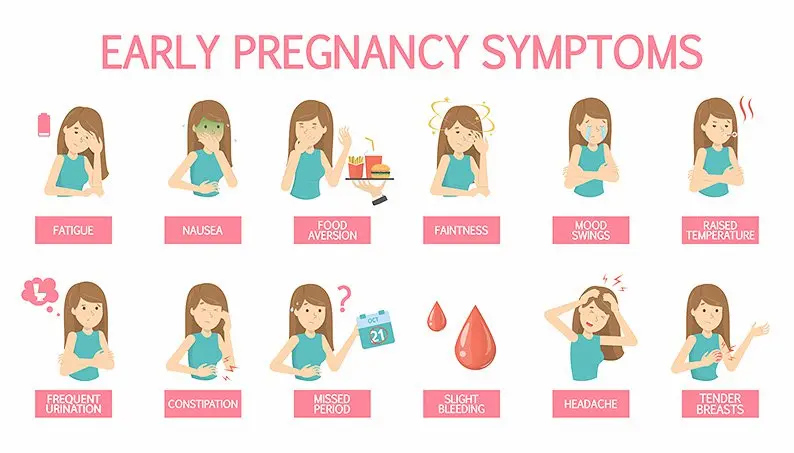
Here’s the crucial, often frustrating truth: after ovulation, your body ramps up production of the hormone progesterone whether you are pregnant or not. Progesterone’s job is to maintain the uterine lining. Its side effects? Fatigue, breast tenderness, mood swings, bloating, and mild cramping. Sound familiar? These are the classic hallmarks of PMS.
So, if you’re searching for the earliest signs of pregnancy before missed period, you’re essentially trying to distinguish pregnancy-caused progesterone symptoms from cycle-caused progesterone symptoms. Until a significant new player enters the scene, it’s nearly impossible. This is the heart of “symptom spotting” madness.
A Cautious Look at Subjective Clues
While no symptom is definitive before a positive test, some experiences are commonly reported in early pregnancy. Treat these not as proof, but as possible notes in the margin of your story.
- Implantation Bleeding/Cramping: Around the time of implantation, some people experience light spotting (often pink or brown) and mild, fleeting cramps. This is what fuels the search for an implantation bleeding vs period comparison. Implantation bleeding is typically much lighter and shorter than a period—a spot or two over a day, not a flowing bleed. But its absence means nothing; most pregnancies occur without it.
- Basal Body Temperature (BBT) Shift: If you’re tracking your BBT, a sustained high temperature for more than 14 days past ovulation can be a strong hint, as progesterone (and later, pregnancy hormones) keeps your temp elevated.
- Breast Changes: Tenderness can be intense, often described as a deep, heavy, or tingly sensation, sometimes with more pronounced blue veins. But again, progesterone alone can cause this.
- Fatigue: This isn’t just feeling tired. It’s a profound, soul-deep exhaustion that can hit seemingly out of nowhere. Related to skyrocketing progesterone and increased metabolic demand.
- Nausea: True pregnancy-related nausea (morning sickness) is typically driven by the hormone hCG, which we’ll discuss next. It rarely appears before a missed period. So, if you’re wondering, “can you feel pregnancy symptoms at 1 week” (meaning 1 week after conception, or roughly 7 DPO), nausea is very unlikely. That’s likely something else.
The bottom line: Your body’s whispers are not a reliable test. They are clues to a mystery that only one thing can definitively solve.
The Hormone That Tells the Tale: Understanding hCG
Enter the star of the show: human chorionic gonadotropin (hCG). This is the “pregnancy hormone.” It is produced only by the cells that will become the placenta, and its production begins the moment implantation is successful.
hCG has a mission: it signals the corpus luteum (the structure left behind after ovulation) to keep producing progesterone, preventing your period and maintaining the pregnancy. It’s the biological baton pass from your menstrual cycle to a pregnancy-supported system.
Here’s the critical timeline for detection:
- At Implantation (6-12 DPO): hCG production begins. Levels are minute—maybe 5 mIU/mL or less.
- Doubling Time: In a viable early pregnancy, hCG levels should approximately double every 48-72 hours. This is why timing is everything.
- Detection Threshold:
- Blood Test: Can detect hCG as low as 1-5 mIU/mL. This means a blood test can theoretically be positive as early as 7-12 DPO.
- Urine Test (Home Test): Sensitivity varies. Standard tests detect 25 mIU/mL. “Early detection” tests claim 10 mIU/mL. But the concentration in your urine depends on hydration, time of day, and the specific test’s accuracy.
So, how soon after implantation can you test positive? If implantation happens on day 8, and you use a very sensitive (10 mIU/mL) test, you might see a faint positive on day 10 or 11. But that’s the absolute earliest edge of possibility. For most, a reliable result comes closer to the day of an expected period or after.
The Moment of Truth: A Strategic Guide to Pregnancy Testing
Blood Tests (Quantitative hCG): The Gold Standard
A quantitative hCG blood test, ordered by a doctor, measures the exact amount of the hormone in your bloodstream. It’s the definitive answer to the question of “am I pregnant?” and, with a second test 48 hours later, can provide crucial information about viability through the doubling rate. It’s used not for routine early checking, but for confirming pregnancy, dating, and monitoring early concerns.
Urine Tests (Home Pregnancy Tests): Navigating the Aisle
This is where most of us seek our first answer. Not all tests are created equal.
- Sensitivity is Key: Look for the mIU/mL number on the box. Lower = better for early testing. A 10 mIU/mL test will turn positive sooner than a 25 mIU/mL test.
- “Early Detection” Claims: These tests are more sensitive. Some, like First Response Early Result (FRER), are consistently rated among the most accurate early pregnancy test brands due to their sensitivity and design.
- Method Matters: Use first-morning urine (FMU). It’s the most concentrated, giving you the highest level of hCG to detect.
- Reading the Results: Follow the timing instructions exactly. A line that appears after the 10-minute window is an evaporation line, not a positive. A true positive, even a faint one, will have color and appear within the timeframe.
Testing Timeline: A Realistic Expectation Chart
- 8-10 DPO: The wilderness. A negative is meaningless. A positive is possible but very faint. High chance of false negatives.
- 11-12 DPO: The maybe zone. Sensitive tests may show a faint line for some. A negative is still not definitive.
- 13-14 DPO (Around Missed Period): The reliability zone. Most pregnant people will get a clear positive on a standard test by now.
- After Missed Period: The confirmation zone. If your period is late and you test negative, it’s likely accurate. If you still suspect pregnancy, see your doctor for a blood test.
Navigating Ambiguity: Negative Tests, Faint Lines, and Changing Symptoms
This journey is rarely a straight line. Ambiguity is part of the process.
- “Can you have a negative test but still be pregnant?” Yes. This is a false negative. The most common reason is testing too early. If hCG hasn’t reached the test’s detection threshold in your urine, it will read negative. If you get a negative but your period doesn’t arrive, test again in 2-3 days.
- “What does a faint line mean?” A faint line within the read window is almost always a positive. It simply means the hCG concentration is low but present. “Pregnant” is a binary state—you are or you aren’t. The line darkness relates to hormone level, not the strength of the pregnancy.
- Chemical Pregnancy: This is a very early pregnancy loss that occurs shortly after implantation. It often results in a faint positive test followed by a negative test and a period that may be slightly late or heavier. It’s more common than most realize and signifies that fertilization and implantation occurred, but development didn’t continue.
- Do early pregnancy symptoms come and go? Yes. Hormone levels can fluctuate, especially in the very beginning. It’s normal to have a nauseous day followed by a fine one. The disappearance of symptoms is not a reliable sign of a problem in the earliest weeks.
FAQ: Your Early Detection Questions, Answered with Care
Q: Is cramping a sign of pregnancy or my period coming?
A: It can be either. Progesterone causes uterine cramping regardless. Implantation cramps are usually milder and more pinpoint than menstrual cramps. Without a positive test, there’s no way to know the difference. Don’t rely on cramping alone as an indicator.
Q: When should I see a doctor after a positive test?
A: Contact your OB-GYN or midwife’s office to schedule your first prenatal appointment. Most will see you around 8-10 weeks of pregnancy. If you have a history of miscarriage, ectopic pregnancy, or are experiencing severe pain or heavy bleeding, call them immediately, regardless of how far along you are.
Q: Are digital tests less sensitive than line tests?
A: Often, yes. The technology that provides the “Pregnant” or “Not Pregnant” readout typically requires a higher threshold of hCG (often 25 mIU/mL or more) to trigger the positive result. For the very earliest detection, a sensitive line test is superior.
Q: Does a slower-rising line darkness mean something is wrong?
A: Not necessarily. Line darkness is a poor proxy for hCG concentration, which can be affected by your hydration. The only reliable way to track hCG rise is through quantitative blood tests. Don’t torture yourself with daily line comparisons.
Q: I have no symptoms at all. Does that mean I’m not pregnant?
A: No. Many people have zero noticeable symptoms in the first few weeks. The only symptom that matters for detection is the presence of hCG, which is what the test measures. Consider yourself lucky if you’re symptom-free!
Conclusion: The Weight of Knowing, The Grace of Waiting
The quest to discover how early can you detect pregnancy is a testament to our profound need to know, to connect, to begin the story. It’s a journey that mixes cutting-edge science with the most ancient of human hopes.
Remember this: Your body is having its own conversation, on its own timetable. The early signs are its murmured dialect, fascinating but often unclear. The pregnancy test is the official translator, but it only works once the conversation has reached a certain volume.
Be gentle with yourself in the waiting. The suspense is real, the analysis is natural, but the most definitive answers are forged in time and patience. Whether the news comes in a faint line at 10 DPO or a clear one at 14 DPO, the moment of discovery is powerful. You have moved from the realm of possibility into the story of what is. And that is a journey worth taking, one deliberate day at a time.