The moment your baby starts eyeing your meal with curiosity is thrilling. That instinct to share a taste of your world is powerful, a beautiful part of bonding. Yet, this milestone requires a mindful pause. Your baby’s body is not a miniature adult’s; it’s a masterpiece of development with specific, temporary limitations. Understanding what foods to avoid in your baby’s first year isn’t about fostering fear—it’s about applying a logical framework for safety based on their remarkable, evolving physiology.
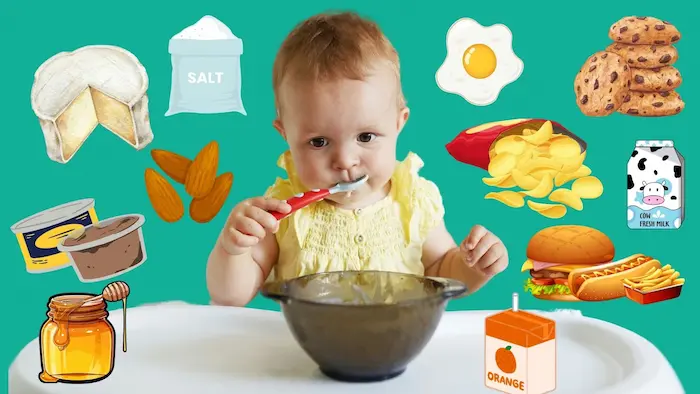
Leading global health authorities like the World Health Organization (WHO) and the American Academy of Pediatrics (AAP) provide clear guidelines that stem from this developmental science. They recommend exclusive breastfeeding or formula feeding for the first six months, followed by the careful introduction of complementary foods. This staged approach respects the immaturity of three key systems: the kidneys, which cannot process heavy loads of sodium; the digestive tract, still learning its role; and the immune system, calibrating its responses. Add to this a baby’s innate lack of molars and underdeveloped chewing and swallowing coordination, and choking becomes a primary, preventable risk.
This guide moves beyond a simple “do not eat” list. It will equip you with the reasons behind each recommendation, transforming rules into understanding. We’ll separate evidence-based guidelines from outdated myths, provide actionable tips for safe preparation, and empower you to navigate your baby’s culinary first year with confidence and calm.
Section 1: The Non-Negotiables – Choking Hazards and How to Beat Them
Choking is the leading cause of injury and death in young children, and food is the most common culprit. An infant’s airway is roughly the diameter of a drinking straw, and they cannot consciously cough with enough force to dislodge a blockage. This makes prevention through proper food preparation your most critical job at mealtime.
High-Risk Foods to Exclude Entirely:
- Firm, Round Foods: Whole grapes, cherry tomatoes, whole blueberries, and hot dog slices. Their perfect plug-like shape can completely seal an airway.
- Hard, Crunchy Foods: Raw carrot sticks, apple chunks, nuts, seeds, and popcorn. Babies lack the grinding molars to break these down.
- Tough or Stringy Foods: Large chunks of meat (especially steak or chicken), string cheese pulled into strands, and raw celery.
- Sticky or Dense Spreads: A spoonful of thick peanut butter or almond butter can ball up and adhere to the roof of the mouth or throat. Similarly, marshmallows and chewing gum are hazardous.
- Unmodified Crunchy Snacks: Tortilla chips, pretzels, rice cakes, and hard crackers can break into sharp, jagged pieces.
The Solution: The Art of Safe Preparation
Immediately reframe these risks with positive, safe alternatives. Preparation is everything:
- Modify Shape & Texture: Always cut round foods lengthwise into quarters, not widthwise circles. Cook hard vegetables and fruits until they are soft enough to mash easily between your fingers (e.g., steamed carrot sticks).
- Shred, Mash, or Thin: Shredded chicken or cheese is far safer than chunks. Thin nut butters by mixing them with water, yogurt, or apple sauce until they drip easily from a spoon.
- Model Safe Eating: Always have your baby sit upright during meals (never lying down or walking), and stay present. Demonstrate taking small bites and chewing slowly.
Section 2: Respecting Immature Systems – Salt, Sugar, and Hidden Dangers
Your baby’s kidneys are working hard but are not yet equipped to filter high sodium loads. Their taste preferences are being formed, and their first teeth (and those still developing below the gums) are vulnerable.
1. Excess Sodium (Salt)
- The Why: An infant’s kidneys can process only about 1 gram of salt per day. Excess sodium places undue stress on these developing organs and can set a lifelong preference for salty tastes.
- Practical Avoidance: Do not add salt during cooking or at the table when preparing your baby’s food. Vigilantly avoid sharing processed adult foods, which are sodium mines: canned soups or beans (unless no-salt-added), deli meats, packaged snacks, chips, and most restaurant food.
2. Added and Refined Sugars
- The Why: Sugar provides “empty calories” that can displace vital nutrients needed for growth. It also acidifies the mouth, promoting tooth decay from the very first tooth. Early exposure can wire the brain to prefer hyper-sweet flavors.
- Practical Avoidance: Do not offer cookies, cakes, candy, or sweetened yogurts. Read labels on seemingly healthy foods like oatmeal packets or fruit pouches—look for “no added sugar.” Sweeten foods naturally with mashed banana or unsweetened applesauce if needed.
3. Specific Contaminant Risks
- Honey: This is an absolute “no” before age one. The Centers for Disease Control and Prevention (CDC) clearly warns that honey can contain Clostridium botulinum spores. An infant’s gut cannot defend against these, which can germinate and produce a toxin causing infant botulism, a rare but serious illness.
- Unpasteurized Foods: Avoid raw milk, raw milk cheeses, and unpasteurized juices (often labeled “fresh pressed” or “cider”). Pasteurization kills harmful bacteria like E. coli, Salmonella, and Listeria, to which infants are highly susceptible.
- High-Mercury Fish: While low-mercury fish (like salmon, light tuna) are excellent, avoid shark, swordfish, king mackerel, and tilefish due to their high mercury content, which can affect a developing nervous system.
Section 3: The Allergen Update – Why We No Longer “Avoid” (And What to Do Instead)
This is where modern pediatric guidance has undergone a revolutionary shift. For decades, parents were told to delay common allergens like peanut, egg, and dairy. Current research has completely reversed this advice. For most babies, early introduction is now recommended to help prevent food allergies.
- The Landmark Evidence: The groundbreaking LEAP (Learning Early About Peanut Allergy) study, cited by the AAP and the National Institute of Allergy and Infectious Diseases (NIAID), found that introducing peanut-containing foods to high-risk infants between 4-6 months reduced their risk of developing a peanut allergy by up to 86%.
- The New Paradigm: Unless your pediatrician advises otherwise (typically for infants with severe eczema or a known allergy), common allergens are not on the “avoid” list. In fact, they should be introduced intentionally.
- How to Introduce Allergens Safely:
- Start around 6 months, after your baby has tolerated a few other solid foods like cereal or pureed fruits/veggies.
- Introduce one common allergenic food at a time, in a small amount (e.g., a dab of thinned peanut butter mixed into oatmeal, a well-cooked scrambled egg).
- Offer it at home, not at daycare or a restaurant, and watch for any reaction for 2-3 hours.
- If no reaction occurs, continue serving that food regularly (2-3 times a week) as part of a varied diet.
This proactive approach is a key part of navigating your baby’s first year of eating safely and smartly.
Section 4: Liquids Beyond Milk – What to Sip and What to Skip
Nutrition in the first year is primarily solid (or pureed) food and breast milk or formula. Other liquids must be carefully managed.
- Cow’s Milk as a Main Drink:
- Avoid as a beverage before 12 months. It’s low in iron, can irritate the intestinal lining leading to microscopic blood loss, and its protein and mineral content is hard for young kidneys to process.
- It’s OK in food. Small amounts used in cooking, or foods like full-fat yogurt and cheese, are fine and nutritious after 6 months.
- Fruit Juice:
- The AAP states clearly: No juice before age 1. After the first birthday, it should be limited to 4 oz per day at most, served in a cup, not a bottle. Juice is a concentrated source of sugar without the beneficial fiber of whole fruit. It can cause diarrhea, contribute to tooth decay, and spoil the appetite for more nutritious foods.
- Water:
- Babies under 6 months generally do not need extra water—breast milk or formula provides perfect hydration. Offering too much water can fill their tiny stomachs, displacing milk, and in extreme cases, lead to water intoxication, diluting essential electrolytes.
- After 6 months, you can offer small sips of water (1-2 oz) in a cup with meals to practice cup-drinking and aid with swallowing food. It remains a complement to, not a replacement for, breast milk or formula.
Section 5: Setting the Record Straight – Debunking Common Myths
Let’s address well-meaning but outdated advice head-on with current evidence.
- Myth: “A little cereal in the bottle will help her sleep through the night.”
- Fact: Research shows this does not improve sleep. It poses a choking risk and can lead to overfeeding. The AAP advises against it.
- Myth: “Give him some water for his hiccups/constipation.”
- Fact: For young infants, water is not the solution. For hiccups, try a brief breastfeeding or formula session. For constipation in an older baby on solids, “P” fruits (pears, prunes, peaches) are more effective and nutritious.
- Myth: “Herbal tea is natural and good for colic.”
- Fact: Many herbal teas can interfere with nutrient absorption or contain compounds unsuitable for infants. They should be avoided unless specifically recommended by your pediatrician.
- Myth: “If I avoid allergens now, she won’t develop allergies.”
- Fact: As detailed in Section 3, the opposite is now believed to be true for most infants. Delaying may increase risk. Always discuss the plan with your child’s doctor.
Conclusion: Building a Foundation of Confidence and Health
Navigating your baby’s first foods is a journey of love and learning. By understanding the reasons behind the guidelines—protecting from choking, respecting developing organs, and proactively introducing allergens—you move from following rules to empowered decision-making.
Remember, this list of foods to avoid for babies is ultimately about creating space for all the wonderful, nutritious foods your baby can enjoy: rich avocados, soft-cooked sweet potatoes, iron-fortified cereals, mashed beans, soft fruits, and appropriately prepared meats and fish.

Let this knowledge relieve anxiety, not create it. Your attentiveness is your child’s greatest safeguard. For any doubts or questions, especially concerning family history of allergies, your pediatrician is your indispensable partner. Together, you can lay a delicious and secure foundation for a lifetime of healthy eating.