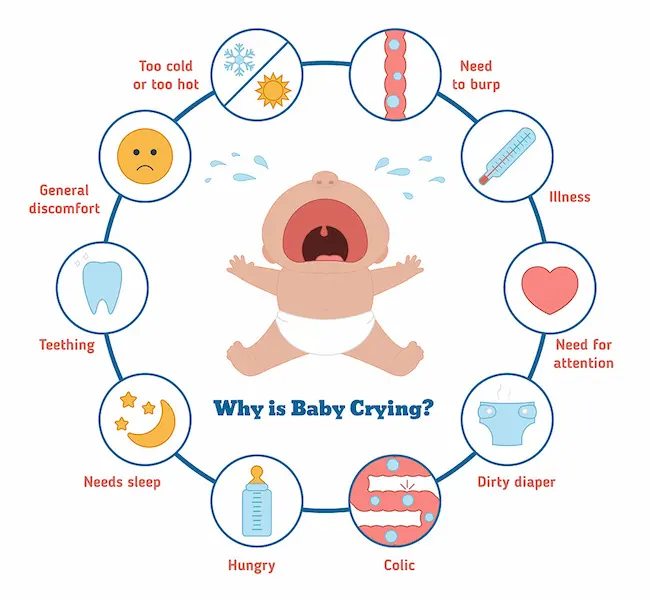
Few things test new parents like a baby who cries hard, for hours, and won’t be comforted — especially when the baby is otherwise healthy and you’ve checked everything. That pattern often has a name: colic. It affects up to about 1 in 5 babies, it isn’t dangerous or your fault, and it always passes. This guide explains what colic actually is, what causes it, the soothing methods that genuinely help, the remedies to avoid because they’re unsafe for infants, and the signs that mean it’s time to call your doctor.
What Colic Actually Is
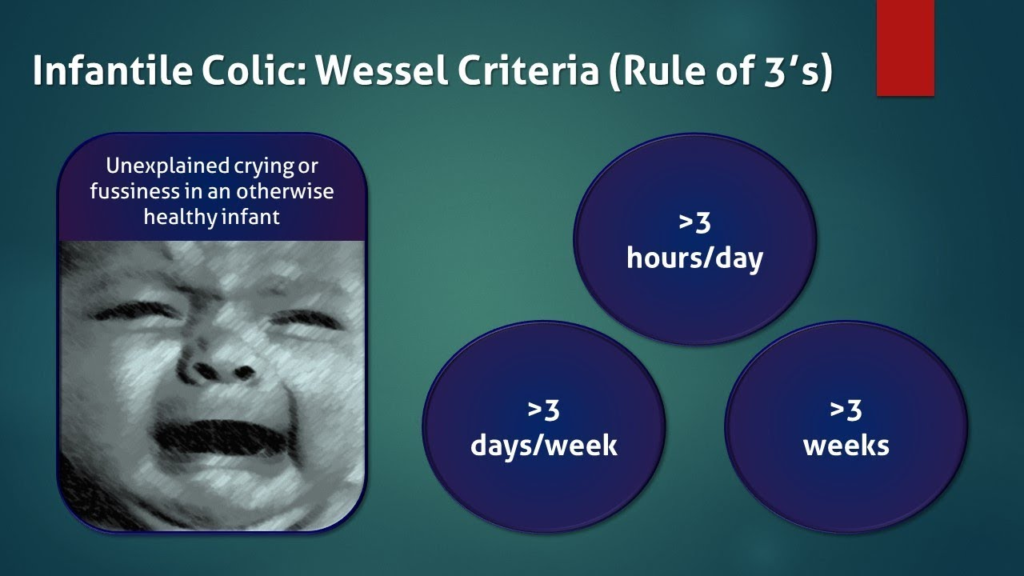
Colic is intense, frequent crying in a healthy, well-fed baby, with no identifiable cause. Clinicians often use the “rule of threes” as a rough definition: crying that lasts more than 3 hours a day, more than 3 days a week, for more than 3 weeks. But you don’t need to hit those exact numbers to recognize it — the hallmark is a baby who cries far more, and far more inconsolably, than you’d expect, despite being fed, changed, and cared for.
A colicky episode often looks like this: sudden, loud, high-energy crying that can seem like pain; a flushed red face; clenched fists; legs pulled up or the back arched; and a tense tummy, sometimes with passing gas. Crucially, between episodes your baby is well — feeding normally and gaining weight. The crying tends to cluster in the late afternoon or evening, the classic “witching hour.”
The most reassuring facts about colic: it’s self-limiting. It usually begins around 2–3 weeks of age, peaks around 6 weeks, and fades by 3–4 months. It causes no long-term harm. And it’s not caused by anything you did — it happens just as often in breastfed and formula-fed babies.
What Causes It?
Honestly, no one knows for certain, and it’s likely a mix of factors that varies from baby to baby. The leading ideas include an immature digestive system and gut that’s still learning to process feeds and move gas along, differences in the gut microbiome, an immature nervous system that’s easily overstimulated and slow to self-settle at the end of a busy day, swallowed air from feeding, and — in a smaller number of babies — a temporary sensitivity to cow’s-milk protein. What colic is not is a disease, a sign of pain you’re missing, or a reflection of your parenting.
Soothing a Colicky Baby: What Helps
No single trick works every time, so the practical approach is a toolkit — try one thing calmly for a few minutes, and if it doesn’t help, move to the next. Many parents find the “5 S’s” a useful framework:
- Swaddle — a snug wrap can recreate the containment of the womb (always place a swaddled baby on their back, and stop swaddling once they start rolling).
- Side or stomach hold — holding your baby on their side or tummy across your arm can calm them (only while awake and held; babies always sleep on their back).
- Shush — steady white noise, a fan, or a “shhh” near the ear mimics the constant whoosh of the womb.
- Swing — gentle, rhythmic motion: rocking, a stroller walk, or a car ride.
- Suck — offering a pacifier or the breast can be deeply soothing.
Beyond those, lots of skin-to-skin holding, a warm bath, a gentle tummy massage, and a calm, dimly lit, low-stimulation room can all help — an overstimulated baby often needs less input, not more. Because swallowed air plays a role, feeding technique matters too: feed in a more upright position, burp often, and if bottle-feeding use a slow-flow nipple and paced feeding. For more general fussiness (not just colic), see our guide to soothing a fussy baby and easing baby gas.

Feeding adjustments
If you suspect a cow’s-milk-protein sensitivity (which sometimes shows up alongside eczema, blood or mucus in the stool, or reflux), talk to your pediatrician. For formula-fed babies, they may suggest a trial of an extensively hydrolyzed formula — but don’t just switch brands randomly, as that rarely helps. For breastfed babies, routine maternal diet restriction is not recommended; the long lists of “foods to avoid” you’ll see online aren’t evidence-based. However, if cow’s-milk allergy is genuinely suspected, a supervised 2-week trial of removing dairy from your diet is worth discussing with your doctor.
A word on probiotics and drops
The probiotic Lactobacillus reuteri has some evidence for reducing crying in breastfed colicky babies (the evidence is weaker for formula-fed ones) — ask your pediatrician whether it’s worth trying. Simethicone (anti-gas) drops are considered safe but have limited proof of benefit. “Gripe water” is unregulated with no strong evidence behind it, so approach it with caution and check with your doctor first.
Remedies to Avoid
Some traditional colic “cures” are ineffective, and a few are genuinely dangerous for infants. Steer clear of:
- Dicyclomine — an antispasmodic that is not safe for babies under 6 months. It has been linked to serious breathing problems and seizures in infants and should not be used for colic.
- Star anise tea — the FDA warns against giving it to infants, because star anise can be contaminated with a toxic variety that causes serious neurological effects.
- Essential oils on or near your baby — oils like tea tree, eucalyptus, and peppermint are not safe for young infants and can cause breathing or skin problems.
- Homeopathic colic products — there’s no reliable evidence they work, and some have been recalled for containing inconsistent amounts of belladonna.
When in doubt, run any remedy — herbal, over-the-counter, or otherwise — past your pediatrician before giving it to a young baby.
Protecting Yourself: The Most Important Rule
Hours of inconsolable crying are genuinely exhausting and can push any loving parent to the edge of their patience — that’s normal, and it doesn’t make you a bad parent. But there’s one rule that matters above all others: never shake your baby. Colic-related crying is the most common trigger for shaking, which can cause devastating brain injury. If you feel your frustration rising, it is completely safe and okay to place your baby on their back in the crib, close the door, and step away for a few minutes to breathe and reset. A crying baby in a safe crib is far safer than a baby held by an overwhelmed adult.
Take shifts with a partner, lean on family or friends, and remember this phase is temporary. If you’re feeling persistently low, anxious, hopeless, or disconnected, that can be a sign of postpartum depression or anxiety — reach out to your doctor, or call the Postpartum Support International helpline at 1-800-944-4773. Caring for yourself is part of caring for your baby.

When to Call the Doctor
It’s always worth a visit to have colic confirmed, because the diagnosis is really one of exclusion — your pediatrician checks that nothing else is causing the crying. Contact your doctor promptly, and treat some signs as urgent, if the crying comes with any of these — they point to something other than colic:
- A fever of 100.4°F (38°C) or higher, especially in a baby under 3 months (an emergency).
- Forceful or projectile vomiting, or green/bloody vomit; diarrhea or blood in the stool.
- Poor feeding, or not gaining weight as expected.
- Lethargy, floppiness, or a weak, high-pitched, or unusual cry.
- Any breathing difficulty, or a baby who looks genuinely unwell rather than simply crying.
- Crying that starts suddenly for the first time after about 4 months of age.
Frequently Asked Questions
Colic is frequent, intense, hard-to-soothe crying in an otherwise healthy, well-fed baby, with no clear cause. A common definition is crying more than 3 hours a day, more than 3 days a week, for over 3 weeks. It affects up to 1 in 5 babies and usually resolves by 3–4 months.
The exact cause is unknown and likely a mix of factors: an immature digestive and nervous system, an easily overstimulated baby, swallowed air, and sometimes a temporary cow’s-milk-protein sensitivity. It is not caused by parenting, and it occurs equally in breastfed and formula-fed babies.
Work through a toolkit one step at a time: swaddling, white noise, gentle rhythmic motion (rocking, a stroller or car ride), a pacifier, skin-to-skin holding, a warm bath, and a calm, dimly lit room. Feeding upright with good burping and paced bottle feeding also helps.
Avoid dicyclomine (unsafe under 6 months), star anise tea (FDA warns of toxic contamination), essential oils on or near babies, and homeopathic colic products (unproven, some recalled). Ask your pediatrician before trying probiotics like L. reuteri, simethicone, or gripe water.
Call for a fever (urgent under 3 months), vomiting or blood in the stool, poor feeding or weight gain, lethargy, breathing trouble, or a baby who seems ill rather than just crying. It’s also worth confirming the diagnosis. And never shake your baby — if overwhelmed, put them down safely and step away.
The Bottom Line
Colic is one of the hardest — and most temporary — challenges of early parenting. It’s a phase in a healthy baby, not a disease, and it will pass, usually by around four months. Lean on the soothing methods that genuinely help, skip the remedies that aren’t safe, protect your own wellbeing, and never shake your baby no matter how frustrated you feel. Have your pediatrician confirm it’s colic and rule out other causes, and then hold on to the knowledge that better days are close.
This article is for general information and is not a substitute for personalized medical advice.
References
- American Academy of Pediatrics (HealthyChildren.org). Colic.
- Mayo Clinic. Colic: Symptoms & Causes.
- National Health Service (NHS). Colic.
- National Center on Shaken Baby Syndrome. Preventing Abusive Head Trauma.