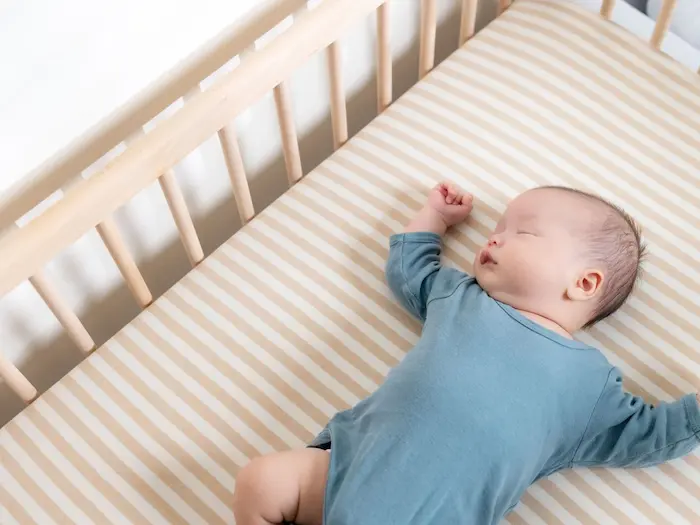
You’ve picked the crib—maybe a beautiful convertible model that grows with your child, maybe a simple, sturdy hand-me-down from a trusted friend. You’ve imagined your baby sleeping peacefully in that nursery, soft light filtering through the curtains.
Then you start shopping for a mattress and realize: there are approximately 47 million options, ranging from $50 to $500, and every single one claims to be the safest, best, most comfortable choice for your baby.
Standing in that aisle (or scrolling through that website) with a registry scanner in hand, the pressure feels immense. This isn’t just a purchase—it’s where your baby will spend over half their time for the next several years. Get it wrong, and you’re not just dealing with a cranky baby; you’re dealing with safety risks.
Let me walk you through exactly what matters, what doesn’t, and how to make a choice you’ll feel confident about at 3 a.m. when you’re tiptoeing in to check on your sleeping miracle.
Why Your Crib Mattress Choice Matters More Than You Think
Before we dive into firmness levels and organic certifications, let’s talk about why this decision carries weight beyond simple comfort.
The SIDS Connection
Sudden Infant Death Syndrome remains a leading cause of death among infants between 1 month and 1 year. While researchers don’t fully understand all causes, we know that sleep environment plays a significant role.
The American Academy of Pediatrics is unequivocal: a firm sleep surface reduces the risk of SIDS and suffocation. Soft surfaces can conform to a baby’s face, creating a pocket where they rebreathe exhaled carbon dioxide rather than fresh oxygen. This risk is highest for young infants who cannot yet roll over or lift their heads effectively.
According to the National Institutes of Health, approximately 3,400 infants die suddenly and unexpectedly each year in the United States. While not all these deaths are sleep-related, a significant portion are, and safe sleep environments—including the right mattress—are critical prevention tools.
The Hours Add Up
Newborns sleep 16 to 17 hours per day. By their first birthday, they’ll have spent over 5,000 hours on that mattress. That’s enough time for materials to off-gas, for firmness to degrade, and for wear to accumulate. The mattress you choose becomes your baby’s primary environment for months.
Beyond Safety: Development
While safety drives the most critical requirements, sleep quality affects everything—brain development, growth, immune function, and parental sanity. A comfortable (but still safe) mattress helps babies sleep better, which helps everyone function better.
The Non-Negotiable: Understanding Crib Mattress Safety Standards
Let’s start with what’s required by law, so you know the baseline every mattress must meet.
Federal Safety Standards (16 CFR 1633 and 1632)
All crib mattresses sold in the United States must meet specific federal flammability standards. These regulations, enforced by the Consumer Product Safety Commission, require mattresses to resist ignition from open flames (16 CFR 1633) and smoldering materials like cigarettes (16 CFR 1632) for specified time periods.
What this means for you: Every new mattress you purchase legally will meet these standards. You don’t need to research flammability ratings—the law has already done that work.
JPMA Certification
The Juvenile Products Manufacturers Association offers voluntary certification for juvenile products. When you see the JPMA seal on a crib mattress, it means the manufacturer has certified that the product meets applicable safety standards.
Worth noting: JPMA certification is helpful but not required. Some excellent mattresses don’t carry the seal. It’s one data point, not the final word.
GREENGUARD Gold Certification
This voluntary certification deserves your attention. GREENGUARD Gold tests products for over 10,000 chemicals and volatile organic compounds (VOCs), with limits specifically designed to protect children and sensitive populations.
Why this matters: Babies spend hours with their faces pressed against the mattress, breathing whatever chemicals off-gas from materials. GREENGUARD Gold certification provides independent verification that emissions are within safe limits for prolonged exposure.
According to the certification program’s standards, Gold-level products are suitable for use in schools and childcare facilities, where children spend extended time. For a crib mattress, this is the gold standard (pun intended) for chemical safety.
The Tight Fit Rule
Here’s the most important safety check you’ll perform yourself: The mattress must fit snugly in the crib with no gaps.
The Consumer Product Safety Commission specifies that no more than two fingers’ width should fit between the mattress and the crib sides. Any larger gap creates an entrapment hazard—baby could roll into that space and suffocate.
This rule matters whether you buy a new mattress for a new crib or mix brands. Not all cribs and mattresses are exactly the same dimensions, even when both claim “standard” size.
Firmness: The Most Critical Safety Feature
If you remember only one thing from this guide, remember this: Firm is safe. Soft is dangerous.
Why Firm Matters: The SIDS Connection
A firm surface maintains its shape under baby’s weight. When a baby lies on a firm mattress, their face remains exposed to air. If they roll onto their stomach (which they shouldn’t be placed that way, but babies move), a firm surface won’t conform around their nose and mouth.
A soft surface does the opposite. It molds to the shape of baby’s head, potentially creating a pocket where exhaled carbon dioxide accumulates. The baby breathes in that carbon dioxide rather than fresh air, oxygen levels drop, and in tragic cases, SIDS can occur.
The Eunice Kennedy Shriver National Institute of Child Health and Human Development emphasizes that a firm sleep surface is one of the most important ways to reduce SIDS risk.
How to Test Firmness
Forget what you know about your own mattress preferences. You like plush, pillow-top comfort. Your baby needs something that feels more like a yoga mat than a cloud.
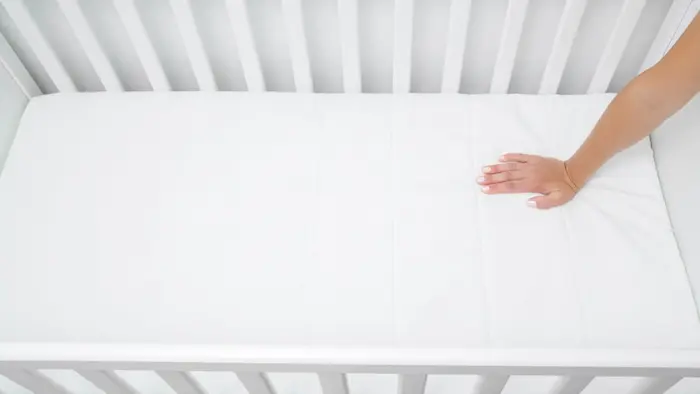
The push test: Press firmly on the mattress with your palm. A safe infant mattress should feel firm and spring back immediately without conforming to your hand. If your hand leaves an impression, even temporarily, the mattress is too soft.
The cheek test: Some pediatricians describe it this way: If you pressed the mattress against your cheek, it should feel more like a book than a pillow.
Understanding Mattress Construction and Firmness
Different materials achieve firmness differently:
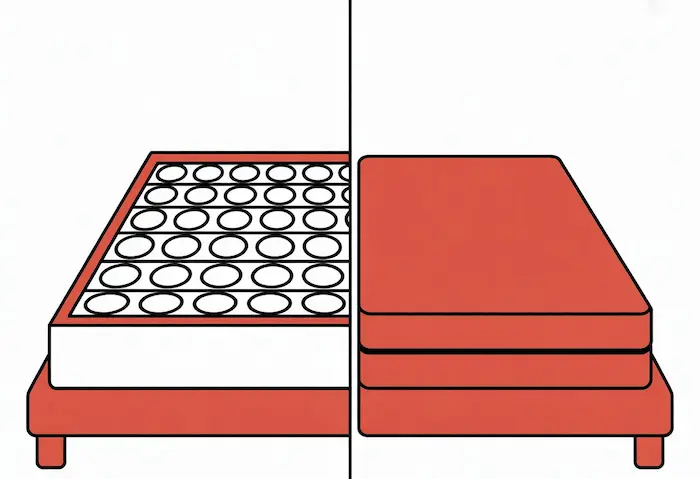
- Innerspring mattresses use steel coils to maintain structure. Generally very firm and durable.
- High-density foam mattresses can be appropriately firm if manufactured correctly. Low-density foam compresses too easily.
- Memory foam is never appropriate for infants. It’s designed to conform to body shape—exactly what babies don’t need.
Mattress Materials: Navigating Your Options
Now let’s explore the actual construction options available to you.
Innerspring Mattresses
Innerspring mattresses contain steel coils surrounded by foam and padding layers. They’ve been around forever and remain popular for good reasons.
Construction details:
- Coil count: Higher isn’t automatically better, but generally 150+ coils provides good support. Some premium mattresses use 200+.
- Gauge: Lower gauge numbers indicate thicker steel. Thicker steel means more durability and firmness retention. Look for 15.5 gauge or lower (thicker).
- Edge support: Reinforced edges prevent sagging when baby stands or climbs later (toddler phase).
Pros:
- Excellent firmness retention over time
- Good airflow through coil structure (less heat retention)
- Heavy weight helps keep mattress in place
- Often dual-sided with different firmness for infant/toddler
Cons:
- Heavier to lift for sheet changes
- Can be more expensive than basic foam
- Coils may eventually be felt if padding layers thin
Foam Mattresses
Foam mattresses are lighter, often less expensive, and can be perfectly safe when manufactured correctly.
Types of foam:
- High-density polyurethane foam: The standard for quality foam crib mattresses. Density of 1.5 pounds per cubic foot or higher indicates better quality.
- Conventional polyurethane foam: Lower density, less durable, may compress over time.
- Memory foam: Not appropriate for infants. Too conforming. Skip it.
Pros:
- Lightweight—easy to change sheets
- Often less expensive than innerspring
- No coils to feel through padding
- Good option when weight matters (travel, moving)
Cons:
- May retain more heat than innerspring
- Lower-quality foams compress and lose firmness
- Can’t visually inspect internal condition
Organic and Natural Material Mattresses
The organic mattress category has grown significantly, responding to parent concerns about chemical exposure.
What “organic” actually means:
- GOTS certification (Global Organic Textile Standard): Covers organic fibers like cotton. Means the cotton is grown without synthetic pesticides and processed to environmental standards.
- GOLS certification (Global Organic Latex Standard): Covers organic latex content.
- GREENGUARD Gold: Already discussed, this covers chemical emissions regardless of organic status.
Common materials:
- Organic cotton: For covers and padding layers
- Natural wool: Often used as a natural fire barrier (replacing chemical flame retardants) and moisture-wicking layer
- Natural latex: From rubber trees, provides firm support without synthetic foams
Pros:
- Reduced chemical exposure concerns
- Natural materials often more breathable
- Wool provides natural temperature regulation
- Avoids synthetic flame retardants
Cons:
- Significantly more expensive ($300-$500+)
- Heavier than synthetic options
- Latex allergies possible (rare but real)
Waterproofing and Covers
Here’s a reality of infant life: fluids happen. Leaky diapers, spit-up, drool, potty training accidents—your mattress will encounter them all.
Why waterproof matters: Moisture seeps into mattress materials, creating mold, mildew, and bacteria growth. Once inside, you can’t clean it effectively. The mattress becomes a health hazard.
Your options:
- Integrated waterproof cover: Many mattresses come with a waterproof layer built into the outer cover. These wipe clean easily.
- Separate mattress protector: A removable, washable waterproof cover adds protection and can be laundered regularly. This extends mattress life significantly.
Breathable claims: Some manufacturers market “breathable” mattresses that allow air flow while remaining waterproof. The science behind these claims is debated. What matters most: if the surface is waterproof, it’s not truly “breathable” in the way fabric breathes. Evaluate these claims skeptically.
Removable, washable covers: This convenience feature matters more than you’d think. A zippered, removable cover that you can toss in the washing machine makes life dramatically easier when midnight blowouts happen.
Flame Retardants: What You Need to Know
For years, parents worried about chemical flame retardants added to mattress foams. These concerns were valid—some chemicals used historically were linked to health issues.
Current situation:
- Federal flammability standards still require mattresses to resist ignition.
- Manufacturers now achieve this through several methods:
- Barrier fabrics (like wool) that naturally resist flame
- Less toxic chemical alternatives
- Construction techniques that meet standards without added chemicals
What to look for: If chemical flame retardants concern you, seek mattresses specifically labeled “no added chemical flame retardants.” Organic and natural mattresses typically use wool barriers instead of chemicals. GREENGUARD Gold certification also screens for concerning flame retardants.
Dual-Stage and Convertible Mattresses: Are They Worth It?
You’ve probably seen mattresses marketed as “2-in-1” or “dual-stage” with different firmness on each side. Here’s what to know.
What Dual-Stage Means
These mattresses feature:
- Infant side: Extra firm, designed for babies under 12-15 months
- Toddler side: Slightly softer (but still firm by adult standards), designed for older children
You start with the infant side facing up. When your child reaches the appropriate age (typically around 12-15 months, or when they’re climbing out of the crib—whichever comes first), you flip the mattress to the toddler side.
Pros and Cons
Pros:
- One mattress lasts from newborn through toddler years
- Cost savings compared to buying two mattresses
- Manufacturer has designed both sides appropriately
Cons:
- You must remember to flip at the right time
- Some parents flip too early, compromising infant safety
- The toddler side still won’t feel like an adult mattress—it’s firmer than you might expect
When to Flip
The American Academy of Pediatrics recommends keeping infants on a firm surface through the first year. Many dual-stage manufacturers suggest waiting until 12-15 months before flipping.
Signs your child might be ready for the toddler side:
- They’re consistently rolling, sitting, and moving independently
- They’re approaching or past their first birthday
- They seem uncomfortable on the firm side (though this is hard to gauge in babies who can’t tell you)
When in doubt, wait longer. The firm side remains safe; the softer side introduces variables you don’t need before absolutely necessary.
Size Matters: Getting the Right Fit
You’d think “standard crib mattress” would mean one universal size. It mostly does—but not entirely.
Standard Crib Mattress Dimensions
The standard full-size crib mattress measures approximately:
- 52 inches long
- 28 inches wide
However, variations exist between manufacturers. A mattress from Brand A might be slightly smaller than a mattress from Brand B, even though both claim standard size. This is why the two-finger test matters even with new products.
Mini Crib and Portable Crib Mattresses
Mini cribs and portable cribs (like pack-n-plays) use different mattress sizes. Important safety rules:
- Always use the mattress designed for that specific crib. Pack-n-plays require their own mattresses—standard crib mattresses won’t fit properly and create gap hazards.
- Never add an aftermarket mattress to a portable crib unless the manufacturer explicitly approves it. These products are tested as systems; changing components changes safety.
- Mini crib dimensions vary by brand. If you buy a mini crib, purchase the matching mattress to ensure proper fit.
The Two-Finger Test (Again)
This test bears repeating because it’s that important:
- Place the mattress in the crib, centered properly.
- Try to insert two fingers between the mattress and the crib side.
- If your fingers slide in easily with room to spare, the mattress is too small.
- If you can’t insert your fingers at all (or can barely wedge them in), the fit is too tight. Mattress should be snug but possible to insert with gentle pressure.
Check all four sides, paying special attention to corners where gaps sometimes appear even when sides fit well.
Sheet Fit
Fitted crib sheets must fit tightly. Loose sheets can bunch up and create suffocation hazards.
Sheet safety rules:
- Use only sheets specifically designed for crib mattresses
- Elastic should run all the way around the sheet (not just corners)
- After fitting, try to pull up the sheet edges—they should resist lifting
- Never use adult sheets, blankets, or make-shift covers
Breathable Mattresses: Marketing vs. Science
You may have encountered “breathable” crib mattresses marketed with claims about air flow even if baby rolls face-down. Let’s address this directly.
The Theory
Breathable mattress manufacturers claim their products allow air to pass through the mattress surface, so if a baby rolls onto their stomach, they can still breathe through the mattress itself. The theory sounds reassuring.
The Reality
The American Academy of Pediatrics has not endorsed breathable mattresses as a SIDS prevention strategy. Their safe sleep guidelines continue to emphasize:
- Firm sleep surface
- No soft objects or loose bedding
- Back sleeping position
- Room sharing without bed sharing
The AAP’s position is based on evidence—and currently, insufficient evidence supports breathable mattress claims. A 2019 study in The Journal of Pediatrics found no difference in rebreathing risk between conventional and breathable mattresses.
What This Means for You
Consider breathable claims with healthy skepticism. The most important safety feature remains firmness, not air flow claims. If you choose a breathable mattress, ensure it also meets all other safety criteria—especially firmness and snug fit.
Waterproofing and Maintenance: Practical Considerations
Beyond safety, your mattress choice affects daily life with a baby.
Why Waterproof Matters (Repeated)
Babies leak. From every possible location, at unpredictable times. A waterproof surface protects the mattress interior from:
- Urine (ammonia damages materials)
- Stool (bacteria)
- Spit-up (acids)
- Sweat
- Spilled liquids
Once moisture penetrates the mattress cover, you cannot fully clean the interior. Mold and bacteria grow unseen. The mattress becomes a health hazard.
Mattress Protectors vs. Integrated Waterproof Covers
Integrated waterproof cover: Part of the mattress itself. Wipes clean but can’t be removed for washing. Over time, stains accumulate.
Separate mattress protector: A removable cover that goes over the mattress and under the sheet. Machine washable. Protects the mattress completely and can be washed regularly.
Best practice: Use both. Choose a mattress with an integrated waterproof cover for baseline protection, and add a washable mattress protector that you launder weekly. This combination keeps the mattress itself pristine for years.
Cleaning and Care
- Spot clean immediately: Wipe spills before they soak through sheets and protector
- Follow manufacturer instructions: Some covers can be wiped; others tolerate mild soap
- Air dry thoroughly: Never reassemble bedding on damp surfaces
- Inspect regularly: Check for signs of wear, sagging, or damage
Frequency of Replacement
Most manufacturers recommend replacing crib mattresses every 5-10 years, or when:
- Visible sagging develops
- Cover is damaged (tears, holes)
- Odors persist despite cleaning
- Moving to second child (hygiene considerations)
New vs. Used Crib Mattresses: A Safety Analysis
Money is tight for many new parents, and used mattresses appear everywhere—Facebook Marketplace, garage sales, hand-me-downs from friends. Here’s the real talk on used mattresses.
The Case Against Used Mattresses
Safety reasons to avoid used:
- Loss of firmness: Mattresses compress and soften over time. That sag may not be visible but affects safety.
- Unknown history: Was the mattress stored in a damp basement? Did a toddler have accidents without a protector? Are there mold, mildew, or bed bugs inside where you can’t see?
- Outdated standards: Older mattresses may not meet current flammability or safety standards.
- Hidden damage: Internal damage isn’t visible but compromises support.
Hygiene considerations: Even with protectors, mattresses accumulate dead skin cells, dust mites, and potential allergens over years of use.
When a Used Mattress Might Be Acceptable
The exceptions are limited:
- From a trusted source (immediate family, close friend) who can verify history
- In excellent condition: No visible sagging, stains, odors, or damage
- Less than 5 years old
- Meets current safety standards (check manufacturer date and recalls)
- Never used without a waterproof protector (or protector used consistently)
Even then, proceed with caution. The money saved may not justify the unknowns.
Expiration Dates: Do Crib Mattresses Expire?
Manufacturers typically recommend replacing crib mattresses every 5-10 years. Why?
- Material breakdown: Foam degrades, coils lose tension, fibers compress
- Firmness loss: Even slight softening increases risk
- Accumulated allergens: Dust mites, skin cells, potential mold accumulate over time
- Hygiene limits: No matter how well you clean, years of use leave traces
Check manufacturer recommendations for your specific mattress. When in doubt, replace.
Budget Considerations: What Are You Paying For?
Crib mattress prices range dramatically. Here’s what different price points typically include.
Budget Range ($50-$150)
- Basic foam construction
- May meet minimum safety standards but lack certifications
- Often thinner (4-5 inches)
- Less durable—may need replacement for second child
- Covers may not be removable/washable
- No GREENGUARD certification
Best for: Tight budgets, occasional use (travel), or short-term needs
Mid-Range ($150-$300)
- Better materials (higher-density foam or basic innerspring)
- Often GREENGUARD Gold certified
- Removable, washable covers
- Dual-stage options common
- Better durability (may last through multiple children)
- 5-6 inch thickness
Best for: Most families seeking good value and safety features
Premium/Organic ($300-$500+)
- Organic materials (GOTS/GOLS certified)
- Natural latex construction
- Wool fire barriers (no chemical flame retardants)
- Highest durability ratings
- Premium certifications across categories
- Often made in USA with higher labor standards
- 6+ inch thickness
Best for: Families prioritizing organic materials, those with chemical sensitivity concerns, or those wanting maximum longevity
Where to Spend, Where to Save
Spend on:
- Certifications (GREENGUARD Gold)
- Removable, washable covers
- Quality construction that maintains firmness
- Dual-stage if it fits your needs
You can save on:
- Brand names (many lesser-known brands meet all safety standards)
- Decorative patterns (under the sheet, who cares?)
- “Breathable” marketing claims without evidence
Putting It All Together: Your Crib Mattress Shopping Checklist
Use this checklist when evaluating options:
Safety Non-Negotiables
- Fits crib snugly (two-finger test passes)
- Firm surface (push test passes)
- Meets current federal safety standards
- No recalls on specific model
Strongly Recommended
- GREENGUARD Gold certified (or equivalent low-emissions certification)
- Waterproof surface or compatible with protector
- Removable, washable cover (makes life easier)
- From reputable manufacturer with clear safety information
Age-Appropriate Considerations
- For infants under 12 months: extra-firm only
- For infants under 12 months: if dual-stage, infant side up
- For toddlers over 12 months: can use toddler side if desired
Practical Considerations
- Fits your budget (including protector and sheets)
- Weight manageable for you (if you’ll be lifting frequently)
- Warranty and return policy understood
- Delivery method works for your situation
Frequently Asked Questions About Crib Mattresses
How many crib mattresses do I need?
One quality mattress typically lasts from newborn through toddler years, especially if you choose a dual-stage option. You’ll need only one unless you have twins, separate sleeping spaces, or a specific need for a second.
Can I use a hand-me-down crib mattress?
With caution. If it’s from a trusted source, less than 5 years old, in excellent condition, meets current standards, and has no damage or sagging, it might be acceptable. When in doubt, buy new. The Consumer Product Safety Commission recommends against using secondhand crib mattresses due to unknown history and potential safety issues.
When should I flip a dual-stage mattress?
Typically around 12-15 months, or when your child transitions to a toddler bed. The infant side remains safe longer; there’s no rush to flip. Wait until your child is consistently rolling, sitting, and moving independently before considering the transition.
Do I need a special mattress for a toddler bed?
If you’re converting the crib to a toddler bed (using the same mattress), the existing mattress works fine. If you’re transitioning to a twin bed, you’ll need a twin mattress—and toddler safety rules still apply (firm, good fit). The AAP continues to recommend a firm mattress for toddlers as well.
How do I clean a crib mattress?
Spot clean with mild soap and water for small messes. For deeper cleaning, follow manufacturer instructions. Many removable covers can be machine washed (air dry). Never submerge the mattress itself. For disinfecting, use a diluted bleach solution only if the manufacturer approves it, and rinse thoroughly.
What about mattress toppers or pads?
Avoid additional padding. Mattress toppers, memory foam pads, or extra quilting under the sheet create soft surfaces that increase SIDS risk. The mattress alone—with tightly fitted sheet—is all baby needs. The AAP is clear that nothing should be placed under or over the mattress that could create a soft surface.
Can I use a crib mattress for a toddler bed later?
Yes, if the mattress is in good condition. Most crib mattresses work with convertible cribs that transform into toddler beds. The same safety rules apply: firm, good fit in the bed frame. Check that the mattress still fits snugly in the toddler bed configuration.
How do I know if my mattress is too soft?
Perform the push test regularly, especially with used mattresses or as mattresses age. If you can feel significant give or if your hand leaves an impression, replace it. Also watch for visible sagging or a “valley” where the baby sleeps.
What’s the difference between crib mattress sizes?
“Standard” crib mattresses are roughly 52″ x 28″, but slight variations exist. Mini cribs, portable cribs, and bassinets all use different sizes. Always use the mattress designed for your specific sleep space. Mixing brands and sizes creates dangerous gaps.
Are organic mattresses worth the cost?
For families concerned about chemical exposures, yes. For others, a conventional mattress with GREENGUARD Gold certification offers excellent safety at a lower price point. The most important features remain firmness and fit—certifications are valuable but secondary to those non-negotiables.
How do I dispose of an old crib mattress?
Check with your local waste management services. Some communities have recycling programs for mattresses. If not, the mattress may need to go to a landfill. Never donate a mattress that shows signs of wear, sagging, or damage.
Can I use a crib mattress for a newborn and then for future children?
Yes, if the mattress remains in excellent condition. Before reusing for another child, inspect thoroughly for any signs of wear, sagging, or damage. Check that all safety certifications still meet current standards. When in doubt, replace.
What about waterproof mattress protectors—are they safe?
Yes, when used correctly. Choose a tightly fitted, waterproof mattress protector designed specifically for crib mattresses. It should fit snugly with no loose fabric. Avoid plastic covers that crinkle or create a separate sleeping surface.
Making Your Final Decision
By now, you understand the key factors: firmness, fit, materials, certifications, and practical considerations like waterproofing and durability. You know that safety comes first, comfort second, and that marketing claims deserve healthy skepticism.
As you make your final decision, remember:
The safest mattress is one that:
- Fits your crib perfectly
- Feels firm to the touch
- Meets all federal safety standards
- Has been verified for low chemical emissions
The right mattress for your family also considers:
- Your budget
- Whether you value organic materials
- How long you plan to use it
- Practical features like removable covers
Trust yourself. You’ve done the research. You know what matters. And when you lay your baby down on that safe, firm, properly fitted mattress for the first time, you’ll rest easier knowing you made an informed choice.