The moment is both thrilling and daunting: your baby, who has lived entirely on milk, is now eyeing your dinner plate with keen interest. It’s time for their first spoon foods. This post focuses on the practical heart of that transition — the best purees to start with, how to prepare them, and how to actually get them from spoon to baby. For the bigger picture of readiness, feeding approaches, and safety, pair it with our full guide to starting solids.
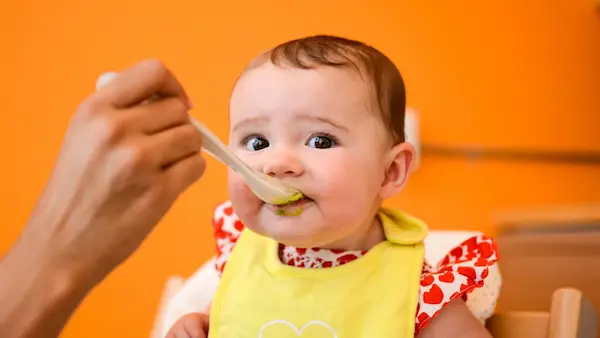
A quick readiness check first: the AAP, WHO, and CDC agree that developmental readiness — not just a calendar date — is what matters, and it typically lines up around six months (never before four). Look for steady head and neck control and the ability to sit up with minimal support, a faded tongue-thrust reflex, the ability to close their lips around a spoon and draw food in, and keen interest in your food. If those are in place, you’re ready to begin.
The Best First Spoon Foods
The old rule of weeks of single-grain cereal is outdated. Because a baby’s iron and zinc stores start to deplete around six months, your first choices should lead with those nutrients. Great options to start with:
- Iron-fortified infant cereal (oat, barley, or multigrain) — still a great choice, just not the only one. Mix with breast milk or formula for a familiar taste.
- Pureed meats (poultry, beef, lamb) — a superb source of highly absorbable iron and zinc. Puree cooked meat with broth or water until smooth.
- Pureed legumes — lentils, beans, and chickpeas offer plant-based iron and protein.
- Cooked, mashed vegetables — sweet potato, squash, and carrot add vitamin A.
- Mashed banana or avocado — nutrient-rich and full of healthy fats, and no cooking required.
Start smooth and thin, then thicken over the following weeks toward soft lumps and mashes — that texture progression helps develop the chewing and tongue movements your baby needs. Whatever you offer, remember that breast milk or formula stays the main source of nutrition through much of the first year; these foods are complementary. Our guide to how much your baby should eat helps with amounts.
How to Spoon-Feed, Step by Step
- Pick a good moment: choose a time when your baby is alert, happy, and slightly hungry — not ravenous or tired. Mid-morning often works well.
- Set the scene: use a highchair with foot support, secure the safety strap, and settle in with patience.
- Start small: offer 1–2 teaspoons of a single-ingredient food on a soft-tipped, shallow spoon. The first sessions are about learning, not consumption.
- Let them draw it in: rest the spoon on their lower lip and let them close their lips and take the food, rather than scraping it off or pushing it in.
- Follow their lead: if they turn away, clamp their mouth shut, or fuss, the meal is over. Never force-feed.
- One new food at a time: wait 2–3 days before adding another, which makes it easier to spot any reaction.
- Embrace the mess: a splat mat, a bib with a catch pocket, and a sense of humor go a long way — sensory exploration is part of the learning.
Making Your Own Baby Food
Homemade purees are easy, budget-friendly, and let you control exactly what goes in. Steam or bake fruits and vegetables until very soft, then puree with a little of the cooking liquid, breast milk, or formula to reach a smooth, spoonable consistency. Cool quickly, and freeze extra portions in an ice-cube tray so you can thaw single servings as you need them (use within a few months, and reheat evenly, never leaving hot spots). Always remove pits, bones, seeds, and skins, and cook hard fruits and vegetables until they mash easily. As your baby grows, simply mash rather than fully puree to build texture.
A Word on Pouches
Store-bought pouches are convenient for travel, but they’re best used sparingly. Sucking puree straight from a pouch doesn’t teach spoon skills, can encourage overeating, and skips the chance to see, smell, and explore the food. If you use them, squeeze the contents onto a spoon or into a bowl rather than letting your baby suck directly.
Allergens and Safety, in Brief
Two things not to skip. First, allergens: current guidance is to introduce common allergenic foods (peanut, egg, dairy, soy, wheat, tree nuts, sesame, fish, shellfish) early and keep them in the diet, as this can help prevent allergies — babies with severe eczema or an existing egg allergy should be evaluated by a pediatrician first. Our step-by-step guide to introducing allergens covers the how.
Second, choking safety: always supervise meals, and know that gagging (noisy, with coughing and sputtering) is a normal protective reflex, while choking is silent, with an inability to cry, cough, or breathe — every caregiver should learn infant CPR. Avoid choking hazards like whole nuts, whole grapes, hard raw vegetables, chunks of meat or cheese, popcorn, and spoonfuls of thick nut butter. Cook hard produce until soft, thin nut butters, remove pits and bones, and quarter grapes lengthwise.
Frequently Asked Questions
Tiny amounts. Day one might be just a few licks. Gradually build toward 1–2 tablespoons per meal, once or twice a day, following your baby’s hunger cues. Let appetite guide you, not a chart.
That’s the tongue-thrust reflex, and it may mean they’re not quite ready. Wait a week and try again. Make sure you’re resting the spoon on their front lip and letting them draw it in, rather than pushing it in.
Absolutely — it’s cost-effective and lets you control the ingredients. Steam or bake fruits and vegetables, puree with a little cooking liquid or breast milk, and freeze portions in an ice-cube tray for easy single servings.
They’re convenient but best used sparingly. Sucking from a pouch doesn’t build spoon skills and can lead to overeating. If you use one, squeeze it onto a spoon rather than letting your baby suck directly.
No. Iron-fortified cereal is a fine first food, but it’s not required — a smooth iron-rich meat puree, mashed avocado, or a vegetable puree are all great starting points. Leading with iron-rich foods is what matters most.
The Bottom Line
Your baby’s first spoon foods are the opening chapter in a lifelong relationship with food — a process of exploration, sensory learning, and bonding as much as nutrition. Lead with iron-rich foods, start smooth and progress texture, keep breast milk or formula as the main source of nutrition through the first year, and follow your baby’s cues. Let go of the pressure to “finish the jar,” celebrate the messy hands and the curious first tastes, and enjoy guiding your baby into a wider, more flavorful world.
This article is for general information and is not a substitute for personalized medical advice.
References
- American Academy of Pediatrics (HealthyChildren.org). Starting Solid Foods.
- Centers for Disease Control and Prevention. When, What, and How to Introduce Solid Foods.
- World Health Organization. Complementary feeding.
- Mayo Clinic. Solid foods: How to get your baby started.