That feeling—the knot in your stomach when your newborn fusses and you run through the mental checklist: Are they hungry? Tired? Wet?—is almost a rite of passage. You’re not failing. You’re simply learning a brand new, silent language.
Hi, I’m Maya. As a postpartum doula and infant development specialist, I’ve spent over a decade sitting with parents just like you in the quiet (and sometimes not-so-quiet) hours of early parenthood. My most important job isn’t to give you all the answers, but to teach you how to listen. Because your baby has been talking to you since the moment they were born, not with words, but with a beautiful, nuanced vocabulary of movement, sound, and expression.
Learning this language is the single greatest tool to reduce guesswork, minimize crying (for both of you), and build a bond of profound security. This isn’t about creating a perfect parent, but a responsive one. Let’s move from reactive panic to proactive understanding. Let’s learn to read the signals before the siren goes off.
Your Quick-Reference Cue Cheat Sheet
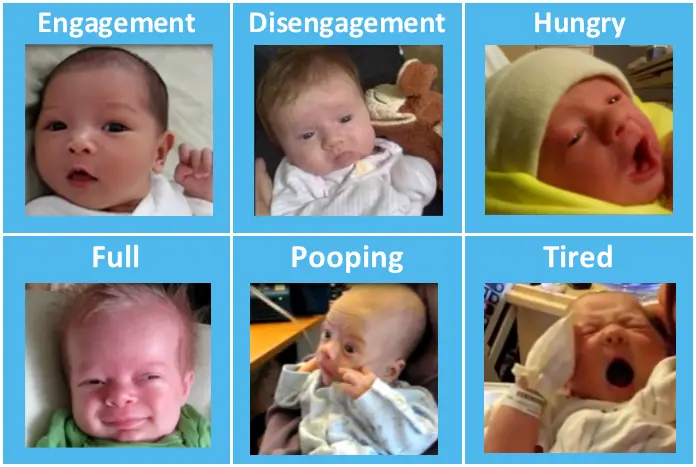
- Early Hunger: Rooting, hand-to-mouth, lip-smacking.
- Late Hunger: Frantic movement, crying (a red, angry cry).
- Early Sleepiness: Glazed eyes, red eyelids, slowing down.
- Overtired: Rubbing eyes, arched back, fussy crying.
- Overwhelmed: Looking away, hiccuping, jerky movements.
- Ready to Play: Bright, focused eyes, smooth movements, cooing.
- Discomfort/Gas: Drawing legs up, clenched fists, sharp cries.
Part 1: Why Learning This Language Changes Everything
When you respond consistently to your baby’s signals, you’re doing much more than solving a momentary problem. You’re building their brain. Neuroscience shows that this “serve and return” interaction—your baby “serves” a cue, you “return” a response—wires their nervous system for emotional regulation, trust, and secure attachment. It tells them, “The world is a predictable, safe place. My needs matter.” This is the cornerstone of responsive parenting.
For you, reading baby cues reduces crying and the feelings of helplessness that come with it. It transforms parenthood from a relentless fire drill into a connected dance. You start to see patterns, anticipate needs, and feel that incredible surge of confidence that comes from truly knowing your child.
We’ll focus on five core dialogues: Hunger, Sleep, Overstimulation, Connection, and Discomfort.
Part 2: The Hunger Dialogue – From Subtle Hint to Red Alert
Feeding is more than nutrition; it’s a primary conversation. Catching the early cues makes feeding calmer and more effective. Think of it in three stages:
Stage 1: Early Hunger Cues – “I’m Getting Interested”
This is the golden window. Your baby is calm and receptive.
- Rooting Reflex: The most classic rooting reflex feeding cue. Stroke their cheek, and they’ll turn toward it, mouth open.
- Hand-to-Mouth: They’ll bring their fist to their mouth, often missing a few times. Their hands are their first pacifier.
- Lip Smacking & Tongue Darting: Little mouth movements as if they’re tasting the air.
- Body Stillness & Alertness: They become quietly focused, as if tuning into an internal signal.
Stage 2: Active Hunger Cues – “I’m Ready Now!”
The intensity is ramping up. If you start a feed now, you’ll likely avoid a meltdown.
- Squirming & Stiffening: Wriggling, body tension.
- Nuzzling: Burying their face into your chest or your arm.
- Increased Fussing: Whimpers, grunts, and short “eh-eh-eh” sounds.
Stage 3: Late Hunger Cues – “I’m Frustrated!”
This is the last resort signal.
- Frantic Head-Turning: Desperately moving their head side-to-side.
- Full-Blown Crying: A distinct, red-faced, angry cry. It’s loud and panicked.
Crucial Note: A baby in this state often needs to be calmed (swaddled, rocked, shushed) for a minute before they can latch or feed effectively. They’re too upset to eat.
Part 3: The Sleep Conversation – Catching the Wave Before It Crashes
Missing your baby’s sleep window is like missing the last step in the dark—it’s jarring and leads to a cascade of upset. An overtired baby produces cortisol, a stress hormone that makes it harder to fall asleep and stay asleep.
Early Tired Cues – “I’m Getting Sleepy”
- The “Zoned Out” Stare: Eyes glaze over, they stare blankly into space. This is often mistaken for being content, but it’s a key baby sleep signal.
- Slowing Down: Movements become less frequent and more sluggish.
- Red Brows or Eyelids: A subtle but reliable sign.
- Looking Away/Yawning: The classic signs, though yawning can sometimes be a later cue.
Late Tired Cues (Overtired) – “I’m Past My Limit”
- Rubbing Eyes/Ears: Using their hands to self-soothe and block stimulation.
- Arched Back & Rigid Body: Stiffening against you instead of melting in.
- Fussy, Inconsolable Crying: A whiny, grating cry that builds. This is the “tired but fighting sleep” cry.
- The Second Wind: A sudden burst of energetic, almost frantic activity. This tricks many parents into thinking they’re not tired at all.
Pro Tip: For a peaceful transfer to the crib, wait for the “deep sleep” cues: limbs are limp and heavy, breathing is deep and regular, and their startle reflex doesn’t fire when you move them.
Part 4: The Overstimulation Signal – “The World is Too Much!”
Newborns have a tiny bucket for sensory input—sights, sounds, smells, touches. It fills quickly. Signs of overstimulation in a newborn are often misread as generic fussiness or hunger. This is one of the most common “aha!” moments for the parents I work with.
Early “I Need a Break” Cues:
- Gaze Aversion: This is the biggest one. They deliberately look away from your face or a toy. It’s not rejection; it’s self-preservation. They’re saying, “I need to process.”
- Hiccuping or Sneezing: Sudden, reflexive discharges of nervous energy.
- Color Changes: Skin becomes mottled or gets red splotches.
Active “I’m Overwhelmed” Cues:
- Turning Head Away Repeatedly: More urgent than a single gaze aversion.
- Jerky Movements & Clenched Fists: Arms and legs move in abrupt bursts.
- Fussing in Waves: Crying that starts, stops, and starts again as they try to regulate.
The Rescue Protocol: The moment you see these cues, act. Immediately move to a quiet, dim room. Hold them firmly against your chest (deep pressure is calming). Use a low, steady shush or white noise. Reduce all other input. You’re helping them empty that sensory bucket.
Part 5: The Connection & Play Cues – “I’m Here and I See You!”
This is the beautiful flip side. When your baby is in a calm, alert state, they are literally asking to connect and learn. This is the foundation of bonding with your baby.
“I’m Alert and Available” Cues:
- Bright, Focused Eyes: They lock onto your face and track you.
- Smooth, Coordinated Movements: Gentle kicking or arm waves.
- Relaxed, Open Hands: A sign of contentment and readiness.
- Vocalizations: Soft “ah,” “eh,” and cooing sounds. They’re practicing conversation!
- Facial Mirroring: They may stick out their tongue or open their mouth in response to you.
This is your invitation for serve-and-return interaction. Talk softly, mirror their expressions, sing a song. Keep it gentle and watch for those early overstimulation cues. These moments, even just a few minutes at a time, are pure gold for their development.
Part 6: The Discomfort Decoder – “Something Feels Wrong”
Sometimes the fussiness has a specific physical cause. Here’s how to start differentiating.
- Gas/Tummy Pain Cues: Drawing knees sharply to chest, clenched fists, a pained grimace, sharp cries that come in intense waves followed by stillness.
- “I Need to Burp” Cues: Fussing, squirming, or pulling off the breast/bottle mid-feed. A burp can be the magical solution.
- Temperature Cues: Feel the back of their neck, not hands/feet. Too Hot: Sweaty, flushed, rapid breathing. Too Cold: Cool skin, mottled skin, weak cry.
- Diaper Cues: Often a lower-priority need for newborns, but a sudden fuss during sleep or a pause in feeding can be a sign.
Part 7: When Signals Get Crossed: Your Troubleshooting Guide
Q: “My baby shows hunger cues an hour after a full feed. Are they really hungry again?”
A: This could be cluster feeding (common in the evenings), a need for comfort sucking, or reflux. Offer a feed, but if they suckle briefly and fall asleep, it was likely comfort. A pacifier can be a helpful tool here to meet the suck need.
Q: “I try ‘drowsy but awake’ and it always ends in crying. What am I missing?”
A: You might be missing the early sleep window, placing them down when they’re already overtired. Or, “drowsy but awake” might be too big a leap. Try “calm and sleepy in arms” first, then gradually work toward drowsy in the crib.
Q: “How can I tell a pain cry from a hunger cry?”
A: A pain cry is often a sudden, sharp, high-pitched shriek—it hits your nervous system differently. A hunger cry is more rhythmic and building (“wah, wah, WAH!”). An overtired cry is often a grating, whiny complaint.
Conclusion: Your Growing Fluency
I’ll never forget a father, David, who was convinced his daughter just had a “fussy temperament.” We spent an afternoon just watching her. I pointed out how she’d look away and hiccup when her big brother ran into the room. “She’s not fussy,” I said. “She’s telling you, ‘It’s too loud, Daddy.'” The moment he saw it, everything changed. He became her interpreter, her protector. Their dynamic shifted from frustration to partnership.
That’s what awaits you. You will misread cues. We all do. See it not as a failure, but as data. “Okay, that was a tired cry, not a hungry cry. I’ll note that for next time.”
Every time you watch and respond, you’re sending a message that shapes your child’s world: “You are understood. You are safe. You are loved.” This secret language you’re learning is the first and most important dialogue of your lives together. You are already becoming an expert in your child. Trust that. Now, take a deep breath, and go look at your baby. What are they telling you right now?