Water seems like the most basic thing you could offer, but for babies the rules are surprisingly strict — and getting them wrong can be dangerous. In the early months, milk does the job of both food and drink, and adding water too soon carries real risks. Here’s a clear, stage-by-stage guide to what your baby should drink from newborn through toddlerhood, how to spot dehydration, and what to do when they’re sick or it’s hot.
The Golden Rule: For the First 6 Months, Milk Is Food and Drink
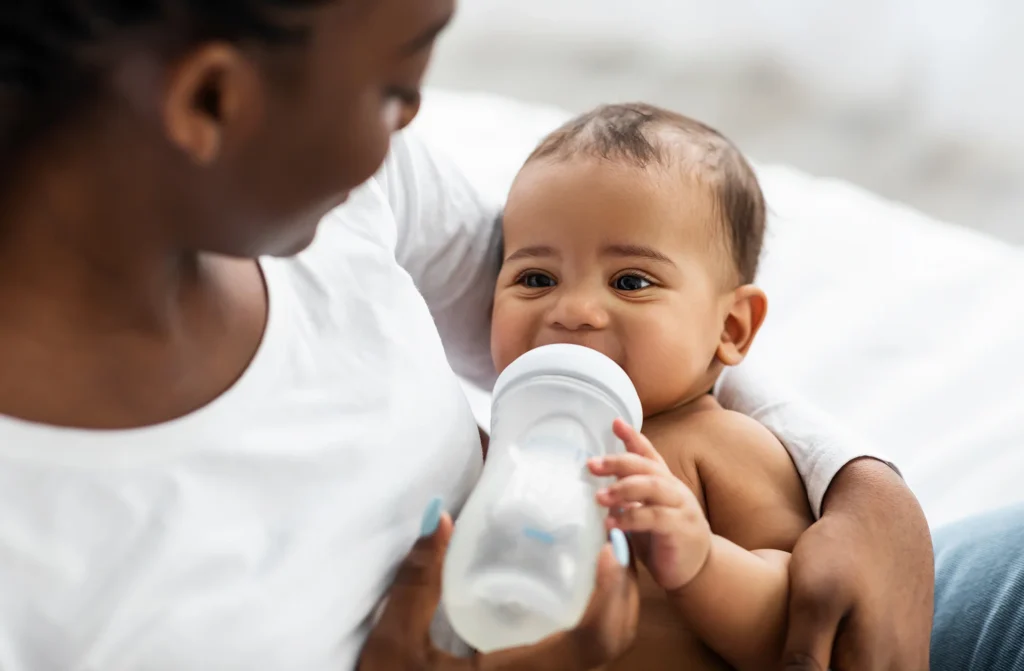
For a healthy, full-term baby, the American Academy of Pediatrics, the World Health Organization, and the CDC all agree: breast milk and/or infant formula provide all the nutrition and hydration your baby needs for the first six months. No extra water is necessary, and offering it can actually be harmful. There are three reasons why:
- It displaces nutrition. A newborn’s stomach is tiny. Filling it with zero-calorie water crowds out the calories, fat, and protein they need from milk for growth and brain development.
- It can cause water intoxication. Too much water dilutes the sodium in a baby’s blood, a dangerous condition called hyponatremia that can lead to seizures and be life-threatening. This is the most serious risk.
- It can reduce milk supply. For breastfed babies, water fills them up and reduces demand at the breast, which can signal the body to make less milk.
The Hydration Roadmap, Stage by Stage
Birth to 6 months: exclusive milk
The source is 100% breast milk or formula, fed on demand — a rough guide is about 2.5 ounces of formula per pound of body weight per day, or 8–12 breastfeeds in 24 hours. Trust hunger cues (rooting, sucking on hands) and watch output: 5–6 or more wet diapers a day with pale urine means all is well. No water, juice, or other liquids are needed.
Around 6 months: first sips of water with solids
When your baby starts solid foods, you can introduce small amounts of water in a cup — mainly to build the skill of sipping and to help with occasional constipation from new foods. Offer only about 2–4 ounces total per day in small sips at meals; breast milk or formula (roughly 24–32 oz daily) is still the main source of both hydration and nutrition. Use a small open cup or a straw cup rather than a valved sippy cup — our guide to choosing baby’s first cup explains why.
9 to 12 months: growing independence
Now hydration comes from a balance of milk (about 20–24 oz/day), water, and water-rich foods like fruits and vegetables. Water can increase to roughly 4–8 ounces a day as solids grow and milk dips slightly. Keep offering water with meals and during active play, and focus on cup skills — by the first birthday the aim is to be moving off bottles.
12 to 24 months: toddlerhood
At 12 months, whole cow’s milk (or a suitable alternative your pediatrician approves) can become a primary drink — its fat supports brain development. Aim for 16–24 ounces of whole milk a day (more can fill toddlers up and cut their appetite for iron-rich foods), with water freely available throughout the day — often 1–4 cups (8–32 oz) depending on size, activity, and climate. The AAP recommends weaning off the bottle by 15–18 months to protect teeth and prevent overconsumption of milk.
Reading the Signs: Hydrated vs. Dehydrated
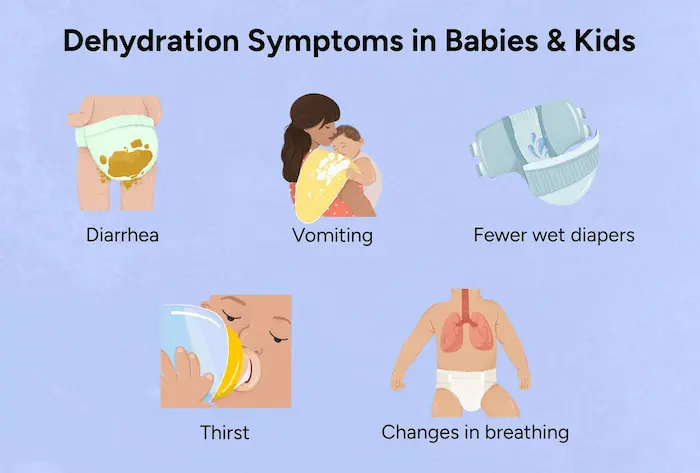
Your most reliable gauge is output. Signs of good hydration include six or more wet diapers a day (for infants), pale yellow or clear urine, skin that springs back quickly when gently pinched, a soft moist mouth, and an alert, active baby.
Red flags of dehydration — seek medical attention:
- Fewer than 6 wet diapers in 24 hours, or no wet diaper for 8+ hours.
- Very dark, strong-smelling urine.
- A sunken soft spot (fontanelle) on an infant’s head.
- Sunken eyes, or few or no tears when crying.
- Unusual lethargy, fussiness, or difficulty waking.
- Dry, cool, or mottled skin that stays “tented” when pinched.
- Fast heartbeat or breathing.
Illness, Heat, and Activity
The usual rules adapt when your baby is losing extra fluid:
- Fever, diarrhea, or vomiting. These cause rapid fluid loss. Keep offering breast milk or formula frequently in smaller amounts. For older infants, your pediatrician may recommend an oral rehydration solution (like Pedialyte) to replace electrolytes. Never dilute formula, and don’t use sports drinks, soda, or plain juice to rehydrate.
- Hot weather. Offer breast or bottle feeds more often. For babies over 6 months, add sips of water between feeds, keep them in cool, shaded spots, and dress them lightly.
- More activity. A crawling or walking toddler needs more fluids — offer water before, during, and after active play.
What Not to Give
- Juice. The AAP says fruit juice offers no benefit under age 1 and should be avoided. After 1, limit it to a maximum of 4 oz/day of 100% juice with a meal — never carried around all day, since it promotes tooth decay. More in our guide to juice for babies.
- Plant-based “milks.” Almond, oat, rice, or cashew milk are not adequate replacements for breast milk, formula, or cow’s milk in the first year — they often lack the protein and fat babies need. Discuss alternatives with your pediatrician if there’s a medical need.
- Cow’s milk as a main drink before 12 months. It can cause intestinal bleeding and iron deficiency in younger infants. Small amounts in food (yogurt, cheese) after 6 months are fine — see our formula feeding guide for milk basics.
- Sugary drinks, soda, tea, or coffee. Never appropriate for infants or toddlers.
Frequently Asked Questions
Around 6 months, once solid foods begin — and only in small amounts (about 2–4 oz a day) offered in a cup at meals. Before 6 months, healthy babies need no water at all; milk covers everything.
Too much water can dilute the sodium in a baby’s blood, causing a serious condition called water intoxication (hyponatremia) that can trigger seizures. Water also fills their small stomach and crowds out the calories and nutrients they need from milk.
Roughly 2–4 oz a day at 6 months, 4–8 oz from 9–12 months, and then freely (often 8–32 oz) in toddlerhood, adjusted for size, activity, and weather. Milk remains a major source of fluid through the first two years.
Watch for fewer wet diapers (or none for 8+ hours), dark urine, a sunken soft spot or sunken eyes, few tears, lethargy, and skin that stays tented when pinched. These warrant prompt medical attention.
Avoid juice entirely under age 1 and limit it afterward. Plant-based milks aren’t nutritionally adequate in the first year, and cow’s milk shouldn’t be a main drink until 12 months. When in doubt, ask your pediatrician.
Keep offering milk frequently in smaller amounts, and ask your pediatrician about an oral rehydration solution for illness — never dilute formula. In heat, feed more often and, for babies over 6 months, add sips of water while keeping them cool and shaded.
The Bottom Line
Baby hydration is really about adapting to your child’s changing biology. The principles are simple: rely on milk alone for the first six months, introduce water as a small mealtime companion with solids, and move to a balance of water and milk in toddlerhood. Your most powerful tools are observation — counting wet diapers and noticing energy — and offering the right fluids at the right time. Get those right and you protect your baby’s growth and their developing kidneys, and set up healthy habits for life.
This article is for general information and is not a substitute for personalized advice from your pediatrician.
References
- Centers for Disease Control and Prevention. Infant and Toddler Nutrition.
- World Health Organization. Infant and Young Child Feeding.
- Mayo Clinic. Dehydration.