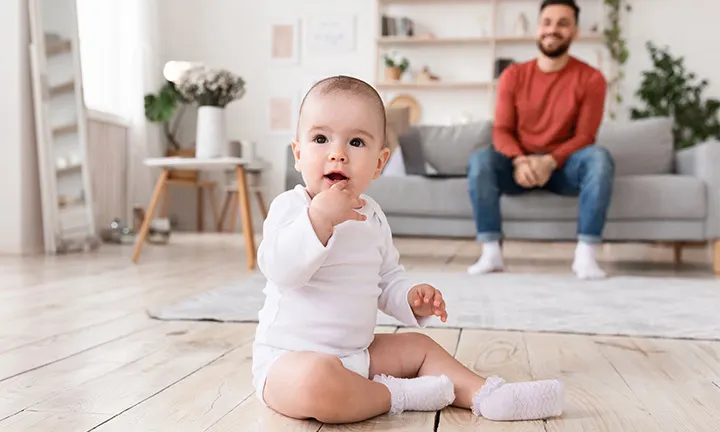
There is a profound shift in a baby’s world the moment they sit up on their own. The horizon lifts from the floor and the ceiling to a panoramic view of the room. Their hands, once occupied with pushing against the ground, are now free to grasp, examine, and explore. For parents, this milestone—often marked by a wobbly, triumphant smile—feels like a graduation into a new stage of babyhood. But the path to that first independent sit is a gradual process of strength, balance, and neurological maturation. This guide will walk you through the nuanced timeline, the essential preparatory skills, and how you can safely support your baby’s journey from reclining to sitting unassisted.
The Sitting Timeline: A Phased Development
Unlike a light switch, sitting up is not an instantaneous skill. It’s a carefully orchestrated sequence of physical developments. Understanding these phases helps manage expectations and celebrate the subtle progress along the way.
Phase 1: Propped Sitting (Around 4-6 Months)
This is the first glimpse of a seated baby. With your hands supporting their torso or with the aid of a nursing pillow or high-backed infant seat, your baby can hold their head steady and upright for short periods. Their back is rounded, and if they lean too far forward or to the side, they will topple over like a tipped statue. This phase is about building core and neck endurance. According to the American Academy of Pediatrics (AAP), by around 4 months, many babies will have enough head control to enjoy this supported, interactive position.
Phase 2: Tripod Sitting (Around 5-7 Months)
Now we see true progress toward independence. In tripod sitting, a baby can sit on the floor by using one or both arms extended forward as a crucial third leg of support. Their back is straighter, but their posture is hunched over their arms. They can look around and even reach gingerly for a toy, but if they lift both hands, the balance is lost. This stage is a masterclass in balance and core engagement. The Centers for Disease Control and Prevention (CDC) lists sitting with support as a key 6-month milestone.
Phase 3: Independent Sitting (Around 6-9 Months)
This is the goal: unsupported, hands-free sitting. Your baby’s back is straight, their core is engaged, and they can turn their head and torso to look at things without falling over. They can play with toys in their lap and recover from small balance disturbances. The World Health Organization (WHO) notes in its motor development study that 90% of babies can sit without support by 8 months. The range, however, is broad. Some determined babies achieve it by 6 months, while others take a more leisurely route to 9 months, with both timelines falling within the spectrum of normal development.
The Foundational Pillars: The Skills Required for Sitting
Independent sitting doesn’t happen in a vacuum. It is the direct result of mastering several precursor skills, all of which are honed through daily play.
- Head Control: This is the non-negotiable first step. Your baby must be able to hold their head steady and upright without it wobbling. This strength is built primarily through tummy time, which strengthens the neck and upper back muscles. You can observe this milestone during gentle pull-to-sit practice—a baby with good head control will not let their head lag behind as they are pulled upward.
- Core and Back Strength: Sitting is an isometric hold. It requires immense strength in the abdominal, oblique, and lower back muscles to stabilize the torso against gravity. This strength is accrued through kicking on their back, pushing up during tummy time, and even the act of rolling over.
- Balance and Proprioception: This is the neurological component. Your baby’s brain and vestibular system must learn to sense their body’s position in space and make constant micro-adjustments in their muscles to maintain an upright posture. This is why the tripod phase is so critical; it’s their training ground for balance.
How to Safely Support Your Baby’s Sitting Development
Your role is that of a spotter and a coach—providing opportunity and safety, not force. Here are evidence-based ways to encourage sitting skills.
1. Prioritize Tummy Time, From Day One.
This cannot be overstated. The AAP’s recommendation for supervised tummy time is the single most important exercise for building the musculature needed for all future milestones, including sitting. Aim for frequent, short sessions, building up to at least an hour total per day by 6 months. During tummy time, encourage reaching for toys to build shoulder stability and core engagement.
2. Practice Supported Sitting During Play.
Instead of always propping your baby in a container seat, sit on the floor with them between your legs, using your body as a supportive backrest. This allows them to feel secure while experiencing the seated position. Keep these sessions brief (a few minutes at a time) and always have your hands ready to catch a topple.
3. Engage in Gentle “Pull-to-Sit” Exercises.
When your baby is lying on their back, offer your fingers for them to grasp. Slowly and gently pull them up to a sitting position. Observe their head. In the early months, their head will lag behind. As they approach 4-5 months, they should be able to keep their head in line with their torso, actively participating in the movement. This is a fantastic diagnostic tool for head and neck strength.
4. Use Toys Strategically.
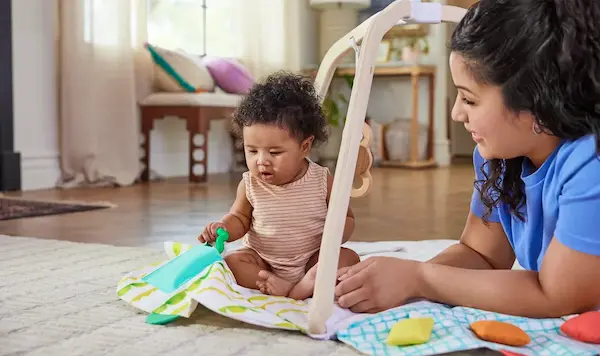
Once in the tripod phase, place engaging toys just within reach in their lap or directly in front of them. As they gain confidence, place a toy slightly to the side to encourage them to shift their weight and practice balance recovery. A stable, low-to-the-ground activity center they can sit inside can also offer secure practice.
5. Let Them Explore (Safely) on the Floor.
The best practice space is a firm, carpeted floor surrounded by soft pillows or cushions. Allow them to wobble and topple in this safe environment. Learning to fall safely and how to catch themselves is part of the process. The Mayo Clinic advises against prolonged use of restrictive seats and encourages free movement on the floor as the optimal environment for motor skill development.
Important Safety Considerations for the Sitting Stage
With new mobility comes new hazards. Vigilance must evolve with your baby’s skills.
- Never Leave Unattended on Elevated Surfaces: The moment your baby can sit with support, they can topple. Never leave them alone on a bed, sofa, or changing table, even propped by pillows.
- Re-evaluate the Crib: Once your baby can push up on hands and knees or sit independently, it’s time to lower the crib mattress to its lowest setting to prevent falls.
- Beware of “Container” Overuse: While supportive seats like Bumbos or high chairs are useful for short periods during meals or interactive play, they should not be used as primary practice tools. True sitting strength comes from the active, often unsteady work of balancing on the floor.
- Baby-Proof the New Vantage Point: From a seated position, your baby can now reach new things. Ensure the immediate floor area is clear of choking hazards, sharp objects, and unstable furniture they could pull over.
FAQs: Addressing Common Parent Concerns
Q: My baby slumps forward or to the side constantly. Is this normal?
A: Absolutely. In the propped and early tripod phases, slumping is how they build strength. Their muscles are learning to fire. Think of it as weightlifting; the “slump and recover” is the repetition. Only be concerned if there is a complete lack of head control or muscle tone (floppiness) by 6 months, which warrants a discussion with your pediatrician.
Q: Is it bad to use a Bumbo seat or similar sitting aid?
A: For short, supervised sessions (10-15 minutes), they are not harmful and can be a fun change of perspective. However, they can be detrimental if overused. They position the baby passively, which can bypass the critical core strengthening and balance work needed for true independent sitting. The AAP cautions against using seats that force a baby into a position they cannot get into on their own.
Q: My 8-month-old can’t sit up alone yet. Should I be worried?
A: While many babies sit by 8 months, the range extends to 9 months. The key question is progression. Are they steadily gaining head control, rolling both ways, and pushing up on their arms? If they are active and hitting other milestones but just taking their time with sitting, they may be on their own path. However, the CDC’s “Learn the Signs. Act Early.” program recommends talking to your doctor if your baby cannot sit with help by 9 months. Trust your instincts and seek professional guidance for peace of mind.
Q: Does sitting late mean other delays?
A: Not necessarily. Motor development can be uneven. Some babies focus on verbal or fine motor skills first. However, gross motor milestones like sitting are important indicators. A persistent, significant delay in sitting, especially when combined with other missed milestones, should be evaluated by a healthcare provider to rule out any underlying conditions.
Q: What’s the link between sitting and crawling?
A: Sitting and crawling develop in parallel, often feeding into each other. The core strength from sitting practice aids crawling, and the pushing/weight-shifting of crawling reinforces balance for sitting. Some babies master sitting first and then figure out crawling; others become mobile crawlers first and then sit up from a crawling position.
The Bigger Picture: Sitting as a Cornerstone of Health
The journey to sitting is a powerful example of the interconnectedness of infant health and maternal well-being. The American College of Obstetricians and Gynecologists (ACOG) emphasizes prenatal and postnatal education that empowers parents with knowledge of developmental milestones and safety.
A baby who sits confidently is a baby who has had the nutrition, the nurturing, and the opportunity for free movement. Supporting this milestone isn’t about hurrying your child; it’s about understanding the process, providing a safe and stimulating environment, and recognizing that each wobble and topple is a necessary step toward strength and independence.
Conclusion: Celebrating the Balance
The question of “when do babies start sitting up?” is answered not with a single date, but with a story of gradual triumph. It’s a story written in the strength built during tummy time, the balance learned from a hundred tiny falls, and the sheer determination visible in your baby’s focused gaze as they work to hold themselves upright.
Resist the urge to compare. Your baby’s timeline is uniquely theirs. Focus on providing the foundational experiences: ample floor time, engaged play, and a safe space to practice. Celebrate the propped sit, the wobbly tripod, and finally, that glorious moment of hands-free, independent sitting. When it comes, you’ll see more than just a baby sitting up—you’ll see a little person poised to explore their world from an entirely new angle.
Sources & Further Reading from Authoritative Organizations:
- Centers for Disease Control and Prevention. Important Milestones: Your Baby By Nine Months. [Link to CDC Milestones Page]
- American Academy of Pediatrics. Back to Sleep, Tummy to Play. HealthyChildren.org. [Link to AAP Tummy Time Guideline]
- World Health Organization. WHO Motor Development Study Windows of Achievement. [Link to WHO Motor Development Standards]
- Mayo Clinic. Infant development: Milestones from 7 to 9 months. [Link to Mayo Clinic Article]
- American College of Obstetricians and Gynecologists. Well-Woman Visit. [Link to ACOG Postpartum Care Guidelines]