You’ve finally gotten your newborn to sleep — then a tiny jerk, a full-body startle, arms fly out, eyes pop open, and the crying starts again. That’s the Moro (startle) reflex, and one of the oldest tools for calming it is the swaddle. Done well, swaddling recreates some of the snug security of the womb and can help a young baby settle and sleep. Done carelessly, it carries real risks. This guide covers why swaddling works, the safety rules that matter most, how to choose a wrap, three folding techniques, and how to transition out of the swaddle when the time comes.
The Quick Version
- Swaddling reduces the startle reflex and can promote longer sleep by mimicking the secure feeling of the womb.
- Safety is paramount: always place a swaddled baby on their back, make sure the hips can move freely, don’t let them overheat, and stop swaddling at the first sign of rolling.
- You have options: traditional blankets are flexible and inexpensive, while swaddle sacks are more foolproof for babies who wriggle free.
- Moving out of the swaddle is a normal phase — there are gentle ways to manage it.
Why Swaddling Works
Swaddling is an ancient practice used across cultures, and it’s especially useful during the “fourth trimester” — the first three months when your baby is still adjusting to the world outside the womb. Its main benefit is taming the Moro reflex, an involuntary jerk that, in the crib, is just a sleep disruptor. A proper swaddle gently limits arm movement so that flailing doesn’t wake your baby mid-sleep.
There’s a comfort element too: the steady, snug pressure mimics the constant contact of the uterus, which can be calming for a newborn. Research suggests swaddled infants may stir less and sleep in slightly longer stretches. It isn’t a cure-all for sleep problems, but it’s a helpful foundational tool for soothing a fussy newborn and creating a restful setup.
The Safety Rules That Matter Most
This is the most important section — these rules are what separate a safe, beneficial swaddle from a hazardous one.
1. Keep the hips free
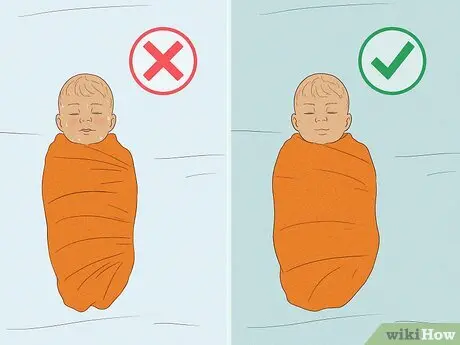
This is where many well-meaning swaddles go wrong. For healthy hip development, a baby’s legs need to bend up and out at the hips — the “frog-leg” or “M” position — which lets the hip sockets develop normally. The swaddle should be snug around the arms and chest but loose around the hips and legs, allowing full leg movement, and it should never pull the legs down straight together. Straight-legged, tight wrapping is linked to hip problems (hip dysplasia); a loose lower swaddle prevents that.
2. Don’t let your baby overheat
A baby’s ability to regulate temperature is immature, and overheating is a risk factor for SIDS. Use lightweight, breathable fabrics like cotton or muslin, and dress your baby lightly underneath — often just a diaper or a simple onesie. Check the back of their neck or chest; if they’re sweaty, damp-haired, flushed, or hot to the touch, they’re too warm.
3. Back to sleep — always
A swaddled baby has restricted movement and must be placed on their back for every sleep, nap and night, with no exceptions. Their ability to reposition themselves if they get into trouble is limited, which makes back-sleeping non-negotiable. See our safe sleep guide for the full picture.
4. Stop at the first sign of rolling
This one is critical. Stop swaddling as soon as your baby shows any attempt to roll, which can happen as early as around 8 weeks. The moment you see them rocking onto their side or working to roll, move them out of the swaddle for good. A swaddled baby who rolls onto their stomach is at serious risk, because they can’t use their arms to push up or turn their head.
Blankets vs. Sacks
The best choice depends on you and your baby. Traditional swaddle blankets are flexible, inexpensive, and breathable, but have a steeper learning curve and can come loose — look for a large square (around 44″ × 44″) in lightweight muslin or stretchy cotton. Swaddle sacks with velcro or zippers are more foolproof and often designed for hip-healthy positioning, which helps if you struggle with folds or have a baby who wriggles free; the trade-off is cost and outgrowing sizes quickly. Hybrid wraps — a pre-shaped blanket with wings or pockets — are a nice middle ground.
Three Techniques
Practice these with a doll or stuffed animal first — muscle memory helps.
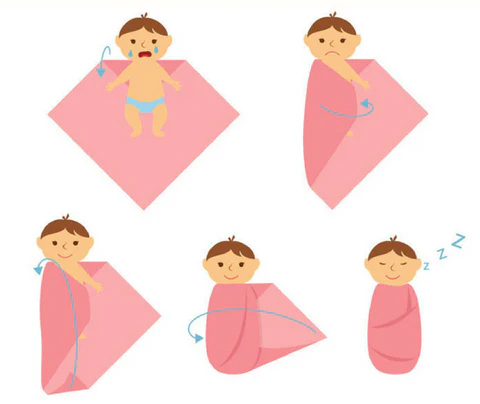
The classic diamond fold
- Lay the blanket in a diamond shape and fold the top corner down about 6 inches.
- Position your baby on their back with their neck just at the fold.
- Right arm down: place the right arm gently at their side, pull the corresponding corner snugly across the body, and tuck it under their left side and back.
- Bottom corner up: fold the bottom up over the feet toward the chest, loose enough for full hip and leg movement.
- Left arm down: place the left arm down, pull the remaining corner firmly across, and tuck it under their right side.
- Safety check: do the “chest pinch test” — you should be able to slip 2–3 fingers between the blanket and your baby’s chest — and confirm the hips can freely bend and kick.
The double-wing tuck (for escape artists)
If your baby breaks their arms free every time, follow steps 1–3 of the classic fold, then — before folding the bottom up — take the loose corner you haven’t used yet and pull it partially across the chest, creating a second layer over the already-secured arm, and tuck it under the baby. Then fold the bottom up and finish with the now-smaller corner. The double layer over the arms is much harder to break.
The arms-up (hands-to-heart) position
Some babies simply hate having their arms pinned down. Use an “arms-up” style swaddle sack or a large, stretchy blanket, and let the hands rest naturally near the face or on the chest as you wrap — wrapping around the arms-up position rather than forcing the arms down. It’s often a sanity-saver for resistant babies.
Special Situations
- The fussy, overtired baby. Swaddle before a full meltdown, during the calm, drowsy phase, and pair it with other soothing techniques like gentle shushing and swaying.
- The preemie. Always follow your NICU team’s guidance. Swaddling a premature baby usually focuses on gentle containment for comfort and energy conservation, with extra attention to temperature.
- The “put-down” startle. After swaddling, hold your baby close and rock until they’re in a deep sleep (limp limbs, steady breathing). As you lower them, keep your hands firmly on their chest and shoulders for a few seconds after their back touches the mattress before sliding your hands out.
Transitioning Out of the Swaddle
The move out of the swaddle can feel like a setback, but it’s a sign of healthy development — and once your baby is rolling, it’s your cue to stop. A few gentle methods:
- One arm out. Start with naps: swaddle with one arm free for a few days, then switch arms, then both arms out while still wrapping the torso.
- Switch to a wearable blanket. The easiest path — move into a sleeveless wearable sleep sack, which gives cozy comfort without restricting the arms.
- Gradual fade. Use a thinner blanket or wrap slightly looser so the reduced sensation eases the adjustment.
Expect a few rough nights — it’s normal. Stay consistent with the rest of your bedtime routine.
Quick Troubleshooting
| Problem | Likely Cause | Quick Fix |
|---|---|---|
| Baby breaks arms free every time. | Not enough tension across the chest/arms. | Use the double-wing tuck or switch to a velcro swaddle sack. |
| Swaddle comes completely undone overnight. | Final tuck isn’t secure under baby’s body. | Tuck the final corner firmly under their weight, or use a sack. |
| Baby fusses and fights as soon as you start. | Overstimulated, or dislikes arm restriction. | Swaddle when calm/drowsy, not crying. Try the arms-up technique. |
| Hips and legs look too straight and tight. | Bottom fold too tight or blanket too small. | Make sure the “M” shape is possible. Use a larger blanket, fold the bottom up more loosely. |
Frequently Asked Questions
At the very first sign your baby is trying to roll, which can be as early as around 8 weeks. A swaddled baby who rolls onto their stomach can’t push up or turn their head, so this is a firm safety cutoff — move to a sleeveless sleep sack once rolling starts.
Tight, straight-legged swaddling that stops the legs from moving can contribute to hip dysplasia. That’s why the hip-healthy rule matters: keep the wrap snug around the arms and chest but loose around the hips so the legs can bend up and out in an “M” shape. Done that way, swaddling is safe for hip development.
Yes, with precautions. Use the thinnest muslin you can find, dress your baby in just a diaper underneath, keep the room cool, and monitor closely for overheating (sweating, damp hair, flushed cheeks). Overheating is a SIDS risk, so when in doubt, use less.
Don’t force it. Try the arms-up position or an arms-up style swaddle sack. Some babies self-soothe and need access to their hands, and forcing a traditional arms-down swaddle can just create a negative sleep association.
Yes, when you follow the core rules: always place your baby on their back, keep the hips free, don’t let them overheat, and stop swaddling the moment they show signs of rolling. A swaddle that respects all four is a safe, soothing sleep tool.
The Bottom Line
A good swaddle can be one of your most useful tools for helping a young baby settle — but only when it’s done safely. Keep the arms snug and the hips free, dress lightly to avoid overheating, always put your baby down on their back, and stop the moment they start trying to roll. You may not get a perfect wrap on the first try, and that’s fine. Respect the safety rules, practice the fold, and it gets easier fast.
This article is for general information and is not a substitute for personalized medical advice.
References
- American Academy of Pediatrics (HealthyChildren.org). Swaddling: Is It Safe?
- International Hip Dysplasia Institute. Hip-Healthy Swaddling.
- American Academy of Pediatrics (HealthyChildren.org). How to Keep Your Sleeping Baby Safe: AAP Policy.
- Mayo Clinic. How to Swaddle a Baby.