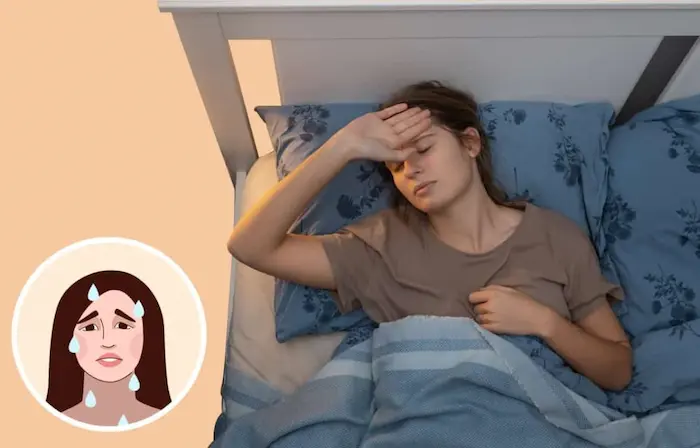
You finally get the baby down after a long feeding session, collapse into bed, and fall into a deep sleep — only to jolt awake an hour later soaked through to the sheets, hair plastered to your forehead, shivering as the sweat cools. The first groggy thought is often, “Am I sick? Is something wrong with me?” Almost always, the answer is no. Postpartum night sweats are an extremely common, if rarely discussed, part of recovery. Here’s why they happen, how to tell normal sweating from a warning sign, and practical ways to get more comfortable, drier sleep.
The Main Cause: A Hormonal Freefall
During pregnancy, your body runs on very high levels of estrogen and progesterone, which (among many other things) increase your total blood volume by up to 50% and cause you to retain extra fluid. Within about 24 hours of delivering the placenta, those hormone levels drop sharply — and that sudden drop is the primary trigger for night sweats, essentially throwing your internal thermostat off balance while it recalibrates.
The sweating itself has a purpose: your body needs to offload all the extra fluid it held onto during pregnancy, and since the kidneys can’t process it all quickly enough, the sweat glands become a secondary route. In other words, you’re literally sweating out the fluid of pregnancy over several nights.
What Makes It Worse
Hormones are the main driver, but a few things turn up the heat:
- Breastfeeding: lactation is metabolically demanding and raises your core body temperature, which can add to nighttime hot flashes.
- Deeper sleep: in your few precious sleep windows you may sleep more heavily, so you don’t notice overheating until you’re already drenched.
- An overly warm sleep setup: heavy pajamas, a partner’s body heat, and a warm room can turn the bed into a sweatbox.
- Stress and anxiety: the hyper-vigilance of new parenthood raises stress hormones like cortisol, which can also influence sweating.
How Long It Lasts
The most intense stretch is usually the first two to three weeks postpartum, when the hormonal shift is sharpest and your body is shedding fluid most aggressively. It’s common for episodes to continue for six to eight weeks or longer — as long as your hormones are recalibrating and, if you’re breastfeeding, prolactin stays high. They tend to taper off gradually as your cycle returns or your breastfeeding rhythm settles.
Normal vs. Not Normal: When to Call Your Provider
Normal postpartum sweating happens mainly at night, soaks your sleepwear and bedding, may come with mild chills as the sweat cools, and gradually improves over weeks. Contact your doctor or midwife, though, if the sweating comes with any of these:
- Fever of 100.4°F (38°C) or higher — this can signal an infection such as mastitis, a uterine infection (endometritis), or a UTI.
- Foul-smelling sweat or vaginal discharge — a possible sign of infection.
- Unexplained weight loss — which can point to a thyroid issue.
- Heart palpitations, shakiness, or severe anxiety alongside the sweating — which can indicate postpartum thyroiditis or significant anxiety.
- Drenching daytime sweats — occasional daytime hot flashes are normal, but profuse sweating all day warrants a check.
- No improvement after several weeks — still-torrential sweats at 8 to 10 weeks with no let-up are worth discussing.
The Overlap With Postpartum Thyroiditis
Postpartum thyroiditis — inflammation of the thyroid gland — affects roughly 5 to 10% of women and often appears between 1 and 4 months after birth. It frequently starts with a hyperthyroid phase (anxiety, rapid heartbeat, insomnia, and excessive sweating) that may be followed by a hypothyroid phase (fatigue, weight gain, low mood). If your sweating feels extreme or is paired with palpitations or significant mood changes, ask your provider for a simple TSH blood test to check for it — it’s easy to miss and very treatable.
Practical Ways to Cope
You can’t stop the hormonal wave, but you can make it far more comfortable.
Bedding and sleepwear
- Moisture-wicking layers: a few sets of pajamas in bamboo, Tencel, or technical fabrics pull sweat away and dry quickly, unlike cotton, which holds moisture against the skin.
- Light, removable layers: a tank under a light cardigan lets you adjust easily through the night.
- The towel trick: keep a soft, absorbent towel on the nightstand so you can lay it over a damp spot and get back to sleep without a full change.
- Protect the mattress: a quiet, cloth-like waterproof mattress protector plus spare pillowcases and sheets within reach make middle-of-the-night changes painless.
Your environment
- Keep the room cool, ideally around 65–68°F (18–20°C), with a fan for airflow pointed to circulate air rather than blow directly on you or the baby.
- A cool pillow can bring quick relief during a hot flash — flip to the cool side, or keep a spare pillowcase somewhere cold.
- Hydration within reach: keep a large insulated water bottle by the bed. You’re losing fluid through sweat and, if nursing, through milk, so rehydrating helps avoid headaches and supports your supply.
Daytime habits
- Drink water steadily through the day rather than waiting until you’re thirsty.
- Watch possible triggers: for some people, spicy foods, caffeine, and alcohol close to bedtime make sweating worse.
- Herbal teas with caution: if you’re breastfeeding, check with a lactation expert first, since some herbs can affect supply.
- Slow, deep breathing when a hot flash starts can calm the nervous-system response, and simply accepting “this is my body regulating itself” can ease the stress that sometimes amplifies it.
The anxiety and hyper-vigilance of the early weeks are common, but if anxious or low feelings become persistent or overwhelming, that’s worth taking seriously — reach out to your provider or Postpartum Support International (1-800-944-4773). Our guide to the signs of postpartum depression and anxiety can help you tell ordinary adjustment from something that needs support.
Frequently Asked Questions
No — they’re unrelated to milk quality or quantity. If anything, the metabolic work of producing milk adds to the heat. Your milk is fine.
Quite possibly, though the severity varies. Some people report worse sweats with later babies, while others find them milder — the hormonal drop that causes them happens after every birth.
Generally not. Normal postpartum night sweats are a self-limiting process, so the focus is on comfort and management rather than medication. If sweating is tied to another issue like a thyroid problem, treating that root cause is what helps.
It’s a similar mechanism — a drop in estrogen — so in a sense it’s a preview. Many people say postpartum sweats were more intense but shorter-lived than perimenopausal hot flashes.
Turn your bed into a sweat-managing system: lay a towel over the sheet, wear moisture-wicking pajamas, keep a fresh set and a second towel within arm’s reach, run a fan, and have water nearby. Being prepared takes most of the misery out of it.
The Bottom Line
Postpartum night sweats are a damp but normal sign of the enormous hormonal and metabolic shift your body is working through after birth — largely a temporary process of shedding the extra fluid of pregnancy. Set your bed up to manage the sweat, stay hydrated, keep the room cool, and be patient; this phase, like so many in early parenthood, passes. Just keep the red flags in mind — a fever, foul-smelling discharge, unexplained weight loss, palpitations, or sweats that simply won’t ease up — and check in with your provider if any of them appear. Recovery is a lot to carry, so be gentle with yourself along the way.
This article is for general information and is not a substitute for personalized medical advice.
References
- Office on Women’s Health, U.S. Department of Health and Human Services. Recovering From Birth.
- National Health Service (NHS). Your Body After the Birth.
- Mayo Clinic. Postpartum Care: What to Expect.
- American Thyroid Association. Postpartum Thyroiditis.