The transition from that iconic, toothless baby smile to the appearance of a first pearly white is a celebrated milestone. Yet, for many parents, the weeks leading up to it are shrouded in mystery and frustration. Is that fever from teething or an illness? Is the constant fussiness a sign of pain or a developmental leap? The experience of “teething” has become a catch-all explanation for a wide range of infant behaviors, often blurring the line between normal development and signs of sickness.

This guide is designed to bring clarity to the confusion. We will meticulously separate evidence-based teething symptoms from commonly held myths, outline the typical teething timeline and order of tooth eruption, and provide a comprehensive list of pediatrician-approved, safe teething remedies. Crucially, we will define what symptoms are not caused by teething—knowledge that empowers you to seek appropriate medical care when your baby truly needs it. From recognizing the earliest clues to caring for that first tooth, consider this your definitive, science-backed companion through this gnawing, drooling, and ultimately rewarding phase of your baby’s growth.
Chapter 1: The Biological Process – What Actually Happens During Teething
Teething, or odontiasis, is the natural process of a baby’s primary teeth (deciduous teeth) sequentially breaking through the gums (gingiva). This begins months before you see a tooth. Tooth buds, formed in utero, slowly travel upward through the jawbone. As a tooth mobilizes, it presses against the gum tissue from below, causing inflammation, increased blood flow, and eventually, a breakthrough.
This localized inflammatory process is key to understanding genuine symptoms. The discomfort is confined to the mouth and gums. It does not cause systemic illness, though the stress and discomfort can make a baby more susceptible to catching the bugs that inevitably circulate among infants.
Chapter 2: The Evidence-Based Symptom List – What Teething Really Causes
According to rigorous studies cited by the American Academy of Pediatrics (AAP) and the Mayo Clinic, a consistent cluster of mild, local symptoms is associated with teething. These are signs of discomfort, not disease.
The Primary Indicators (Directly Linked to Oral Discomfort):
- Irritability and Fussiness: This is the most common symptom. The dull, aching pressure or sharp pain as a tooth erupts can make babies cranky and harder to soothe, often peaking in the afternoon and evening.
- Excessive Drooling (Sialorrhea): Teething stimulates saliva production. You may notice your baby soaking through shirts and bibs. This excess saliva can lead to the next symptom.
- Facial Rash (Drool Rash): Constant moisture from drool can irritate the sensitive skin on the chin, cheeks, and neck, causing a red, chapped rash.
- Gnawing and Chewing: Babies instinctively seek counter-pressure to relieve gum discomfort. They will gum toys, their own hands, your fingers, or any object within reach.
- Swollen, Tender Gums: The gum line where the tooth is emerging may appear red, bulging, and feel firm or bumpy to the touch.
- Mild Gum Bleeding: You may occasionally see a small, bluish cyst or a speck of blood on the gums. This is usually normal as the tooth ruptures the tissue.
- Ear Rubbing or Cheek Pulling: Pain in the gums (especially from molars) can radiate along nerve pathways to the ears and cheeks. Babies may tug at them, but this does not mean they have an ear infection.
- Mild Changes in Feeding Patterns: Some babies find the suction of nursing or bottle-feeding uncomfortable and may feed briefly or refuse. Others may seek the comfort of more frequent, non-nutritive sucking.
- Disrupted Sleep: The discomfort doesn’t pause at night, often leading to more frequent wake-ups or difficulty falling asleep.
The Controversial Symptom: Low-Grade Temperature
Research indicates that teething may cause a very slight elevation in body temperature due to gum inflammation. However, this is not a true fever. The AAP clearly states that a rectal temperature of 100.4°F (38°C) or higher is a fever and is not caused by teething. It indicates an infection or illness that requires evaluation.
Chapter 3: The Teething Timeline – A Guide to What Comes When
While timing varies widely, most babies follow a general pattern of eruption. The first tooth typically appears between 4 and 7 months, but a range from 3 to 12 months is completely normal.
Typical Order of Eruption:
- Lower Central Incisors (6-10 months): The classic “first teeth,” the bottom front two.
- Upper Central Incisors (8-12 months): The top front two follow.
- Upper Lateral Incisors (9-13 months): The teeth flanking the top front two.
- Lower Lateral Incisors (10-16 months): The teeth flanking the bottom front two.
- First Molars (13-19 months): These wide, flat teeth in the back often cause significant discomfort due to their size.
- Canines/Cuspids (16-23 months): The pointed “eye teeth.”
- Second Molars (23-33 months): The last of the baby teeth to arrive, completing the set of 20.
Important Note: Teeth often erupt in pairs and periods of teething discomfort are usually followed by calm intervals. The most discomfort is commonly associated with the larger molars.
Chapter 4: Your Safe Soothing Toolkit – From Cold to Comfort
When your baby is uncomfortable, you need safe, effective solutions. The goal is to counteract the inflammatory pressure with cold and counter-pressure.
Tier 1: Physical & Sensory Relief (First Line of Defense)
- Chilled (Not Frozen) Teething Toys: Solid silicone or rubber rings chilled in the refrigerator. The cold numbs the gums and the firm texture provides satisfying pressure. Avoid liquid-filled rings that could leak.
- Cold, Damp Washcloth: A simple, highly effective remedy. Dampen a clean washcloth, twist it, and chill it. The texture is perfect for gnawing.
- Gentle Gum Massage: With clean hands, use a finger to apply firm, circular pressure to your baby’s gums for a minute or two. You can also use a clean, moistened piece of gauze.
Tier 2: Nutritional Comfort & Pain Management
- Chilled, Soft Foods: For babies eating solids, offer cold applesauce, yogurt, or pureed fruit. For older babies, a large piece of chilled cucumber or banana in a mesh feeder allows safe gnawing.
- Over-the-Counter Pain Relief: For significant pain disrupting sleep or feeding, medication may be appropriate.
- Acetaminophen (Tylenol) is approved for infants 2+ months.
- Ibuprofen (Motrin, Advil) is approved for babies 6+ months.
- Critical: Dose is based on weight, not age. Always use the provided measuring device and confirm the dose with your pediatrician. Use intermittently for pain peaks, not around the clock.
Tier 3: What to Absolutely AVOID (Dangerous “Remedies”)
- Topical Numbing Gels/Benzocaine: The U.S. Food and Drug Administration (FDA) warns against OTC teething gels for children under 2. They can cause methemoglobinemia, a rare but life-threatening condition that reduces oxygen in the blood.
- Homeopathic Teething Tablets: The FDA has warned about inconsistent belladonna (a toxic substance) levels and potential side effects.
- Amber Teething Necklaces: Pose serious strangulation and choking hazards. The AAP and CPSC strongly warn against them, noting a complete lack of scientific evidence for their efficacy.
- Teething Alcohol: Never rub whiskey or other alcohol on gums. It is dangerous and ineffective.
- Frozen Items: Avoid frozen teethers or hard foods, as they can damage gum tissue and are too hard for delicate baby gums.
Chapter 5: Caring for the First Tooth – Oral Hygiene Starts Now
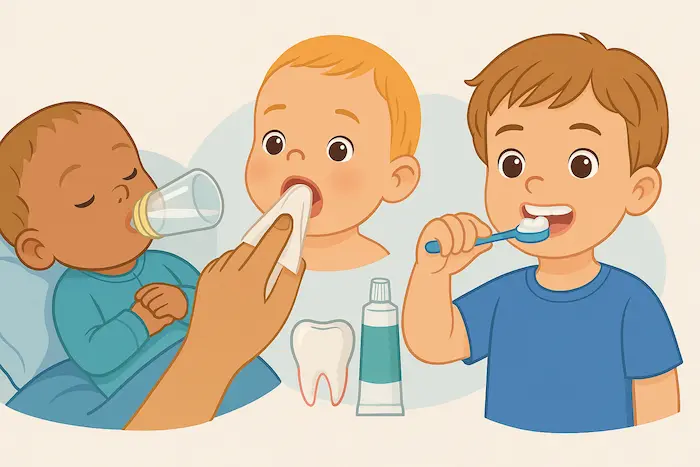
Dental care begins with the first tooth. The American Dental Association (ADA) recommends the first dental visit by the first birthday or within 6 months of the first tooth erupting.
- Brushing: Use a soft, infant-sized toothbrush and a tiny smear of fluoride toothpaste (no larger than a grain of rice). Brush gently twice a day.
- Avoid “Baby Bottle Tooth Decay”: Never put your baby to bed with a bottle of milk, formula, or juice. The sugars pool around new teeth, causing rapid decay.
- Fluoride: Discuss fluoride needs with your pediatrician. If your local water supply is not fluoridated, a supplement may be recommended after 6 months of age.
Chapter 6: Red Flags – When to Call the Pediatrician
Always consult your pediatrician if you are unsure. Specifically, call if:
- Your baby has a fever of 100.4°F (38°C) or higher.
- Symptoms are severe (inconsolable crying for hours) and not relieved by gentle methods.
- You see signs of dehydration (fewer than 4 wet diapers in 24 hours, sunken soft spot).
- There is significant gum bleeding, pus, or severe swelling (beyond the immediate tooth area).
- Your baby has diarrhea, vomiting, or a widespread rash.
- No teeth have erupted by 18 months.
Conclusion: Navigating Discomfort with Knowledge and Calm
The teething phase is a temporary but real challenge in your baby’s development. By focusing on the evidence—understanding the real, localized symptoms and employing safe, effective soothing techniques—you can navigate this period with confidence and provide genuine comfort.
Remember, you are not managing a vague illness called “teething”; you are addressing specific gum discomfort caused by erupting teeth. Trust your instincts. If your baby seems truly sick, they likely are. Your pediatrician is your partner in making that distinction.
Soon, the fussiness will subside, and you’ll be rewarded with a brand-new, brilliant smile—a milestone made all the sweeter knowing you provided comfort through the process with wisdom and care.
Sources and Further Reading:
- American Academy of Pediatrics. (2023). Teething: 4 to 7 Months.
- Mayo Clinic. (2022). Teething: Tips for soothing sore gums.
- American Dental Association. (2023). Baby’s First Tooth.
- U.S. Food and Drug Administration. (2023). FDA Drug Safety Communication: Risk of serious and potentially fatal blood disorder with use of over-the-counter benzocaine products for teething and mouth pain.
- Pediatrics Journal. (2016). A Longitudinal Study of Teething in Infants.