Just when you thought you’d turned a corner—when the first-trimester fog lifts and a welcome surge of energy returns—a new challenge quietly emerges as you slip into bed. The sleep that once came easily now feels like a complex negotiation with your own body. You’re too big for your old positions, but not big enough to feel settled. Your hips ache, your mind races, and the simple act of finding comfort becomes a nightly puzzle. It’s a cruel irony, and you are not imagining it: second trimester sleep can be uniquely frustrating.
This isn’t just about being uncomfortable. It’s about the profound physical and emotional work of growing a human, which doesn’t pause when the sun goes down. The good news? You are not powerless. While a perfect, uninterrupted eight hours might be a pregnancy myth, better, safer, more restful sleep is an achievable goal. This guide is your toolkit. We’ll move beyond the overly simplistic “sleep on your left side” advice and dive into the why and the how. We’ll build pillow fortresses, troubleshoot midnight wake-ups, and give you practical strategies to reclaim a sense of peace and rest. Consider this your manual for surviving—and even thriving—through the nights of the second trimester.
Why Sleep Gets So Tricky: The Science of Your Second Trimester Body
To solve a problem, you must first understand its roots. Your sleep isn’t being hijacked by bad luck; it’s being reshaped by powerful, predictable physiological changes.
- The Growing Center of Gravity: Your expanding uterus shifts your balance, making your usual sleep postures feel unstable and awkward.
- The Vena Cava Consideration: This major vein runs along the right side of your spine, returning blood from your lower body to your heart. After about 16-20 weeks, the weight of your uterus in a back-lying position can compress this vessel, potentially reducing blood flow to your heart, your brain, and, crucially, the placenta.
- Ligament Laxity & Hip Pain: The hormone relaxin, which loosens ligaments to prepare your pelvis for birth, doesn’t discriminate. It also relaxes the ligaments around your hips and pubic bone. When you side-sleep, your top hip tends to drop forward, straining these already-loose ligaments and causing that deep, aching pain.
- The Digestive Squeeze: Your stomach and intestines are getting crowded. This, combined with a relaxed esophageal sphincter (thanks, progesterone!), makes acid reflux (heartburn) a common bedtime visitor.
- The Anxious Mind: With the anatomy scan and growing awareness of the baby, it’s natural for your brain to choose the quiet of night to process excitement, worries, and endless to-do lists.
All these factors converge at bedtime, turning your mattress into a ground zero for discomfort. Understanding this is the first step toward targeted solutions.
The Golden Rule: Side is Best (And Why Left is Suggested)
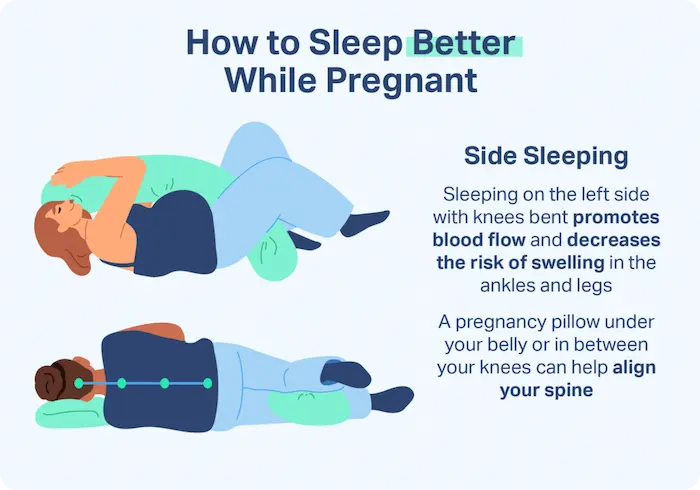
Let’s clarify the most common piece of prenatal sleep advice. Research and clinical guidance strongly recommend side sleeping in the second trimester, particularly after 16-20 weeks, to avoid the potential vena cava compression associated with back-sleeping.
Why the left side gets the top billing:
- Optimal Blood Flow: It may help maximize circulation to the placenta, uterus, and kidneys by taking pressure off the liver (which is on the right side).
- Digestive Aid: It can help keep your stomach below your esophagus, potentially reducing nighttime heartburn.
The important nuance: Sleeping on your right side during the second trimester is also perfectly safe. If your left hip is screaming, switching to the right is absolutely fine. The goal is to be on your side, not to martyr yourself on the left all night. The priority is avoiding prolonged periods flat on your back.
Building Your Sleep Sanctuary: The Art of Pillow Fortification
This is where theory meets practice. Pillows are not just for your head; they are the architectural supports for your new sleeping body. Think of your mattress as a hammock; you need to fill the gaps and create a level, supported platform for your spine and belly.
The Full-Body Pregnancy Pillow System
For some, a dedicated U or C-shaped pregnancy pillow is a game-changer—the best pregnancy pillow for side sleeping second trimester is the one you’ll actually use.
- How it works: It’s an all-in-one support system. You hug one side between your knees and ankles (keeping hips aligned), and the same pillow runs up your back to prevent you from rolling backward. The curve can also tuck under your belly for support.
- Best for: People who want a simple, contained solution and don’t mind a large pillow in the bed.
The Modular “Pillow Nest” Approach
If giant pillows feel suffocating, you can build a custom nest with 4-5 standard pillows. This is the ultimate guide on how to sleep on your side during pregnancy second trimester with what you have.
- The Knee Pillow (Non-Negotiable): Use a firm pillow or a dedicated body pillow. Place it between your knees, ankles, and thighs. It must be long enough so your ankles aren’t crossing. This is the #1 key to relieving hip pain while sleeping pregnant by keeping your spine, hips, and pelvis in a neutral line.
- The Back Support Pillow: Tuck a firm pillow snugly against your back. This creates a “wall” that makes rolling onto your back physically difficult and provides a sense of security.
- The Belly Support Pillow (Optional but helpful): As your bump grows, a small, flat pillow or folded blanket wedged under your belly can relieve pulling on the round ligaments.
- The Head/Upper Body Pillow: Use your normal pillow. If you have heartburn, consider a wedge pillow or stacking pillows to elevate your head and torso—a key pregnancy sleep position for heartburn relief.

Key Pillow Placement for Target Relief
- For Hip Pain: Ensure your knee pillow is thick enough that your top hip doesn’t slump forward. Your spine should feel like a straight, relaxed line when viewed from above.
- For Heartburn: Elevation is key. A foam wedge pillow is ideal, as stacked pillows tend to slip apart.
- For Round Ligament Pain: That small pillow under the curve of your belly takes the weight off the supportive ligaments on the sides of your uterus.
The “Oh No, I Woke Up on My Back!” Guide
It happens to everyone. You drift off perfectly supported, only to wake up flat on your back, maybe feeling a bit short of breath or with a racing heart. First, don’t panic. Brief periods on your back are not harmful. Your body is excellent at giving you signals (like dizziness or nausea) to move long before any risk to the baby.
The Safe Roll-Over Technique:
- Don’t sit straight up using your abs.
- Gently bend your knees, planting your feet flat on the mattress.
- Use your arms to gently push/pull yourself onto your side, leading with your shoulders and letting your hips follow.
- Re-establish your pillow nest. Consider placing a pillow behind you so rolling back is harder.
This is your practical answer to waking up on back while pregnant what to do—a calm, gentle correction, not a moment for fear.
Beyond Position: Holistic Strategies for Better Sleep
Your sleep setup is crucial, but it’s only part of the picture. Create a holistic ritual for better rest.
- Cool, Dark, & Quiet: Lower the thermostat. Use blackout curtains and a white noise machine or fan to drown out distractions.
- The Wind-Down Routine: The last hour before bed is for dim lights, no screens, and calming activities like reading (not on a tablet), gentle stretching, or a warm bath.
- Manage Nighttime Leg Cramps: Gentle calf stretches before bed and staying hydrated can help. If a cramp strikes, flex your foot (toes toward your shin) and gently massage the muscle.
- Mindful Snacking: A small, protein-rich snack (like yogurt or a handful of nuts) before bed can stabilize blood sugar and prevent waking from hunger. Avoid large, spicy, or acidic meals close to bedtime.
- Consult Your Provider: If anxiety or discomfort is severely impacting your sleep, talk to your doctor or midwife. They may approve safe options like supplemental magnesium (a muscle relaxant) or Unisom (doxylamine), an antihistamine that is pregnancy-safe and often used for sleep and nausea.
FAQ: Your Second Trimester Sleep Dilemmas, Solved
Q: Is it really that bad to sleep on my back?
A: After 16-20 weeks, prolonged back-sleeping is not recommended due to the risk of vena cava compression, which can reduce circulation. The key word is prolonged. Waking up on your back occasionally is normal and low-risk. The guidance is to fall asleep on your side.
Q: I’m a stomach sleeper. How can I possibly adjust?
A: This is a tough transition. Start by using a donut-style pillow or fashioning a nest with a regular pillow that has a hole in the center for your belly. This allows you to lie somewhat prone without direct pressure. Most stomach sleepers ultimately find side-sleeping with a full-body pillow to hug more feasible.
Q: What if I keep waking up on my back?
A: This is a sign your back-support pillow isn’t firm or snug enough. Try a denser pillow or a rolled-up towel. You can also try wearing a tucked-in t-shirt with a tennis ball sewn into the back—it provides an uncomfortable cue to roll over.
Q: Why do my hips hurt so much when I side-sleep?
A: This is almost certainly due to your top hip rotating forward and down, straining relaxed ligaments. The fix is a supportive, full-length pillow between your knees and ankles to keep your hips stacked. A firmer mattress may also help.
Q: Can I use a regular body pillow or do I need a special one?
A: A regular body pillow is a great start! The specialty pregnancy pillows often offer more versatile shaping and back support, but a standard long pillow placed between your knees and hugged to your chest can be very effective.
Conclusion: Progress, Not Perfection
Navigating sleeping positions in the second trimester is an exercise in self-compassion and creative problem-solving. You will not craft the perfect pillow nest on the first try. You will wake up in awkward positions. Some nights will just be restless.
The goal is not a flawless sleep score, but incremental improvement. It’s about creating a supported, safe environment where rest has a fighting chance. Every time you tuck that pillow between your knees, you are practicing a profound act of prenatal care—for your body and for your growing baby. You are building a foundation of rest that will sustain you through the rest of this journey and beyond. So, experiment. Adjust. Forgive the rough nights. And remember, in seeking better sleep, you are already doing the hard, loving work of motherhood.