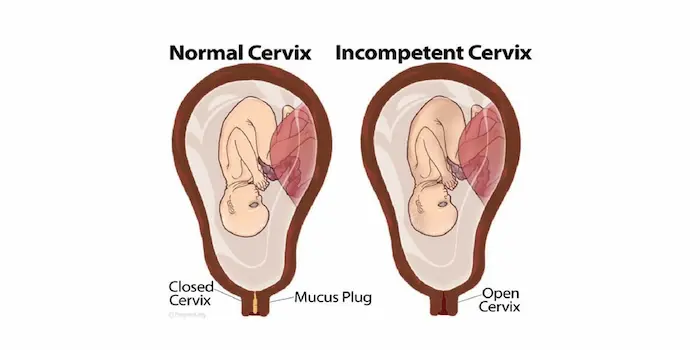
Hearing the words “incompetent cervix” or “cervical insufficiency” during pregnancy can land hard — the language itself sounds harsh. So let’s start here: this diagnosis is not a reflection of you as a mother or a person. It’s a specific, physical condition of the cervix, the structure at the bottom of the uterus that normally stays firm, long, and closed to protect a growing baby until labor. With cervical insufficiency, the cervix softens, shortens, and opens too early — painlessly, often in the second trimester — raising the risk of premature birth or pregnancy loss. The reassuring part: modern obstetrics has effective ways to intervene, and many people go on to carry to term.
What Cervical Insufficiency Is
Many clinicians now prefer “cervical insufficiency” over “incompetent cervix,” since it describes a mechanical function without the negative overtone. Picture the uterus as an upside-down pear; the cervix is the narrow stem at the bottom. In a healthy pregnancy that stem stays a strong, closed, muscular barrier several centimeters long. In cervical insufficiency, that tissue is weaker or more elastic than it should be and can’t hold against the growing pregnancy’s pressure. As the uterus expands, the cervix — usually without any pain or contractions — starts to efface (thin and shorten) and dilate (open). This silent opening can let the amniotic sac bulge into the cervical canal and rupture, leading to preterm delivery, often in the second trimester. Understanding this painless, progressive mechanism is exactly why specific monitoring and treatments matter.
Causes and Risk Factors
Unlike some complications, cervical insufficiency often has identifiable causes or strong associated risks:
- Congenital factors — some people are simply born with a cervix that has less collagen or a weaker muscular makeup. This can include exposure to DES (a medication given to some women decades ago) before birth.
- Prior surgery or trauma to the cervix — a common cause. This includes LLETZ/LEEP or cone biopsy (removing tissue to treat cervical pre-cancer), multiple D&C procedures involving mechanical dilation, and prior births with significant cervical tearing.
- Extra pressure on the cervix — carrying twins or more, or excess amniotic fluid (polyhydramnios).
- A differently shaped uterus, which can distribute pressure unevenly.
The single most telling clue is a history of a second-trimester loss or very premature birth that began with painless dilation and rupture of membranes — often described as a loss that “came out of nowhere,” with none of the usual signs of labor.
The Often-Silent Symptoms
The hardest part is that the changes are frequently silent, with no classic labor signs. But some people notice subtle cues worth reporting right away:
- A sensation of pelvic pressure or fullness — feeling the baby “pushing down” very early.
- A new or increased low, dull backache.
- Mild, intermittent abdominal cramping (easy to dismiss as gas or round ligament pain).
- A change in vaginal discharge — more watery or mucousy, sometimes tinged light pink or brown — or a noticeable increase in it.
The critical point: if you notice any of these in your second trimester — especially with a known risk factor — contact your provider without delay. Don’t wait for your next appointment. Early detection is the single biggest factor in a successful intervention.
How It’s Diagnosed
There’s no single blood test — diagnosis combines your history with precise measurement. Your provider takes a detailed history focused on past pregnancies and any cervical procedures, and the cornerstone is a transvaginal ultrasound, which gives a clear image of the cervix. Two things matter most: cervical length — a mid-pregnancy cervix is normally longer than about 2.5 cm, and shortening below that before 24 weeks is a major red flag — and funneling, where the internal opening starts to open into a “V” shape while the outer part stays closed, visually showing the cervix giving way. A pelvic exam can add information, but ultrasound is far more objective. For someone with risk factors, providers often measure cervical length repeatedly (serially) by transvaginal ultrasound starting around 16 to 20 weeks.
Treatment and Intervention
Cervical cerclage (a stitch)
The main surgical treatment is a cerclage — a strong stitch placed around the cervix to reinforce it, like a purse-string holding it closed. Types include the McDonald (the most common; a simpler stitch usually placed vaginally as an outpatient), the Shirodkar (a slightly deeper stitch for specific cases), and the transabdominal cerclage (TAC) — a permanent stitch placed via abdominal surgery, usually before pregnancy, reserved for severe cases or when a vaginal cerclage has failed.
Timing depends on the situation: a history-indicated cerclage is placed around 12 to 14 weeks for someone with a clear prior history; an ultrasound-indicated one when serial scans show the cervix shortening significantly (typically below 2.5 cm) before 24 weeks; and a rescue (emergency) cerclage is attempted when the cervix has already begun to open and membranes are visible — higher-risk, but it can sometimes save a pregnancy. A cerclage is usually removed around 36 to 37 weeks so a vaginal birth can follow; if labor starts sooner, the stitch is cut right away.
Vaginal progesterone
For someone found to have a short cervix on ultrasound but no prior history, vaginal progesterone is a highly effective, non-surgical first-line option that significantly lowers the rate of preterm birth in that group. It’s sometimes used alongside a cerclage in higher-risk cases.
Activity modification and pelvic rest
Strict, prolonged bed rest is no longer routinely recommended (it carries its own risks, like blood clots), but modified activity is usually advised: pelvic rest (no intercourse, orgasm, or anything placed in the vagina) and avoiding heavy lifting, prolonged standing, and intense exercise. Listen to your body and rest when you feel increased pressure. Follow the specific plan your provider gives you.
Coping With the Diagnosis
The emotional weight is real — this can turn a joyful pregnancy into a time of intense vigilance. Lean on your partner, trusted friends, a therapist, or support groups for high-risk pregnancy or pregnancy loss; you’re not alone. Ask your provider specific questions (“What exactly are my restrictions?” “Which symptoms mean call you, and which mean go to the hospital?”) — clarity eases anxiety. Expect more frequent appointments with a cerclage, plan for help at home, and pack a hospital bag earlier than usual. And celebrate the milestones: each week gained is a genuine victory, and reaching 24 weeks (viability), then 28, then 32, truly matters. This is also a condition worth planning around ahead of a future pregnancy — our preconception planning guide and high-risk pregnancy guide can help you prepare.
Frequently Asked Questions
Not entirely, but you can manage the risk. If you need a cervical procedure like a LEEP, ask your gynecologist about tissue-sparing techniques. Before a future pregnancy, a preconception consult with a maternal-fetal medicine (MFM) specialist can set up a monitoring and treatment plan in advance.
Not necessarily. If a vaginal cerclage is placed and later removed successfully, a vaginal birth is often possible and encouraged. A transabdominal cerclage (TAC), however, typically requires a C-section for delivery.
They’re low but include infection, rupture of membranes, bleeding, or triggering contractions. When a cerclage is genuinely indicated, the risk of not intervening is generally considered far greater than the risk of the procedure.
Quite likely. Because the underlying cervical condition remains, the standard of care is usually to offer a preventative cerclage in later pregnancies once you’ve been diagnosed.
No. Cervical insufficiency is a structural issue, so no amount of diet, exercise, or rest can change the physical integrity of the tissue. Avoiding heavy lifting helps, but medical intervention like a cerclage or progesterone is what’s needed.
Cervical insufficiency is painless cervical opening without contractions, usually in the second trimester. Preterm labor involves contractions before 37 weeks. They’re different mechanisms, which is why they’re diagnosed and treated differently — though both can lead to premature birth.
The Bottom Line
A cervical insufficiency diagnosis is not an endpoint — it’s the start of a specific, proactive care plan. With today’s tools, transvaginal ultrasound to catch it early and proven treatments like cerclage and progesterone, the outlook for carrying a healthy baby to term is excellent. Your pregnancy may involve more scans, a stitch, and modified activity, but the destination is the same: holding your baby. Let the plan build your confidence, one milestone at a time.
This article is for general information and is not a substitute for personalized medical advice from your healthcare provider.
References
- Mayo Clinic. Incompetent Cervix.
- American College of Obstetricians and Gynecologists. Preterm Labor and Birth.
- MedlinePlus (U.S. National Library of Medicine). Pregnancy Complications.