Pregnancy transforms your body in beautiful, profound ways, but it can also leave you yearning for small acts of normalcy and self-care. For many, coloring their hair is a routine part of personal maintenance and identity—a way to cover grays, boost confidence, or simply feel like “yourself.” Yet, the moment you see that positive test, a familiar question arises: Is it safe to dye your hair during pregnancy?
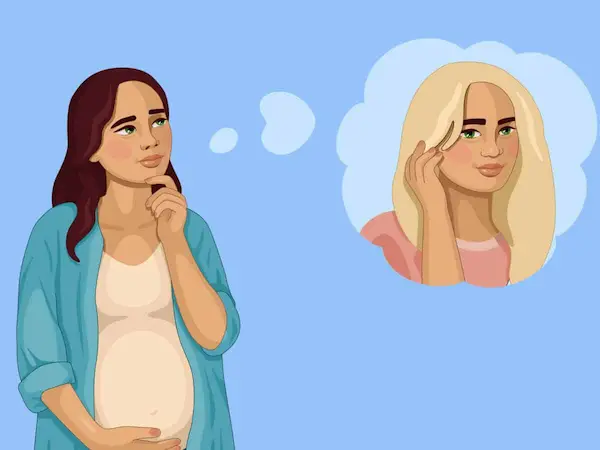
The internet is filled with conflicting advice, ranging from dire warnings to casual reassurances, leaving expectant parents feeling confused and often needlessly anxious. This guide aims to cut through the noise with a balanced, evidence-based perspective. We’ll examine what the science actually says about chemical exposure, discuss practical safety measures, and explore alternative ways to manage your hair color throughout each trimester. Our goal is to provide you with clear information, not to instill fear, so you can make a personal choice that aligns with your comfort level during this special time.
Part 1: The Science Behind the Concern
To understand the debate, we need to look at what’s in hair dye and how exposure might theoretically occur.
What’s in Hair Dye?
Most permanent and semi-permanent hair colors contain a mix of chemicals. The ones most often discussed are:
- Ammonia: Used to open the hair cuticle so color can penetrate. It’s a strong irritant with a potent smell.
- Para-phenylenediamine (PPD): A common ingredient in darker dyes that can cause allergic reactions.
- Resorcinol, Hydrogen Peroxide, and other aromatic amines.
The Theoretical Risk Pathway
The primary concern isn’t that these chemicals are directly toxic in the small amounts used in hair dye. Instead, the worry hinges on two questions:
- Absorption: Can these chemicals be absorbed through the scalp in significant amounts?
- Transmission: If absorbed, can they cross the placental barrier and reach the developing fetus?
What Major Health Organizations Say
Here’s where we find reassuring consensus from expert bodies:
- The American College of Obstetricians and Gynecologists (ACOG): States that hair dye is “likely safe” during pregnancy. They note that very little dye chemical is absorbed through the skin, making significant exposure to the fetus unlikely.
- The UK’s National Health Service (NHS): Concludes that the chemicals in hair dye are not highly toxic and that available evidence indicates it’s safe to use during pregnancy.
- General Scientific Consensus: Most research, including several large epidemiological studies, has not found a direct link between personal use of hair dye during pregnancy and birth defects, pregnancy loss, or developmental issues in children.
The Bottom Line: While no study can ever prove something is 100% safe with zero risk, the current body of evidence is overwhelmingly reassuring for those who choose to color their hair.
Part 2: A Trimester-by-Trimester Approach to Coloring
While the science is reassuring, many choose to adopt a more cautious approach based on the principle of minimizing unnecessary chemical exposure during critical windows of development.
First Trimester (Weeks 1-13): The Period of Organogenesis
This is when the baby’s major organs and systems are forming. It is often considered the most sensitive period.
- A Common Recommendation: Many obstetricians and stylists advise waiting until after the first trimester to dye your hair, if possible. This is a precautionary measure, not due to evidence of harm.
- If You Choose to Color: Opt for the safest methods possible (see Part 3).
Second & Third Trimesters (Weeks 14-40)
By this time, the major structural development is complete, and the fetus is growing and maturing.
- The General View: This is widely considered a safer time for hair coloring. The risk of any potential effect is considered extremely low.
- Practical Considerations: Your body is changing! Hormones can unexpectedly alter how dye reacts with your hair. Pregnancy can make your hair more porous, causing color to take differently or fade faster. A skilled stylist can perform a strand test first.
[Image: https://images.unsplash.com/photo-1560066984-138dadb4c035?ixlib=rb-4.0.3 | Caption: A pregnant woman in a salon chair, smiling as a stylist examines her hair, representing a consultation before a coloring service.]
Part 3: The Safer Strategy Toolkit: Minimizing Exposure
If you decide to color your hair, these strategies can help you minimize any potential exposure and make the experience more comfortable.
1. Choose Your Coloring Method Wisely
- Highlights, Balayage, or Foils: This is often touted as the safest hair coloring technique during pregnancy. Why? Because the dye is applied to strands of hair and wrapped in foil or a cap, with minimal-to-no contact with the scalp itself. This virtually eliminates skin absorption.
- Avoiding Scalp Contact: If doing all-over color, ask your stylist to apply the dye ½ inch away from the root initially, then work it through the ends, only applying to the roots for the last 10-15 minutes of processing. This reduces the time the chemicals are in direct contact with your skin.
- Temporary or Semi-Permanent Dyes: These coat the hair shaft and wash out over several shampoos. They typically contain fewer harsh chemicals (often no ammonia or peroxide) and are a gentler option.
2. Optimize the Environment
- Ventilation is Key: Ensure you are in a well-ventilated salon. Good air circulation helps dissipate fumes. If you’re coloring at home, open windows and use fans.
- Wear Gloves: Always.
- Follow Timing Precisely: Do not leave the dye on longer than instructed to “get more coverage.” Set a timer.
3. Consider Natural & Alternative Options
- Henna: Pure, natural henna (Lawsonia inermis) is a plant-based dye that conditions hair and provides rich red-brown tones. Crucially, you must ensure it is 100% pure henna with no added metallic salts or PPD. “Black henna” often contains unsafe additives.
- Vegetable-Based Dyes: Brands like Herbatint or Naturtint use more plant-derived pigments and avoid ammonia and resorcinol. They are milder but may not provide the same dramatic color shifts.
- Covering Grays with Lowlights: Using a darker shade woven through your hair can blend grays without requiring an all-over chemical process.
Part 4: Special Considerations and “What About…” Questions
What If I Color My Hair at Home?
The same safety principles apply. The advantage is you control the products and environment. The disadvantage is you may not have the skill to safely avoid scalp contact. If doing it yourself:
- Choose a well-ventilated bathroom with the exhaust fan on and a window open.
- Consider a semi-permanent, ammonia-free box dye.
- Perform a patch test 48 hours before, as pregnancy can make you more susceptible to new allergic reactions.
What About Bleaching or Lightening Hair?
Bleach contains stronger chemicals (typically high-volume peroxide). The same safety logic applies: scalp exposure is the main route of concern. Highlights/balayage are excellent alternatives. If doing an all-over bleach, the precautions around scalp contact and ventilation become even more important.
The Overlooked Factor: Salon Comfort
Pregnancy can make you more sensitive to smells. The strong odor of ammonia in a salon might trigger pregnancy nausea. Sitting for a long time in a salon chair can also become uncomfortable as your pregnancy progresses. Communicate with your stylist about taking breaks, needing water, or even scheduling shorter appointments.
[Image: https://images.pexels.com/photos/3993467/pexels-photo-3993467.jpeg | Caption: A woman smiles as she runs her hands through her freshly highlighted hair at home, showcasing a successful, cautious DIY approach.]
Part 5: The Most Important Factor: Your Peace of Mind
All the scientific reassurance in the world may not ease a personal feeling of unease. And that’s perfectly okay.
- Listen to Your Instincts: If the thought of using chemical dye causes you significant anxiety, it’s completely valid to skip it. Your mental well-being is a critical part of a healthy pregnancy.
- Focus on Alternatives: Embrace this as a time to experiment with different styles. Try a new haircut, use hair accessories, or explore the world of temporary root cover-up sprays and powders, which are touch-up products that wash out immediately.
- Have the Conversation: Discuss your plans with your obstetrician or midwife at your next appointment. They know your health history and can provide personalized advice.
Conclusion: A Personal Choice, Informed and Empowered
So, can you dye your hair while pregnant? The evidence-based answer is: Yes, it is generally considered safe, particularly after the first trimester and with sensible precautions.
However, the more nuanced and empowering answer is: You have a spectrum of safe(r) choices.
This decision sits at the intersection of science, personal comfort, and self-expression. Whether you choose to get subtle highlights in a breezy salon, use a pure henna treatment at home, or decide to let your natural color shine through for a few months, the “right” choice is the one that makes you feel confident, comfortable, and like the vibrant individual you are—who also happens to be growing a human.
Pregnancy is a season. Your hair, your style, and your ability to care for yourself in ways that feel good are all part of the journey. Make your choice from a place of information, not fear, and embrace this chapter with whatever look makes you feel most like yourself.
Frequently Asked Questions (FAQ)
Q: I dyed my hair before I knew I was pregnant. Should I be worried?
A: No, there is no need to panic. The exposure from a single coloring session is minimal. Simply inform your healthcare provider at your first appointment for your own peace of mind, but understand that this is a very common occurrence with no evidence of causing harm.
Q: Is it safer to use salon-grade or box dye during pregnancy?
A: There’s no clear winner from a safety perspective, as both contain similar chemicals. A professional stylist offers major advantages: expertise in applying color with minimal scalp contact (like with foils), working in a ventilated space, and using professional-grade products they know well. A skilled stylist is your best asset.
Q: What about getting a perm or keratin treatment while pregnant?
A: These treatments involve different, often stronger, chemicals that are absorbed during the process. The same precautionary principle applies, but even more strongly. Most experts recommend postponing chemical straightening or perming treatments until after pregnancy due to the lack of specific safety data and the higher concentration of chemicals used.
Q: Can the smell of hair dye harm the baby?
A: The strong smell itself is not toxic. It’s an irritant that can trigger headaches or nausea for you. The concern is inhaling the chemical fumes in a poorly ventilated space over a prolonged period. This is why excellent ventilation is the non-negotiable rule, protecting both your comfort and minimizing any inhalation exposure.
Q: Are there any specific hair dye ingredients I should absolutely avoid?
A: While no specific ingredient in hair dye has been conclusively proven dangerous in typical use, a general precaution is to avoid formulas containing lead acetate (found in some gradual men’s dyes like “Grecian Formula”) or to be very cautious with dyes containing high concentrations of PPD if you have sensitive skin, as pregnancy can increase allergy risk.
Q: Will pregnancy affect how the hair dye turns out?
A: Yes, it’s very possible. Hormonal changes can alter your hair’s texture, oiliness, and porosity. Color may take differently, fade faster, or not “grab” as expected. This is why a strand test is highly recommended before any full application. Communicate your pregnancy to your stylist so they can adjust their technique.