Seeing blood when you’re pregnant can send your heart straight into your throat. Before your mind races to the worst, here’s the single most important thing to hold onto: bleeding in early pregnancy is a common signal, not an automatic verdict. Up to a third of people have some first-trimester bleeding, and about half of them go on to have perfectly healthy pregnancies. This guide walks through what’s usually harmless, what needs urgent care, and exactly what to do — so you can move from panic to a clear plan.

Because 15–30% of confirmed pregnancies involve some bleeding in the first 13 weeks, your provider’s first response usually isn’t alarm — it’s a set of clarifying questions. Any bleeding is worth a call, but it’s a well-documented part of many pregnancies, not a rare or fringe event. That said, some patterns do need urgent attention, so it helps to know the difference.
The Usually-Harmless Causes
Much of the time, early bleeding comes from the normal changes your body is going through:
- Implantation bleeding. When the fertilized egg burrows into the uterine lining, about 6–12 days after conception, it can cause a tiny release of blood — usually very light (often “only when I wipe”), pink or brown, lasting a few hours to a couple of days. It often coincides with when you’d expect a period, which causes the classic confusion.
- Cervical changes. In pregnancy the cervix softens and fills with blood vessels, so a pelvic exam, sex, or even straining can cause light spotting that resolves quickly. A cervical polyp can bleed easily too.
- Subchorionic hematoma (SCH). A small pool of blood between the uterine wall and the outer membrane — like a bruise at the pregnancy site. Bleeding can be brown or bright red and sometimes recurs over weeks; it’s diagnosed on ultrasound and many resolve on their own.
- Hormonal “breakthrough” bleeding, before the placenta fully takes over hormone production, can cause a light, period-like bleed.
Implantation bleeding vs. a period
| Feature | Implantation bleeding | Menstrual period |
|---|---|---|
| Timing | 6–12 days after conception, often a few days before your expected period | On or after your expected date, on your regular cycle |
| Flow | Very light spotting that never builds | Starts light, builds to a steady flow |
| Duration | Short — 1–3 days at most | About 3–7 days |
| Color | Light pink, brown, or rust; rarely bright red | Light, then bright red, may end brown |
| Cramping | Mild if any | Often moderate to intense, rhythmic |
| Clotting | None | Common, especially with heavier flow |
This is a guide, not a guarantee — if there’s any doubt, a test and a call to your provider are the only definitive answers.
The Causes That Need Prompt Care
- Ectopic pregnancy — a medical emergency. This is a pregnancy that implants outside the uterus, usually in a fallopian tube; it can’t develop normally and is life-threatening if the tube ruptures. The classic signs are pain (often sharp or one-sided), bleeding (often dark or watery), and a positive test — and pain at the shoulder tip can signal internal bleeding. Go to the emergency room right away. Our guide to ectopic pregnancy has more.
- Miscarriage. A common early complication, usually due to chromosomal issues incompatible with development. Signs include bleeding that starts light and grows heavier (often bright red with clots) and cramping that’s more intense than a period. A “threatened miscarriage” means there’s bleeding but the cervix is closed and a heartbeat may still be present — not all bleeding leads to loss.
- Molar pregnancy (rare). A non-viable pregnancy from a genetic error at fertilization, causing abnormal placental tissue. It can bring dark or bright-red bleeding, severe nausea, and sometimes grape-like cysts, and it needs medical treatment.
Reading Your Own Symptoms
When you call, your provider will ask about four things — so noting them makes you a great observer:
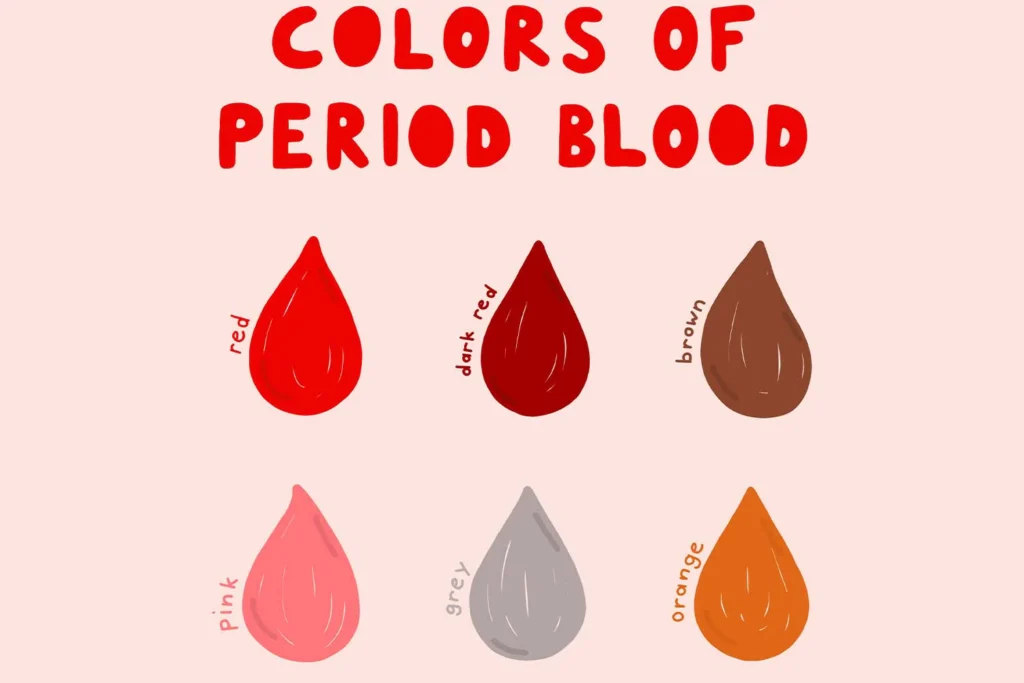
- Color: brown/pink is usually older blood and often less urgent; bright red is fresh, active bleeding; dark red or watery, with pain, can point to ectopic.
- Flow: spotting (only when wiping), light (needs a liner), or heavy — soaking a pad in an hour, especially with clots, means seek care immediately.
- Pain: mild cramping is common and often benign; severe rhythmic cramps or sharp one-sided pain are red flags.
- Timing: after sex is likely cervical; around a missed period could be implantation; heavy and increasing needs urgent evaluation.
What to Do Right Now
- Use a pad, not a tampon. It lets you gauge flow and color and keeps things clear for any exam.
- Observe and note the start time, color, flow, and any pain.
- Call, don’t guess. Contact your OB or midwife’s office (or their after-hours line). If you have severe pain, dizziness, shoulder pain, or heavy bleeding, go straight to the ER.
- Have your details ready: how many weeks along you are, the color and flow, any pain/fever/dizziness, and relevant history (like a prior ectopic).
- Rest and hydrate, and avoid strenuous activity and sex until you’ve spoken with your provider.
At the Doctor’s Office
Your provider is trying to answer two questions: where is the pregnancy? and is it developing? They may use a transvaginal ultrasound (the gold standard — it looks for the gestational sac, yolk sac, and, from around 6 weeks, a heartbeat, and can confirm the pregnancy is in the uterus), a quantitative hCG blood test (where the trend matters more than one number — hCG should roughly double every 48–72 hours in early pregnancy), and a pelvic exam to see whether the cervix is open or closed. Knowing your first prenatal visit covered your history helps them move quickly.
Caring for Your Emotional Health
The wait between seeing blood and getting answers is its own kind of hard. Be gentle with yourself: the anxiety is normal and rational. Once you have the facts and your provider’s guidance, step away from the worst-case forums. When panic rises, a grounding technique can bring you back to the present — try 5-4-3-2-1: name five things you see, four you feel, three you hear, two you smell, and one you taste. Lean on your partner and tell them what you need, whether that’s distraction or a quiet hand to hold; they’re likely scared too. Our guides to first-trimester anxiety and mindfulness in pregnancy offer more support, and if you’re newly pregnant, our first-trimester survival guide covers the wider picture.
Frequently Asked Questions
Yes, it can. Many people who have benign bleeding — from a subchorionic hematoma or cervical changes, for instance — go on to have completely healthy pregnancies. Bleeding is a symptom that needs investigation, not a diagnosis in itself.
Typically no more than 1–3 days, and it’s very light and self-limiting. If bleeding continues or gets heavier, it’s probably not implantation bleeding and is worth checking with your provider.
For truly light spotting with no pain, your first call is usually to your OB/GYN’s on-call service for guidance. But if you have severe pain, dizziness, shoulder pain, or heavy bleeding, go to the ER immediately.
Usually a transvaginal ultrasound to see where the pregnancy is and whether it’s developing, plus serial quantitative hCG blood tests to track the hormone trend. A pelvic exam checks whether the cervix is open or closed.
Not necessarily — it’s a good sign, but still let your provider know, since they may want an ultrasound to confirm. And ongoing bleeding doesn’t always mean the worst; some subchorionic hematomas bleed for weeks alongside a healthy, growing pregnancy.
Implantation bleeding is very light, pink or brown, lasts 1–3 days, and often comes a few days before your expected period. A period builds heavier, turns bright red, lasts about 3–7 days, and usually comes with cramping and clots. When unsure, take a pregnancy test and call your provider.
The Bottom Line
Bleeding in pregnancy is frightening, but understanding takes some of its power away. You know the questions to ask, the details to observe, and the line between watchful waiting and urgent action. Keep one rule in mind: when in doubt, check it out. You’re never bothering your provider with this — helping you interpret your body’s signals is exactly their job, and making that call is an act of care for yourself and your pregnancy.
This article is for general information and is not a substitute for personalized medical advice from your healthcare provider.
References
- American College of Obstetricians and Gynecologists. Bleeding During Pregnancy.
- Mayo Clinic. Bleeding During Pregnancy.
- NHS. Vaginal Bleeding in Pregnancy.