Beyond Purées: Redefining Your Baby’s First Bites
Imagine a mealtime where your baby sits with you at the table, exploring a soft spear of roasted sweet potato with the same curiosity they explore a new toy. There’s no airplane spoon, no puree-strained carrots, and no power struggles. Instead, there’s a sense of shared discovery, messy hands, and the profound joy of watching your child lead their own culinary journey from day one. This is the heart of Baby Led Weaning (BLW).

For many parents, the transition to solids feels daunting, anchored by fears of choking and questions of “is my baby getting enough?” Baby Led Weaning flips the script. It’s an approach that skips traditional purées and instead offers infants safe, graspable pieces of whole foods from the very beginning, around six months of age. It’s not about what they eat in terms of volume at first, but how they learn to eat. The goal is to foster a positive relationship with food, develop fine motor skills, and allow your baby to self-regulate based on their own hunger and fullness cues.
This guide is your comprehensive roadmap to the first—and often most intimidating—phase of BLW. We won’t just give you a list; we’ll provide safe BLW recipes for 6 month old, demonstrate precisely how to serve avocado for baby led weaning, and tackle the top 100 BLW first foods in a practical, phase-by-phase manner. We’ll dismantle the fear by focusing on safety, offering realistic baby led weaning meal ideas for beginners, and empowering you with the knowledge to turn your highchair tray into a landscape of delicious, nutritious exploration.
The BLW Foundation: Readiness, Safety, and Mindset
Before we dive into the foods, let’s establish the non-negotiable pillars of successful Baby Led Weaning.
Is Your Baby Ready? The Key Signs (Around 6 Months)
BLW should not begin before 6 months. Your baby must show these signs of readiness:
- Can sit upright with minimal support and hold their head steady.
- Has lost the tongue-thrust reflex (automatically pushing solids out of their mouth).
- Shows a keen interest in food, watching you eat and reaching for your plate.
- Can bring objects to their mouth with coordination.
The Golden Safety Rules
Safety is paramount and understanding it removes fear.
- The Gagging vs. Choking Distinction: This is critical. Gagging is a normal, noisy, protective reflex that pushes food forward. Your baby may cough, sputter, and turn red. It’s a learning process—stay calm and let them work it out. Choking is silent. The airway is blocked. The baby cannot make sound, may have a panicked look, and skin may turn blue. You must be trained in infant CPR.
- Always Supervise: Never leave your baby alone with food.
- Proper Posture: Baby must be upright, strapped securely into a highchair, never reclining or in a car seat.
- Size & Texture is Everything: Food must be soft enough to mash between your thumb and forefinger. We shape it for their fist.
The Parent’s Mindset: Managing Expectations
- Food is for Fun Until Age One: Breast milk or formula remains the primary nutrition source. The first months of BLW are about exploration, skill-building, and taste exposure, not calorie consumption.
- Embrace the Mess: Mess is sensory learning. A large, easy-to-clean mat under the highchair is your best friend.
- Trust Your Baby: They will decide what, how much, and how fast to eat. Your job is to provide safe options, not to coax or force.
The First 100 Foods: A Phased Approach to Flavor and Texture
This list is not a checklist to race through. It’s a palette of possibilities. Introduce one new allergen food at a time (wait 2-3 days) but otherwise, feel free to mix familiar and new items. Always prepare foods to the safe textures and shapes described.
Phase 1: The Foundational Firsts (Months 6-7)
Goal: Introduce easy-to-grasp shapes, soft textures, and foundational flavors.
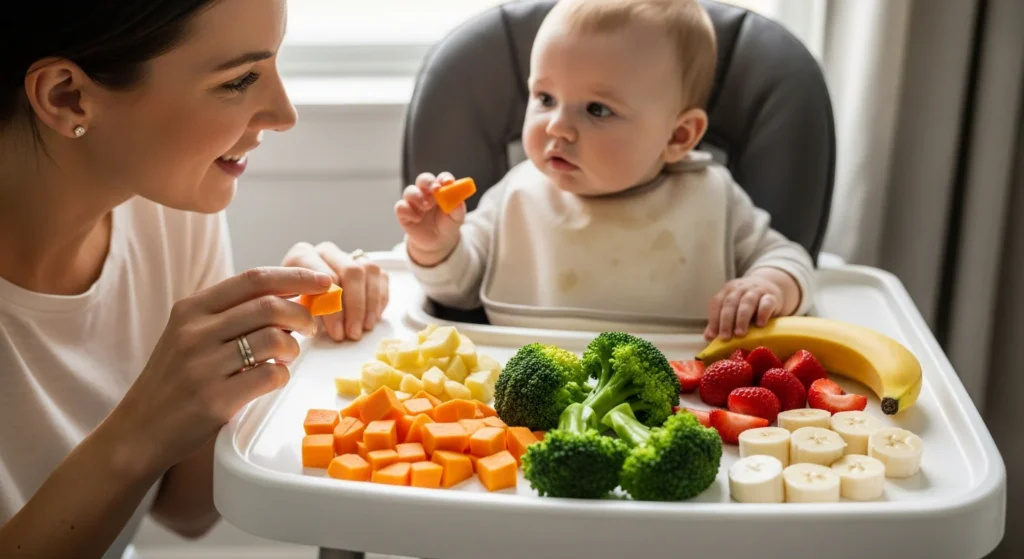
- Vegetables (soft-cooked): Sweet potato (spears), avocado (large spear with skin on for grip), broccoli (large floret with stem as a handle), carrot (long, mushy sticks), zucchini (large, soft wedges), butternut squash (large, skin-on wedges).
- Fruits (ripe & soft): Banana (half, with part of the peel on as a grip), mango (large, skin-on slice), very ripe pear (wedge), roasted apple (fat wedge, skin on).
- Proteins: Large, thick strip of well-cooked steak or lamb (for sucking/gnawing), flaked, low-mercury fish like salmon (in a sticky patty).
- Grains: Extra-thick oatmeal “fingers” (cooled and solidified), toast fingers (lightly toasted, with a thin spread of nut butter or mashed avocado).
- How to Serve Example – Avocado: How to serve avocado for baby led weaning is a classic first question. Take a quarter of a whole, just-ripe avocado. Leave a section of the skin on to act as a non-slip handle for your baby’s fist. This prevents the slippery flesh from shooting across the room and gives them something sturdy to hold.
Phase 2: Building Complexity (Months 7-9)
Goal: Introduce more combined textures, finger-sized shapes, and practice the pincer grasp.
- New Vegetables & Fruits: Cucumber (large, peeled spear), bell pepper (roasted until floppy, long strip), peach (ripe wedge), kiwi (spear), berries (smashed or large, squishable ones like blueberries slightly flattened to reduce choking risk).
- Proteins: Meatballs (made with ground meat, egg, and breadcrumbs), lentil patties, omelet strips (fully cooked), shredded chicken (moist, in clumps), firm tofu (cubed or strips).
- Grains & Dairy: Pancakes (baby-sized, made with mashed banana/egg), pasta (large shapes like rigatoni, well-cooked), full-fat yogurt (scooped onto the tray for hand-scooping or pre-loaded onto a spoon), soft cheese (like mozzarella, in thick sticks).
- Recipe Idea: Easy BLW meatballs are a fantastic all-in-one food. Mix 1 lb ground beef/turkey, 1 grated zucchini (squeezed dry), 1 egg, 2 tbsp breadcrumbs, and 1 tsp mild herbs. Roll into large, walnut-sized balls and bake at 375°F for 20 mins. They are soft, moist, and perfect for gripping.
Phase 3: Toward Family Meals (Months 9-12+)
Goal: Refine pincer grasp, handle more challenging textures, and eat modified versions of family meals.
- Everything from Previous Phases, but smaller: Now you can offer smaller, pea-sized pieces to encourage the pincer grasp.
- Advanced Textures: Flaky fish, tender shredded meats, lightly steamed green beans, quartered grapes (yes, always quartered), small pieces of soft-cooked apple (skinless).
- Family Food Adaptations: Deconstructed taco (seasoned ground meat, smashed beans, avocado chunks, tortilla strip). Pasta with a simple sauce. Shepherd’s pie scoops. The key is to modify for safety: low salt, soft textures, and appropriate sizes.
- Recipe Idea: Sweet potato and black bean fritters. Mash 1 cooked sweet potato, mix with 1/2 cup mashed black beans, 2 tbsp flour, and a pinch of cumin. Form into small patties and pan-fry until firm. They are packed with nutrition and easy to hold.
The Allergen Introduction Blueprint
BLW provides a perfect platform for early and frequent allergen introduction, which is now recommended to help prevent allergies.
- Top Allergens: Peanut, egg, cow’s milk, tree nuts, soy, wheat, sesame, fish, shellfish.
- The Method: Introduce one at a time, early in the day (not right before bed). Offer a small amount. Wait 2-3 days before introducing another new allergen. Once introduced, keep them in the regular diet (e.g., peanut butter thinned with yogurt on toast several times a week).
- Safe Serving Examples: Thinned, smooth peanut butter mixed into oatmeal or yogurt. Scrambled egg (fully cooked) in a strip. Full-fat yogurt. Hummus (contains sesame and chickpea) on a toast finger.
The “How to Serve” Safety Library for Tricky Foods
This is where parents search for specifics. Here’s your quick-reference guide:
- Banana: Offer a half with part of the peel on, or roll a peeled half in crushed baby cereal or hemp seeds to reduce slipperiness.
- Blueberries & Grapes: Always quarter them vertically to create disc-like pieces, never served whole.
- Apple: Never raw. Serve as a thin, soft-cooked wedge (skin on for grip) for young babies, or grated raw for older babies with more chewing skills.
- Meat: Start with a long, thick “finger” of slow-cooked, fall-apart tender meat (e.g., a beef or pot roast strip). As they master gumming, move to smaller, shredded pieces.
- Bread: Lightly toasted is safer than soft, gummy bread which can form a doughy ball. Cut into thick “soldier” strips.
- Cheese: Offer soft cheeses (mozzarella, cheddar) in thick, stick-shaped pieces, not small cubes which can be a choking hazard.
Building a BLW Meal: Practical Ideas for Exhausted Parents
Forget Pinterest perfection. A BLW meal is about balance across food groups.
- Sample Beginner Meal (6-7 months): 1-2 spears of roasted sweet potato + 1 large avocado spear with skin + 1 strip of omelet.
- Sample Mid-Stage Meal (8-9 months): 2-3 baby led weaning meatballs + 2-3 pieces of soft-cooked broccoli + a few thick yogurt dollops on the tray.
- Sample Advanced Meal (10-12 months): Shredded chicken mixed with soft rice, smashed peas, and mango slices.
The formula: Protein + Vegetable + Carbohydrate/Fat + Fruit. Offer water in an open cup (a shot glass-sized cup is perfect) with every meal.
Frequently Asked Questions (From the Weary & Worried)
Q: My baby isn’t actually eating much, just playing. Is this normal?
A: Absolutely. For the first few months, playing, squishing, and tasting is the work. They are learning texture, weight, and cause/effect. Nutrition still comes from milk.
Q: How do I prevent iron deficiency with BLW?
A: Prioritize iron-rich foods: red meat strips (for sucking), iron-fortified oatmeal, lentil patties, and dark leafy greens mixed into fritters. Cooking in a cast-iron skillet also adds trace iron.
Q: My baby gags a lot. Should I stop?
A: Gagging is a normal, safe part of the learning curve. It moves farther back in the mouth as they get more experienced. If you’re anxious, take an infant CPR course—the confidence it provides is invaluable.
Q: Can I mix BLW and purées?
A: Yes! This is often called a combined approach. You can offer pre-loaded spoons of yogurt or mashed foods alongside finger foods. Let your baby decide whether to grab the spoon or the finger food first.
Q: What are the best first foods for baby led weaning?
A: Avocado, banana, sweet potato, and soft-cooked broccoli or carrots are all fantastic, nutritious, and easy-to-prepare starters.
The Messy, Magnificent Journey
Embarking on Baby Led Weaning is a commitment to trust—trust in your baby’s innate abilities and trust in the process. There will be days when more food ends up on the floor, the dog, and in their hair than in their belly. There will also be days of stunning discovery, where they master a new grip or make a delighted face at an unexpected flavor.
You are not just feeding your child; you are inviting them to the family table as an active participant. You are laying the groundwork for a lifetime of healthy eating habits, body awareness, and joyful mealtimes. So, take a deep breath, put down the camera, and join them in the mess. The journey of a thousand bites begins with a single, squished, glorious piece of avocado.