Picture this: you have finally settled into your favorite nursing chair and your baby is rooting hungrily. You gently guide them to your breast, but instead of a sweet bonding moment, a sharp, shooting pain takes your breath away. Understanding the common painful breastfeeding causes is the first step back to the peaceful feeds you were promised.
Maybe it is the sting of skin damage that makes every latch feel like sandpaper, or a deep, heavy ache that lingers long after your baby is done. You might even get random zaps of pain that leave you anxious about the next session. Whatever it looks like for you, this probably is not the serene experience you imagined during pregnancy.

If any of this sounds familiar, please know you are not alone, and you do not have to just “tough it out.” Breastfeeding is natural, but that does not mean it is always easy or pain-free from the start. Some mild tenderness in the first few days is normal while you and your baby find your rhythm, but persistent, sharp, or worsening pain is your body telling you something needs a little extra attention.
The reassuring part is that most causes of nursing discomfort are completely treatable. With the right support and a bit of knowledge, you can move away from dreading feedings and back to the connected experience you pictured. If you are still in the early days, reviewing the breastfeeding basics can help you spot issues before they start. This guide will help you figure out what is going on based on where and how it hurts, and when it is time to call in a professional.
Normal Sensations vs. Red Flags
When you are new to nursing, it is hard to tell a learning curve from a real problem. As your body adjusts in the first couple of weeks, a few things can feel odd but are usually fine: a brief “toe-curling” moment when the baby first latches that fades within 30 to 60 seconds, a distinct pulling feeling as they draw milk (which should not feel sharp), and a tingly, pins-and-needles let-down or sudden rush of fullness. Staying relaxed during let-down helps the milk flow more comfortably. The key rule is that nursing should never cause pain lasting the entire session; if it hurts for the whole twenty minutes, look deeper.
Certain signs mean it is time to take a closer look: sharp or burning pain that continues the whole time the baby sucks, pain between feedings that will not let up, and nipples that are cracked, bleeding, or blistered. Watch too for fever or flu-like symptoms paired with breast pain, or a spot on the breast that is red, hot, and very tender. Your own recovery also depends partly on nutrition, much like it did during pregnancy, and a well-nourished body heals faster from nipple trauma and inflammation, which is one reason to keep up your postpartum vitamins.
A Closer Look at Nipple Pain and Damage
Because “breast pain” can mean many things, pinpointing where and how it hurts is the first step toward fixing it for good.
Shallow Latch and Position Issues
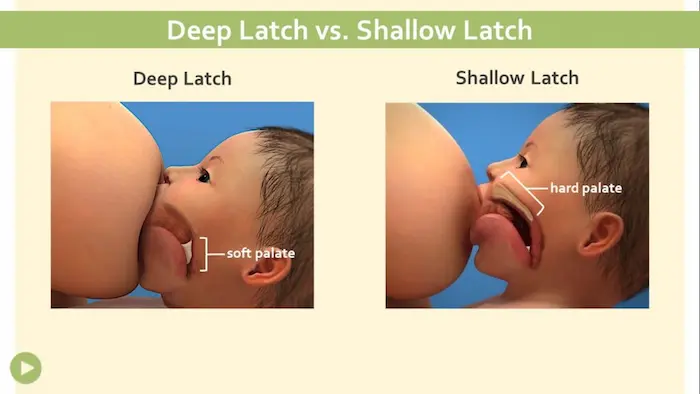
This happens when the baby is only “nippling,” sucking on the tip rather than taking a good mouthful of breast tissue. Instead of the nipple resting safely against the soft palate at the back of the mouth, it gets rubbed or pinched against the hard palate or tongue, one of the most common causes of nursing discomfort. It feels like a pinching or sharp sensation throughout the feed, and when the baby unlatches your nipple may look flattened, slanted, or shaped like a new tube of lipstick. It usually comes down to positioning, rushing the latch, or the baby not opening wide enough, so a review of comfortable nursing positions and our guide to common latch problems and fixes often solves it.
Cracked Nipples
Cracked nipples can be one of the most painful parts of the postpartum journey. This is actual physical damage to the nipple skin, often from the friction of a poor latch or an incorrectly fitted breast pump, and you might see visible cracks, scabbing, or small blisters. The pain often lingers even when you are not nursing. A shallow latch is the usual culprit, but a pump flange that is too small or too large can also do real damage, so getting the right equipment matters for long-term comfort.
Thrush (Yeast Infection)
Thrush is an overgrowth of yeast (Candida) that can infect both your nipples and the milk ducts inside the breast. It feels like a burning, stabbing, or shooting pain deep within the breast that often intensifies after a feed, and your nipples may look unusually shiny, flaky, or bright pink. Check your baby’s mouth for creamy white patches on the tongue or cheeks that do not wipe away, and watch for a persistent, angry red diaper rash. Yeast loves warm, moist environments and often appears after a course of antibiotics, so both you and baby usually need treatment together.
Vasospasm and Raynaud’s
This occurs when the blood vessels in the nipple constrict suddenly, cutting off blood flow, often triggered by a drop in temperature or the trauma of a poor latch. It is very distinctive: after the baby unlatches, the nipple tip turns white (blanches), then may go blue or purple, and finally bright red as blood rushes back in. It feels like an intense throbbing or burning, and keeping the area warm immediately after nursing, along with fixing any shallow latch, helps manage it.
Mastitis vs. Engorgement
It can be confusing to tell these apart when your breasts are heavy and painful, but knowing the difference is essential for getting the right treatment.
Engorgement
Engorgement is when your breasts become overly full of milk and fluid, leading to swelling and firmness. They may look shiny, feel hard, and seem much larger than usual, most commonly when your milk “comes in” around days 3 to 5. The swelling can flatten the nipple so much that the baby struggles to latch, which feeds a cycle of pain. If your baby is fussy and gulping air while struggling to latch, some newborn gas relief techniques can help settle them too.
Mastitis
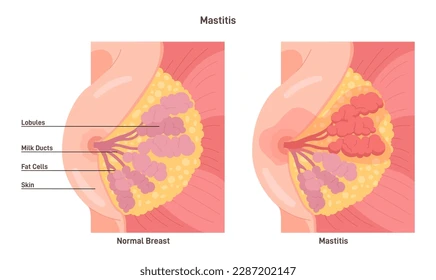
Mastitis is an inflammation of the breast tissue that often leads to infection. It can happen when a clogged duct is left untreated or when bacteria enter through a cracked nipple, and you will likely see a wedge-shaped area of redness that feels hot and swollen. Unlike simple engorgement, mastitis makes you feel like you have the flu, with fever, chills, and total-body exhaustion. If you notice these systemic symptoms, call your doctor promptly, since you may need antibiotics.
Practical Solutions for Breastfeeding Pain
Relief does not always require fancy equipment; sometimes a few small tweaks make all the difference.
Improving the Latch
A comfortable, effective latch should feel like a strong tug, not a sharp pinch. Check that your baby has more of the bottom of your areola in their mouth than the top, with their chin pressed firmly into your breast and their nose clear. Both lips should flange outward like a little fish; if they are tucked in, gently ease them out. You should see the rhythm of their jaw moving all the way back to their ears, and above all, you should feel comfortable.
Remedies for Damaged Skin
For cracked nipples, start with your own “liquid gold”: express a little breast milk and rub it on after feeding, since its natural properties are wonderfully healing. A thin layer of medical-grade lanolin protects the skin between sessions, and hydrogel pads are a relief for severe cracks, cooling the area and helping wounds heal in a moist environment. Whenever you can, let your nipples air dry, as fresh air is one of the simplest ways to help skin recover.
Reverse Pressure Softening
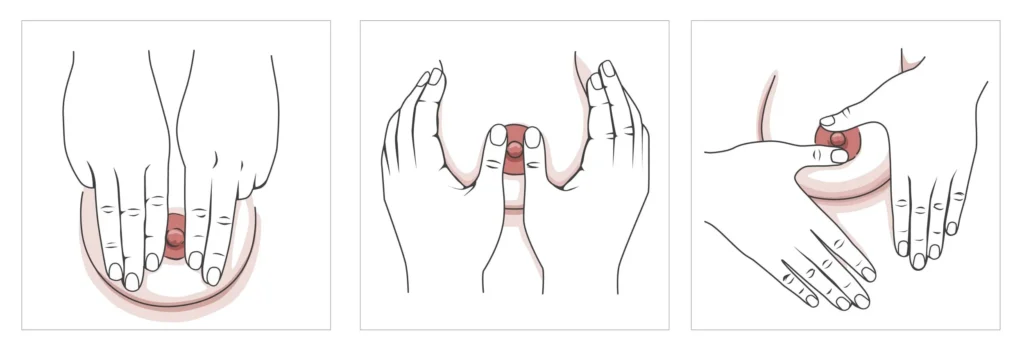
If your breasts are so full that your baby cannot latch, try reverse pressure softening: use your fingertips to gently press the tissue around the base of the nipple inward for about a minute, which moves the swelling back and makes the nipple soft enough to grab. Between feedings, a cold compress or even chilled cabbage leaves can bring down inflammation. And keep the milk moving as much as possible, since frequent nursing or gentle pumping is the best way to manage the pressure.
Self-Care and Emotional Support
Nursing through pain is physically and emotionally draining, so while you work on a fix, take care of your mental health too. Over-the-counter pain relievers like acetaminophen or ibuprofen are generally considered compatible with breastfeeding and can ease inflammation, though it is worth confirming with your provider. Breastfeeding struggles can feel isolating, especially when it seems like everyone else has it easy, so reach out to a friend who has been there, join a support group, or lean on your partner. Asking for help is not failure; it is a sign of a dedicated parent doing whatever it takes. Be gentle with yourself, because you and your baby are a team learning a brand-new skill together.
Frequently Asked Questions
Pain after a feed is often a vasospasm, where the nipple reacts to cooler air, or thrush. A deep, burning ache after the baby unlatches is a common sign of a yeast infection that may need medical treatment.
Yes, and it is important to. Keeping milk moving through the affected breast helps clear the infection and prevents further clogs, and your milk stays perfectly safe for the baby, with antibodies that can even help them.
A clogged duct usually feels like a small, tender lump with no fever. Mastitis typically involves a larger area of redness plus flu-like symptoms such as fever, chills, and extreme fatigue. If you feel genuinely sick, it is likely mastitis.
A nipple shield can give damaged skin a temporary barrier, but it is best used under a lactation consultant’s guidance. It does not fix the underlying latch issue and can affect milk supply if used incorrectly.
If you have adjusted the position and pain persists for more than a few days, call a pro. A fresh set of eyes and hands-on tips can make nursing much more comfortable, often almost immediately.
If you are reading this while in pain, take a deep breath. You are doing a wonderful job, and you have already taken the most important step by looking for answers. Almost every cause of discomfort has a solution, and you deserve a sweet, bonding experience with your little one. When in doubt, reach out to your doctor or a lactation consultant, who can help you heal faster.
References
- Mayo Clinic Staff. (2024). Breastfeeding problems: Sore nipples, mastitis and more. mayoclinic.org
- Academy of Breastfeeding Medicine. (2022). Clinical protocol on mastitis spectrum. bfmed.org/protocols
- American Academy of Pediatrics. (2023). Common breastfeeding challenges. healthychildren.org
- La Leche League International. (2023). Sore nipples and latch. llli.org/breastfeeding-info/sore-nipples
- Centers for Disease Control and Prevention. (2024). Thrush and breastfeeding. cdc.gov/breastfeeding