Think about your baby’s first word. That magical moment feels like a sudden breakthrough, but the journey to that milestone began long before—quietly, steadily, from the very first day of their existence. Language development isn’t a switch that flips at one year; it’s a symphony that starts in the womb and builds note by note through your daily interactions.
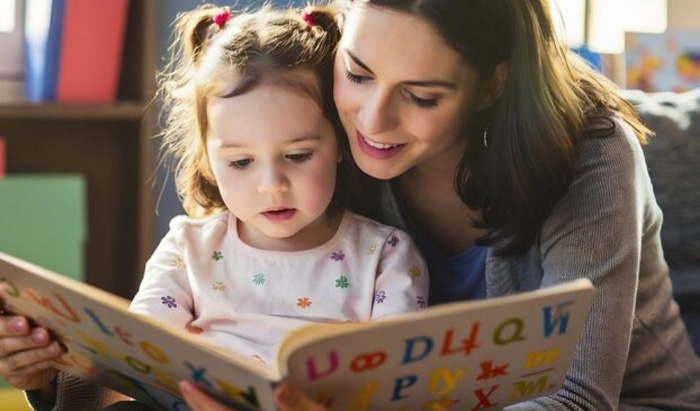
The most powerful tool for nurturing your child’s communication skills isn’t a flashcard or an app—it’s you. This guide will walk you through the science and the simple, joyful practices of how to encourage language development in infants, starting from pregnancy and moving through each key stage of the first year. Forget pressure; think connection. Let’s explore how you can build a world of words for your child, right from day one.
The Prenatal Prelude: Building a Foundation for Sound
Long before you hold your baby, they are listening to the world. The auditory system is one of the first to develop, creating a unique opportunity for early bonding and foundational learning.
When and What Can Your Baby Hear?
According to the Mayo Clinic, a fetus’s inner ear structures are developed enough to detect some sounds by around 18 weeks of pregnancy. By 24 to 28 weeks, the connections from the ear to the brain are more established, and babies begin to actively respond to voices and noises from outside the womb.
What do they hear? It’s a muffled world, dominated by the steady rhythm of your heartbeat and the whoosh of blood flow. But clearly cutting through this backdrop is the sound that matters most: your voice. It resonates through your bones and body, providing a clear, distinct signal. Research has shown that newborns consistently prefer their mother’s voice over others, and can even recognize specific stories or songs heard repeatedly in utero. This isn’t about teaching vocabulary; it’s about pattern recognition, familiarity, and the beginnings of emotional security.
Simple Prenatal Language Development Activities
You don’t need a curriculum. The best prenatal language development activities are about integrating connection into your daily routine.
- Narrate Your Day: Talk to your bump as you cook, shop, or relax. “I’m chopping some carrots for our dinner. It’s a sunny day today!” This habit tunes your baby into the cadence and melody of your speech.
- Read Aloud: Pick a favorite book or a children’s story and read it aloud a few times a week. The repetition is key. Your baby will begin to memorize the rhythmic patterns.
- Sing Songs: Lullabies, pop songs, or your favorite playlist—sing along. The melodic contours of music are highly stimulating to the developing brain.
- Partner Involvement: Encourage your partner to talk and sing to the bump regularly. This helps your baby become familiar with their voice, too, strengthening that early bond.
The goal is calm connection, not cramming. You’re not teaching; you’re introducing the “sound of home.”
The First Year: A Stage-by-Stage Guide to Nurturing Talkers
From birth, your infant is a linguistic detective, decoding the world of sound. Your role is to be their guide and most enthusiastic conversation partner. Let’s break down baby language development 0-12 months.
Stage 1: The Newborn Listener (0-3 Months)
- Milestones (CDC): Startles at loud sounds, quiets or smiles when spoken to, coos and makes gurgling sounds, cries differently for different needs.
- Focus: Building auditory awareness and the first turns of “conversation.”
- How to Talk to Your Newborn:
- Use “Parentese”: That instinctive, high-pitched, slow, melodic way of talking? It’s genius. Parentese perfectly captures an infant’s attention and highlights the sounds of language. It’s not “baby talk” with nonsense words; it’s grammatical, real speech, delivered in a captivating way.
- Face-to-Face Time: Hold your baby 8-12 inches away—their perfect focal distance—and talk. Let them watch your mouth move and your expressions change.
- Respond to Every Sound: When they gurgle or “ah,” pause, make eye contact, and respond. “Yes! You’re telling me a big story!” This responsive communication teaches the fundamental rule of dialogue: I take a turn, you take a turn.
- Narrate Caregiving: “Time for a diaper change. Let’s lift your legs. All clean! Now we’re putting on the soft, blue pants.”

Stage 2: The Babbling Experimenter (4-6 Months)
- Milestones (CDC): Turns head toward sounds, responds to tone of voice, strings vowels together (“ah,” “eh,” “oh”), begins consonant-vowel sounds (“ba,” “ma”), laughs and squeals.
- Focus: Encouraging vocal play and connecting sounds to meaning.
- Speech Development Activities:
- Imitate Their Sounds: If they say “ba-ba,” you say “ba-ba!” This rewards their vocal attempts and shows them the power of imitation.
- Introduce Simple Sounds: Pair sounds with objects or actions: “The ball goes bounce-bounce,” “The cat says meow.”
- Read Interactive Books: Choose books with textures to touch, flaps to lift, or simple, bold pictures. Point and name: “I see the dog! Woof woof!”
- Play Peek-a-Boo: This classic game teaches anticipation, turn-taking, and the fun of social interaction—all core to communication.
Stage 3: The Intentional Communicator (7-9 Months)
- Milestones (CDC): Understands “no,” responds to own name, uses gestures (waves, points, reaches), has a wider range of sounds and syllable strings (“ba-ba-da-da”).
- Focus: Supporting understanding (receptive language) and non-verbal communication.
- Key Strategies:
- Label Everything: “Here’s your cup.” “You found the ball!” “Daddy’s home!” This builds their mental dictionary.
- Acknowledge and Expand Gestures: If they point to a cup, say, “Cup! You want your cup? Here is your cup.” This connects their gesture to the word.
- Sing Action Songs: “Itsy Bitsy Spider,” “Pat-a-Cake,” and “This Little Piggy” pair words with motions, reinforcing meaning.
- Offer Simple Choices: Hold up two items. “Do you want the apple or the banana?” Watch their eyes or reach, then label their choice. “Banana! You want the banana.”
Stage 4: The Emerging Talker (10-12 Months)
- Milestones (CDC): Follows simple commands (“roll the ball”), looks at correct picture when named, says “mama” and “dada” specifically, tries to imitate words you say.
- Focus: Bridging from gesture to first true words.
- Encouraging First Words:
- Talk About Their Focus: If they are intently looking at a dog, that’s your cue. “Dog! See the big dog. The dog says woof.” Talk about what has their attention.
- Use One-Word “Narrations”: Simplify your labeling. Instead of, “Oh, you threw the red ball!” try “Ball! You threw the ball. Boom!”
- Pretend Play: Offer a toy phone. “Hello!” Hand them a spoon. “Yum, you’re eating!” This builds symbolic understanding—that objects and actions can be represented in play and, eventually, in words.
- Celebrate ALL Attempts: If they say “ba” for ball, don’t correct. Instead, celebrate and model: “Yes! Ball! That’s your blue ball!” This positive reinforcement encourages more attempts.
Your Language Development Questions, Answered
Q: Is baby talk (parentese) helpful or harmful?
A: The melodic, exaggerated style known as parentese is incredibly helpful. Studies endorsed by the American Academy of Pediatrics show it boosts infant brain activity for language and helps babies distinguish speech sounds. Avoid made-up words (“owie-boo-boo”) in favor of real words said in this engaging, high-pitched tone.
Q: How many languages can I expose my baby to?
A: You can expose your baby to multiple languages from birth. Their brains are exquisitely wired to differentiate multiple sound systems. The key is consistency—ideally, having different people consistently use different languages (e.g., one parent, one language). Multilingualism is a gift, not a cause of delay.
Q: What are potential red flags for speech delay in the first year?
A: The CDC’s “Learn the Signs. Act Early.” program advises talking to your pediatrician if your baby, by 12 months:
- Isn’t using gestures like pointing, waving, or reaching.
- Doesn’t respond to their own name consistently.
- Shows no babbling with consonant sounds (“mamama,” “bababa”).
- Doesn’t seem to understand simple words like “no” or “bye-bye.”
Early intervention is most effective, so always share concerns with your doctor.
The Heart of the Matter: Connection Over Perfection
The journey of how to encourage language development is woven into the fabric of your relationship. It happens in the mundane, beautiful moments: during diaper changes, on walks, at the grocery store, and during quiet cuddles with a book.
The benefits of reading to babies from birth extend far beyond vocabulary. It’s about closeness, the rhythm of language, and shared attention. Your consistent, loving, talk-rich interaction is the single most significant factor in your child’s language journey. You are not just teaching words; you are building a brain, fostering connection, and showing your child that their voice—from the first coo to the first word—is worth listening to. Start the conversation today, and enjoy every step of the dialogue.